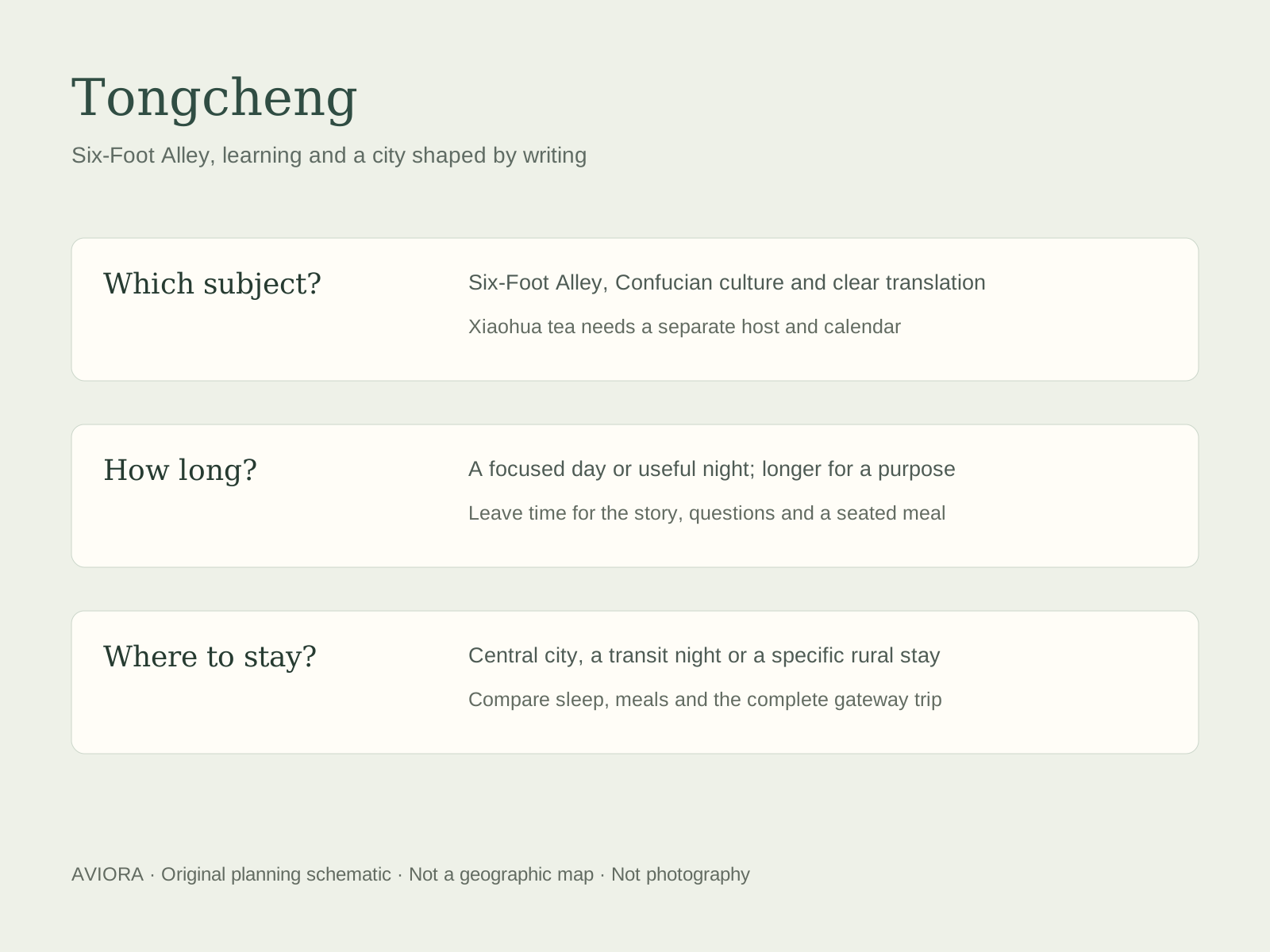
Explore Tongcheng through Six-Foot Alley, Confucian culture and the prose tradition, with clear English interpretation, useful overnight choices and a separately arranged tea interest.
A focused day or 1 useful night; 2 nights for deeper culture or a confirmed tea interestStory-led city visits, Chinese literary culture and thoughtful Anhui extensions
Tongcheng (桐城) is a county-level city within the wider Anqing area of Anhui. Choose it for a focused cultural visit combining Six-Foot Alley, or Liuchi Xiang (六尺巷), the Confucian Temple (文庙) and an introduction to the Tongcheng school of prose. Its appeal is the relationship between a memorable neighborhood story, education and literary life, rather than a long list of grand monuments. A selective day visit can work from a suitable base; one useful night adds a relaxed meal and more time for the city. A Tongcheng Xiaohua (桐城小花) green-tea interest is a separately arranged extension, not an automatic part of the old-city walk.
How many days do you need in Tongcheng?
Choose a day visit when the full journey leaves enough time for the main cultural route and a proper lunch. One useful night can add an evening meal and a less hurried start. Two nights provide one full day, useful for guests who want more explanation, an open collection or a genuinely arranged tea interest. A longer stay needs a specific host, countryside property or deeper subject. Do not stretch a short alley visit into several nights without explaining what the extra time contributes.
Compare stays by number of nights
Focused day / a cultural route with lunch
Choose the alley, Confucian context and a manageable historical-area walk from a suitable starting point. Leave time for explanation and a proper meal. Do not equate a short train sector with a full cultural day once both local transfers are included.
1 useful night / dinner and a less hurried visit
Choose a central room when arrival and departure create useful hours. Enjoy a meal and build the principal visits around the current venue calendar. An overnight adds value through pace and comfort, not by repeating the alley at several times of day.
2 nights / a fuller cultural day or a confirmed tea interest
Use the full day for deeper literary explanation, a relevant open collection or a well-defined tea-host visit. Keep the rural road and season realistic. If those interests do not appeal, a shorter Tongcheng stay and more time elsewhere may be the stronger itinerary.
Plan a tailored Tongcheng visit
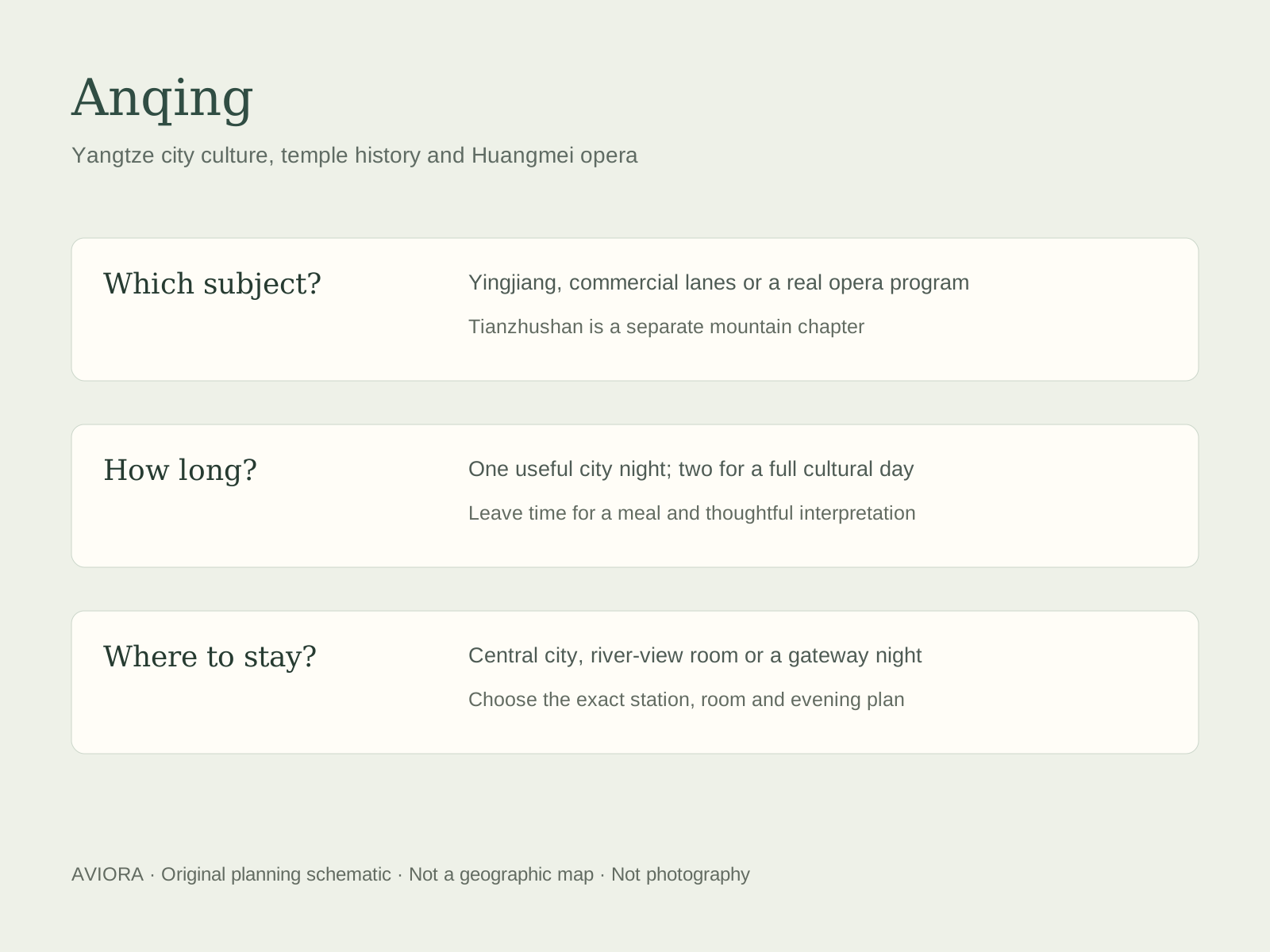
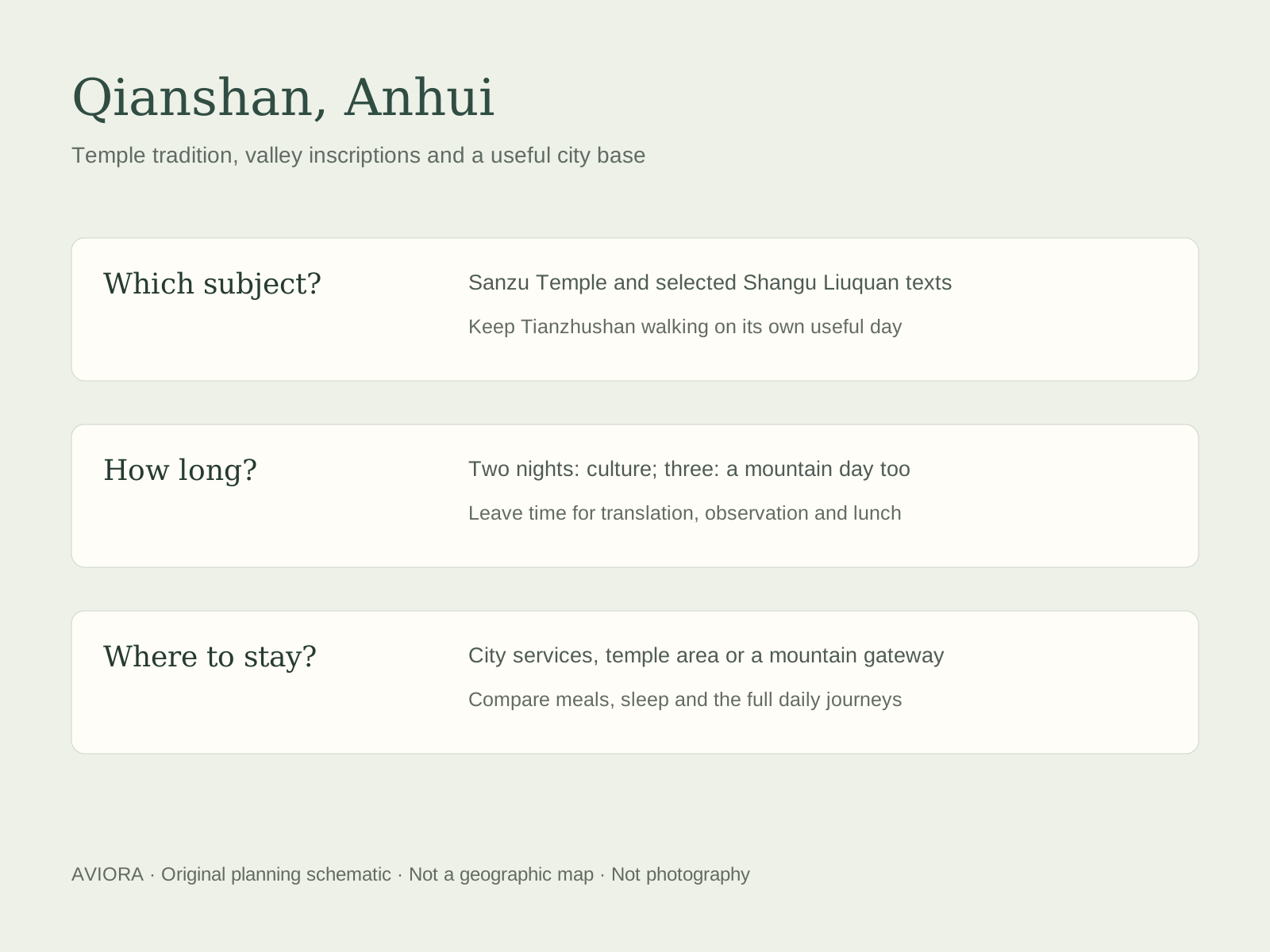
Tell us your dates, starting point, available nights and whether you are most interested in the alley story, education, writing or tea. We can compare a focused day with one useful night, or two nights when a fuller cultural day genuinely fits. Connect with Anqing for Yangtze city culture or Qianshan for Buddhist tradition and inscriptions when each adds a different question. No matching published Tongcheng itinerary is currently listed here; request a tailored route with the selected visits, room, interpretation and included services specified.
A tailored Tongcheng visit should name the public alley and cultural route, guide language, admissions, pickup and return, lunch and any separately confirmed collection. Agree how the story and prose tradition will be explained in English; a private car and an untranslated venue label are not enough. For tea, specify the willing host, location, date, tasting or production activity and any purchase expectations. Private residences, specialist meetings, workshops and household meals require separate consent and arrangements; they are not implied by a cultural city visit.
This is a destination planning guide, not a fixed departure or a confirmed package. We check the route, accommodation, transport and guide availability for your dates before setting out the services and price in writing.
Allow time to hear the alley story, look at the space and ask questions before moving on. The Confucian Temple or a collection needs its own useful window and current opening check. Keep lunch seated and unhurried. A tea-host visit should have a defined start, purpose and full road return, rather than become an unnamed afternoon filler. On a day excursion, preserve the complete gateway connection; on an overnight, leave enough time to enjoy the room and dinner.
01
Understand the Six-Foot Alley story through the space and its local interpretation
02
Connect Confucian education with the Tongcheng prose tradition in clear English
03
Enjoy a regional meal or a separately arranged Xiaohua tea conversation without rushing
Suggested Tongcheng itinerary
What can you fit into your Tongcheng itinerary?
Arrival / start of a day visit
Begin with the city and the story
Complete the actual gateway transfer and settle luggage where relevant. Visit Six-Foot Alley with time for the local account, translation and questions. Keep the walk manageable and treat surrounding restoration and current use honestly.
Principal cultural visit
Connect learning and prose
Use the confirmed Confucian Temple or relevant open display to explain education and civic life. Introduce the literary tradition through a short, understandable example. Avoid turning the route into a list of author portraits without context.
Lunch and optional extension
Choose depth or a genuinely different interest
Take a seated meal, then choose a fuller old-city explanation, a relevant open collection or a separately arranged tea conversation. A rural tea visit needs its own host, road journey and seasonal purpose. Otherwise leave time for a comfortable evening or return.
Overnight / onward travel
Let the next stop add a new question
An overnight can provide dinner and a relaxed departure; a second night needs a meaningful full-day plan. Continue to Anqing, Qianshan or another base with complete transfers counted. The final tailored proposal should name visits, interpretation, rooms, any host arrangement and included services.
Spring and autumn can suit city walks, though rain and holiday demand remain possible. Summer is hot and humid, making shade, water and a paced lunch important; winter can be cold and damp, so check room heating. Xiaohua tea work depends on the production calendar and actual host, not spring dates alone. Choose the city-cultural purpose first, then match the public walk, interiors and any rural extension to the forecast and current arrangements.
What affects the cost of a Tongcheng trip?
Compare the same cultural entries, guide time, transfers and meal basis. A day trip and an overnight have different room and transport costs, while a tea visit needs its own inclusion and host terms. Establish whether a tasting is educational, retail-led or both, with purchases optional unless explicitly agreed. Premium value lies in understandable interpretation, time to talk, comfortable sleep and a realistic route, rather than an unverified private-house or scholar-access claim.
Getting there and getting around
How to get to Tongcheng and plan your stay
Arriving and connecting
Compare dated rail services and the complete local road to the actual room or first visit, including Tongcheng East when relevant. Use the exact Chinese station and city name to avoid confusing 桐城 with 湖北通城. Include boarding, luggage and transfers at both ends. A late arrival should have dinner and the next pickup settled before another outing. Choose an overnight because it improves usable time, not simply because a train reaches the city after dark.
Getting around
Plan transport between the room, chosen cultural visits and any separate rural host. Walk manageable public sections with the last vehicle point, toilets, seats and shorter option agreed. A compact-sounding historic route may still involve separate entries and a final lane walk. Tea-area transport and slopes need their own assessment. Keep a seated meal and the full return in the day rather than add another distant stop to fill an afternoon.
Walking and access
A selective city route can be shorter than a mountain day, but old-lane surfaces, thresholds, temple steps and the last walk from the car need assessment. Ask for continuous walking, toilets, seats and a shorter alternative. A narrow alley may be busy, so avoid building the whole experience around an unobstructed photograph. Rural tea paths have different footing and slopes; assess them separately rather than infer accessibility from the word tasting.
What first-time visitors often underestimate
Tongcheng rewards curiosity about an idea more than a desire to collect monuments. Start with the alley story, ask how learning and writing shaped local identity, and let the guide translate a small amount well. You do not need a private house, a specialist meeting or a staged tea activity to have a thoughtful visit. Choose the length of stay around your interest and the complete journey.
Where to stay in Tongcheng
Compare a central Tongcheng room for the historic-area route and meals with a station-area room for a deliberate transit need. A rural or tea-area property is a different choice, justified only by its actual room, setting and arrangements. Check street noise, heating or cooling, bathroom, bed, breakfast, dinner and the final luggage approach. A hotel marketed as cultural or historic does not establish an old building, quiet courtyard or access to private residences. Use the exact station, room and route addresses before deciding where to stay.
Compare hotel areas
Central Tongcheng / culture and meals
Pin the room against the public walking route and dinner options. Check sound, bathroom, climate control, bed and the last vehicle point. A historic-area address can help an evening or morning, but the actual room still determines sleep and comfort.
A named railway gateway / a deliberate transit night
Use the station printed on the ticket and confirm the final approach. Compare dinner, sleep and the next pickup against a central room. Station convenience is a logistical purpose, not a substitute for time understanding the city.
A specific countryside or tea-area property / a separate reason to stay
Choose it only when the setting, room and host arrangements add value. Confirm meals, dampness, heating or cooling, road access and the full journeys to the cultural visits. A rural room does not automatically include picking, processing or a private tea ceremony.
How do I make Six-Foot Alley and Tongcheng’s literary history meaningful?
Use Six-Foot Alley as the starting point for a discussion of compromise and neighborhood space, explaining the commonly told Zhang Ying (张英) story as a local historical tradition rather than proof that every visible feature survives from that moment. At the Confucian Temple, explore the relationship between learning, status and civic life. Then introduce the Tongcheng prose tradition through a short translated passage or a clear example of writing, rather than a list of author names. The subjects complement each other when the guide makes them understandable; they are not interchangeable photo stops.
Six-Foot Alley is a short place with a larger question
The value lies in understanding the story and considering how shared space is negotiated. A quick photograph may occupy only a small part of a worthwhile cultural visit. Pair it with education and literary context rather than promise a large, untouched ancient town around one narrow passage.
Tell the Zhang Ying story with an honest distinction between tradition and evidence
The familiar account concerns a boundary dispute and mutual concessions, with a poem attributed to Zhang Ying central to its retelling. Present the moral meaning and local tradition clearly. Do not treat the current paving, walls or visitor interpretation as direct proof of every detail of the narrative.
Tongcheng’s prose tradition is more than a school building
The Tongcheng school is a literary tradition associated with Qing writers including Fang Bao, Liu Dakui and Yao Nai. Explain prose as writing, argument and style, rather than suggest visitors are entering an operating school under that historic name. A translated example and a good conversation can be more revealing than collecting author portraits.
A Confucian Temple is a different cultural setting from a Buddhist monastery
Use the visit to discuss learning, ritual and civic status, keeping the visible architecture and current use clear. It should not be described as another version of a Buddhist temple visit or sold with an invented religious ceremony. Individual halls and displays have their own access arrangements.
Xiaohua tea requires its own place, host and calendar
Tongcheng Xiaohua is a green-tea interest, not evidence of year-round harvesting or production. Ask which tea is being served, who explains it and what can genuinely be seen on the date. Outside a production period, a thoughtful tasting can be a more useful and honest choice than staged picking.
Culture and historical context
An alley opens a conversation about how people live together
Six-Foot Alley is memorable because its story makes a modest space carry a larger idea. In the familiar retelling, a dispute over a boundary gives way to reciprocal concessions, with Zhang Ying and an attributed poem helping to frame the lesson. A thoughtful guide can explain the account, its place in local memory and the visible space without presenting every modern feature as direct evidence of the event. Then give guests time to consider why the story continues to be told.
The Confucian and prose subjects extend that conversation from conduct to learning and expression. Introduce the Tongcheng tradition through writers such as Fang Bao, Liu Dakui and Yao Nai, using a short translated example to make writing tangible. Distinguish the literary school from a physical classroom and a named writer’s association from an open residence. The value of the visit is a connection between place and ideas, not a promise of access to a private household or an untranslated parade of famous names.
Food and social life
Give the day a proper meal and the tea a clear purpose
A seated city lunch can provide the pause that makes the cultural route enjoyable. Ask what the chosen kitchen prepares well, then balance vegetables, a staple and a suitable protein. Check portions and any fish bones, stocks or fillings. There is no need to invent a local signature or require an unfamiliar dish to make the stop distinctive; the meal’s quality, comfort and timing can be valuable in their own right.
Tongcheng Xiaohua gives interested guests a specific green-tea subject. Ask the host about the tea being served, its preparation and the actual season, keeping a tasting distinct from production or picking. Make any purchase expectations clear. For meals, discuss soy, wheat, pork, fish, alcohol and shared equipment as relevant to dietary needs. A tea conversation should serve curiosity rather than become an obligatory shopping stop or an unsupported health promise.
Tongcheng travel FAQ
Questions about visiting Tongcheng
Is Tongcheng worth visiting?+
Choose Tongcheng for a focused cultural visit linking Six-Foot Alley, Confucian education and the Tongcheng prose tradition. It is most rewarding with clear English explanation and time for a meal. On a short Anhui trip, compare that specific interest with the full journey and time needed elsewhere.
How long should I spend in Tongcheng?+
A selective day can cover the main cultural route when full transfers leave enough time. One useful night adds dinner and a less hurried visit. Two nights suit deeper literary interests, a relevant open collection or a confirmed tea experience, rather than the alley alone.
What is the story of Six-Foot Alley?+
The commonly told account links a boundary dispute with mutual concessions by neighbors, with Zhang Ying and an attributed poem central to the retelling. A guide should explain it as local historical tradition and its message of compromise, while distinguishing the story from claims about every surviving wall or feature.
Is Six-Foot Alley a large ancient town?+
No. Plan it as a specific short place within a wider city-cultural visit. Its value comes from the story and its relationship to local identity, not a long circuit of untouched historic streets. Pair it with the Confucian and literary subjects when those interest you.
What is the Tongcheng school?+
It is a literary tradition associated with Qing prose writers such as Fang Bao, Liu Dakui and Yao Nai. It is not simply an operating school building to visit. A short translated passage and an explanation of argument or style can help an English-speaking guest understand why the tradition matters.
Can I enjoy Tongcheng without reading Chinese?+
Yes, with a guide who translates selected material and connects the alley, learning and prose in plain language. Ask what will be explained rather than assume untranslated exhibition panels are enough. A few understood examples can make a more useful visit than a long list of author names.
Is Tongcheng Confucian Temple a Buddhist temple?+
No. Its cultural focus is Confucian tradition, learning and ritual, rather than Buddhist monastic life. A good visit explains those differences and the actual buildings and displays. Current open halls and visitor arrangements should be confirmed for your date.
Can I visit a Tongcheng Xiaohua tea farm?+
Only through a suitable, willing host and a date-specific arrangement. Confirm the location, tea, activity, production season and what is included. A tasting, picking and processing visit are different experiences; neither a tea label nor a rural hotel automatically establishes farm access.
Is Tongcheng suitable for travelers who prefer gentle walking?+
A selective city route can suit a gentler pace, but assess old-lane surfaces, thresholds, steps, seats, toilets and the last vehicle point. A rural tea extension needs its own slope and footing check. Do not infer step-free access from a short map distance.
Is Tongcheng in Anhui the same as Tongcheng in Hubei?+
No. Tongcheng / 桐城 in Anhui and Tongcheng / 通城 in Hubei are different places. Use the Chinese name, province, exact railway station and final property address when booking transport or accommodation.
Share your dates, interests, arrival and departure cities, and any plans already booked. We’ll recommend an itinerary at a pace that suits you, with the arrangements and price explained before you book.