Temple tradition, writing on rock and a city stay beyond the mountain name · East China
Qianshan, Anhui Travel Guide: Temples, Inscriptions & Where to Stay
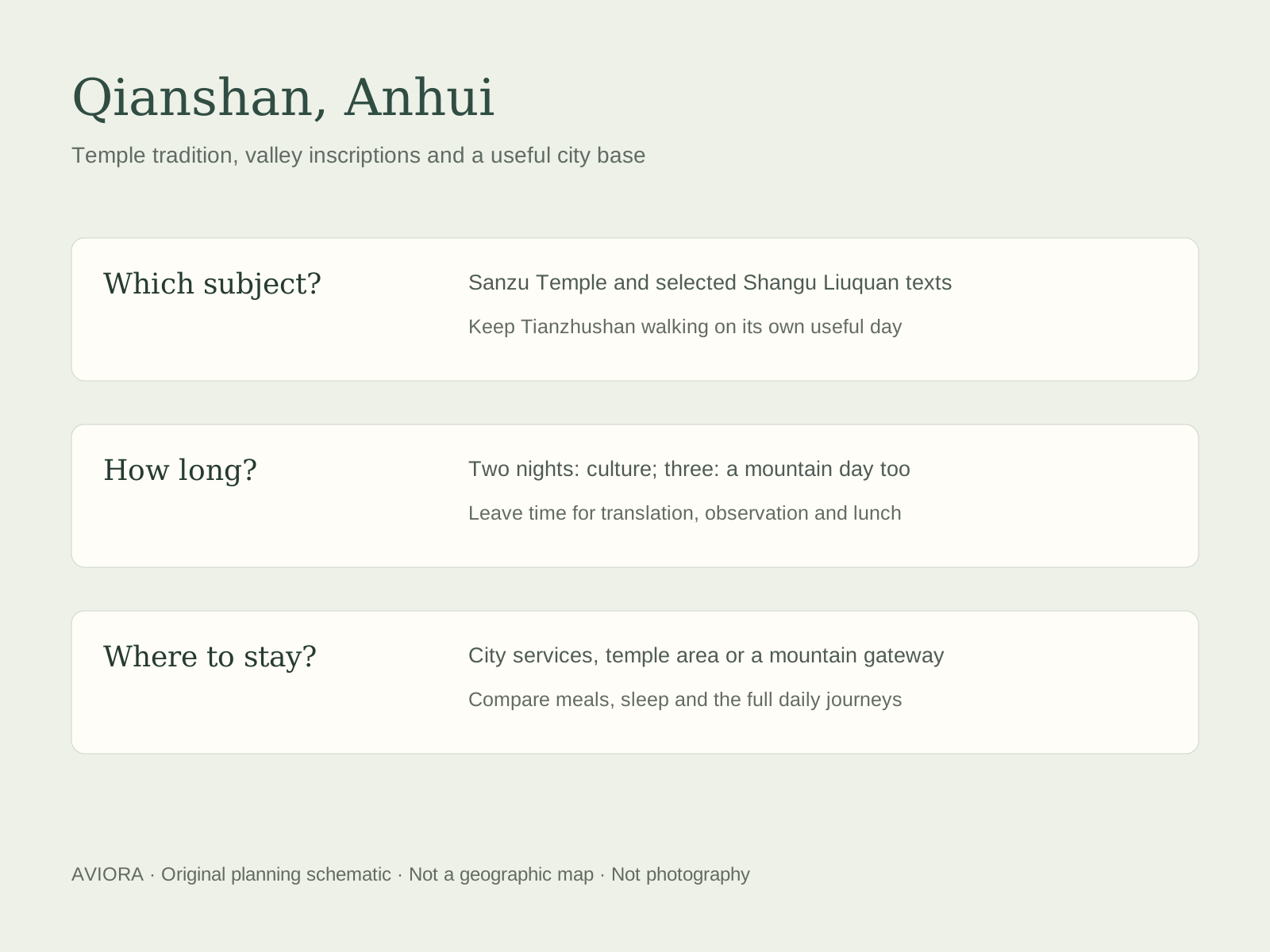
Explore Qianshan through Sanzu Temple, selected Shangu cliff inscriptions and a comfortable city base, with a separate decision on Tianzhushan walking and accommodation.
1 useful night or 2 for culture; 3 for separate culture and mountain daysChan Buddhist history, cliff inscriptions and a balanced city-and-mountain Anhui stay
Qianshan (潜山) is a county-level city within the wider Anqing area of southwestern Anhui. It is the city context for Tianzhushan, but it also rewards a separate cultural plan around Sanzu Temple (三祖寺), the Shangu Liuquan (山谷流泉) valley and its cliff inscriptions, and selected local collections. Choose the city for practical meals and a cultural day, or compare a lower mountain-gateway room when the main purpose is Tianzhushan walking. One useful night can support a focused cultural stop; two give a full day. For city culture plus a full mountain day, compare three nights across the most suitable base or bases.
How many days do you need in Qianshan, Anhui?
One useful night works when arrival and departure leave time for the main cultural visit and a meal. Two nights give a full day for a respectful Sanzu Temple visit, selected valley inscriptions and a slower lunch, with another collection only if it adds value. Three nights can support one cultural day and one separate Tianzhushan day when both interest the group. Decide whether a single room serves both days well or a move improves the mountain approach. Extra nights need a specific interest or a particularly suitable stay, not a requirement to visit every regional entrance.
Compare stays by number of nights
Focused stop / one cultural purpose
Choose a temple-and-inscription introduction only when the full arrival, meal and onward journey leave enough time. Set the public route and walking beforehand. A railway connection by itself is not a cultural visit.
2 nights / one full cultural day
Use the full day for Sanzu Temple, selected inscriptions and an unhurried lunch. Add an open collection only when its subject contributes something new. Choose a room that serves the route, dinner and rest rather than automatically book beside a mountain entrance.
3 nights / culture and a separate mountain day
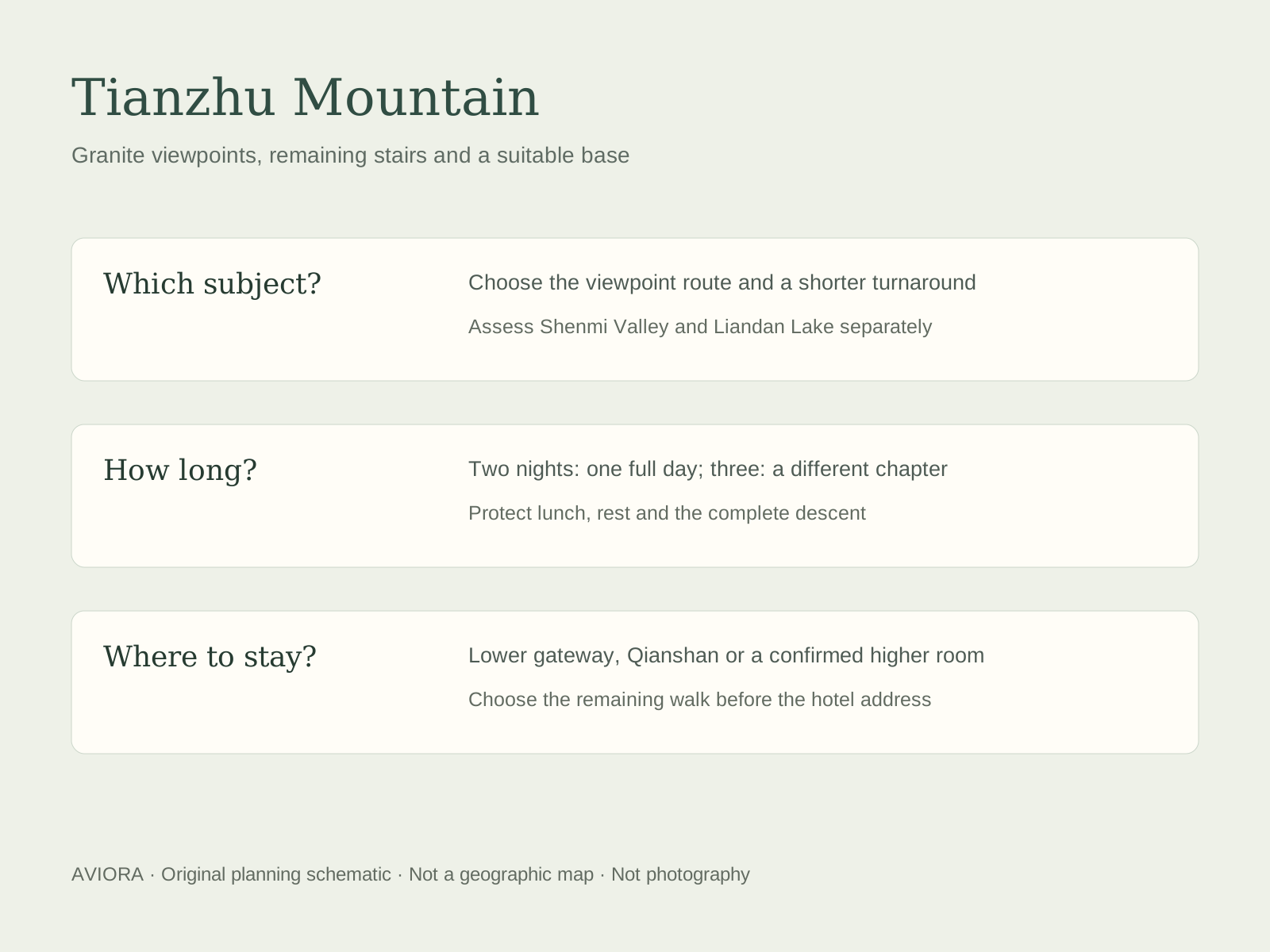
Give Tianzhushan its own route, cableway and remaining-step assessment. Compare keeping one comfortable base with a move that materially improves the mountain day. Make the cultural day a different subject and pace, rather than another ambitious climb.
Plan a tailored Qianshan, Anhui visit
Tell us your dates, starting point, available nights and interests in Buddhist history, calligraphy, archaeology or a city-and-mountain combination. We can compare a focused cultural stop with two nights and a fuller day, or three nights for culture and a separately assessed Tianzhushan route. Choose the room from the complete daily journeys and your comfort needs. Continue to Anqing for Yangtze culture or a genuine Huangmei opera interest when the dates fit. No matching published Qianshan itinerary is currently listed here; request a tailored plan with the selected visits, rooms and included services.
A tailored Qianshan cultural day should identify the temple and public valley route, guide language, admissions, pickup and return, lunch and any museum reservation. Specify the remaining steps, uneven sections and shorter alternative. Interpretation should make a few inscriptions meaningful through translation and context, not rely on the guest reading Chinese. A Tianzhushan extension needs its own cableway, path and room assessment. Religious ceremonies, monastic meetings, specialist appointments and private interiors are separate arrangements requiring evidence and consent; they are not implied by private guiding.
This is a destination planning guide, not a fixed departure or a confirmed package. We check the route, accommodation, transport and guide availability for your dates before setting out the services and price in writing.
Give Sanzu Temple a calm visiting window, then choose the valley component according to interest and footing. A short route with a few well-explained inscriptions can be more rewarding than an extended walk past untranslated texts. Keep a proper seated lunch. A museum chapter depends on the actual calendar and galleries, and should not be assumed as an automatic indoor substitute. On departure, count luggage collection and the complete road to the station named on the ticket.
01
Understand Sanzu Temple’s Chan association through a respectful cultural visit
02
Read selected valley inscriptions with translation and time to observe
03
Pair a comfortable city stay with a separately chosen Tianzhushan mountain day
Suggested Qianshan, Anhui itinerary
What can you fit into your Qianshan, Anhui itinerary?
Arrival
Settle into the base that serves the cultural day
Complete the correct station-to-room transfer and confirm dinner. Keep a shorter public city introduction optional according to time and energy. Settle the temple-and-valley walking plan before adding an arrival-day excursion.
Full cultural day / morning
Understand Sanzu Temple and its tradition
Visit the agreed open areas respectfully, with interpretation suited to the guest’s interest. Separate lineage history from the age of visible structures, and keep thresholds, steps and breaks matched to the group.
Lunch and afternoon
Read a few inscriptions rather than rush through the valley
Take a seated meal, then follow the selected public Shangu Liuquan route when conditions suit. Use translated examples and time to look. A confirmed local collection can add another subject, but should not crowd a thoughtful temple-and-valley day.
Optional mountain day / onward travel
Change the scale with a separately chosen landscape
With three nights, give Tianzhushan its own named paths, cableway sectors and remaining-stair assessment. Otherwise collect luggage and preserve the complete gateway connection. The tailored proposal should specify the cultural visits, rooms, meals and included transfers.
Spring and autumn can suit temple and valley visits, with rain and holiday demand still possible. Summer calls for shade, water and shorter exposed sections; winter can be cold and damp, especially in a room without effective heating. Wet stone may affect the inscription route even when a temple visit remains possible. A mountain addition needs its own forecast and operator checks. Choose the main cultural questions first, then set outdoor and collection time around the actual date.
What affects the cost of a Qianshan, Anhui trip?
Compare the same temple and valley components, guide time, full transfers, admissions and meal basis. A museum visit or more specialist interpretation needs a clear scope. If adding Tianzhushan, price its scenic transport, cableway sectors, paths and room sequence separately. Premium value comes from understandable cultural explanation, comfortable sleep and pacing, rather than an unverified private religious experience or a larger number of paid entrances.
Getting there and getting around
How to get to Qianshan, Anhui and plan your stay
Arriving and connecting
Compare dated trains and the full onward road from the named station to the actual property. Qianshan and Tianzhushan station labels serve different services and final approaches; choose from the proposed route. Include luggage, boarding and transfers at both ends. Send the full Chinese city, station and room address to avoid a same-name error. On a late arrival, confirm dinner and the next pickup before planning another visit.
Getting around
Plan road transport between the room, temple, selected valley route and any confirmed collection. Agree where the car can stop, the walking start and finish, toilets, seats and a shorter alternative. Public paths and working religious areas have different access. A mountain outing adds its own visitor transport and cableway plan. Keep lunch and the return to the hotel in the day rather than equate nearby cultural labels with one continuous accessible walk.
Walking and access
Review the temple approach, thresholds, stairs and seating separately from the valley’s uneven paths and rock-viewing positions. A lower-elevation cultural route can still be unsuitable for someone who needs step-free access. Ask for continuous walking, toilets, the last vehicle point and a clear turnaround. Wet stone can change the valley choice. A guide can shorten a public route and improve interpretation, while a private car helps between places; neither removes terrain within a visit.
What first-time visitors often underestimate
Qianshan can add depth to a Tianzhushan trip without requiring another hard walking day. Start with a temple, a few inscriptions you can understand and a proper meal. Choose the mountain separately if its route suits. The value of the cultural day lies in the explanation and pace, not in reaching every site or entering a private religious space.
Where to stay in Qianshan, Anhui
Choose a Qianshan urban room for dinner, services and the city-led cultural plan. Compare a property serving the Sanzu Temple and valley interests for its actual room, access and meals. A Tianzhushan lower-gateway room serves a separate mountain-first purpose. Check the full road journeys for each day before deciding that one base is best. For the booked room, ask about sound, heating or cooling, dampness, bathroom, bed, breakfast and dinner. Qianshan station, Tianzhushan station and a hotel using the mountain name are different addresses, not interchangeable descriptions of arrival.
Compare hotel areas
Qianshan urban area / meals and practical services
Choose the address for the cultural route, dinner and gateway. Compare noise, bed, bathroom, temperature control and the full journeys to Sanzu Temple and any mountain day. An urban room can be the stronger choice when reliable meals and comfort matter more than a scenic outlook.
A property serving Sanzu Temple and the valley / a culture-led stay
Assess the precise room and final approach, rather than assume every nearby property is convenient or quiet. Confirm stairs, luggage, dinner, dampness and daily transport. Proximity is useful when it gives you a comfortable day, not merely a shorter line on the map.
Tianzhushan lower gateway / a mountain-first comparison
Use the independent mountain guide to choose the entrance, visitor transport and remaining walk. Compare that advantage with driving back for city meals or cultural visits. A mountain-marketed property is not automatically beside every trail, station or temple.
What can I do in Qianshan without a full Tianzhushan mountain hike?
Build a cultural day around Sanzu Temple and a selected Shangu Liuquan inscription route, with lunch and time to understand the setting. Sanzu Temple is associated with Sengcan (僧璨), traditionally regarded as the third patriarch of Chan Buddhism. The nearby valley offers a different subject through writing on rock and the experience of reading a landscape. Add a local museum interest only when its current opening and collections fit. This can be less strenuous than an upper Tianzhushan circuit, but the temple and valley still require their own steps and surface assessment.
Qianshan city and Tianzhushan answer different questions
The city guide helps with cultural interests, practical stays and gateway decisions. The mountain guide chooses granite viewpoints, cableway sectors and remaining stairs. They can form a balanced three-night chapter, but one should not be presented as a duplicate of the other or counted as completing every local route.
A temple association deserves careful interpretation
Sanzu Temple’s association with Sengcan gives a visit a clear Chan Buddhist subject. Explain the tradition, current religious use and visible buildings separately. A long religious history does not establish the age of every structure, and a visitor ticket does not include a ritual or meeting with a monk.
For inscriptions, a few understood texts are better than a large count
Choose accessible examples that the guide can translate, place in context and relate to the landscape. Distinguish an attributed text, its carving and later repair where evidence permits. Do not invent an author, date or original hand for an inscription merely because a famous name is associated with the valley.
Archaeology needs a collection plan, not a promised excavation visit
The Xuejiagang (薛家岗) archaeological subject can deepen a Qianshan visit when an appropriate collection and explanation are available. Confirm what is actually displayed and open. A reference to an archaeological site does not establish public excavation access, a curator appointment or original objects on display that day.
A cultural day can be gentler without being universally accessible
Temple steps, valley stones and collection interiors have different demands. Choose the actual route, seating and shorter option before describing the day as easy. If wet weather makes the valley unsuitable, protect the quality of the visit through a confirmed alternative rather than add an unassessed mountain path.
Culture and historical context
A temple and a carved text offer different ways into the landscape
At Sanzu Temple, begin with the association with Sengcan and what the Chan lineage means within the tradition. Keep that account distinct from dating the building in front of the guest. The visitor can then notice spatial arrangement, worship and repair without needing every structure to be an untouched relic. Respect current religious use, photography instructions and the areas actually open to the public.
In the Shangu Liuquan setting, writing on rock changes how a visitor looks at the valley. Select a few inscriptions whose words and context the guide can explain, then leave time for the landscape that gives them meaning. Distinguish a text’s attribution, the carving and later changes where evidence allows. This is a chance to understand how people responded to a place across time, rather than a competition to find the greatest number of famous names.
Food and social life
Choose a city meal that gives the cultural day room to breathe
A Qianshan urban base can be useful for a straightforward dinner after arrival and a seated lunch during the cultural day. Ask what the actual kitchen prepares well, then combine vegetables, tofu or another suitable protein with rice or noodles. A shorter walk should still have a comfortable pause; there is no need to fill every gap with another entrance. Choose portions and preparation around the group rather than require an unfamiliar specialty at every meal.
Confirm dietary needs with the kitchen, including stocks, sauces, soy, wheat, pork, seafood and shared equipment. A meal near a temple is not automatically vegetarian, and a rural address does not prove wild or locally gathered ingredients. For a mountain addition, settle breakfast, water and lunch availability separately from the city dinner. Reliable food and rest support a premium stay without an invented cooking session or compulsory tea purchase.
Qianshan, Anhui travel FAQ
Questions about visiting Qianshan, Anhui
Is Qianshan, Anhui worth visiting without climbing Tianzhushan?+
Yes, when Chan Buddhist history, cliff inscriptions or a local cultural collection interest you. Sanzu Temple and a selected Shangu Liuquan route can support a focused cultural day. Choose the visits and walking carefully rather than expect the mountain panorama without a mountain route.
Is Qianshan the same as Tianzhushan?+
No. Qianshan is the city context in Anhui; Tianzhushan is the mountain destination with separate entrances, visitor transport and walking choices. An urban hotel, temple visit and upper granite route are different plans, even when a booking description uses the regional mountain name.
How many nights should I spend in Qianshan?+
One useful night can support a focused stop when transport fits; two give a full cultural day. Three can provide distinct culture and mountain days. Choose the room or room sequence from the actual visits and full transfers, not a fixed requirement to stay in the city for every mountain outing.
What is Sanzu Temple known for?+
Sanzu Temple is associated with Sengcan, traditionally regarded as the third patriarch of Chan Buddhism. A worthwhile visit explains that tradition and current religious use while distinguishing older history from the visible buildings and repair. Ceremonies and monastic meetings are not automatic parts of a cultural visit.
Can I understand the Shangu inscriptions without reading Chinese?+
Yes, with a guide who chooses suitable examples, translates the central meaning and explains the context. A few well-understood texts can make a stronger visit than a long untranslated list. Confirm the public route and walking, and distinguish attribution and carving history when the evidence permits.
Is the temple and inscription route suitable for older travelers?+
It may suit a selective cultural day, but assess steps, thresholds, wet stone, continuous walking, seating and toilets. Lower elevation does not guarantee step-free access. Ask for the named shorter plan and last vehicle point rather than rely on a general easy-day description.
Can I visit the Xuejiagang archaeological site?+
Do not assume public site or excavation access. Discuss the archaeological subject through a confirmed museum or collection when its current displays fit, and verify any proposed site visit separately. A historical reference does not establish open areas, original objects on display or a specialist appointment.
Should I stay in Qianshan city or at the Tianzhushan gateway?+
Choose the city for the cultural plan, meals and services. Choose a suitable lower gateway for a mountain-first day when its room and approach improve the route. Compare the complete drives, dinner and sleep for both days before deciding on one base or a hotel move.
Which railway station should I use for Qianshan?+
Choose dated services together with the final room and first visit, comparing the named Qianshan and Tianzhushan gateways where relevant. Include both local transfers, boarding and luggage. The most scenic-sounding station name is not proof of the best complete journey.
Can I combine Qianshan culture with Anqing and Jiuhua Mountain?+
Yes, when each adds a distinct subject and useful nights justify the complete connections. Qianshan can focus on Chan tradition and inscriptions, Anqing on Yangtze city culture, and Jiuhua on another living Buddhist mountain setting. Compare the combined walking and avoid repeating rushed temple stops.
Share your dates, interests, arrival and departure cities, and any plans already booked. We’ll recommend an itinerary at a pace that suits you, with the arrangements and price explained before you book.