Choose the granite views and the remaining stairs before choosing the room · East China
Tianzhu Mountain Travel Guide: Routes, Cableway & Where to Stay
Plan Tianzhushan through selected granite viewpoints, realistic cableway-assisted walking and a suitable Qianshan or mountain-gateway stay, with honest choices on longer routes.
2 gateway nights for one mountain day; 3 for a distinct second chapterGranite landscapes, thoughtful mountain interpretation and route-led Anhui stays
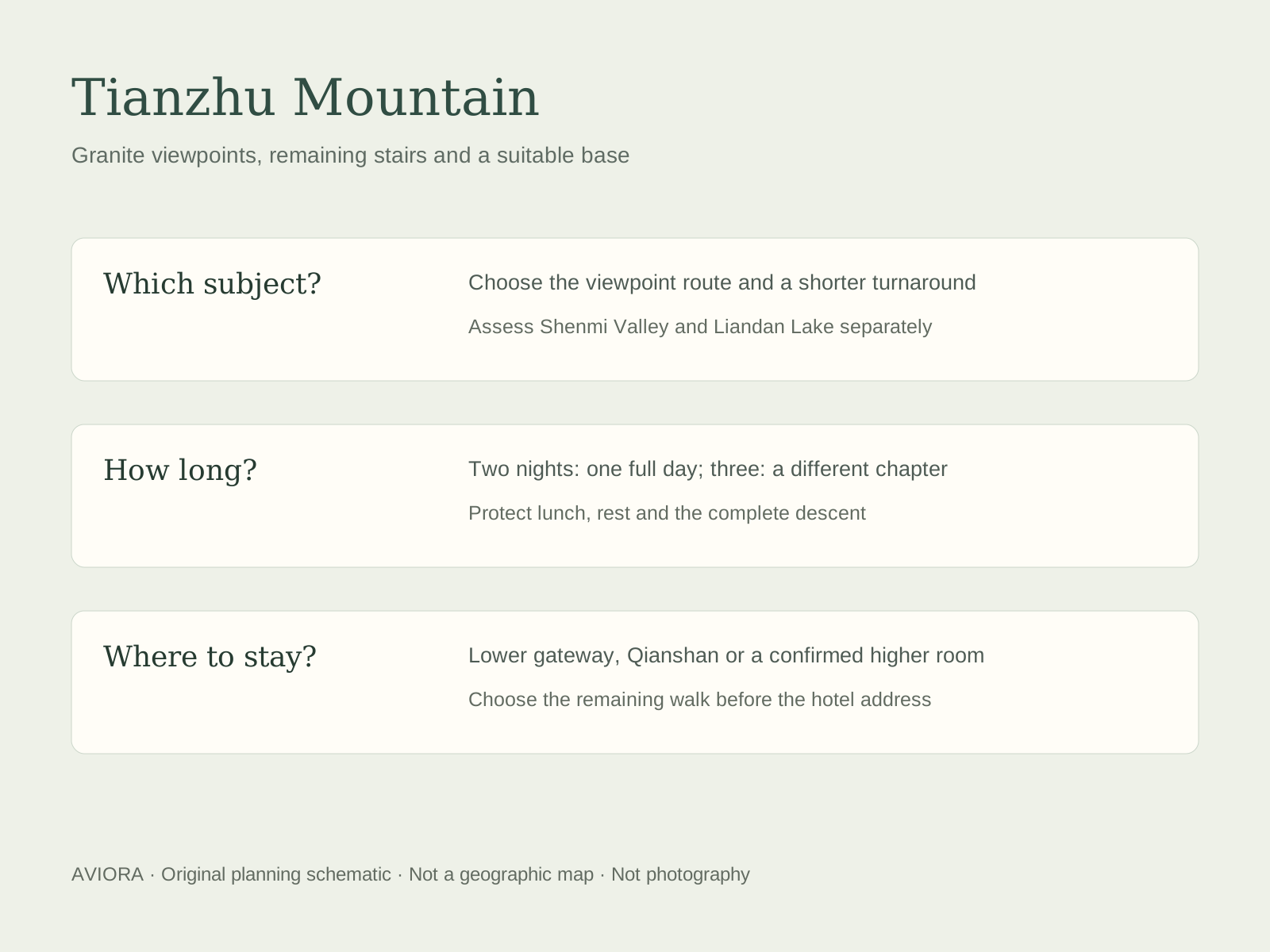
Tianzhu Mountain (天柱山), also called Tianzhushan or Mount Tianzhu, is a granite mountain destination near Qianshan (潜山), within the wider Anqing area of Anhui. Choose it for sculpted rock forms, wooded approaches and a walking route that gives you time to understand the landscape. The central planning question is how much stair walking remains after the selected cableway, not whether a cableway exists. Two nights near the appropriate gateway give one full mountain day; three can allow a second, different route or a gentler cultural chapter. Qianshan city, the mountain visitor gateway and any higher accommodation are different bases.
How many days do you need in Tianzhu Mountain?
Start with two nights for one full mountain day, provided arrival and departure leave comfortable road connections. Three nights give two full days: use the second for a genuinely different landscape or a lower-area cultural interest, with time to rest. A day visit from Qianshan or another suitable base can work for a selected route, but compare the whole journey, visitor transport and descent with an overnight closer to the gateway. A higher mountain room makes sense only if its exact approach and location improve the walking plan; it is not necessary for every introduction.
Compare stays by number of nights
Focused day visit / a selected route
From a suitable starting property, choose the main viewpoint interest and a realistic return. Count road travel, scenic transport, entry, queues, lunch and the walk. A cableway-assisted day can still be demanding, so agree the shorter route and turnaround first.
2 gateway nights / one full mountain day
Stay near the approach that serves the actual route and reliable dinner. Use the full day for a selected mountain plan with breaks, leaving arrival and departure for manageable travel. Any shorter additional outing depends on the real connections, energy and current access.
3 nights / two distinct full days
Use a second day for another worthwhile route or a gentler cultural subject rather than repeat the same viewpoints. The extra night provides some flexibility but cannot guarantee clear weather or operating cableways. Choose a room comfortable enough for an afternoon of rest.
Plan a tailored Tianzhu Mountain visit
Tell us your dates, starting point, available nights, comfortable stair load and whether knees, balance or exposure affect your route choice. We can compare two gateway nights and a selective full day with three nights and a distinct second chapter. Begin with the named paths and descent, then choose the room and station. Add Anqing for river-city culture or a genuine Huangmei opera interest when those dates and connections fit. No matching published Tianzhu Mountain itinerary is currently listed here; request a tailored plan with the selected route, room sequence and included services.
A tailored Tianzhushan plan should name the entrance, visitor transport, cableway sectors, actual walking route, guide language, admissions, pickup and return. State the remaining stairs and descent, rest points, shorter option and what changes if weather or operations alter the day. For an overnight, specify the property, room, meals and final luggage approach. Private guiding adds interpretation and pacing; it does not create private mountain paths, bypass visitor rules or make every viewpoint accessible. A sunrise outing and any higher-room stay need their own walking and operating assessment.
This is a destination planning guide, not a fixed departure or a confirmed package. We check the route, accommodation, transport and guide availability for your dates before setting out the services and price in writing.
Work backwards from the actual route end and last required transport, allowing for entry, visitor transfers, cableway queues, lunch, rests and descent. A short cableway ride does not describe the full mountain day. Keep the main walk away from a tight long-distance departure, particularly when weather may affect operations. Start an arrival-day outing only if the complete journey leaves a useful window. For photography, protect time at a few worthwhile positions rather than rush between every named rock.
01
Read granite forms and changing views from a carefully chosen public route
02
Give a boulder-passage or lake component its own purpose and walking assessment
03
Stay near the right approach with enough time for a meal, rest and a full mountain day
Suggested Tianzhu Mountain itinerary
What can you fit into your Tianzhu Mountain itinerary?
Arrival
Settle at the right gateway
Complete the chosen station or hotel transfer and the final luggage approach. Confirm dinner, the selected entrance and the next day’s route. Keep a shorter local introduction optional after a long journey rather than use arrival to begin a demanding mountain circuit.
Full mountain day / main route
Follow the agreed granite-landscape walk
Use the confirmed visitor transport and cableway plan, then walk the selected public route with rest and interpretation. View Tianzhu Peak from the agreed position rather than imply a summit ascent. Keep the shorter turnaround available before extra stairs are added.
Lunch and return
Choose additions by energy and return needs
Take a proper break and include a Shenmi Valley or Liandan Lake component only if it belongs to the assessed route and the group still wants it. Preserve the complete return to the cableway or trail end and hotel. Collecting every named feature is not the measure of a successful day.
Optional second full day / departure
Change the subject or continue with time to spare
With three nights, choose another distinct permitted route or a gentler lower-area cultural interest. Otherwise collect luggage and allow the full gateway connection. The final tailored proposal should identify paths, cableway sectors, rooms, meals and included services for your dates.
Spring and autumn can suit selected mountain walks, though cloud, rain and holiday demand remain possible. Summer needs water, cooling breaks and flexibility for heavy weather; winter can bring ice, cold and changed operations. A clear granite panorama, sunrise and sea of cloud are variable conditions, not seasonal guarantees. Check the forecast and the operator’s current instructions for the chosen route, including wind-related cableway decisions. The booked room should be comfortable when outdoor time is shorter than planned.
What affects the cost of a Tianzhu Mountain trip?
Compare the same entrance, visitor transport, cableway sectors, guide hours, full transfers and meal basis. A lower quote may use a different walk or omit a required transport component. Room comparisons should include the exact location, bathroom, climate control, meals and any separate baggage arrangement. Premium value lies in a suitable route, clear interpretation, restful sleep and an honest fallback when conditions change, rather than an unverified quiet-trail or guaranteed-cloud-view promise.
Getting there and getting around
How to get to Tianzhu Mountain and plan your stay
Arriving and connecting
Compare dated services to Qianshan, Tianzhushan and other relevant stations with the real starting point and final property. The station name alone does not establish the most useful service or the shortest complete journey. Include both local transfers, boarding, luggage and the road to the selected visitor approach. Use the full Chinese station, entrance and property names. On a late arrival, settle dinner and the room before another outing, and keep the following morning’s pickup and luggage arrangements clear.
Getting around
Use the planned road and currently required visitor transport to the agreed cableway or trail approach. Within the scenic area, steps and route junctions determine the day more than the map distance. Specify the return cableway or path and the final pickup point, including a shorter option. Private transport outside the scenic area does not mean a car follows the upper walk. Keep water, lunch, toilets and seated pauses in the plan, and follow current access instructions when conditions change.
Walking and access
Expect repeated steps and changes of level on upper routes, including descent that can be harder on knees than the ascent. Ask whether the chosen plan uses narrow boulder passages, wet stone, exposed viewpoints or long stretches without a seated break. Shenmi Valley needs its own assessment rather than an assumption that a valley is easy. Cableways can reduce ascent while leaving substantial walking. Guests who need step-free access should receive a specifically assessed alternative; a general mountain sightseeing label is insufficient.
What first-time visitors often underestimate
The best first Tianzhushan visit is the route you can enjoy while still noticing the landscape. Choose the principal viewpoint subject, explain your stairs and descent tolerance, and keep a clear shorter option. You can understand the mountain without a summit claim, every lake-and-valley addition or a dawn departure. Good guiding should make the rock forms more interesting, not make the walking harder by default.
Where to stay in Tianzhu Mountain
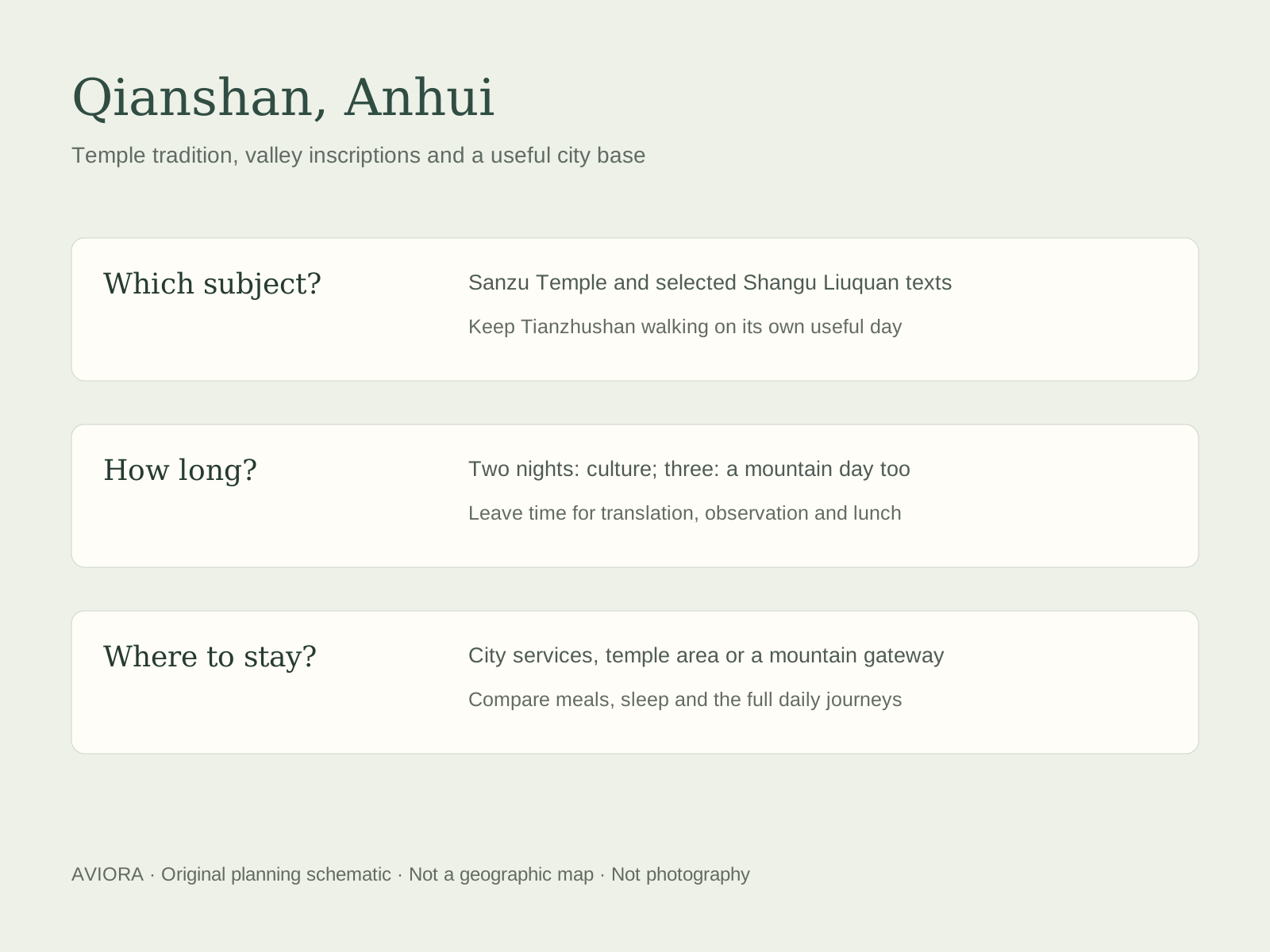
Choose a lower mountain-gateway property when the main purpose is an early, well-paced scenic day. Compare Qianshan city for meals, services and a deliberate urban or transit chapter, counting the complete daily road journey. Consider a higher or mountain-interior property only after confirming the room, opening, luggage approach and walking from the selected cableway or trail. Check heating or cooling, dampness, bathroom, mattress, noise, dinner and breakfast. A hotel marketed as Tianzhushan may serve a different approach, and its photograph does not show the steps from the final vehicle point.
Compare hotel areas
Lower mountain gateway / the main walking day
Pin the property against the selected entrance and visitor-transport point. Check dinner, heating or cooling, dampness, bathroom, noise and the last luggage approach. An early start is useful only when the room and morning transfer support it; proximity alone does not make the stay comfortable.
Qianshan city / practical services and a separate city purpose
Compare meals, room facilities and the actual gateway sequence with the full daily road to the mountain. A city night may help an arrival or departure, or a cultural visit. It should not be sold as though the hotel sits at the upper scenic route.
A confirmed higher mountain property / a route-led exception
Choose this only when its position improves the itinerary. Confirm current operation, room facilities, dinner, luggage and the full walk from the agreed cableway or path. Keep a lower-gateway comparison and assess the approach in poor weather; a higher bed is not a guarantee of sunrise or an easier day.
Which Tianzhushan route should I choose after the cableway?
For a first visit, compare a selective granite-viewpoint route around the Tianchi Peak (天池峰) viewing area with any longer circuit being proposed. Tianzhu Peak (天柱峰) is a subject to admire from an agreed public viewpoint, not a promise that guests can climb the named peak. Shenmi Valley (神秘谷) adds boulder passages and its own footing demands; Liandan Lake (炼丹湖) offers another landscape subject but is not an automatic short addition. Ask for the named start, finish, cableway sectors, steps, descent and turnaround before choosing. Fewer viewpoints with time to look can make the stronger day.
Cableway-assisted and easy are different descriptions
The cableway reduces part of the ascent; it does not remove repeated stairs between viewpoints or the descent to the return point. Ask for the remaining route in plain language, including the longest continuous climb and the shorter option. Choose another regional focus if even that shorter plan exceeds the group’s comfort.
A peak name can describe the view without granting a summit ascent
Tianzhu Peak is a striking landmark, but the intended visitor experience should identify the actual permitted viewpoint. Do not sell climbing the named pinnacle by implication. A well-explained panorama can be the purpose of the route without a summit objective.
Shenmi Valley and Liandan Lake change the walking plan
Boulder passages, a lake outing and the main viewpoint circuit are different components with their own junctions, levels and return needs. Ask what adding each does to the route, not simply whether it is on a scenic-area list. A lake is not automatically lower-effort, and a valley name does not promise level walking.
Tianzhushan and Huangshan deserve a real comparison
Both can offer granite mountain scenery and substantial steps, but they have different routes, accommodation and gateway sequences. Choose Tianzhushan when its specific landscape and position suit the journey, not because it is assumed to be an uncrowded or effortless substitute. Combining both needs distinct interests and enough recovery time.
A good mountain day should work without sunrise or a sea of cloud
Cloud, light and visibility vary. Choose a route that remains interesting through rock forms, woodland and interpretation when the distant view is limited. A dawn outing may mean darkness, cold and extra steps; confirm it separately rather than let a photograph determine an unsuitable hotel or walking plan.
Culture and historical context
A mountain can be read without collecting every named rock
Tianzhushan’s granite forms invite close looking: a change of position alters the outline, while joints, rounded surfaces and vegetation reveal different scales of the landscape. Local rock names can make that observation enjoyable. Distinguish imaginative associations from geological explanation, and keep scientific claims within what the guide can support. Time to look and ask questions often reveals more than a rapid sequence of nicknames on the way to another staircase.
Liandan Lake’s name carries an alchemical association, which can open a conversation about how people have imagined and used mountain landscapes. Present that meaning as cultural interpretation, not proof of a specific event at every visible feature. The same care applies to a lower-area temple or Qianshan cultural extension: identify the actual place, open areas and evidence rather than promise an unchanged ancient site. A strong route connects landscape and meaning while respecting the guest’s physical limits.
Food and social life
A proper meal and a reliable dinner make the walking plan better
Choose lunch around the actual route and the group’s energy, allowing a seated break when suitable facilities permit. Confirm where food and water are available rather than assume every viewpoint has a restaurant. A straightforward meal with vegetables, a staple and a suitable protein can support the afternoon better than an elaborate tasting squeezed between cableway deadlines. Ask about portions, fish bones and preparation instead of making a mountain-themed specialty compulsory.
At the gateway property, agree dinner timing and dietary needs before the return from a longer walk. Check stocks, sauces, soy, wheat, pork, seafood and shared equipment with the actual kitchen. Rural vegetables, mushrooms or tea should not be described as wild or from a particular farm without evidence. A comfortable evening, hydration and dependable breakfast are practical parts of a premium mountain stay; they do not require invented household meals or a private cooking session.
Tianzhu Mountain travel FAQ
Questions about visiting Tianzhu Mountain
Is Tianzhu Mountain worth visiting?+
Choose Tianzhushan for its granite forms, wooded approaches and a route that fits your walking and wider Anhui journey. Two nearby gateway nights can give a useful full day. Compare its specific appeal and complete transfer with the time you would otherwise spend at Huangshan, a village or another regional stop.
Where is Tianzhushan, and is it the same as Qianshan?+
Tianzhushan is the Tianzhu Mountain destination near Qianshan city, within the wider Anqing area of Anhui. The mountain visitor approaches and Qianshan’s urban hotels are different addresses. Use the full Chinese entrance and property name when planning transfers; other places in China also use Tianzhu-related names.
How many nights should I spend at Tianzhushan?+
Two gateway nights give one full mountain day when arrival and departure fit. Three nights allow a distinct second route or gentler cultural day and more rest. A higher mountain overnight is optional and should be chosen for its effect on the route, not an assumed requirement for every visit.
Does the Tianzhushan cableway remove most of the walking?+
It reduces a section of ascent, but the selected upper route can still involve repeated stairs, uneven ground and a substantial descent. Ask for the named path, remaining climbs, return and shorter alternative. Cableway access alone does not establish an easy or step-free day.
Can I climb Tianzhu Peak itself?+
Do not infer a pinnacle ascent from a sightseeing description. Ask which permitted public viewpoint the route uses to see Tianzhu Peak and what walking it requires. The landmark can be the subject of a rewarding mountain visit without a promise to climb its named summit.
Should I add Shenmi Valley or Liandan Lake?+
Only when the extra route matches your interests, time and walking. Shenmi Valley adds boulder passages and footing considerations; Liandan Lake is a different landscape component with its own approach and return. Ask how each changes steps and descent rather than include both because they appear on the same attraction list.
Is Tianzhushan easier or quieter than Huangshan?+
Do not assume either. Both can involve substantial stairs, and demand varies by date and route. Compare the actual walks, hotel approaches, gateways and subjects you want to see. Tianzhushan should be chosen on its own merits, not as a guaranteed crowd-free or low-effort replacement.
Should I stay in Qianshan city or near the mountain?+
Choose a lower mountain gateway for the principal walking day when its room and meals suit. Qianshan city can provide services or a useful city/transit purpose, but adds the full road journey. Compare any higher room separately by its approach, facilities and effect on the route.
Can I visit Tianzhushan as a day trip from Anqing?+
A selective day may work when the complete road return, visitor transport, cableway arrangements and chosen walking fit. Compare that excursion with a night nearer the appropriate approach, especially for a longer route. Do not add the mountain to an already full city-culture and opera day.
What happens if the cableway or upper paths are affected by weather?+
Use the responsible operator’s current instructions and reassess the actual route. A cableway change does not mean the group should replace it with a much longer climb. Agree a suitable shorter plan or a different regional focus, and clarify transport, admission and cancellation terms before booking.
Share your dates, interests, arrival and departure cities, and any plans already booked. We’ll recommend an itinerary at a pace that suits you, with the arrangements and price explained before you book.