A Yangtze city best understood through its streets, temple and stage · East China
Anqing Travel Guide: Yangtze Culture, Huangmei Opera & Where to Stay
Explore Anqing through Yingjiang Temple, the Yangtze setting, old commercial lanes and a carefully chosen Huangmei opera interest, with clear city and Tianzhushan base decisions.
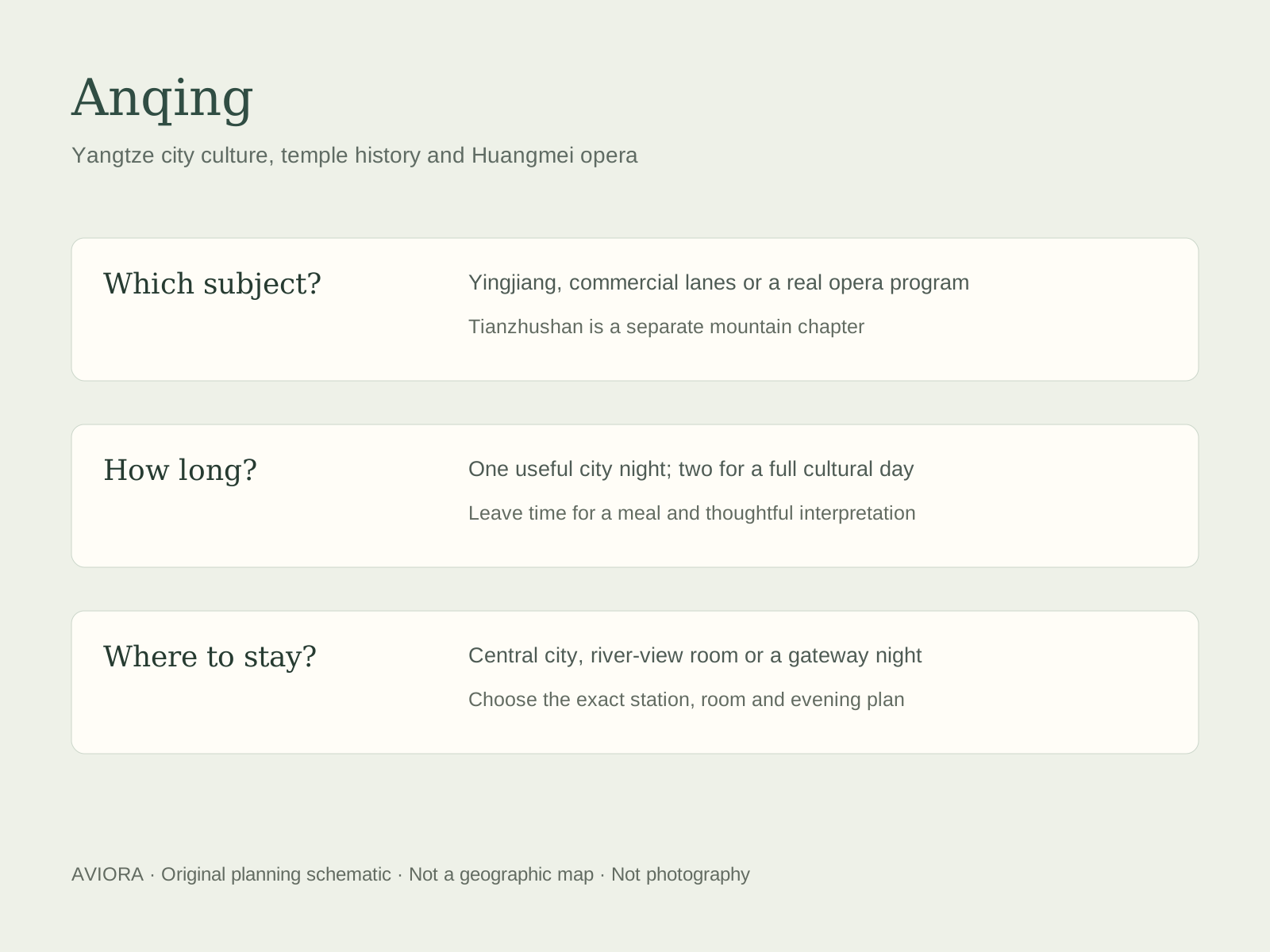
1 useful city night or 2 for a full cultural dayYangtze city history, Buddhist architecture and Huangmei opera interests
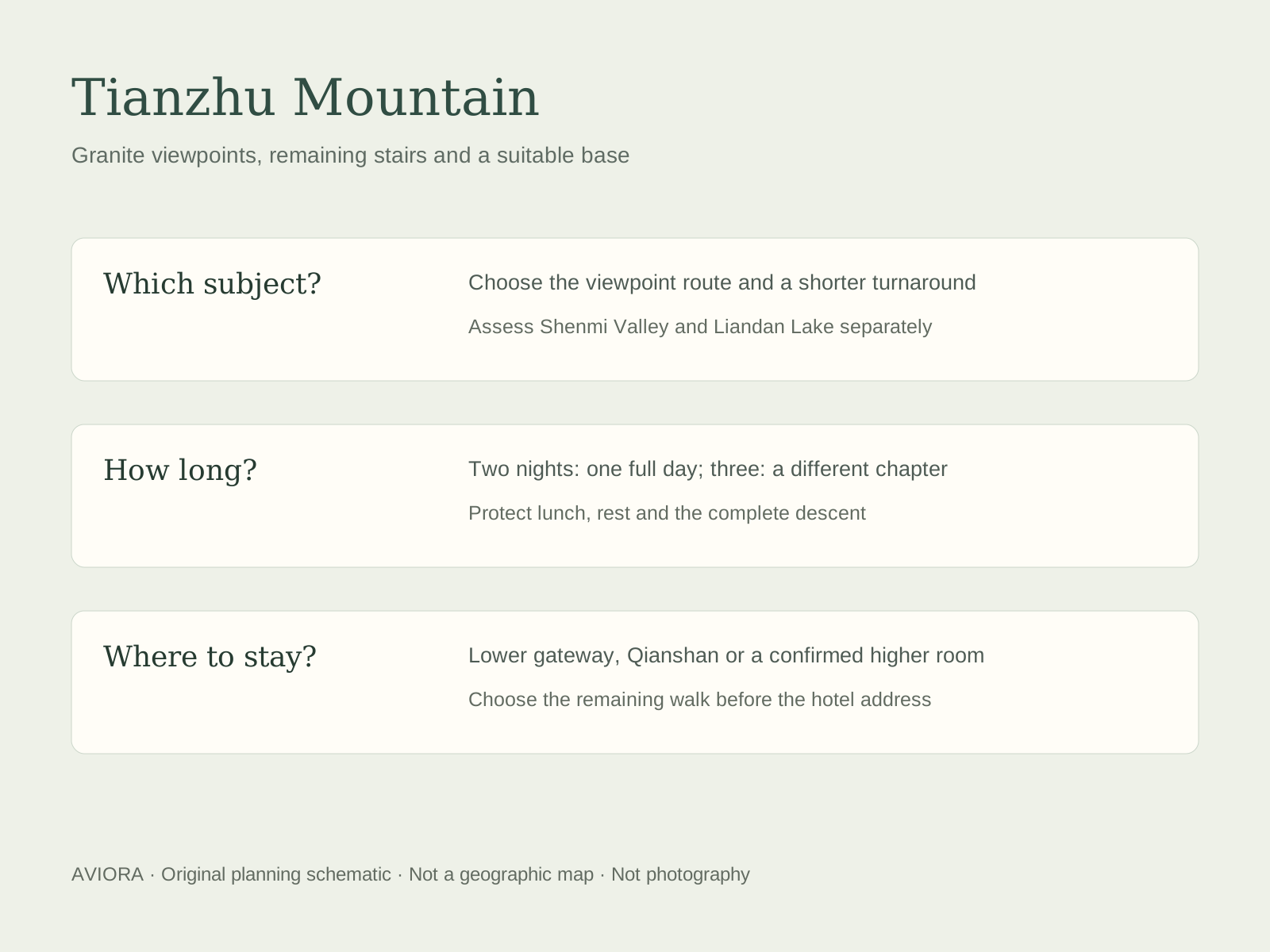
Anqing (安庆), historically written Anking in English, is a city on the north side of the Yangtze in southwestern Anhui. A focused introduction combines the river-city setting around Yingjiang Temple (迎江寺), a selected walk through the old commercial area and regional food. Huangmei opera (黄梅戏) can give the visit a distinctive cultural purpose when a suitable performance or venue visit is genuinely available. Choose one useful night or two for a full city day. Tianzhushan (天柱山), or Tianzhu Mountain, near Qianshan (潜山), is a separate mountain chapter with different hotel and walking decisions; it is not beside the central Anqing riverfront.
How many days do you need in Anqing?
One useful city night can add a riverfront or old-street introduction and dinner when the arrival and onward journey fit. Two nights provide one full day for temple culture, commercial history and a collection or opera interest that suits the dates. Three or more regional nights can support a separate Tianzhushan stay, but choose its room, entrance and walking plan independently. Anqing does not need to be inserted into every Anhui itinerary: compare its particular cultural appeal with the time available for the rest of the journey.
Compare stays by number of nights
Day visit / one clear city interest
Choose the temple-and-river context or a focused cultural route from a suitable starting point. Keep lunch and the complete onward or return journey realistic. A station connection alone is not an Anqing visit, and an undated opera listing should not determine the whole day.
1–2 city nights / an evening or a full cultural day
One night can support a useful walk and meal when transport fits. Two give one full day and a better chance to accommodate a suitable cultural calendar. A performance remains a separately confirmed component, not a guarantee attached to the extra night.
A longer regional route / a distinct mountain chapter
For Tianzhushan, choose useful nights around the actual mountain room and permitted paths. Tongcheng literary and urban interests are another separate option. Each base should add a different subject; the wider Anqing name does not make every regional outing convenient from one city hotel.
Plan a tailored Anqing visit
Tell us your dates, starting point, available nights and interest in river history, Buddhist architecture, Huangmei opera or mountain scenery. We can compare a selective city stop with two nights and a fuller cultural day, checking whether a suitable opera experience fits. If Tianzhushan is the priority, choose the mountain base and walking before the gateway. Continue to Chizhou, Jiuhua Mountain or Hefei when the next chapter adds something distinct. No matching published Anqing package is currently listed here; request a tailored route with the selected visits, rooms and included services.
A tailored city visit should name the public walking route, guide language, temple or museum admissions, pickup and return, lunch and any performance ticket. Clarify whether Zhenfeng Pagoda (振风塔) entry or ascent is available and included; a temple visit does not imply it. For opera, specify the venue, excerpt or full show, duration, seat basis and language support. Tianzhushan requires a separate entrance, paths, transport and accommodation plan. A private guide does not establish a private performance, rehearsal visit, river cruise or permission to enter a working religious area.
This is a destination planning guide, not a fixed departure or a confirmed package. We check the route, accommodation, transport and guide availability for your dates before setting out the services and price in writing.
Give the principal temple or commercial-lane route a useful daylight window and a seated meal. A pagoda ascent, museum interior and opera visit each depend on their own current arrangements. If a performance fits, protect dinner and the full return rather than add another late outing first. In summer, use shorter exposed riverfront sections and indoor or shaded breaks. Departure plans should allow luggage collection and the complete journey to the station printed on the ticket.
01
Understand Yingjiang Temple and Zhenfeng Pagoda through a selected river-city visit
02
Read the old commercial lanes with a guide who explains change as well as heritage
03
Explore Huangmei opera through a suitable, clearly described cultural experience
Suggested Anqing itinerary
What can you fit into your Anqing itinerary?
Arrival / useful evening
Settle into the city and its food
Complete the correct station-to-room transfer and confirm dinner. If time and energy allow, take a short public commercial-lane or river-context walk. Use the real journey to decide whether an arrival visit fits, keeping the main cultural chapter for an unhurried window.
Full city day / morning
Understand the temple, pagoda and river setting
Follow the agreed Yingjiang route with respectful interpretation and walking matched to the group. Treat any pagoda ascent as a separately confirmed choice. Leave time to observe and sit rather than add an upper level simply because it appears in a skyline photograph.
Lunch and afternoon / optional evening
Change the subject with lanes, a collection or opera
Take a regional meal, then choose the commercial area or an open collection that adds a different perspective. If a suitable opera experience is confirmed, introduce its story and protect the meal and venue transfer. Otherwise enjoy a paced cultural day without inventing an evening substitute.
Regional continuation / departure
Choose a mountain chapter or a comfortable onward journey
Continue to a separately planned Tianzhushan or another regional base only when its useful nights and walking fit. Otherwise collect luggage and preserve the complete gateway connection. The final proposal should identify rooms, visits, performance terms where relevant and included transfers.
Spring and autumn can suit city walks, though rain and busy holidays remain possible. Summer brings heat and humidity, so choose shorter exposed riverfront sections and restful meal breaks. Winter can be cold and damp, making effective room heating important. Performances, museum interiors and pagoda access follow their own calendars; a season does not guarantee an evening show. Choose dates for the wider journey, then confirm the selected city and mountain components individually.
What affects the cost of a Anqing trip?
Compare the same city admissions, guide time, complete transfers and meals. For opera, establish the show, date, seat category and what language support actually means; a brief synopsis differs from a subtitled performance or interpreter. Tower access and any special venue visit should be explicit. A mountain extension has its own transport and room requirements. Premium value comes from useful explanation, comfortable timing and a suitable room, not unverified backstage access or a longer list of entrances.
Getting there and getting around
How to get to Anqing and plan your stay
Arriving and connecting
Compare dated services and the final hotel transfer for Anqing and Anqing West, and assess Qianshan-area gateways separately for a mountain-led journey. Include luggage, boarding and local travel at both ends. Use the Chinese room address and the station printed on the ticket rather than the broader city name alone. For late arrival, settle dinner and sleep before an optional walk. A same-day flight connection requires its own airport, terminal and complete buffer.
Getting around
Plan a vehicle or suitable local connection between the chosen temple, commercial area, collection and evening venue. Walk manageable public sections, with the pickup, toilets and seated breaks agreed. A river view does not establish a continuous promenade, and a private car may stop outside the final historic lane. Mountain transport and any regional excursion should be specified separately. For opera, allow the full hotel-to-venue return and a meal that fits the actual start time.
Walking and access
A selected city route can be shortened, but temple thresholds, old-lane surfaces, pagoda stairs and museum floors have different demands. Ask about continuous walking, seats, toilets and the last vehicle point. A riverside road is not automatically a continuous pedestrian promenade. A pagoda climb is optional and should not be needed to make the cultural visit worthwhile. Tianzhushan is a different physical commitment: assess its actual paths, cableway sequence and remaining steps separately.
What first-time visitors often underestimate
Anqing works best when the visit has a clear cultural purpose: the Yangtze city, a temple-and-pagoda introduction or Huangmei storytelling. Choose the main interest and build a paced day around it. A performance, tower ascent or distant mountain route is an optional decision, not something required to make the city worthwhile.
Where to stay in Anqing
Compare a central room serving the old commercial area and Yingjiang interests, a specific river-view property for its booked outlook and sleep, or a station-area room for a deliberate transit night. Anqing station and Anqing West (安庆西) are different gateways, and a mountain-led journey may need another comparison around Qianshan. Choose the dated service and final address together. Ask about street or traffic sound, bathroom, heating or cooling, breakfast, dinner and the final vehicle approach. A view over the Yangtze does not establish direct access to a public river walk or a cruise departure.
Compare hotel areas
Central old-city interests / culture and dinner
Map the room against the selected lanes, temple route and evening meal. Check noise, bathroom, climate control and where the vehicle can meet you. A heritage-district label does not prove that every room is quiet or every entrance can be reached with luggage by car.
A specific river-view property / outlook and time at the room
Ask what the booked room overlooks and how any public walk is reached. Compare traffic sound, window insulation, privacy and meals. River views should support the stay itself; they do not imply a boat service, uninterrupted promenade or guaranteed sunset orientation.
Station area / a deliberate gateway choice
Use the exact station on the ticket and confirm the final road or pedestrian approach. Compare sleep, dinner and the next pickup rather than assume station proximity serves the old city. Anqing and Anqing West are different gateway decisions.
Qianshan or a Tianzhushan-area property / a separate mountain plan
Choose the room for the named entrance, route, meals and useful nights. Assess the complete connection from Anqing city or another gateway. A mountain property is not an alternative central-city neighborhood, so choose Qianshan accommodation separately if the mountain is the main reason for your visit.
What should I choose in Anqing: river culture, Huangmei opera or Tianzhushan?
Choose Yingjiang Temple and the surrounding river-city context for a focused cultural introduction. Add a selected Daopashi (倒扒狮) commercial-lane walk or an open museum interest when it changes the subject. Choose Huangmei opera for its music and storytelling, with the title, format, language support and dated availability clear. Choose Tianzhushan as a separate landscape stay matched to the group’s stair tolerance. A shorter visit is stronger with one principal city interest than an attempt to combine every urban site, a performance and a mountain route in one day.
River history is not a promise of a cruise
The Yangtze setting helps explain Anqing’s commercial and urban story. A selected public shore visit can be worthwhile without entering the water. A cruise, ferry or other boat component needs a named operator, dated service and clear embarkation arrangements; do not infer one from a river-view hotel or a waterfront map.
The pagoda and the temple are related, but access is a separate question
Zhenfeng Pagoda is an important part of the city’s visual identity. The visit should distinguish the temple grounds, the tower’s architecture and any current interior or ascent arrangement. A cultural introduction can be complete at ground level when steps or access do not suit the group.
Make an opera experience understandable before making it longer
A short translated synopsis, the main characters and an explanation of the scene can help an English-speaking guest appreciate Huangmei singing. Ask whether the offering is a full performance, excerpt, exhibition or another format. Do not promise subtitles, rehearsals, backstage meetings or a private show without evidence.
Historic commercial lanes have changed with the city
In Daopashi and the old commercial area, distinguish surviving material, repair, reconstruction and newer visitor businesses. Connect buildings and street scale to the city’s trading life rather than call the whole district unchanged. Specific interiors have their own opening and access arrangements.
Tianzhushan, Qianshan and Tongcheng answer different travel questions
Tianzhushan is a mountain landscape; Qianshan is the surrounding city context; Tongcheng has another urban and literary interest. A regional guide can introduce the choices without completing each independent destination. Compare full transfers, useful nights and walking before adding them to a city stay.
Culture and historical context
Let the river city and the stage tell different parts of the story
At Yingjiang, the relationship between temple, pagoda and river gives an introduction a visible structure. Explain the architecture and present religious use, then connect the setting with Anqing’s urban and commercial life. In the old commercial lanes, the scale of a street or shopfront can make that history more tangible. Distinguish older material, restoration and newer uses; a city that has changed can still reward careful interpretation.
Huangmei opera adds a different way of understanding the region. A short account of the characters and scene helps an English-speaking visitor hear storytelling in the singing rather than experience an unexplained show. Familiar works include The Heavenly Match (天仙配), but the chosen program and availability must be real. Present the art form’s regional development with care, avoiding an exclusive-origin claim or the assumption that a rehearsal, performer meeting or backstage visit is part of every ticket.
Food and social life
Use a local meal to give the cultural day a comfortable rhythm
A seated meal between visits gives the city day a useful pause. When available, the small dumplings served in broth associated with Jiangmao shuijiao can introduce a local food tradition; ask about the filling and broth rather than confuse them with Shanghai-style soup-filled dumplings. Balance a tasting with vegetables, a suitable protein and enough food for the afternoon. A famous dish name does not require every guest to order it.
For a performance evening, choose a meal whose location and timing leave a relaxed venue transfer. Discuss pork, fish, shellfish, soy, wheat, sauces and shared equipment as relevant to dietary needs. A Yangtze setting does not prove wild river fish or a particular supply chain, and a culturally themed restaurant does not establish a private cooking experience. The meal should support comfort and curiosity without an obligatory purchase or an unfamiliar specialty imposed on the group.
Anqing travel FAQ
Questions about visiting Anqing
Is Anqing worth visiting on an Anhui trip?+
Choose Anqing for a focused Yangtze city and cultural stop, especially if Yingjiang Temple, historic commercial lanes or Huangmei opera interest you. One useful night or a full city day can fit a wider route. Compare that specific appeal with the time available for mountains, villages and the rest of the journey.
How many nights do I need in Anqing?+
One useful night can add a walk and dinner when transport fits; two provide one full cultural day. A Tianzhushan extension needs its own useful nights and mountain-base decision. Do not count arrival and departure as full sightseeing days until the actual connections are chosen.
Can I see Huangmei opera in Anqing?+
A suitable experience may be possible when the current venue calendar and format fit. Confirm whether it is a full show, excerpt, exhibition or another cultural visit, along with seats, duration and language support. Do not build the holiday around an unconfirmed performance or imply a daily schedule.
Will Huangmei opera have English subtitles?+
Do not assume so. Ask about the particular performance and venue. A translated synopsis and introduction to the main characters can help, but that is different from subtitles or live interpretation. Choose the format and length according to the guest’s interest and comfort.
Can I climb Zhenfeng Pagoda?+
Confirm current entry, ascent arrangements and suitability before including a climb. Tower access is a separate component from a temple introduction, and stairs may not suit everyone. Ground-level architectural and river-city interpretation can provide a complete cultural visit.
Is there a Yangtze cruise included with an Anqing visit?+
No cruise should be inferred from a city or riverfront visit. A boat component needs its own named service, dated operation, embarkation point and terms. A river-view room or public shore walk can be worthwhile without a cruise.
Should I use Anqing station or Anqing West?+
Choose the dated service together with the final hotel and first visit. They are different gateways, so compare complete transfers, luggage and boarding rather than train time alone. A Qianshan or Tianzhushan plan may call for another gateway comparison.
Can I visit Tianzhushan as a day trip from Anqing?+
A selective visit may work when the full return road journey, operating arrangements and chosen mountain path fit. Compare that excursion with a stay nearer the appropriate entrance, particularly for a longer route. The mountain should not be added to an already full city-and-opera day.
Is Anqing suitable for travelers who prefer gentle walking?+
A selected temple, lane and collection route can suit a gentler pace when steps, seats, toilets and the last vehicle point are clear. A pagoda ascent and Tianzhushan are separate physical decisions. A private car helps between places without making every interior or mountain path accessible.
Is Anqing the same place as Huangmei County?+
No. Huangmei County is in Hubei, while Anqing is in Anhui. Huangmei opera has a regional history and a strong association with Anqing, but the art form’s name should not be used as a transport address. Confirm the specific city, venue and Chinese name when planning the visit.
Share your dates, interests, arrival and departure cities, and any plans already booked. We’ll recommend an itinerary at a pace that suits you, with the arrangements and price explained before you book.