Answer Brief
The Answer, Briefly
Departing from the United States? Use our USA-to-China travel preparation guide to check entry rules, flight gateways, payments and arrival recovery time.
Plan a first trip to China in this order: confirm that the passport and complete flight pattern support entry; count the nights actually available; choose no more cities than those nights can carry; decide the arrival and departure gateways; protect the major sightseeing and transfer days; then confirm hotels, passport-linked reservations, transport, payments, connectivity and local support. Buying flights first and trying to make the route fit afterwards is one of the easiest ways to lose time or pay twice.
Key Takeaways
- Confirm entry against the entire international route before paying for fixed services.
- Count usable days and hotel nights; give every additional city a reason.
- Reserve major heritage days before adding flexible neighborhood activities.
- Write down booking responsibilities, room details and support coverage.
For a first journey built around Beijing, Xi'an and Shanghai, 12 days is a practical center when the Forbidden City, Great Wall and Terracotta Army should have separate days and the two intercity journeys should end at the next hotel rather than another attraction. Ten days can work with firmer choices. Fourteen days can add depth or one carefully justified extension. The right answer still depends on the actual flights, dates, walking comfort, room needs and interests.
| Decision stage | What must be known | What can go wrong if decided too early |
|---|---|---|
| Entry and flights | Passport, gateways, onward route and dates | A route may not match the entry basis or may require unnecessary backtracking |
| Trip length | Nights on the ground and usable sightseeing time | Arrival, departure and transfers get counted as full touring days |
| City sequence | Why each city belongs and how it connects | Too many hotel changes consume the days added for enjoyment |
| Hotels and reservations | Exact location, room setup, passport details and release terms | The booking looks confirmed while the lived journey remains awkward |
| Daily operation | Walking, standing, vehicle access, guide timing and alternatives | A good-looking itinerary becomes tiring or brittle when conditions change |
This guide is not another list of apps and attractions. It shows the sequence AVIORA's China-based journey design and operations teams use to test whether a first-China itinerary can work in real life. We call that process the AVIORA Route Reality Check.
Why The Order Of Decisions Matters
China trip planning is often presented as a collection of independent tasks: choose cities, buy flights, book hotels, download a payment app and reserve a train. They are not independent. The international gateway changes the best city order. The train time changes the useful hotel location.The hotel changes the morning drive. The attraction reservation controls which day can move. One unnecessary city can add a checkout, a luggage sequence, a station or airport, a local handover and another arrival.
Our team therefore works from the whole journey inward. We begin with the travelers, travel window and gateway logic. We then test the city sequence and the hard-to-move days. Only after that do individual hotels, transport sectors and experiences earn their place.
That distinction matters even more on a private journey. Private service can reduce avoidable friction, respond to the party and keep the logistics quiet. It cannot create extra hours, remove every heritage-site step, control weather or turn an unsuitable flight into a good arrival day.
The AVIORA Route Reality Check
Before preparing a date-specific proposal, we test the route through six connected views. They make the work behind a smooth trip visible without pretending that a planning framework replaces live confirmation.
| AVIORA planning view | What our team examines | What the traveler receives |
|---|---|---|
| Route feasibility | Gateways, nights, city order and hotel changes | A route that fits the actual travel window |
| Door-to-door transfer chain | Checkout, vehicle, station or airport, luggage, arrival and next hotel | Transport chosen for the whole day, not only the ticket time |
| Journey Rhythm assessment | Walking, levels, standing, transit, exposure, recovery and flexibility | Harder days separated and lower-load options kept useful |
| Reservation dependency calendar | Passport-linked tickets, release windows and fixed operating days | Important reservations protected before flexible experiences |
| Hotel fit review | Location, room category, bathroom, lift, breakfast, noise and vehicle approach | A hotel selected for this route and these travelers |
| Contingency plan | Weather, delay, closure, fatigue and substitute value | A second good decision when the first plan no longer works |
We publish the method because travelers deserve to know how a proposal was judged. The individual conclusion still requires the actual names, dates, flights, rooms and availability. A generic article cannot responsibly decide whether a particular arrival supports dinner, whether a specific room has the required shower, or whether a ticket is secured until those facts are checked.
Decision 1: Confirm Entry Using The Complete Journey
Do not begin with a social-media summary that says a nationality is "visa free." Entry depends on the passport, purpose, duration, arrival point, departure point and complete routing. A transit policy and an ordinary visa exemption are not interchangeable. Travelers using temporary documents, changing passports, combining mainland China with another jurisdiction or making unusual connections need the exact itinerary reviewed against current official guidance.
AVIORA asks for the nationality shown on each travel document, passport expiry, intended gateways and onward travel before treating the route as settled. We explain the operational reading and point travelers to the relevant authority; the competent government authority makes the entry decision. Our route-first visa-free transit guide explains why the journey pattern matters as much as the number of hours.
What must be confirmed: the applicable entry basis, permitted stay, documents and full route close to travel. Do not purchase a non-refundable itinerary because an old article or a third party reduced the rule to one sentence.
Decision 2: Count Nights, Not The Number Printed On The Holiday Request
A 12-day trip is normally 11 nights, but even that does not describe the usable time. International arrival has immigration, baggage, the meeting point, the drive and check-in. Departure belongs first to the flight. Beijing to Xi'an and Xi'an to Shanghai are hotel-to-hotel sequences, not only the hours shown on the train or aircraft.
Under an arrival-Beijing, departure-Shanghai model with two intercity transfers, AVIORA estimates that an eight-day route often has about four complete sightseeing days, ten days about six, and twelve days about eight. Those are planning estimates, not universal promises. The actual flights and transport schedule can preserve or remove useful partial periods.
| Total trip | Approximate complete sightseeing days | Best use |
|---|---|---|
| 8 days | About 4 | A tightly edited introduction with little recovery or choice |
| 10 days | About 6 | A workable classic route with one city receiving less depth |
| 12 days | About 8 | Separate major heritage days, protected transitions and two meaningful choice periods |
| 14 days | About 9-10 | More depth in three cities or one carefully tested extension |
Read the full 8, 10 or 12-day Beijing, Xi'an and Shanghai comparison before deciding what the headline duration can honestly contain.
Decision 3: Make Every City Justify Its Hotel Change
First-time travelers frequently arrive with six famous names for a 10-to-12-day journey. The problem is not ambition. The problem is that every extra base carries hidden work: packing, checkout, luggage handling, transfer, security, waiting, the next meeting point, check-in and learning a new neighborhood.
For many first journeys, Beijing, Xi'an and Shanghai create a complete narrative with only two hotel changes. Beijing establishes imperial and national context. Xi'an brings the Qin dynasty, the Terracotta Army and Silk Road history. Shanghai provides a flexible final chapter through architecture, neighborhoods, food and contemporary life.
Add Chengdu, Guilin, Zhangjiajie or another city when it answers a strong personal reason and the trip has the nights to support it. Do not add one merely because a fast train or flight exists.
A Route We Would Not Recommend In Twelve Days
Consider Beijing, Xi'an, Chengdu, Chongqing, Zhangjiajie and Shanghai in twelve days. It contains six impressive destinations. It also creates five bases, repeated luggage handling, several long connections and little capacity to recover from a delay. The Great Wall, Terracotta Army, pandas and Zhangjiajie weather all compete for fixed time. A driver and guide can manage individual sectors well; no operator can make the geography disappear.
AVIORA would first ask which two experiences define the trip. If pandas are essential, we might add Chengdu and extend the journey or remove another city. If the priority is a calm first-China arc, we would keep Beijing, Xi'an and Shanghai and use the available time to improve the journey already chosen.
Decision 4: Design The Route Before Buying International Flights
An open-jaw pattern, arriving in Beijing and departing from Shanghai or the reverse, often removes a domestic return sector. It is not automatically the best answer. Fare, flight times, entry basis, home airport and the direction of the daily route still matter.
Our team compares the complete patterns before recommending a gateway. A low fare that arrives after midnight may require an additional hotel night or a protected following morning. A late departure from Shanghai may create useful time, but only after airport, terminal, traffic and check-in margin are known. Separate tickets can introduce baggage and disruption risks that a map does not show.
Before paying, send the proposed flight numbers or at least the arrival and departure airports and times. AVIORA can test whether the route still works. This is not an airfare guarantee or immigration approval; it is a practical check that the flights support the journey being designed.
Decision 5: Give The Three Hardest Visits Their Own Space
The Forbidden City, Great Wall and Terracotta Army should not be treated as labels that fit wherever a blank half-day appears.
The Forbidden City combines timed entry, security, large courtyards, limited vehicle access and a substantial internal route. Mutianyu adds the road journey, ascent and descent choice, uneven steps, exposure and a turnaround decision. The Terracotta Army adds the drive outside central Xi'an, security, indoor movement, standing and busy viewpoints.
In AVIORA's 12-day framework, each receives the alert part of its own day. The more demanding days are separated by gentler starts, choice periods or transfers that do not also promise a major attraction. Our site-by-site China tour walking guide shows the physical load that a destination list hides.
Private planning can choose a shorter palace route, the most suitable Great Wall lift pattern, a sensible turnaround point and a focused museum sequence. It cannot make ancient architecture step-free or remove official security.
Decision 6: Map Reservation Dependencies Before Adding Flexible Experiences
Not every day has the same booking pressure. Some attraction and transport reservations are tied to passport details, operating dates or timed admission. A flexible food walk should not control the day needed for a scarce heritage reservation. Nor should a hotel be made non-refundable before the fixed elements around it have been tested.
AVIORA builds a reservation dependency calendar: what must be fixed first, what can follow, what remains subject to availability and what is deliberately left open. The Forbidden City ticket guide for foreign visitors and Terracotta Army booking guide explain the current visitor-facing requirements in detail.
What a proposal should state: which ticket or service is included, whether it is confirmed, what information is required, what happens if it is unavailable and whether the substitute needs the traveler's agreement. "Tickets included" is not enough when the ticket controls the day.
Decision 7: Compare Transport Hotel To Hotel
Beijing to Xi'an is often well suited to high-speed rail. Xi'an to Shanghai deserves a date-specific comparison between rail and air. The correct choice is not the shortest published segment. It is the better complete day.
For rail, our operations team checks hotel departure time, the correct station, passport and ticket details, luggage, security, waiting, boarding, seating, arrival exit, meeting point and next transfer. For air, the chain adds airport distance, earlier processing, baggage rules, disruption exposure and the arrival airport's relationship to the next hotel.
First class may improve the hours aboard. A private vehicle may improve both ends. Neither removes station or airport procedures. Read the passport-to-platform China high-speed train guide before treating the ticket time as the transfer time.
_AVIORA plans the hotel-to-hotel chain. The train is only its middle._
Decision 8: Choose A Hotel For The Route And The Room
A recognized luxury brand is not a complete hotel decision. In a multi-city trip, location affects repeated driving, the usefulness of a free evening and how far the traveler moves before sightseeing begins. The exact room category affects bed type, floor area and sometimes bathroom layout. The entrance, lift route, breakfast distance, noise and vehicle approach can matter more than an impressive lobby.
AVIORA reviews location, room size, bedding, bathroom configuration, quietness, lift access, breakfast and vehicle access against the stated needs. Availability and room details still require date-specific written confirmation. We do not promise that every room within a brand is identical.
The best hotel is therefore not always the most famous one. It is the property, location and confirmed room that support the route the travelers are actually taking.
Decision 9: Describe The Travelers Without Reducing Them To Age
"Senior friendly" is too vague to design a day. One traveler in their seventies may enjoy a longer Great Wall route. Another in their fifties may need regular seating. A couple may be physically capable of a packed schedule and simply prefer time for a conversation or meal to run long.
AVIORA asks about comfortable continuous walking time, stairs, standing, balance, heat, recovery, luggage and room setup. We use the AVIORA Journey Rhythm to make movement, levels, standing, transit, exposure, recovery and flexibility visible before booking. It is a planning framework, not a medical assessment.
This is how an easier pace protects possibility rather than reducing the trip. The complete 12-day China itinerary at an easier pace shows where choice and recovery sit without turning age into the story.
Decision 10: Prepare A Backup For Payments And Connectivity
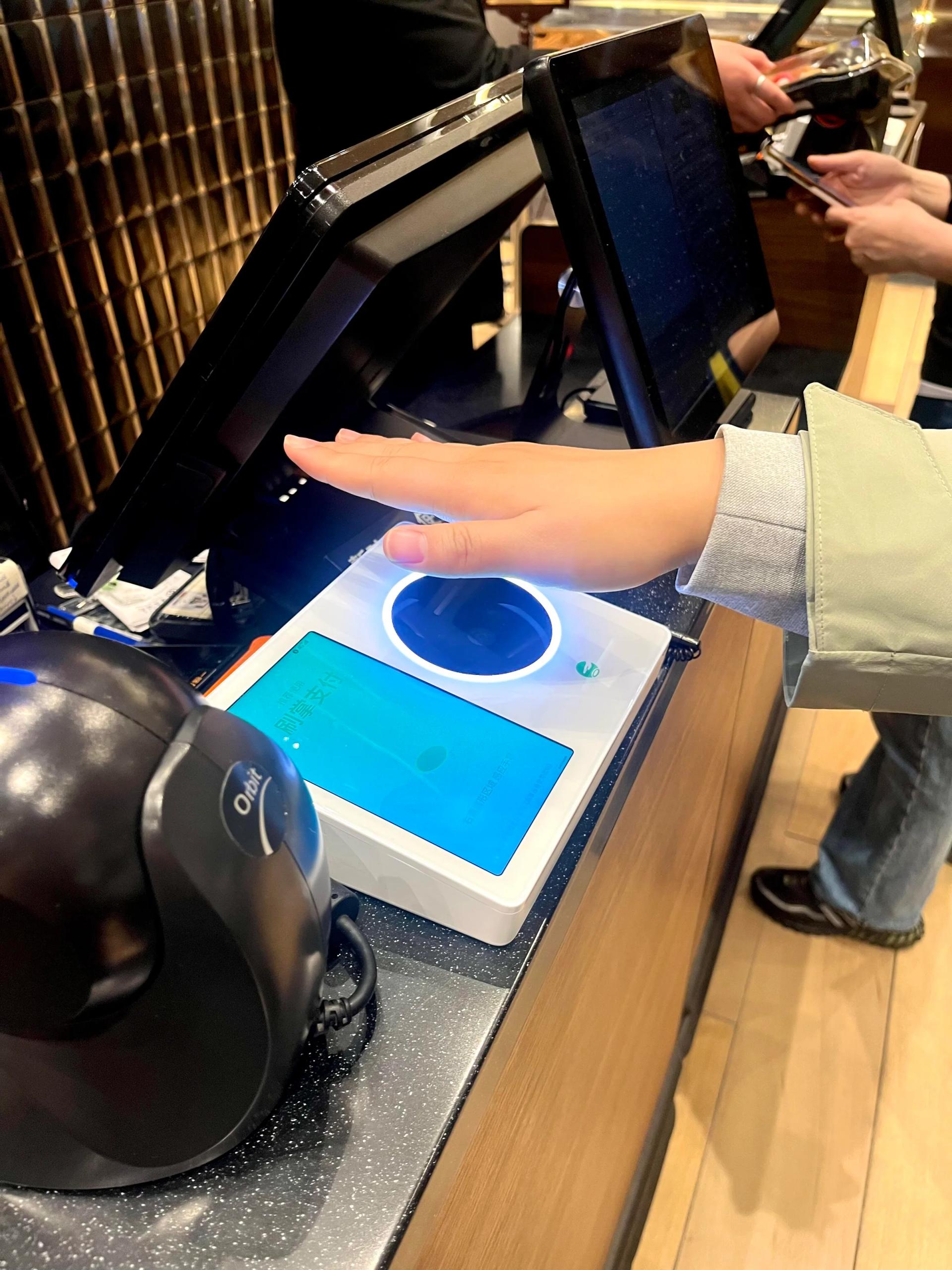
Mobile payments and mobile data solve many daily tasks in China, but a first trip should not depend on one wallet, one overseas card, one phone or an untested roaming promise. Set up the primary method before travel, complete required identity verification, test what can be tested and carry permitted alternatives.
Our preparation advice connects payments, connectivity and the itinerary. The airport arrival, station meeting point and independent evening have different consequences if a phone loses power or data. The Alipay and WeChat Pay setup guide and China SIM card versus eSIM guide cover the changing technical details without pretending one setup works for everyone.
AVIORA's role is not to guarantee a third-party app or banking decision. It is to reduce the number of moments in which one failure leaves the traveler without a practical next step.
Decision 11: Decide What The Traveler Should Never Have To Coordinate
A private China journey is not simply a car and a guide attached to a public itinerary. The value appears at the handovers: the airport meeting point, hotel room issue, station entrance, luggage sequence, guide briefing, changed start time and decision to shorten a day.
Several people check an AVIORA journey from different operating angles:
- The journey designer tests the route, interests, pace and commercial scope.
- The operations team checks hotels, reservations, transport and local handovers.
- The destination guide controls interpretation, timing and the lived rhythm of the day.
- The driver manages the vehicle sequence, luggage and practical approach points.
- The China-based support team remains the contact path when the confirmed plan needs attention.
_A smooth private journey is checked by more than one person before the traveler arrives._
The proposal should say which of those services are included and where third-party conditions remain. Professional support is clearest when its boundaries are written down, not when every uncertainty is hidden behind the word "seamless."
Decision 12: Prepare A Second Good Decision
Weather moves. Flights and trains can be delayed. An attraction may change capacity or access. Travelers can wake with different energy from the day before. A rigid schedule treats every change as failure. A well-operated private journey decides in advance which parts must be protected and which can move.
AVIORA identifies the pressure points, then prepares alternatives with comparable value: an indoor Shanghai chapter for difficult weather, a shorter Great Wall route, a focused Xi'an day, a later start where reservations allow, or a protected hotel return instead of a marginal extra stop. Any material change to contracted services still needs clear communication and agreement.
The point is not to promise that nothing will change. It is to ensure that change does not leave the traveler responsible for rebuilding the trip alone.
What Smooth Travel Required For Felix And His Wife
Felix and his wife traveled with AVIORA from August 1 to 14, 2026. His feedback focused on how the journey felt: easy, joyful, smooth, full of excellent experiences, and guided by someone who combined expertise with genuine humor.
Travelling with AVIORA felt easy and joyful. Our guide was an expert and genuinely funny, the whole trip flowed so smoothly, and every experience was excellent.
Felix, who travelled with his wife, August 1-14, 2026. Translated from his original message and lightly edited for clarity.
That feeling did not come from asking the travelers to watch the logistics more closely. It came from the opposite: the route, timings, handovers and experiences were managed well enough for the two of them to stay inside the journey.
Humor matters here. A strong guide does more than recite dates. The guide reads the travelers, keeps a substantial subject alive, notices when attention is fading and adjusts the human rhythm without losing the story. Operations make the day possible; personality makes it memorable.
This is the result the Route Reality Check is designed to support. The public framework can show what should be examined. Only the date-specific operating process can turn those decisions into one couple's actual journey.
What You Receive When AVIORA Reviews The Route
Send the dates, proposed international flights, travelers, cities already considered, hotel expectations and practical preferences. Before treating the itinerary as ready, our team can identify:
- whether the arrival and departure pattern supports the route;
- how many complete sightseeing days remain;
- which city or stop is weakening the sequence;
- where rail or air creates the better hotel-to-hotel day;
- which days carry the most walking, standing or exposure;
- what requires early reservation or passport information;
- which hotel and room details need written confirmation;
- where a useful alternative should be prepared.
We will not describe an unverified service as confirmed or promise that no condition can change. The value is a clearer route, explicit assumptions and a China-based team that knows what it is responsible for.
Explore the complete 12-day China, Considered private journey if Beijing, Xi'an and Shanghai already fit your priorities. If you are still deciding, send us the route before booking the flights. We will show what works, what needs evidence and what should change before avoidable bookings make the decision harder.
Choose The Next Planning Decision
Use the nine-day Beijing, Xi’an and Shanghai framework if holiday time is tight. It shows eight nights and the trade-offs of the shorter route rather than shrinking a longer program without explanation.
For daily readiness, follow the foreign-visitor payment preparation guide. Test the payment method and keep a second route to pay before relying on the phone for meals, taxis and admission.
Return to the China travel journal for the wider planning library. When the city order is taking shape, compare the twelve-day private route and request a proposal showing precisely which days are guided and which remain independent.