Answer Brief
The Answer, Briefly
Travel to China from the USA is more manageable than many first-time visitors expect. Tourist-visa paperwork has been simplified for applicants in the United States, eligible US passport holders can use 240-hour visa-free transit, and supported American cards can link to Chinese payment apps. A successful luxury trip still depends on choosing the correct entry basis, sensible flights and a route that allows recovery. Start with those decisions, then build the hotels and experiences around them.
Key Takeaways
- 240 hours has replaced the older 144-hour transit framework for qualifying journeys; it is not a general visa exemption for Americans.
- Compare international flights and China hotel nights together before making restrictive bookings.
- Prepare mobile payments, bank verification and connectivity before departure.
- AVIORA combines tailored planning with 24/7 bilingual support, Mercedes-Benz transfers, business-class rail and a Zero-Shopping Guarantee.
Use our first-trip China planning hub to connect these preparations with your preferred route.
1. Visas And Entry Requirements For US Citizens
Ordinary Tourism: Understand The L Visa
A US passport holder planning a conventional sightseeing holiday generally needs a Chinese tourist visa, usually the L visa, unless a specific exemption applies. Flying from America does not determine eligibility: the passport, purpose and complete itinerary do.
For tourist-visa applicants within the United States, Chinese missions removed the routine requirement for round-trip flight bookings, hotel reservations, an itinerary or an invitation letter from January 1, 2024. The embassy’s current application instructions retain that simplification, while allowing case-specific requests.
That makes it easier to plan without buying flights solely to support an application. It does not remove the visa application itself.
The embassy now describes online submission and preliminary review through its China Online Visa Application system, followed by passport and original-document submission when instructed. Follow the mission responsible for your place of residence. An uploaded application is not an issued visa.
Tourist-visa preparation checklist:
- Passport meeting the application requirements: the embassy specifies more than six months’ remaining validity and at least two blank visa pages.
- Application details, required photograph and proof of residence.
- Previous Chinese visa or residence permit, where applicable.
- US lawful-residence evidence if applying as a non-US citizen.
- Former Chinese-nationality, naturalization or name-change documents where relevant.
- Required originals and the application information page at the instructed submission stage.
If you already hold a Chinese visa, check its validity, entries and permitted stay. A multi-year visa’s expiration date does not establish how long each visit may last. For the detailed document pathway, see our China visa guide for US citizens.
The 144-Hour Question: The Current Framework Is 240 Hours
Older articles still advertise 144-hour transit. The current expanded arrangement allows eligible travelers, including US citizens, to transit through designated mainland ports for up to 240 hours, within permitted areas and subject to the full conditions.
You need a qualifying travel document, confirmed onward travel to a third country or region, and a compliant entry, exit and sightseeing route. NIA guidance specifies at least three months’ document validity for this transit arrangement; do not confuse that with the longer passport requirement for a tourist-visa application.
| Proposed journey | Transit-policy assessment |
|---|---|
| USA → Shanghai → USA | An ordinary return trip; it does not meet the third-country or region requirement |
| USA → Shanghai → Tokyo → USA | Potentially qualifying, subject to passport, ports, onward booking, timing and permitted geography |
| USA → Hong Kong → Shanghai → Hong Kong → USA | The mainland segment comes from and returns to Hong Kong; it does not become qualifying transit because the overall holiday starts in America |
The immediate routing around mainland China matters. Follow the authorized departure deadline and permitted areas; “ten days” is not permission to add ten hotel nights wherever you choose. An airline checks boarding eligibility, and immigration decides admission.
For a longer holiday, repeated mainland entries or a route outside the permitted geography, an appropriate visa may be the better planning basis.
Chinese-American Travelers And Mixed-Nationality Families
Assess each person separately, including children. One relative’s visa exemption does not cover the rest of the family, and US residence does not turn another nationality’s passport into an American one.
Former Chinese nationals applying for their first Chinese visa after naturalization may need their previous Chinese passport and naturalization evidence. For US-born children of Chinese parents, the parents’ nationality and settlement status at the child’s birth can affect the required documentation. Ask the responsible Chinese mission to determine whether the child needs a visa or a Chinese travel document.
Resolve these questions before restrictive purchases. A family checklist should record each traveler’s passport, entry basis, permitted stay and any mainland re-entry created by a Hong Kong visit.
2. Flights: Choose The Gateway That Fits The Journey
SFO, LAX And JFK: Compare The Complete Routing
There is no universal best US departure airport. A nonstop that requires a separate domestic positioning flight can be less convenient than one protected connection from home.
SFO’s official route directory lists nonstop Beijing Capital service on Air China and United, Shanghai Pudong on China Eastern and United, and Hong Kong on Cathay Pacific and United. Cathay’s official route pages also describe direct Hong Kong flights from LAX and JFK. Check the operating schedule and cabin for your actual dates.
| US gateway | Options worth comparing | Practical decision |
|---|---|---|
| San Francisco, SFO | Nonstop Beijing PEK, Shanghai PVG or Hong Kong HKG | Match the mainland gateway to your first city; Hong Kong adds another border or connection if continuing inland |
| Los Angeles, LAX | Available mainland nonstops versus a Hong Kong connection | Compare the full journey, checked baggage and arrival time, rather than the transpacific sector alone |
| New York, JFK | Available mainland services versus Hong Kong or another Asian connection | Check operating days, total elapsed time and whether the itinerary requires changing airports |
Beijing Capital PEK and Beijing Daxing PKX are separate airports. Shanghai Pudong PVG and Hongqiao SHA are also distinct. Your transfer must follow the issued flight, not simply the city name.
Hong Kong has its own immigration arrangements. Landing there does not grant mainland entry, and crossing onward by rail, road or air needs its own document and transfer plan.
Flight-booking checklist:
- Prefer a protected through-ticket when connections are involved; understand the risk of separate tickets.
- Confirm baggage transfer, immigration, terminal changes and minimum connection requirements with the carrier.
- Check the operating aircraft and cabin if a particular premium seat matters.
- Compare arriving in Beijing and leaving from Shanghai, or the reverse, to reduce backtracking.
- Record local arrival dates, hotel nights and homeward arrival separately across the International Date Line.
Protect The First 48 Hours
China is 12–16 hours ahead of the contiguous United States, depending on location and daylight saving time. Premium cabins help with comfort, but they do not eliminate jet lag.
Arrival day: meet the driver, reach the hotel, eat and rest. A morning landing needs a clear room-access arrangement; standard afternoon check-in may leave a long gap. Reserve the previous night or confirm paid early access if immediate rest is essential.
First full day: plan one principal experience, a manageable walk and a proper lunch break. Keep an easy return available for grandparents and children.
Second full day: place the more demanding excursion here when practical. For Beijing, a Great Wall visit often benefits from separating it from the first post-flight morning. Check museum closures and ticket availability before fixing the sequence.
3. Payments And Connectivity: Prepare Before You Land
Link An American Visa Or Mastercard
Official guidance confirms that foreign visitors can register for major mobile-payment services with foreign or Chinese phone numbers and link supported overseas bank cards. A supported network does not guarantee every card or transaction.
Set up Alipay or WeChat/Weixin Pay through the official app before departure:
- Register with a phone number you can continue accessing.
- Complete identity checks requested by the current app.
- Add your eligible US-issued Visa or Mastercard using the issuer’s correct details.
- Complete bank authentication and check that you can receive verification messages abroad.
- Test a modest merchant payment after arrival, with a backup available.
App menus, supported functions, charges and limits can change. Check the live product and your bank rather than relying on an old screenshot. Merchant payments and person-to-person transfers are different functions.
Keep a second card and some RMB cash. Ask your hotel separately about incidental deposits: a prepaid room does not necessarily remove the need for a card authorization. Our China mobile-payment guide explains the backup strategy.
Choose Data Access And Verification Access Separately
Your internet connection and your US phone number solve different problems. A data-only eSIM can support messaging while leaving you unable to receive a bank’s SMS code.
- US-carrier roaming: confirm mainland coverage, charges, calls, SMS and hotspot terms.
- Travel eSIM: check device compatibility, unlocking, mainland coverage, activation timing and whether the plan includes a number or only data.
- Local SIM: official guidance allows foreign visitors to apply at telecom service offices with their passport. Check device compatibility and the available product before depending on it.
Some US-sold phones lack a physical SIM tray. Do not buy a plan your handset cannot use. Advertised 4G/5G access also depends on the carrier, device and location.
Mainland networks restrict some familiar overseas services. Ask your provider what its actual routing supports; roaming or eSIM branding alone does not guarantee access to every app. Download reservations, hotel addresses in Chinese and essential contacts offline. Confirm a working communication channel with your family and AVIORA.
4. Build An Itinerary Around Nights And Energy
For a first visit, Beijing–Xi’an–Shanghai provides a clear sequence: imperial history, the Terracotta Army and a contrasting modern city. A three-city trip can fit ten days, but count arrival, departure and intercity movements within that total.
One planning example is four Beijing nights, two Xi’an nights and three Shanghai nights. Keep the arrival day light, give the Terracotta Army a dedicated visit and avoid treating a transfer afternoon as a full sightseeing day.
Adding Chengdu requires more nights or fewer commitments elsewhere. For a family, three cities with recovery time can deliver more than four cities connected by rushed checkouts. An extra city should earn its place through a specific interest.
Want a route built around your flights and family? Explore AVIORA’s tailor-made China journeys and ask Lena to align the cities, hotels and recovery time before you commit.
5. Why Choose A Private DMC Instead Of DIY?
Independent booking is possible. The work lies in coordinating passport-linked rail tickets, timed attraction reservations, station transfers and changes across suppliers.
A late arrival can affect a driver, hotel and next-day visit simultaneously. A multigenerational family adds room layouts, walking limits and different meal times. Translation apps help with communication; someone still has to decide how the revised day should work.
AVIORA provides:
- 24/7 bilingual on-ground concierge support, connecting you with a China-based team throughout the journey.
- Dedicated Mercedes-Benz transfers, organized around your actual airports, hotels, stations and luggage.
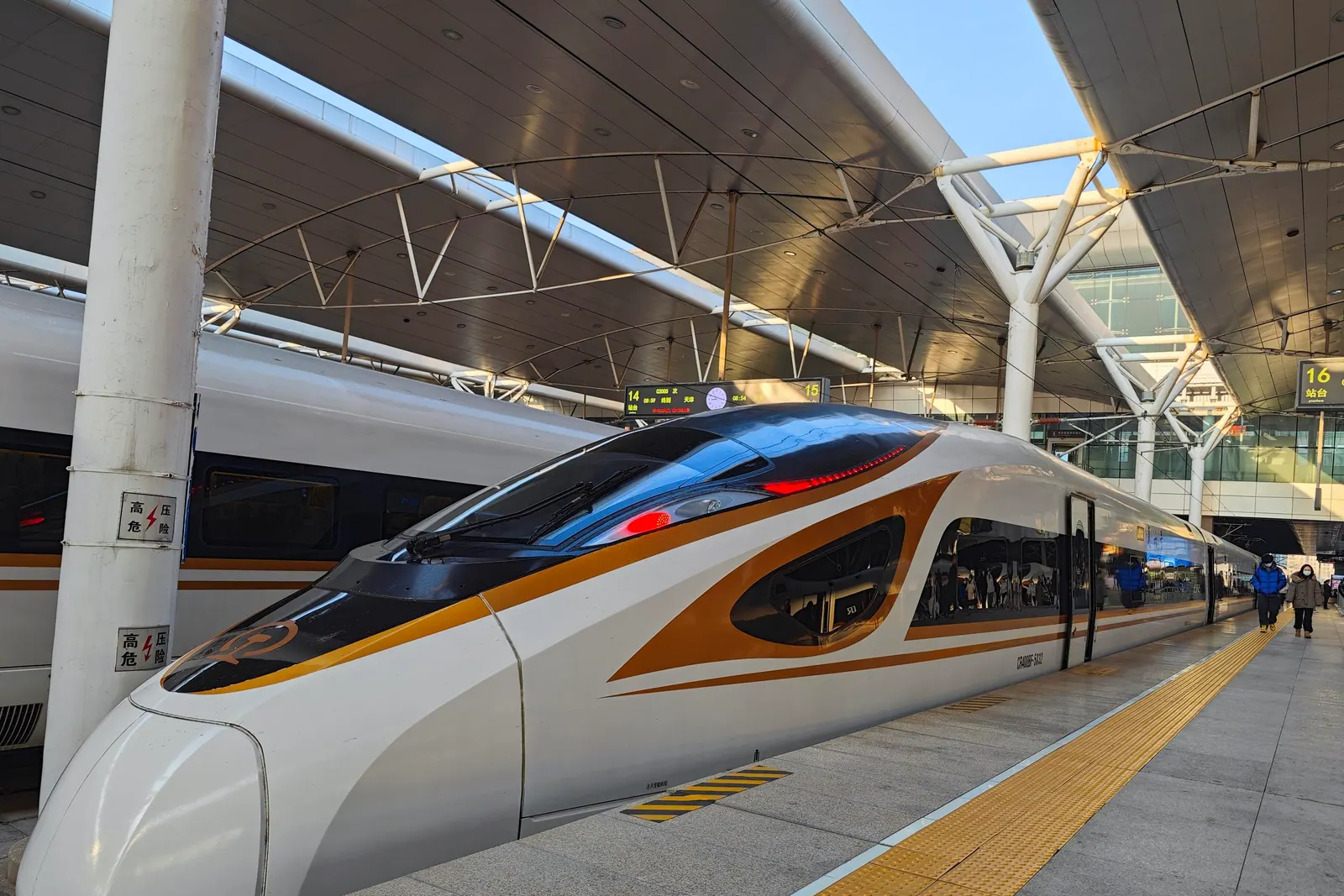
- Guaranteed business-class high-speed rail seating on the agreed rail sectors, with coordinated transfers.
- A Zero-Shopping Guarantee, protecting the itinerary from compulsory retail stops.
These services preserve your attention for the trip. You can still request independent evenings, free afternoons and time exploring at your own pace.
Expert Planning Tips
Plan Your China Journey With Lena
Start with how you want to spend your time. Lena can connect that brief with the flights, hotel nights, private experiences and support that make the journey work.
Email [advisor@aviorachina.com](mailto:advisor@aviorachina.com) for your personalized China itinerary and quote, or visit aviorachina.com.