Read the Cao Cao story through history, memory and the city today · Central China
Xuchang Travel Guide: Cao Cao, Three Kingdoms & Hotels
Plan Xuchang for Cao Cao and Three Kingdoms interests, distinguishing historical evidence, later Guan Yu memorials and modern Cao Wei-themed streets, with realistic hotel and rail choices.
2 nights for one full city day; a selective excursion can workThree Kingdoms readers, historical interpretation and a less familiar Henan city stay
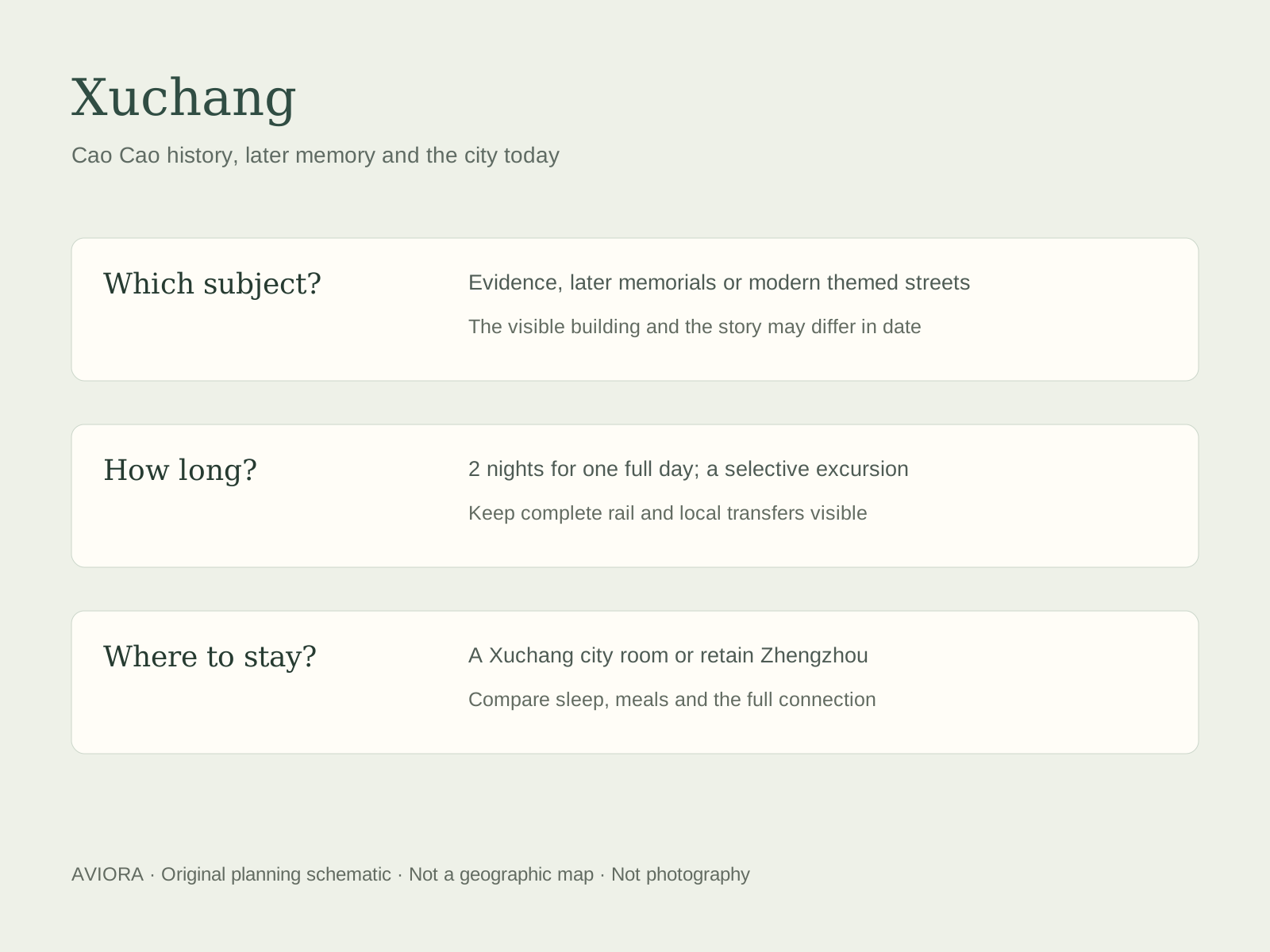
Xuchang (许昌) is a Henan city associated with the late Han court at Xu and Cao Cao’s political power. It is a rewarding choice for travelers who want to distinguish historical events, the later Three Kingdoms literary tradition and the way those stories are remembered today. The modern Cao Wei Ancient City visitor streets are not a surviving Han–Wei capital. A useful city day combines a selected collection or historical explanation with one well-chosen memorial or architectural interest and time for a meal. Two nights give one full day when arrivals fit; a narrower excursion from Zhengzhou can also be assessed using complete transfers.
How many days do you need in Xuchang?
Two nights give one full city day, enough for a thoughtful first introduction when reservations and transport fit. One night can work with useful arrival and departure hours, but should not promise every Cao Cao attraction and another regional trip. Three nights need a distinct second full-day interest or a slower stay at a property that suits you. Yuzhou’s ceramics require a separate plan and are not automatically covered by an extra Xuchang evening.
Compare stays by number of nights
Selective day excursion / one clear historical question
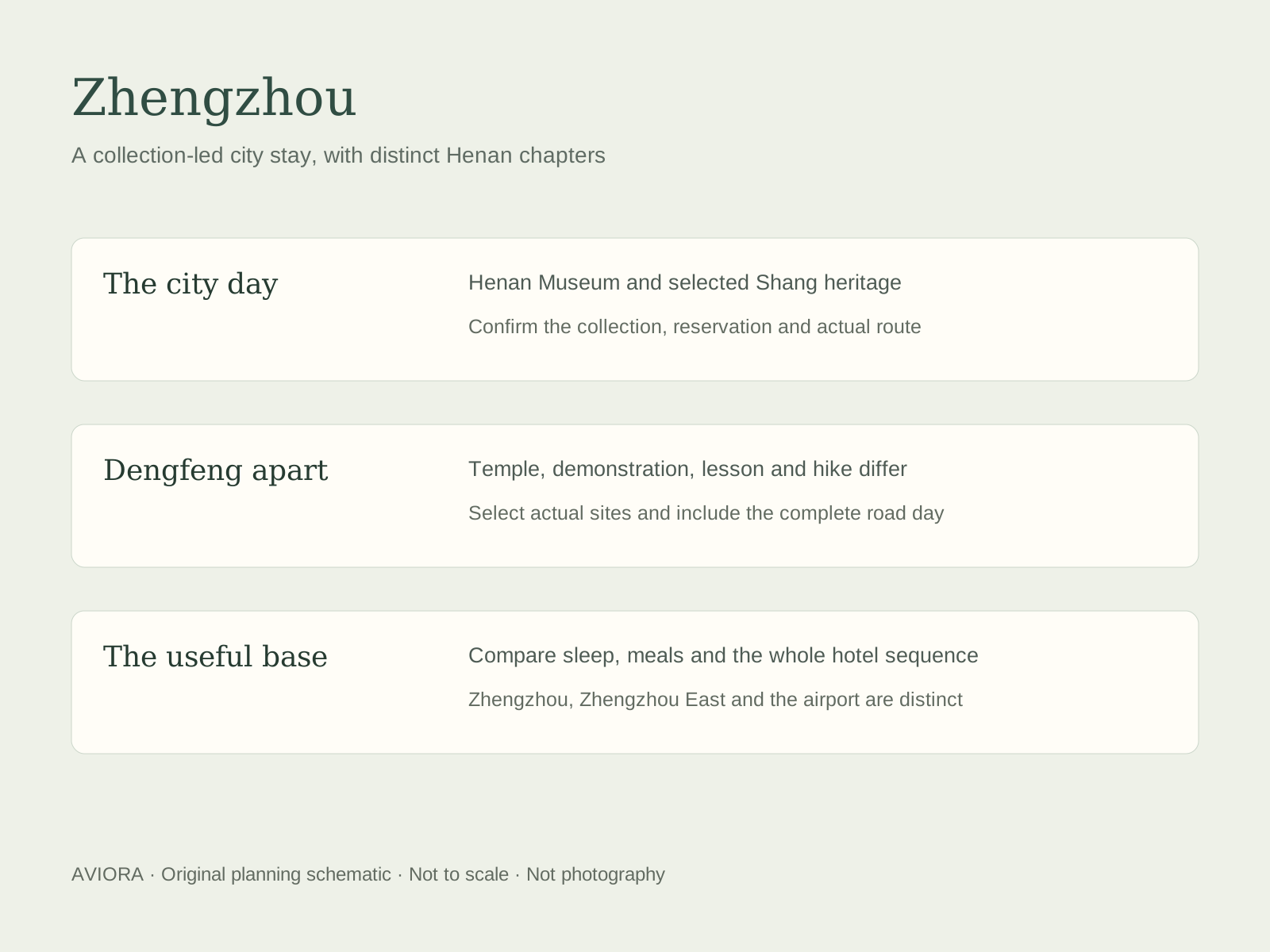
Use a Zhengzhou base when the full connection leaves useful time for a chosen visit, interpretation and a meal. Keep the selection narrow and count station transfers or both road journeys. The city’s historical association does not require visiting every similarly themed attraction.
2 nights / one complete city day
Connect a suitable museum or historical explanation with a selected later memorial or architectural visit. Keep the themed street walk optional in the evening. The extra night can remove pressure to fit dinner and a return train into the same day.
3 nights / a distinct second interest
Choose this for a genuinely different subject or a slower city stay. A Yuzhou ceramic interest requires a separate full road plan and actual provider, not an assumed half-day workshop. More nights should deepen the visit rather than repeat Cao Cao-themed displays.
Plan a tailored Xuchang visit
Share dates, actual gateways, available nights and whether Cao Cao’s political history, Three Kingdoms literature, architecture or contemporary city life interests you most. We can compare a focused excursion with a two-night stay and a wider Henan sequence. No matching published Xuchang itinerary is listed here. A tailored plan should name the actual visits and explain why each belongs, with a worthwhile alternative if a museum reservation or chosen interior is unavailable.
A tailored Xuchang proposal should identify the actual museum or site visits, guide, admissions, transfers, meals and room if staying. Interpretation should distinguish documentary history, literature, archaeology, surviving buildings, later commemoration and modern reconstruction. Public streets do not include private courtyards, religious spaces, backstage areas or archaeological access. A performance, hosted conversation or Yuzhou ceramics activity requires a separate willing provider and defined arrangement; no special access is implied.
This is a destination planning guide, not a fixed departure or a confirmed package. We check the route, accommodation, transport and guide availability for your dates before setting out the services and price in writing.
Choose one main historical subject and a compatible second visit, with a seated meal and time to ask questions. Museum entry, commemorative sites and evening themed streets have different opening or booking arrangements. Do not fill the day with attractions carrying similar Cao Cao labels. A Zhengzhou excursion needs both station transfers, boarding and local travel counted before promising an evening walk and return.
01
Understand the late Han court and Cao Cao story without confusing it with later fiction
02
Choose a Guan Yu memorial or architectural interest with its historical layer explained
03
Enjoy a contemporary city meal and optional themed-street evening for what they offer today
Suggested Xuchang itinerary
What can you fit into your Xuchang itinerary?
Arrival / choose the historical frame
Reach the actual city base
Complete the station transfer, settle luggage and enjoy dinner. Confirm the next day’s actual museum or site and the questions that interest you. A short themed-street walk is optional if time and conditions fit.
Full day / evidence and memory
Make one historical subject readable
Use a selected museum or historical visit to establish the late Han setting, then explore a compatible later memorial or architectural interest. Keep a seated meal and walking breaks. Identify reconstruction and display interpretation rather than assume original fabric.
Evening or additional day / a deliberate choice
Enjoy the city or plan a different subject
Choose contemporary streets and food for the evening without describing them as an ancient capital. With an extra full day, assess a distinct interest. A Yuzhou ceramics trip requires its own complete route and willing provider; it is not automatically included.
Departure / onward Henan
Keep the next connection realistic
Leave for the actual station or next hotel with transfers and boarding counted. The tailored proposal should name visits, interpretation, walking, room, meals and alternatives for unavailable access, without implying an unlisted product.
Spring and autumn can suit a mix of city walks and indoor visits, with weather varying by date. Summer needs shade, water and breaks between streets and galleries; winter calls for warm clothing and footing checks. Museum reservations, religious-site access and evening visitor activity follow their own current arrangements. Holidays can change availability and crowds, including in places described as less familiar. Choose the sequence around openings, weather and the guest’s interests rather than promise an empty city.
What affects the cost of a Xuchang trip?
Compare the guide’s subject knowledge, vehicle hours, named admissions, meals and actual hotel room. Identify any performance, special exhibition or regional excursion separately, only when available. Themed streets, an exhibition and an archaeological interest should not be bundled under a vague ancient-city ticket. A premium should buy thoughtful explanation, time and comfort, not invented relics or private access.
Getting there and getting around
How to get to Xuchang and plan your stay
Arriving and connecting
Compare dated services using Xuchang (许昌) or Xuchang East (许昌东) as the actual station; they are different gateways. Include the hotel-to-station approach, luggage, boarding and the final road journey to your first visit. For a Zhengzhou base, compare the complete rail journey with an assessed road excursion rather than select from the train sector alone. A late arrival is best planned around dinner and sleep, not an assumed museum opening.
Getting around
Use a defined local transfer plan between the actual museum, selected memorial, hotel and station. City walks need safe crossings and a manageable route rather than an assumption that all Cao Wei-associated names are adjacent. Follow current rules for temple spaces, interiors and photography. Archaeological remains are a separate location and permission question; a private driver does not establish public access to fields or restricted areas.
Walking and access
City streets can involve crossings, uneven paving and prolonged standing; temple-style visitor routes can add thresholds and steps. Assess the actual museum lifts, seats and entrance-to-exit walk for the guest. A pagoda seen from outside is different from an open climb. Ask for continuous walking, toilets and a shorter alternative rather than assume urban touring is step-free. Summer heat, rain and winter footing can change comfort.
What first-time visitors often underestimate
You do not need prior knowledge of the Three Kingdoms to enjoy Xuchang. Start with who held power at the late Han court, then ask how later stories and memorials shaped today’s visitor landscape. Read each place at the appropriate level: an archaeological site, a later temple, an exhibition and a themed street do different work. Good interpretation can connect them without pretending they are all ancient remains.
Where to stay in Xuchang
Compare a named central or Weidu-area hotel for the chosen city visits and meals with a property selected for the actual Xuchang East station connection. A modern hotel elsewhere in the urban area may offer a better room but add driving to older streets. Check bedroom noise, bathroom, heating or cooling, breakfast, dinner and pickup. District names and a Cao Wei-themed address do not prove historic fabric, quiet sleep or a short journey to every attraction.
Compare hotel areas
Central / Weidu-area address
Compare the actual room against chosen city visits, meals and pickup. A useful urban base can support one full day without moving luggage. Check bedroom orientation, nearby street noise, bathroom and temperature control rather than assume a central label means quiet convenience.
Xuchang East-oriented room / a real rail need
Choose when the actual arrival or departure and property justify it. Count the drive to the selected city interests and check dinner and breakfast. A station hotel can simplify one leg while making an evening return to older streets less convenient.
Retain Zhengzhou / keep the wider trip simple
A suitable larger-city room may make a selective excursion preferable to another hotel move. Compare actual train or road options, all transfers and usable site hours. Do not infer a relaxed day trip from a short rail timetable alone.
Is Cao Wei Ancient City an original Three Kingdoms city?
No. Treat the Cao Wei Ancient City visitor streets as a modern themed urban experience, rather than surviving Han–Wei buildings or the full archaeological capital. They can suit an evening walk, meals and an introduction to how the city presents its history. For historical depth, distinguish museum evidence, actual archaeological remains, later commemorative temples and modern interpretation. Enjoy the streets for what they offer without using their appearance as proof of ancient construction.
Cao Cao’s political story is not identical to the novel
The late Han court at Xu provides a historical starting point: Cao Cao’s power operated in relation to Emperor Xian and the Han state. The later founding of Wei under Cao Pi and the literary Three Kingdoms tradition are different layers. A useful guide identifies which layer a site or display represents rather than present every familiar episode as documented local fact.
Themed streets and archaeological remains are different evidence
Cao Wei Ancient City can be enjoyable for an evening walk and contemporary urban atmosphere. Its historical appearance does not establish ancient fabric. The Han–Wei Xu capital remains are a separate archaeological question with their own location and access; do not promise a walk through an excavated palace from a themed-street booking.
Guan Yu memorials explain later memory as well as older stories
Chunqiu Tower and the Baling Bridge visitor setting can introduce how Guan Yu has been commemorated. Distinguish the episode being told from the date and nature of the visible structures. Do not describe every bridge or hall as an untouched witness to the Three Kingdoms period. Current religious practices and public access deserve respect.
A museum needs a defined question and current displays
Choose the museum because its available collections can support the story you want to understand. Confirm the actual opening, reservation and relevant galleries; a general name does not establish which object is present. Artifacts, copies and modern visualizations should be identified clearly, and a guide should acknowledge when the evidence does not answer a question.
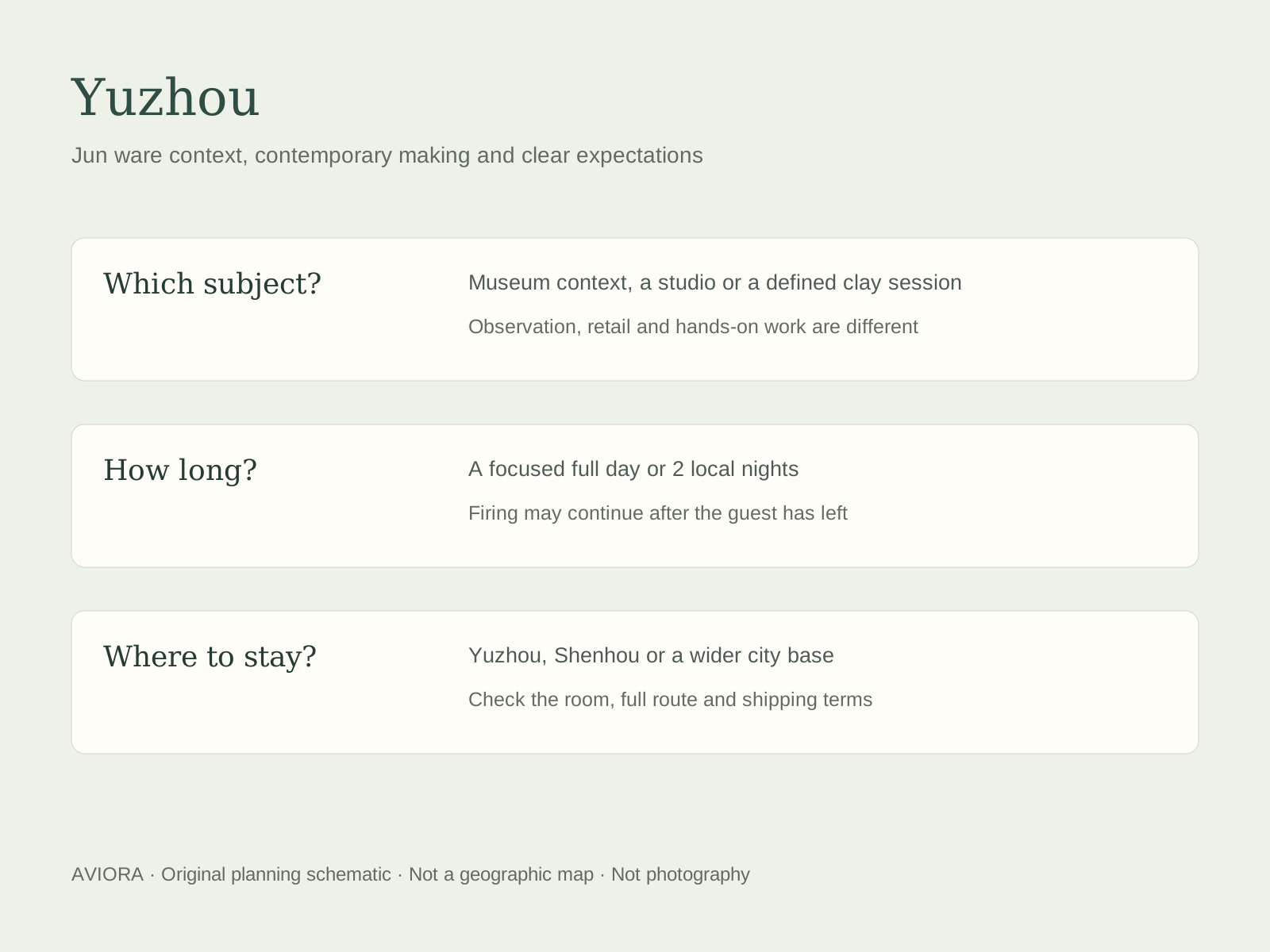
Yuzhou is a separate ceramics journey
Jun ware interests in Yuzhou and Shenhou town require their own location, travel and content decisions. A showroom, museum, workshop visit and hands-on session are different experiences. Identify a willing provider and actual process before promising a class or kiln visit. Allow a separate Yuzhou excursion for ceramics; a meeting with a particular maker depends on a confirmed appointment.
Culture and historical context
A city can remember a period without preserving all its buildings
The value of Xuchang lies partly in the questions it raises about history and memory. A historical court, a later story, a commemorative temple and a modern themed street can all refer to Cao Cao or the Three Kingdoms world while offering different kinds of evidence. The visitor gains more when those differences are explained than when every visible hall is described as ancient.
Use a clear sequence: establish the late Han setting and Emperor Xian’s court at Xu; distinguish Cao Cao’s position from the later Wei state; then consider how literature and devotion shaped familiar figures such as Guan Yu. A good guide can make this readable for a newcomer without treating a novel as a site report. Later buildings and modern interpretations can still be interesting when their dates and purposes are described honestly.
Food and social life
A comfortable meal belongs in the history day
Give the city introduction a seated lunch rather than make every pause a themed snack stop. Henan’s wheat-based dishes offer an approachable starting point: ask a suitable kitchen about noodles, broth and a manageable selection of vegetables and protein. If choosing huimian, explain that the actual ingredients and stock depend on the kitchen. A dish’s familiar regional name does not establish one fixed recipe or an exclusive Xuchang origin.
An evening walk can include an optional tasting when the vendor, preparation and guest’s preferences fit, without turning the visit into compulsory sampling. Discuss meat stock, wheat, soy and shared preparation for dietary needs, and settle breakfast before an early train. Reliable food, a comfortable seat and time to discuss the day can provide more value than a theatrical banquet or a supposed ancient recipe with no evidence.
Xuchang travel FAQ
Questions about visiting Xuchang
Is Xuchang worth visiting for Three Kingdoms history?+
Yes when you want an interpreted Cao Cao and late Han chapter that distinguishes evidence, literary tradition and later memory. Choose actual visits deliberately; a collection of themed attractions is not the same as a historical explanation. Two nights allow one full city day.
Is Cao Wei Ancient City an original ancient city?+
No. Treat the visitor streets as a modern themed urban experience. They can be enjoyable for food and an evening walk, but their appearance is not proof of surviving Han–Wei construction or the full archaeological capital.
What is the connection between Cao Cao and Xuchang?+
The late Han court at Xu and Cao Cao’s political power provide the historical connection. Distinguish that relationship from the later establishment of Wei under Cao Pi and the literary Three Kingdoms tradition. A themed display may combine these different layers.
Are Chunqiu Tower and Baling Bridge Three Kingdoms originals?+
Do not assume the visible structures survive unchanged from that period. Visit them as later commemorative and architectural settings associated with Guan Yu stories, and distinguish the event being told from the history of the building or visitor site.
How many nights should I spend in Xuchang?+
Two nights give one full city day. One night needs favorable arrival and departure hours; three need a distinct second interest or slower pace. A selective Zhengzhou excursion can also be assessed using complete transfers and actual site hours.
Where should I stay in Xuchang?+
Compare a named central or Weidu-area room with an address chosen for a real Xuchang East connection. Check sleep, noise, meals, bathroom, climate control and pickup. A themed-street location or station label does not establish convenience for every visit.
Can I visit Xuchang as a day trip from Zhengzhou?+
Assess the actual train or road option, station transfers, reservations, selected visits and return first. A focused excursion may fit. A short rail sector alone does not guarantee a relaxed city day with an evening street walk and dinner.
Can I visit the Han–Wei Xu capital remains?+
Treat the archaeological remains as a separate researched site and current public-access question. Confirm the location, permitted visitor route and interpretation before adding it. A Cao Wei-themed street booking does not establish entry to an excavation or surviving ancient palace.
Is Yuzhou Jun ware a quick Xuchang city activity?+
No. Yuzhou and Shenhou need their own full travel and provider assessment. A museum, showroom, working studio and hands-on session have different content and arrangements. No kiln operation, class or master meeting is promised by a Xuchang city visit.
Is there a published Xuchang itinerary here?+
No matching product is listed on this page. Share dates, gateways, nights, walking needs and interests for a tailored assessment. The example outline is not a newly published package or a promise of private cultural access.
Share your dates, interests, arrival and departure cities, and any plans already booked. We’ll recommend an itinerary at a pace that suits you, with the arrangements and price explained before you book.