1 night: a focused Longmen stop
Choose the main cave-art visit when the real trains and transfers leave useful time. Do not use the station's Longmen name as evidence that the site can be seen between any two services.
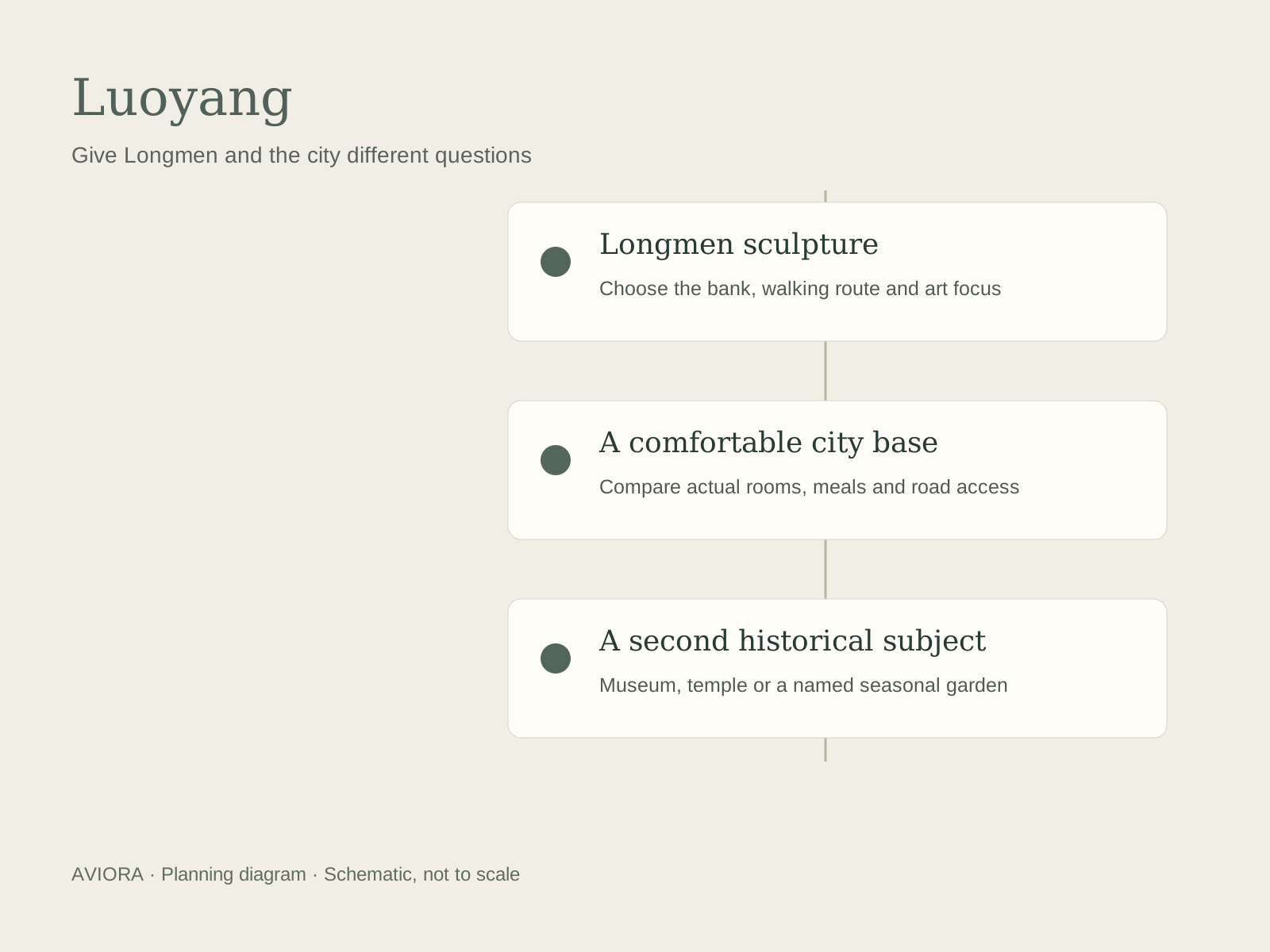
Longmen sculpture, successive capitals & a considered Henan stay · Central China
Give Longmen's Buddhist sculpture time and context, choose Luoyang's other historical layers deliberately, and build a comfortable city stay around the real rail and road connections.
Luoyang is a Henan city associated with successive Chinese capitals, best known to many travelers for the Buddhist sculpture of the Longmen Grottoes. Choose it for the relationship between monumental cave art, changing centers of power and museum collections, rather than assuming every ancient capital occupied the present old-town streets. Longmen is a separate riverside site south of the urban center. A meaningful stay gives the caves proper interpretation and chooses another historical subject instead of rushing through every place carrying a capital-history label.
Two nights provide one full day for Longmen and a selected city interest when access and the full transfers allow. Three nights add a second full day for White Horse Temple, a museum or another well-chosen subject. One night can support a focused cave visit with compatible rail tickets, but should not promise the city, several museums and a Dengfeng excursion. A peony visit, if important, needs its own garden and seasonal check rather than a spare hour assumed within the history circuit.
Choose the main cave-art visit when the real trains and transfers leave useful time. Do not use the station's Longmen name as evidence that the site can be seen between any two services.
Give Longmen the principal window and choose a complementary museum or city interest if current access and energy allow. Keep a proper meal and avoid filling an arrival evening with another distant attraction.
Add White Horse Temple, deeper museum time or a separately reviewed regional interest. A spring garden can justify time when the actual bloom suits; more nights do not guarantee flowers or make Songshan an effortless add-on.
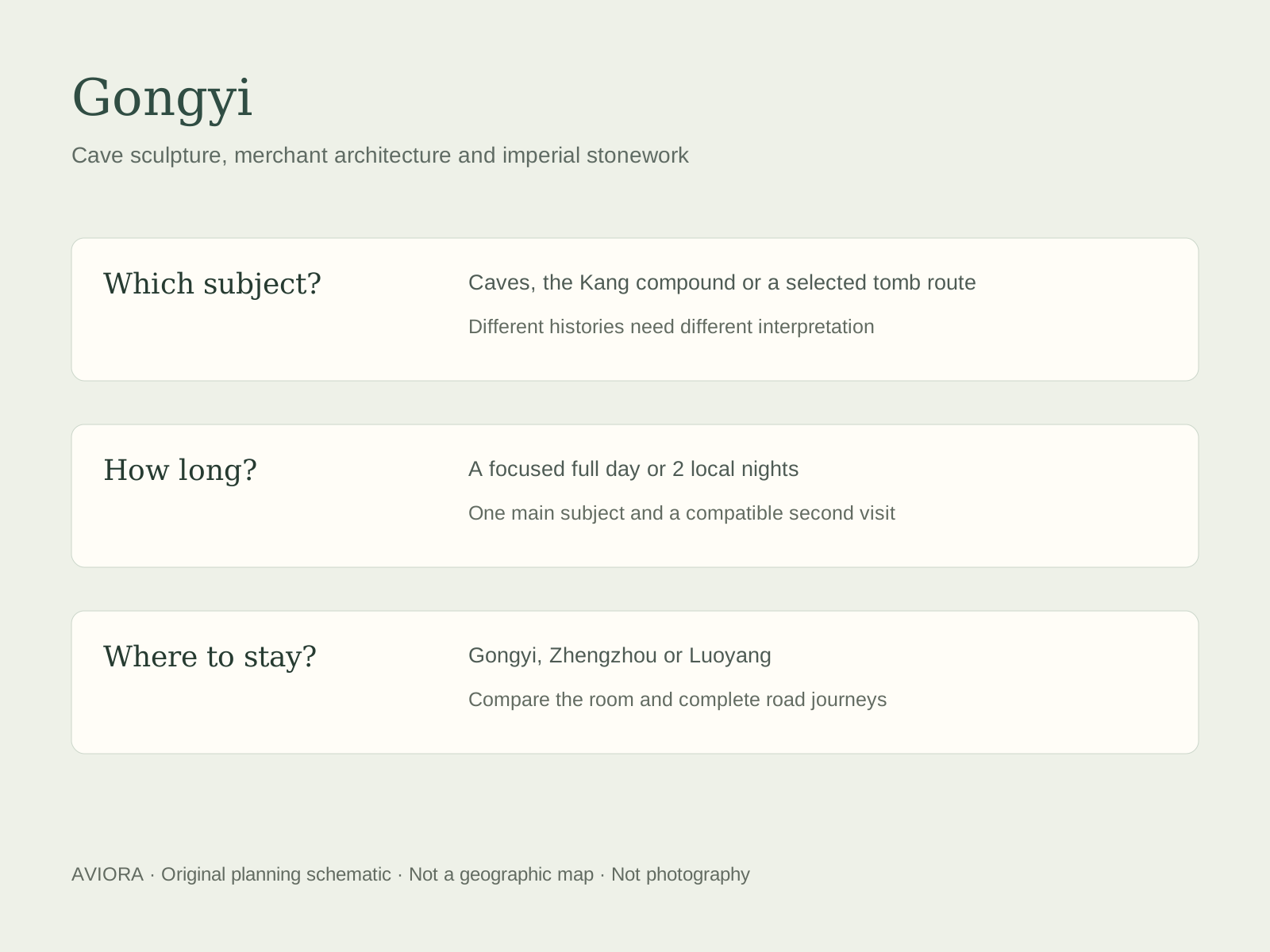
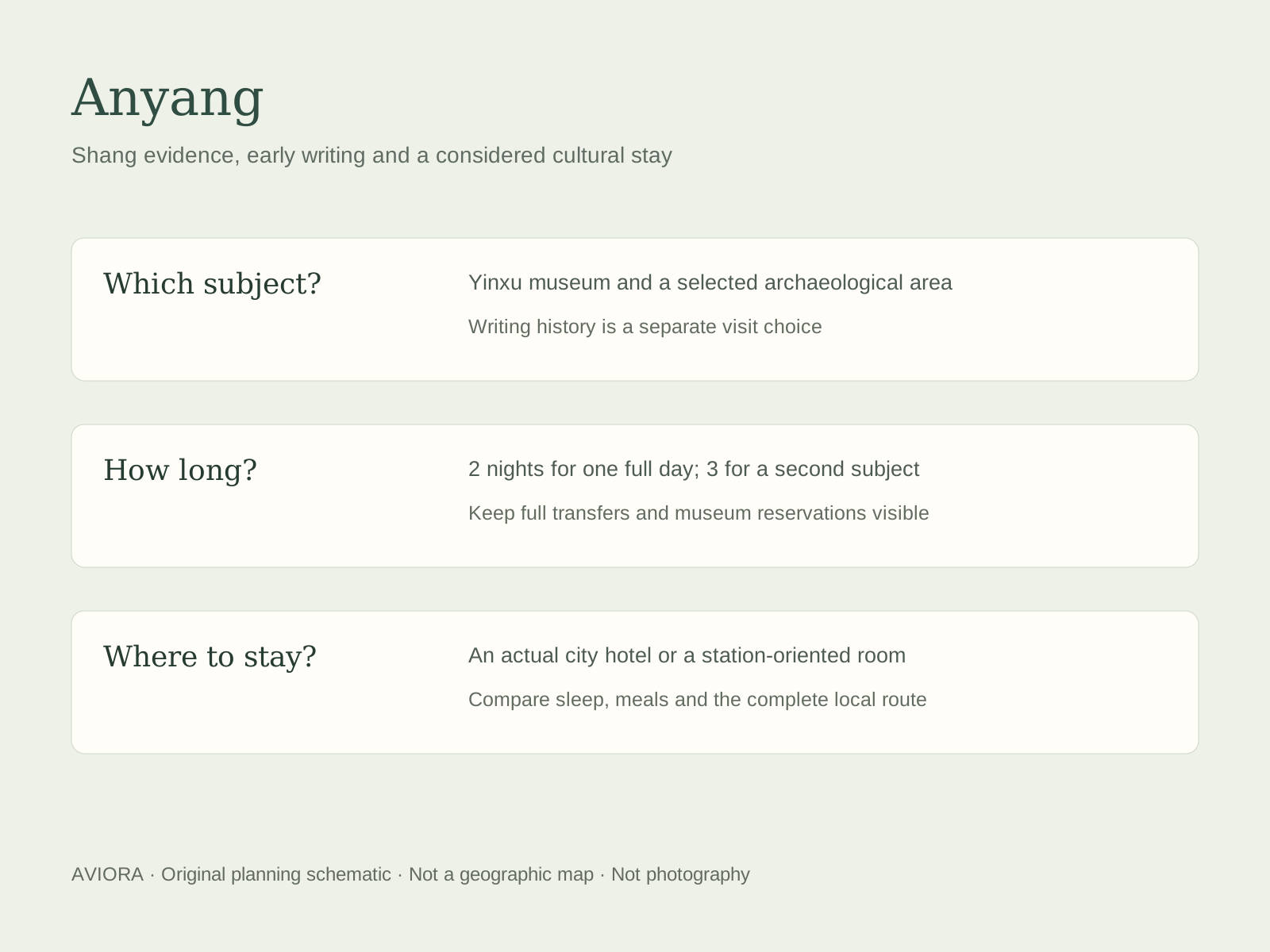
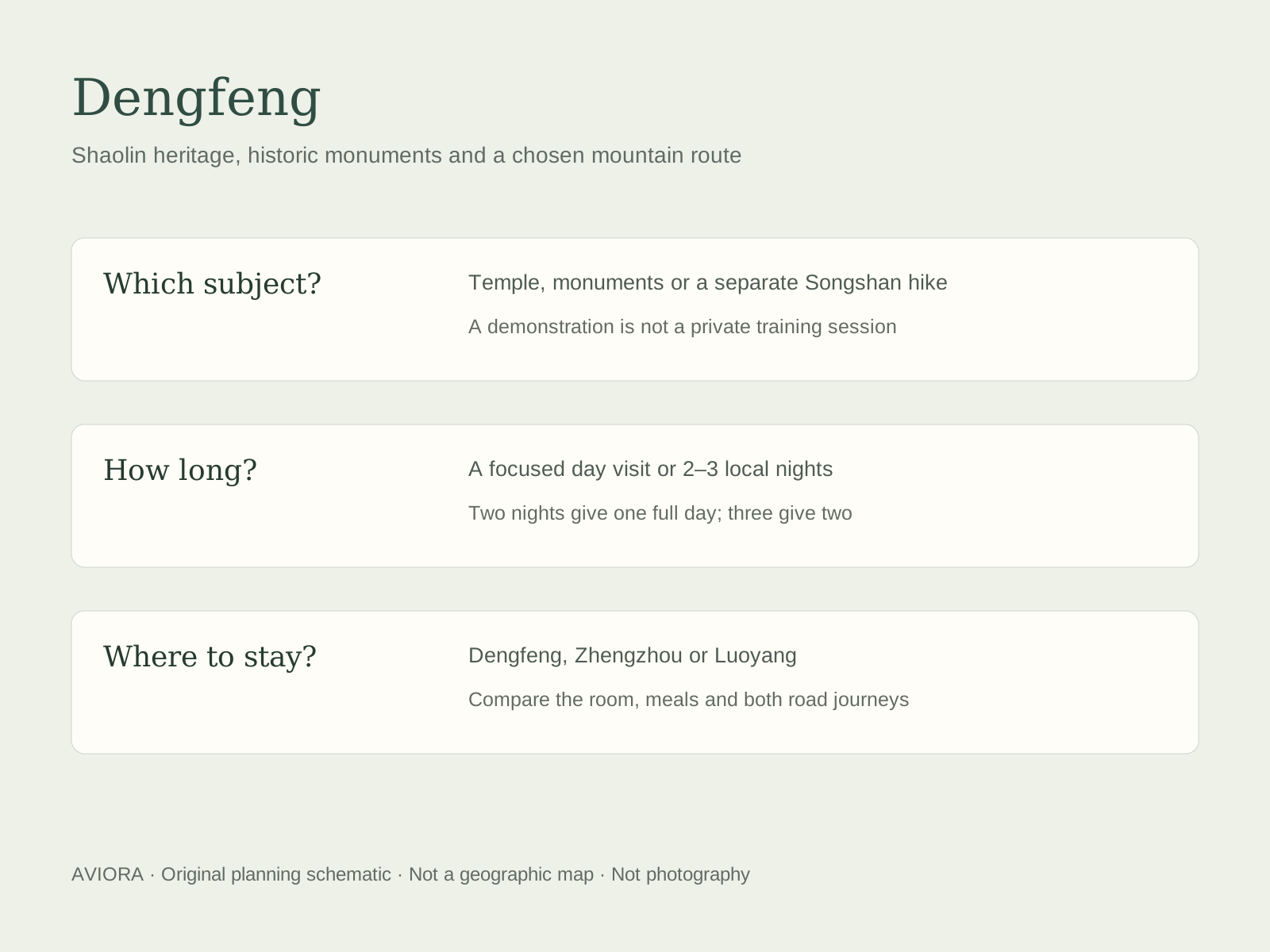
Luoyang can deepen a Xi'an or Beijing itinerary, or form part of a separate Henan route with Zhengzhou and Dengfeng. Use actual stations, full road transfers and usable days to choose the order. Shaolin and Songshan are a distinct excursion or regional chapter, not another Longmen entrance. There is no published Luoyang package recommended on this page. The outline is illustrative; a written proposal should identify the selected cave route, museum or temple and every intercity leg.
We can discuss a tailored Luoyang stay with the named hotel, guide, road transfers, admissions and onward rail arrangements itemized in the proposal. Guiding should match the art and historical subjects you want to understand. Private transport does not remove Longmen's internal walking, stairs or conservation rules. Closed caves, evening access, specialist meetings and private religious spaces require their own confirmed arrangements and should not be inferred from a premium tour description.
This is a destination planning guide, not a fixed departure or a confirmed package. We check the route, accommodation, transport and guide availability for your dates before setting out the services and price in writing.
How our tailor-made China service works · Explore routes in Central China
Start planningSignature experiences
Give Longmen a useful window for the visitor approach, selected caves, interpretation, crossings where chosen and return pickup. Do not judge it only by a map distance from the station. Pair it with a modest second interest and a meal when the schedule allows. Reserve museums around their current booking and opening arrangements. A full Dengfeng or mountain excursion should not be attached to a cave day and a fixed evening departure by default.
Suggested Luoyang itinerary
Arrival
Transfer from the named station or airport and keep the first meal local. Add a short city interest only when the connection and hotel approach leave useful time.
Full day 1
Prioritize the main sculpture interest, review any additional bank and allow lunch and rest. Add a city or museum subject only when its current access and the full schedule genuinely fit.
Optional extra full day
Consider White Horse Temple, deeper museum time or a named seasonal garden. A Dengfeng excursion needs its own transport and program assessment; do not assume it includes a mountain hike or a private martial-arts class.
Departure
Allow the complete transfer to the actual station or onward hotel. This is an illustrative planning outline, not a published package, fixed floral promise or guarantee of all mentioned site access.
When to go
Spring and autumn can suit outdoor cave-art and city visits. Spring peony interest often centers on April, but the actual garden and bloom need checking, with crowding and hotel demand considered separately. Summer can be hot and humid, requiring shade and breaks during Longmen walking. Winter calls for warm clothing and a route adapted to current conditions. Neither clear views nor a quiet sculpture platform is guaranteed by the season; choose the art and history as the underlying reason to visit.
Compare the actual hotel room, guide expertise, road-service hours, selected admissions and included internal transport. A second bank, evening arrangement, specialist interpretation, garden or distant excursion may alter the schedule or quote. Museum entry, special exhibitions, meals and rail class should be identified separately. A premium should correspond to real time, comfort or expertise, not a promise of empty caves, privileged access or guaranteed peony bloom.
Getting there and getting around
Use the exact station or airport on the ticket. Luoyang Longmen and Luoyang railway stations have different pickups; Zhengzhou airport is a different gateway and cannot be treated as a city arrival without its transfer. Include luggage, the hotel approach and visitor entry before promising Longmen on arrival. Keep the first visit selective when a connection is uncertain, and agree the actual departure-station return time in advance.
Road transfers connect the selected grottoes, museum, city and temple interests, while Longmen has its own internal visitor route and walking. Establish the entrance, any included shuttle, crossing and pickup before setting out. A private car cannot follow every riverside path or reach an elevated sculptural platform. Group visits by location and give a Dengfeng journey its own road plan rather than assuming it fits into spare city time.
Longmen includes riverside walking and steps to important sculptures, with different demands on the two banks. An internal shuttle does not eliminate every approach or stair. Review the actual route for mobility, knees and balance, and choose a shorter plan where needed. White Horse Temple and museum visits have their own surfaces, thresholds and standing time. Summer heat, rain or winter footing can change what is comfortable even on a familiar route.
Luoyang is strongest when the history is put in order. Begin with a clear subject at Longmen, then use a museum or another setting to understand a different chapter. Some famous names describe traditions, later buildings or archaeological locations rather than one unchanged ancient city. A thoughtful guide should explain that distinction and help you choose what to see, leaving enough time to look and rest rather than filling every day with claims to antiquity.
Compare a modern Luolong-area property for its actual road relationship to Longmen and Luoyang Longmen station, an old-city or Laocheng-area base for evening streets and meals, or a central urban hotel for a particular room and service level. These districts cover broad areas: use the address rather than assuming a district name establishes short transfers. A scenic-area property can suit a specific stay, but room quality, dining and the journey to other sights need review. Check noise, bathroom, temperature control and pickup before selecting a heritage-style room.
Compare for the actual room and road sequence to Longmen, selected museums and the booked station. The area is broad; a Luolong address does not guarantee a walkable relationship to any of them. Check evening meals, traffic approach and departure timing.
Choose for selected evening lanes and local dining, verifying noise, road pickup, stairs and luggage. The present visitor streets should not be confused with every historical capital site in the wider Luoyang region. A heritage-style room may be recent construction with a different comfort specification.
Choose a particular property for its facilities or setting after comparing the full drives to chosen visits. These are separate locations, not one uniform hotel district. Confirm the actual room, food, bathroom, temperature control and gateway transfer rather than relying on a central or scenic label.
Make the principal west-bank sculptures, including the Fengxian Temple ensemble when accessible, the core of a first visit. The east-bank side can offer a different perspective across the river and other site interests, but adds its own walking and route decisions. Review the actual entrance, crossings, exit, steps and internal transport before treating both banks as a short level loop. Choose the route around art interest and stamina, not the expectation that every ticket component must be completed.
The site includes work from different periods, with major Northern Wei and Tang chapters. Ask the guide to compare scale, figure treatment and setting among accessible examples instead of identifying every image simply as the same Buddha. Give Fengxian's ensemble context when open, while recognizing that conservation and visitor arrangements may restrict particular approaches. A short interpreted selection can be more meaningful than racing the full site.
White Horse Temple, traditionally associated with an early chapter in Buddhism's establishment in China, is a religious and architectural setting with its own changing history. Luoyang Museum offers collections and archaeological context, subject to current displays. Choose by interest, not because both sound ancient. Access to religious spaces, exhibitions and photography follows each venue's actual rules.
Successive historical centers occupied different places in the wider region. A modern old-town walk, an archaeological site and a museum reconstruction are different experiences. Ask which period and physical evidence a visit concerns, and do not imply that every structure in a popular heritage district survives unchanged from an imperial capital. Add a specialist archaeological subject only when its actual visitor access and interpretation are established.
Spring, often around April, is associated with Luoyang's peonies, but bloom varies with weather, cultivar and garden. Select a named garden and check current conditions if flowers are central to the trip. Festival dates, peak bloom and visitor crowding are different considerations. The historical itinerary should still be worthwhile if the exact flowering stage differs from the image you hoped for.
A Dengfeng excursion may involve a temple, pagoda forest, a scheduled demonstration or mountain routes, each with different access and physical demands. Do not treat a demonstration as a private lesson or a monastery visit as a complete hike. Include the full road journey, actual program and return before adding it to a short Luoyang stay.
Culture and historical context
Longmen offers a way to compare how Buddhist images and their settings changed across periods. Start with a few accessible examples, looking at scale, posture, clothing and the relationship between a figure and the cliff around it. Connect those observations to the historical context rather than only naming a dynasty or presenting every image as identical. This makes the visit useful even when conservation prevents entry to a particular cave.
The wider city's successive capital histories need another kind of care. A museum object, an archaeological foundation and a modern heritage district are different forms of evidence. Ask the guide which kind you are seeing and what is known about it. White Horse Temple introduces religious tradition and a changing built setting, while a museum can supply material context. Choosing between them by question produces a more coherent stay than collecting the longest list of ancient claims.
Food and social life
Luoyang's water banquet, shui xi, is associated with a sequence of dishes in which soups and liquid-rich preparations play an important role. A full banquet can be more food and time than a small group wants, so ask whether selected dishes or another regional meal would suit better. The name does not mean a meal on a boat or every dish being plain soup. Use the occasion to ask about actual ingredients and the serving sequence rather than treating the label as a fixed menu for all restaurants.
Local soup and noodle meals offer other options, especially around a substantial cave visit. Discuss stocks, wheat, meat, sauces, spice and shared cooking before ordering for allergies or dietary requirements. A vegetable-looking dish does not establish vegetarian preparation, and a famous local meal does not guarantee halal suitability. Choose enough seated time and an appropriate portion size instead of rushing an elaborate banquet before a train or another long walk.
Luoyang travel FAQ
Two nights give one full day for Longmen and selected city context. Three nights add a second full day for White Horse Temple, a museum or another reviewed interest. One night requires compatible tickets and a focused plan, without assuming time for Dengfeng or every museum.
A focused visit may be possible with suitable actual trains and the full station-to-site transfers, but compare the complete schedule and entry window first. A Luoyang overnight gives more room for interpretation and a second subject. The rail ride alone does not determine whether a relaxed day trip works.
Not every visitor needs the same full circuit. Prioritize the principal west-bank art for a first introduction, then assess the east-bank perspective and other interests against walking ability and time. Confirm the actual entrance, crossings, steps and exit rather than assuming both banks form a short level loop.
Suitability depends on the selected route, visitor approach, steps and actual assistance. Important sculptures can require stairs, and internal transport does not remove every walk. Discuss knees, balance and mobility needs before booking and choose a realistic reduced route if appropriate.
Compare a specific Luolong hotel for its road sequence, an old-city-area property for evenings, or another urban base for the actual room and service. Check the address, noise, temperature control, meals and pickup rather than assuming any district is convenient for every attraction.
Spring, often around April, is the usual planning period, but the actual stage varies by weather, cultivar and garden. Confirm current conditions at a named garden and distinguish festival programming from peak bloom. Do not promise a specific floral scene solely from the calendar.
It needs a careful current assessment of road time, visitor arrangements and how selective each visit would be; it should not be sold as an automatically relaxed day. Give Dengfeng its own excursion when depth or mountain walking matters. Temple entry, a demonstration and a hike are different activities.
No. It is a railway gateway with a separate road and visitor-entry plan to reach Longmen. It is also distinct from Luoyang railway station. Use the exact ticket and complete transfer before estimating a same-day cave visit or fixed onward departure.
Route combinations
Plan your journey
Share your dates, interests, arrival and departure cities, and any plans already booked. We’ll recommend an itinerary at a pace that suits you, with the arrangements and price explained before you book.
You are asking about Luoyang.
The enquiry form will load here.
Prefer a direct reply? Message us on WhatsApp or email our China team.