1 night / a genuine gateway purpose
Choose for the actual arrival or departure when it simplifies the trip. Keep sightseeing modest and conditional on useful hours. A train connection alone does not justify inventing a full city program.
A useful northern Henan city stay, with culture beyond the rail connection · Central China
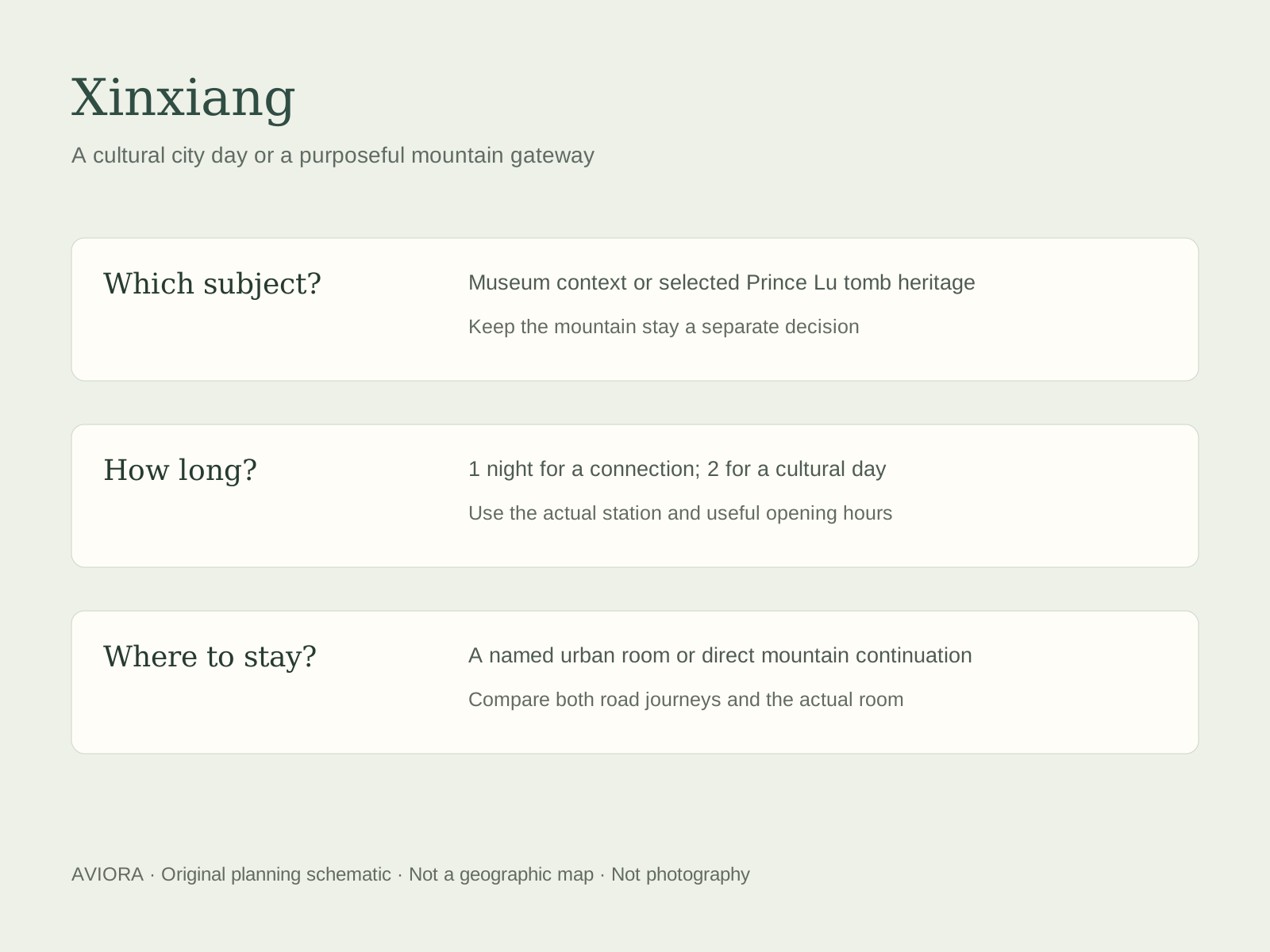
Plan Xinxiang for Pingyuan Museum, Prince Lu tomb heritage and a comfortable northern Henan base. Compare actual stations, city hotels and a separate Huixian mountain stay.
Xinxiang (新乡) is a city in northern Henan with a useful rail gateway and its own selected cultural interests. Pingyuan Museum (平原博物院) can provide regional collection context, while the Prince Lu tomb complex (潞王陵) offers a separate Ming-period funerary-architecture subject. Choose Xinxiang for those interests or a comfortable urban base, rather than automatically treating it as a compulsory stop before the mountains. Two nights give one full city-and-heritage day when opening and transfers fit. Huixian’s Guoliang, Wanxianshan and Baligou are separate mountain visits, not city-center attractions or sights completed by sleeping near a Xinxiang railway station.
One night can serve a genuine arrival or departure need, with limited sightseeing only when hours and reservations work. Two nights give one full cultural day for the museum and a separately assessed Prince Lu tomb interest. Three nights need another distinct day, such as a carefully planned Huixian outing, or a slower urban stay the guest actually wants. A mountain-focused traveler may prefer to continue directly to a suitable Huixian or mountain room instead of adding an unnecessary city night.
Choose for the actual arrival or departure when it simplifies the trip. Keep sightseeing modest and conditional on useful hours. A train connection alone does not justify inventing a full city program.
Use the day for the available museum and a compatible tomb-architecture interest, with full transport, lunch and breaks. The collection and funerary setting provide different kinds of evidence. Choose interpretation rather than adding multiple minor stops.
Add a properly assessed Huixian outing or another substantive interest when the city room and road journeys suit the guest. Compare a local mountain stay first. More city nights should not hide repeated long scenic transfers.
Share dates, actual station or starting hotel, available nights and whether regional collections, Ming architecture or a practical mountain gateway matters most. We can compare one transit night, two city nights and a direct Huixian continuation. No matching published Xinxiang itinerary is listed here. A tailored proposal should show the actual visits, room, full connections and alternatives if a museum booking or selected tomb area is unavailable.
A tailored Xinxiang proposal should identify the actual museum and tomb visitor areas, guide, admissions, full transfers, meals and hotel. Interpretation should distinguish historical fabric, repairs, replicas and exhibition material. Public admission does not establish access to collection stores, active research, private rooms or underground tomb spaces. Any Huixian extension requires a separate named scenic route and current visitor-system assessment, not an implied benefit of a Xinxiang hotel booking.
This is a destination planning guide, not a fixed departure or a confirmed package. We check the route, accommodation, transport and guide availability for your dates before setting out the services and price in writing.
How our tailor-made China service works · Explore routes in Central China
Start planningSignature experiences
Keep a useful museum window for looking and interpretation, then allow a proper meal and the separate tomb-area transfer if both fit. Do not assume every collection or outdoor heritage area stays open around train times. A transit night may provide only dinner and sleep. A Huixian mountain outing needs its own full day and current access plan rather than the remaining afternoon after city touring.
Suggested Xinxiang itinerary
Arrival / gateway and room
Complete the transfer from the named station, settle luggage and enjoy dinner. Confirm the next day’s museum booking and tomb route. A late arrival should not be described as a full cultural visit.
Full day / regional collections
Use the actual museum galleries for a chosen regional question, with interpretation and breaks. Keep a proper lunch and assess energy before the separate heritage outing. No famous artifact or specialist meeting is assumed.
Second subject / Ming funerary heritage
Visit the selected public area with the full transfer, walking and current access understood. Explain princely rank and the visible fabric. If the route is unavailable or unsuitable, use a separately confirmed alternative rather than promise a burial chamber.
Departure / mountain or next city
Continue to the actual station or a separately assessed Huixian mountain stay. The written plan should name visits, transfers, room, meals and alternatives, without implying that all wider Xinxiang scenic areas were included.
When to go
A city-and-museum plan can be considered across seasons when current opening and room conditions suit the guest. Outdoor tomb-area walking needs shade and breaks in summer and warm clothing and footing checks in winter. Rain can alter the preferred order. A Huixian extension has separate mountain-road and weather constraints, so an operating city museum does not prove a scenic trail is open. Holidays may affect reservations and queues.
Compare the exact hotel room, guide expertise, road-service hours, named admissions, meals and rail basis. Identify special exhibitions or additional visitor transport separately when relevant. Do not bundle the museum, tomb complex and distant mountains under an undefined city tour. A premium should correspond to useful time, comfort and interpretation, not invented curator meetings, private chambers or guaranteed quiet.
Getting there and getting around
Check dated services to the actual Xinxiang or Xinxiang East station and use that address for the hotel transfer. Include boarding and luggage at both ends rather than rely on the rail sector alone. For Huixian continuation, assess the full mountain road and permitted visitor approach before promising a village arrival time. A late train may call for a city dinner and sleep, while an early arrival does not automatically establish a museum reservation.
Use a defined local vehicle plan between the room, actual museum entrance, tomb visitor route and departure station. Within collections and heritage areas, follow the public route and current photography rules. Assess internal walking separately from the road transfer. For a Huixian day, use the named scenic entry and current transport system; a city driver does not establish access to all mountain roads or trails.
Museum visits can involve long standing periods and gallery distances; check lifts, seats and the actual entrance-to-exit route. The tomb complex has its own outdoor surfaces, steps, thresholds and exposed walking. Ask for the selected public path, handrails and shorter alternatives. A vehicle to the entrance does not make every area step-free. Heat, rain and winter footing can change the comfortable route.
Ask whether you want a cultural day or simply a comfortable place to connect. Both are valid, but they need different plans. The museum and Prince Lu tomb interest can give Xinxiang an independent purpose without borrowing every mountain attraction from the wider prefecture. If mountains are the sole reason for travel, compare direct continuation before adding city nights.
Compare a named Hongqi-area property for the actual museum and intended city visits with a central urban room chosen for meals and comfort. An address oriented to Xinxiang East serves a different gateway need; a room near Xinxiang station is another location. Plot the actual hotel against the full route rather than infer short transfers from a district or station label. Check sleep, bathroom, heating or cooling, breakfast, dinner, luggage and pickup. A city room can offer conventional comfort while adding long daily mountain drives.
Compare a specific room and its road relationship to Pingyuan Museum and chosen meals. Districts are broad; a name is not a transfer estimate. Check bedroom orientation, bathroom, temperature control, dinner and pickup.
Choose a property for its actual comfort and the full set of visits. Assess street noise, road access and the trip to the selected station. A station-near or central label does not establish convenience for both the museum and tomb complex.
Use when the actual train and room justify it, with dinner and breakfast checked. Count local drives to the city interests and the mountain approach if selected. This is a gateway base, not a scenic-village stay.
Stay in Xinxiang when the museum, Prince Lu tomb interest, actual room or a rail connection gives the city a clear purpose. Continue toward Huixian when the main goal is Guoliang/Wanxianshan or Baligou and a suitable local property improves the complete mountain day. Compare both road journeys, visitor transport, luggage and meals. A city hotel can be the better comfort choice, but it should not be sold as a mountain stay or a short walk from Guoliang.
Xinxiang can simplify a real train sequence or support a cultural day, but not every traveler needs to stay. Compare the actual arrival time, room and onward road with direct continuation. An extra hotel move should add comfort or meaningful time rather than merely mark a city on the itinerary.
Pingyuan Museum can provide a regional frame, but the available collections and exhibitions should determine the focus. Confirm booking, document requirements, opening and language support before building the day around it. A general museum description is not proof that a famous object, specific exhibition or specialist will be available.
Use the site to understand the rank, architecture and commemoration of a Ming prince. The relationship between approach, stonework and built spaces can reward close looking, with original fabric and later changes distinguished. Confirm the actual public route; a tomb-complex ticket is not a promise of an underground chamber.
A city room may offer preferred services, while a Huixian or mountain address can reduce part of the scenic approach. Compare both drives, internal transport, room quality, meals and the next station connection. Do not treat the outbound map distance as the entire day or assume the mountain room always provides better comfort.
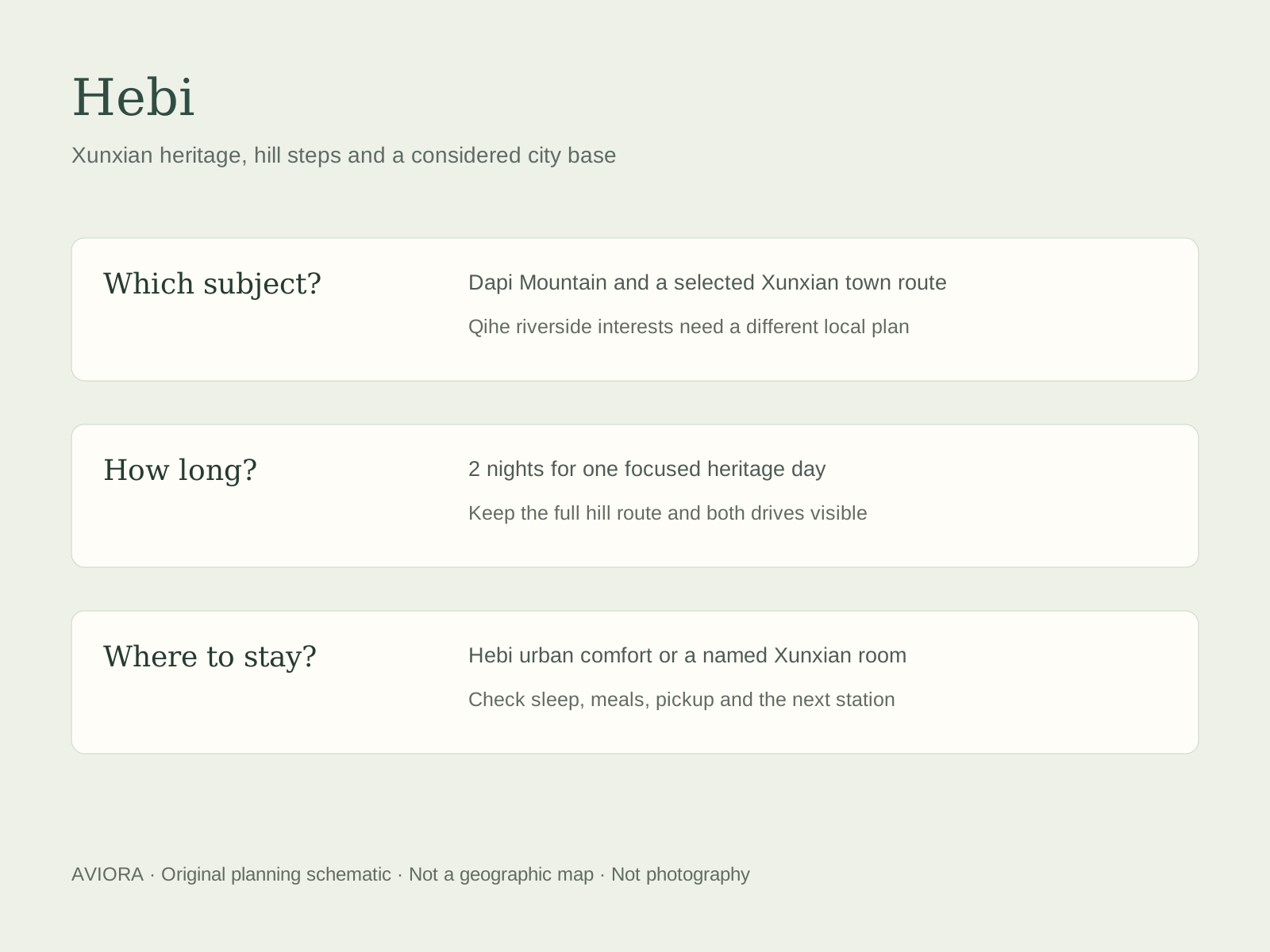
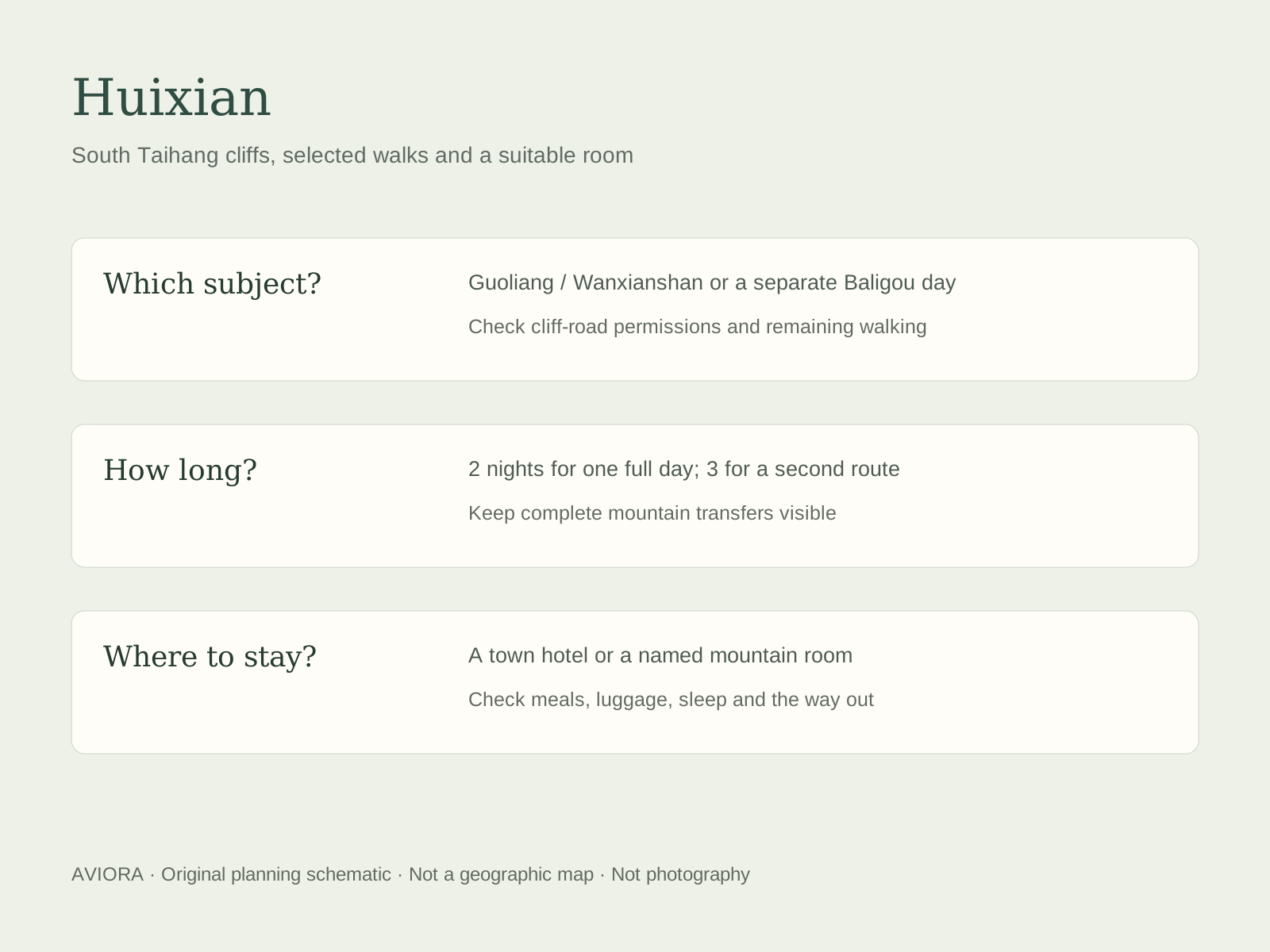
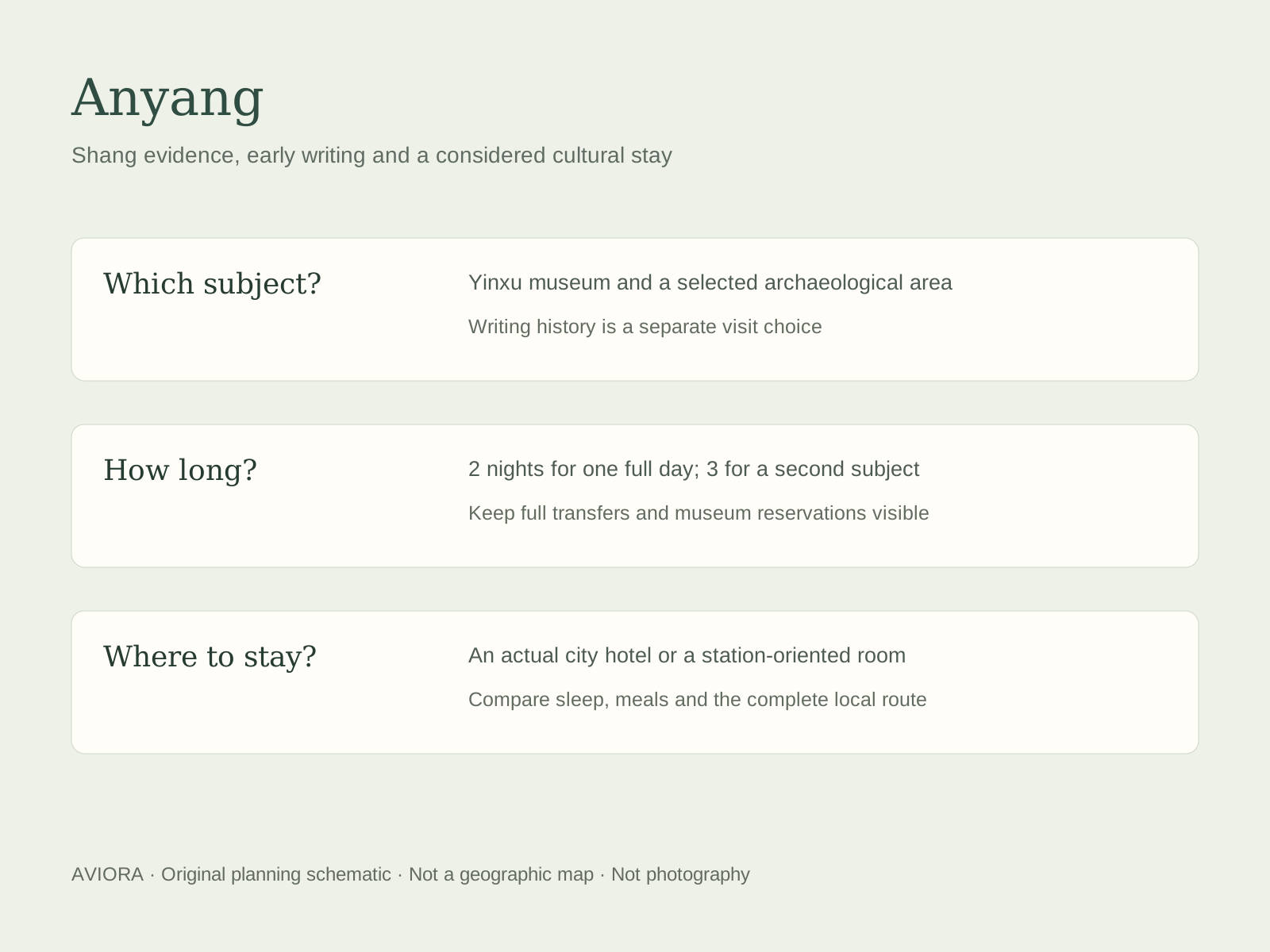
Anyang’s late Shang archaeology, Xinxiang’s regional collections and Ming tomb subject, and Huixian’s landscape visits offer distinct reasons to travel. Choose them deliberately rather than use one ancient-history label for everything. Each needs its own reservation, transport and useful time.
Culture and historical context
A regional collection and a princely tomb offer different ways of reading the past. The museum can connect objects with their periods and local contexts; the tomb landscape can focus attention on rank, approach and commemoration in the Ming world. Avoid treating every site in Henan as one continuous ancient-capital story. A meaningful visit explains why a particular object or structure belongs to the question being asked.
At the Prince Lu complex, distinguish a prince’s status from imperial rank and the visible visitor route from the burial space. Look at the relationship between stonework, built elements and the setting, with repairs and later interpretation identified. A careful explanation can be valuable without access to a chamber, an archaeologist or a closed building. Public access and the conservation of the site set the boundaries of the visit.
Food and social life
An urban Xinxiang base can be useful for a seated dinner before or after the mountain chapter. Ask a suitable kitchen about its own noodle or braised-meat specialties, rather than prescribe a long compulsory tasting list. If choosing a Hongmen-style braised lamb dish, confirm the actual restaurant preparation, portion and ingredients. A named regional style is not evidence of one fixed recipe or an exclusive historical origin.
For guests avoiding lamb or meat, choose suitable alternatives and discuss stocks, wheat, soy and shared preparation explicitly. Confirm breakfast before an early train or mountain pickup. The value of the city meal can be practical as well as cultural: reliable service, a comfortable seat and enough time to discuss the next day. A local restaurant does not automatically provide a kitchen visit or family host.
Xinxiang travel FAQ
It can serve either purpose. Choose a cultural stay for available Pingyuan Museum galleries and a selected Prince Lu tomb interest. Use a transit night only when it simplifies the actual gateway sequence. Not every mountain itinerary needs an extra city stop.
A selected Pingyuan Museum visit can provide collection context, with a separate Prince Lu tomb-complex outing for Ming funerary architecture. Confirm current access and full transfers. Guoliang and Baligou are separate Huixian mountain destinations, not city-center walks.
No. Use the actual station on the dated ticket for every transfer. Include the hotel approach, luggage and boarding. Neither station name establishes a short trip to every city interest or a mountain-village arrival.
One can suit a real connection; two give one full cultural day. Three need a distinct second day and a room that supports the plan. A mountain-focused guest should compare direct Huixian continuation rather than add city nights automatically.
Compare the actual city room and both scenic drives with the Huixian or mountain property’s comfort, meals and visitor-system approach. A city hotel is not a mountain stay, but a closer room is not automatically better. The full sequence decides.
Check the institution’s current booking, identity-document and opening instructions for your date, including any relevant galleries. Do not infer availability from a general city guide. A guided proposal should state the actual museum arrangement and alternative if unavailable.
It is a Ming princely tomb subject, distinct from an emperor’s mausoleum. Interpretation should explain rank, setting and visible architecture. Confirm the named public visitor route rather than assume every building or underground chamber is open.
Assess current openings, the full local transfers, walking and a proper meal first. Two nights give a useful full-day window. Choose a focused route rather than add an uncertain mountain excursion or tight evening train to the same day.
Compare each complete day, including both road journeys and separate visitor systems. A convenient map position alone is not enough. Local bases may suit some trips better, while a city room can suit particular comfort or gateway needs.
No matching product is listed on this page. Share dates, actual gateways, nights and cultural or mountain priorities for a tailored assessment. The outline is not a new itinerary for sale or a promise of restricted heritage access.
Route combinations
Plan your journey
Share your dates, interests, arrival and departure cities, and any plans already booked. We’ll recommend an itinerary at a pace that suits you, with the arrangements and price explained before you book.
You are asking about Xinxiang.
The enquiry form will load here.
Prefer a direct reply? Message us on WhatsApp or email our China team.