Explore Tangshan through Kailuan industrial heritage, ceramics and thoughtful earthquake remembrance, with a separate Eastern Qing Tombs decision and practical hotel advice.
2–3 nights for selected city interests; allow a separate day for the tombsIndustrial history, ceramics and a thoughtful introduction to modern urban China
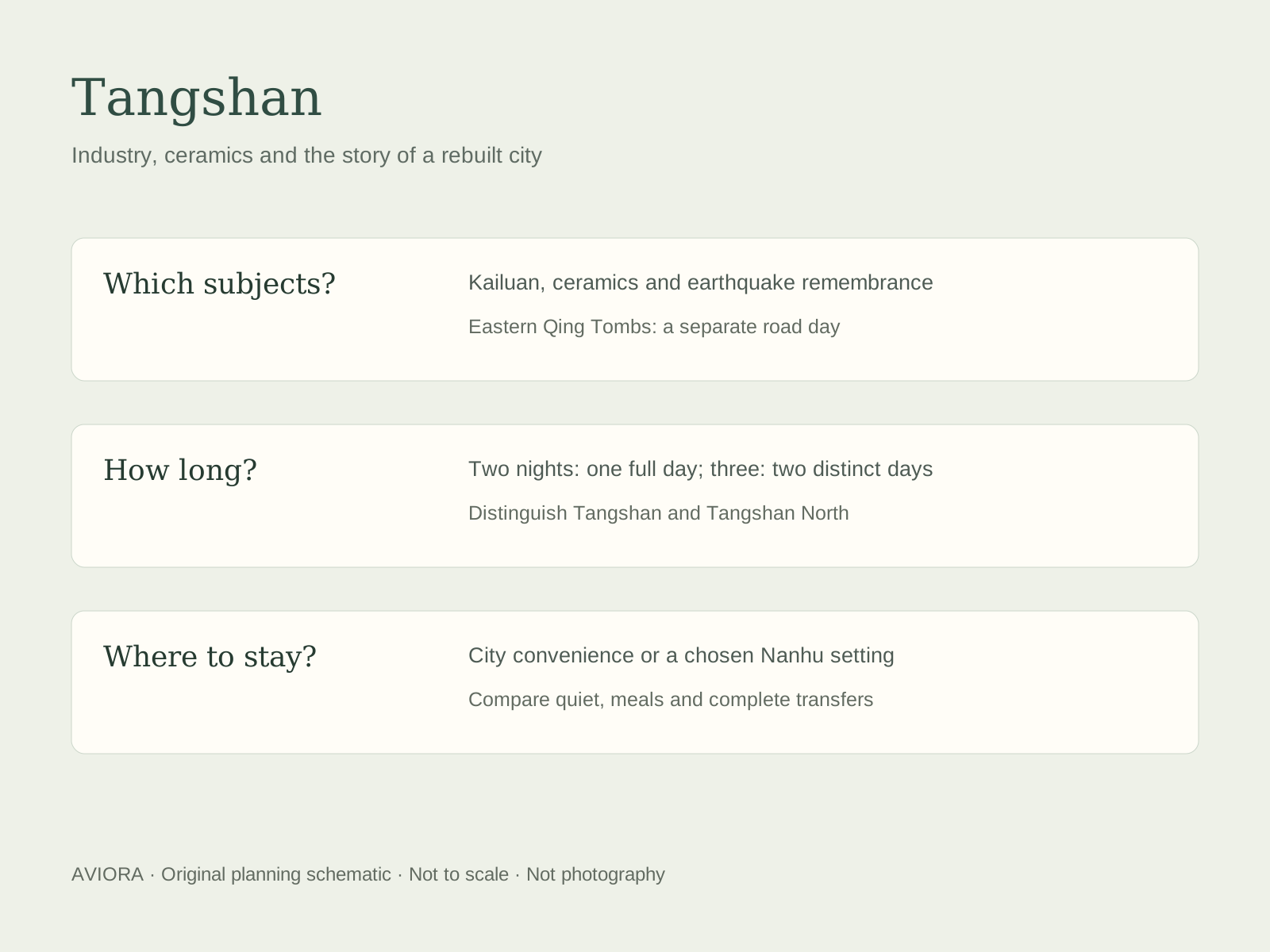
Tangshan (唐山) is a modern industrial city in Hebei, east of Beijing and northeast of Tianjin. Its strongest cultural case combines the history of coal and early industry, a significant ceramics tradition and a considered understanding of the 1976 earthquake and subsequent rebuilding. Choose it for these specific interests rather than for a preserved imperial old town. Kailuan industrial heritage, a selected ceramics collection and earthquake-remembrance sites ask different questions and deserve clear interpretation. Two nights give one focused full day; three allow two distinct days when current visitor arrangements fit. The Eastern Qing Tombs near Zunhua are a separate outlying heritage excursion, not another city-center stop.
How many days do you need in Tangshan?
Two nights can support a focused industrial-history or ceramics day, with a modest additional city interest if arrival and departure leave useful hours. Three nights allow two different full days or a slower pace. If the Eastern Qing Tombs are essential, allocate their complete road and selected visitor route rather than attach them to a full museum day. One night is a selective stop. A longer stay works best with a specific craft, research or regional interest and confirmed access, not an assumption that every factory or collection welcomes private visitors.
Compare stays by number of nights
1 night / one selective subject
Useful when the actual transport and open hours permit a meaningful collection or industrial-heritage visit. A late room arrival and early departure are a transport stop. Keep the main subject off a closing-time window and do not add distant tomb travel merely to lengthen the attraction list.
2 nights / a focused city chapter
Give one principal subject and a complementary interest a full day, with interpretation, meals and rest. A modest arrival or departure visit can fit only when the actual hours work. This does not automatically include a craft class, mine access or a complete regional circuit.
3 nights / two different full days
Combine a clearly interpreted city day with another distinct collection, reflective subject or a separately planned Eastern Qing Tombs excursion. Choose the actual open route and road pattern. Extra time should create depth or a better pace rather than additional unconfirmed institutional appointments.
Plan a tailored Tangshan visit
Tangshan can add a distinct industrial-and-craft chapter to a journey through Tianjin, Beijing or Qinhuangdao when that subject interests the guests. Baoding offers another institutional and funerary-history contrast farther west, with the Western Qing Tombs distinct from Tangshan's Eastern Qing Tombs decision. Compare actual rail or road connections and useful nights instead of collecting cities along a map line. No matching published Tangshan tour is recommended here. Share dates, gateways, interests in industry or ceramics, walking needs and room expectations for a tailored route with named public experiences and confirmed services.
A proposal should name the public industrial-heritage site, actual ceramics collection or confirmed provider, memorial subject, hotel and room, full station transfers, guiding, admissions and meals. Explain whether any mine-related experience is a museum presentation or an actual currently available visitor route, with physical conditions assessed. Working factories, specialist conversations, craft lessons, research stores, underground activities and closed tomb spaces require separate appropriate permission and arrangements where available. Private guiding does not authorize industrial premises or institutional access. State a worthwhile alternative if a core collection or site is unavailable.
This is a destination planning guide, not a fixed departure or a confirmed package. We check the route, accommodation, transport and guide availability for your dates before setting out the services and price in writing.
Anchor the city stay on the currently available collection or industrial route that explains why you are coming. Pair it with one complementary subject, lunch and rest instead of several loosely related museums. Memorial places deserve an unhurried and respectful window. A Nanhu walk or event is another current operating decision. Give the Eastern Qing Tombs their own road day and protect the correct station transfer before an onward departure. Avoid making a key exhibition or appointment depend on an uncertain arrival afternoon.
01
Understand a named Kailuan public route through industry, work and technology
02
Choose a ceramics collection for its material and production story rather than default shopping
03
Give earthquake remembrance or a separate imperial-tomb day a clear and respectful purpose
Suggested Tangshan itinerary
What can you fit into your Tangshan itinerary?
Arrival / the exact station and booked room
Keep the first cultural window modest
Complete the transfer, settle in and take a straightforward meal. A short local orientation can fit if actual arrival and entry hours allow it. Keep the principal collection or specialist appointment off an uncertain late arrival.
Full day 1 / a focused city story
Connect public industrial heritage with a distinct subject
Use the named currently available Kailuan route and a suitable ceramics or reflective interest, allowing interpretation, final walking, lunch and rest. This is not a promise of working-mine or factory entry. Choose fewer well-explained subjects rather than rush several unrelated museums.
Full day 2 / for a three-night stay
Choose another city interest or the separate tomb day
Add a distinct available collection or actual confirmed craft service, or follow a separately planned Eastern Qing Tombs route with its whole road day and open mausoleums assessed. Do not require all options, Nanhu events and a departure train in one day.
Departure / the actual onward connection
Give the final transfer its real time
Reach the ticketed station or continue to a separately confirmed Tianjin, Beijing or Qinhuangdao chapter. This outline is illustrative, not a published package or a guarantee of exhibitions, production access, teachers, chambers, rooms or current site operation.
Spring and autumn are useful starting points for mixing city collections, industrial heritage and a selected outdoor route, with the actual weather still important. Summer heat and rain affect large grounds and outlying tomb approaches; winter needs a review of cold, ice and room comfort. Indoor collections can support a cultural visit outside ideal walking weather when their actual galleries are open. Nanhu events, craft appointments and chamber access follow their own schedules. Choose the principal subject before assigning one perfect season to every regional interest.
What affects the cost of a Tangshan trip?
Compare the actual room and breakfast, full vehicle and station transfers, guide language and subject knowledge, named admissions and any separately confirmed craft service. A public museum, a workshop lesson and a working-factory visit have different arrangements and should not be implied by one ceramics label. A tomb day adds the full return drive and a separate set of site visits. A premium should buy useful interpretation, comfortable timing and reliable service rather than a guaranteed private factory, closed chamber or master-maker meeting.
Getting there and getting around
How to get to Tangshan and plan your stay
Arriving and connecting
Choose the actual dated train to Tangshan / 唐山 or Tangshan North / 唐山北 and include the complete transfer to the booked property. They are not interchangeable pickup points. Any airport proposal needs a verified operating dated flight and full final journey. Keep specialist appointments and essential galleries off uncertain arrival windows. Protect a realistic return to the ticketed station after any outlying excursion rather than use an ideal road estimate that omits the actual visit and meals.
Getting around
Use a coherent city sequence for selected public collections, industrial heritage and memorial subjects, with the outlying tomb day separately planned. Confirm actual entrances, open buildings, steps, final walking, seating, toilets, lunch and pickup. A private car does not enter operating industry, closed conservation areas or every visitor structure. A specialist guide's role should be clear and genuinely available; it is different from a driver or a promise of institutional introductions. Adjust the sequence when a core route is unavailable.
Walking and access
Industrial heritage can involve large buildings, uneven surfaces, steps and prolonged standing; confirm the exact public route. Any mine-themed or underground visitor experience needs separate assessment of stairs, light, enclosed spaces and current operation. Ceramics galleries and memorial grounds have different demands. At the tombs, final monument approaches and any open chamber stairs need their own review. Agree toilets, seating, pickup and a shorter useful option. A private vehicle does not make every museum, industrial structure or mausoleum step-free.
What first-time visitors often underestimate
Ask which Tangshan story makes the stop worthwhile: industrial development, ceramics, rebuilding or a distinct imperial-tomb landscape. Then check the actual public route, available interpretation and complete transfers. A clear answer can reveal an interesting city beyond familiar first-trip destinations. A long list of vaguely cultural attractions without confirmed subjects is a weaker reason to add another hotel move.
Where to stay in Tangshan
Compare a specific central property for meals and the selected city sites with a Nanhu-area hotel when its actual setting and room justify the location. Tangshan station and Tangshan North station serve different arrival patterns and final transfers; a station hotel is a logistical choice rather than a universal cultural base. A Zunhua-area stay belongs to a separate tomb-led road chapter. For each property, assess quiet, bathroom, bedding, temperature control, lift, breakfast, dinner and pickup. A premium rate or industrial-design theme does not establish heritage-building accommodation or specialist access.
Compare hotel areas
Central Tangshan / practical meals and selected city sites
Compare the exact address, quiet, bed, bathroom, heating or cooling, breakfast and pickup. Map the main collection and industrial route rather than assume a central label makes every subject walkable. A comfortable modern room can be more valuable than themed decoration with uncertain facilities.
A named Nanhu-area property / a deliberate setting choice
Choose it for an actual room or landscape benefit, then check the public walking route, meals and complete cultural transfers. A lake-view photograph does not establish the view from the booked room, unrestricted shore access or an operating evening event. Confirm what remains useful in poor weather.
A station-oriented room / exact transport purpose
Use the dated ticket and full hotel address, distinguishing Tangshan from Tangshan North. Compare dinner, sleep and the rest of the cultural road day alongside the short station transfer. Station proximity alone does not make the room the best sightseeing base.
Zunhua or a tomb-area property / another overnight chapter
Consider it when the actual mausoleum route and onward journey justify an outlying night. Check current room facilities, meals and road access. It is not interchangeable with a central Tangshan hotel, and a tomb-area listing does not provide private chamber entry or the comfort of an assessed resort.
Should I prioritize Kailuan, ceramics, earthquake history or the Eastern Qing Tombs?
Choose Kailuan for a clearly defined industrial-heritage visit, distinguishing public interpretation from an operating mine. Choose a named ceramics museum or exhibition for material, design and production history; a collection, shop, workshop and working factory are different experiences. Give earthquake remembrance an appropriate reflective place rather than use it as a dramatic photo stop. Choose the Eastern Qing Tombs for a separate imperial funerary landscape with the actual open mausoleums and full road day specified. A focused city visit can stand on its own without adding every regional attraction.
Industrial heritage is not a working-mine invitation
Kailuan can provide a public introduction to coal, labor, technology and industrial development. Name the actual museum and visitor route. Do not infer entry to production areas or a real mine descent from photographs of mining equipment or underground-themed interpretation. Any additional activity requires current operation, permission, guest suitability and a clear description.
A ceramics collection, a shopping stop and a class are different services
A museum can explain materials and the development of Tangshan production, including bone china where relevant. A shop is a commercial visit, a workshop needs a willing teacher and working facilities, and a factory requires its own institutional permission. Identify the actual purpose, language, content and any firing or shipping arrangements instead of implying that every ceramics day includes them all.
The 1976 earthquake deserves context and care
Treat memorial places as opportunities to understand loss, response and rebuilding, not as disaster spectacle. Distinguish a monument, an exhibition and an actual preserved site. A guide should explain documented evidence and the current city respectfully, avoiding graphic storytelling for effect or an assumption that local people wish to recount personal experiences.
Eastern and Western Qing Tombs are different destinations
Qing Dongling near Zunhua is distinct from Qing Xiling in Yi County near the wider Baoding chapter, and from Beijing's Ming tombs. A serial UNESCO listing does not create one visitor park or ticket. Specify the exact complex and open mausoleums, complete road day, internal transport and final walking rather than use imperial tombs as a generic interchangeable label.
A modern visitor district is not surviving ancient fabric
Entertainment-led streets and staged cultural presentation can be enjoyable when that is what the guests want. Describe them accurately as contemporary visitor experiences rather than proof of a preserved historic Tangshan old town. Distinguish a performance, commercial district and documented industrial monument before deciding how each serves the trip.
Tangshan earns a stop through a specific interest
Industry, ceramics and urban rebuilding can offer a rewarding perspective on modern China. If those subjects do not interest the guests, adding the city solely for national coverage may not improve their route. A thoughtful proposal explains why this chapter complements Tianjin or Beijing and gives it useful time instead of another brief station-to-museum detour.
Culture and historical context
Understand modern China through work, material and rebuilding
Tangshan's industrial story can widen a cultural journey beyond imperial courts and ancient capitals. A named public Kailuan visit offers a way to discuss coal, technology, labor and urban growth through actual collections and structures. Ceramics adds another material history: design, production, changing markets and the difference between industrial scale and a particular maker's practice. Good interpretation does not treat workers or active factories as available performances for visitors.
The earthquake of 1976 and the rebuilding that followed are also part of the city's history, but remembrance calls for care. Explain what a memorial or exhibition represents, separate documented evidence from popular narratives and respect the privacy of residents. An unhurried conversation about the present city can be meaningful without a promised personal testimony. Modern visitor districts and restored industrial structures should be identified accurately rather than presented as unchanged surviving old Tangshan.
Food and social life
Choose local tastes with clear ingredients and realistic timing
Tangshan qizi shaobing, small filled baked pastries, can be an accessible local food subject where genuinely offered. Ask about the particular filling, fat and preparation rather than assume every version is a vegetarian snack. A taste alongside a proper seated meal can fit a city day without another long detour. For an outlying tomb excursion, arrange lunch realistically so interpretation and walking are not followed by an uncertain late meal.
Clarify wheat, meat fillings or stock, dairy, sesame, nuts, sauces and shared equipment where relevant. A regional specialty name does not establish allergy suitability or halal preparation. Serious dietary requirements need a specific kitchen's confirmed capacity and a workable alternative. A cooking lesson or hosted meal requires a real willing provider and separate arrangement; it is not included merely because the city guide discusses food culture.
Tangshan travel FAQ
Questions about visiting Tangshan
Is Tangshan worth visiting as a foreign traveler?+
It can be for a defined interest in industrial heritage, ceramics or urban rebuilding, with suitable interpretation and actual public visitor routes. It is a weaker fit if you expect a compact preserved ancient town. Choose the subject that earns the road and overnight rather than add the city simply because it is on a rail map.
How many nights should I stay in Tangshan?+
Two nights give one focused full day; three allow two distinct days or a city chapter plus a separately planned Eastern Qing Tombs excursion. One night is selective. Actual museum hours, appointments, arrival and departure determine the useful time.
Can I visit a working coal mine at Kailuan?+
Do not assume so. A public industrial-heritage museum or mine-themed visitor presentation is different from operating production premises or a real mine descent. Confirm the exact current activity, permissions, physical conditions and guest suitability before including anything beyond the ordinary public route.
Can I take a ceramics class or visit a factory in Tangshan?+
Research it as a separate service with an actual willing provider, appropriate permission and confirmed language, content and timing. A ceramics museum or shop does not automatically include a working-factory visit or lesson. Any firing, collection or shipping arrangements should be explicit.
How should I approach Tangshan's earthquake memorial sites?+
Choose a clear reflective and historical purpose, distinguishing memorial grounds, an exhibition and any actual preserved site. Allow time for context and respect other visitors. A guide should not promise survivor encounters or use private loss as a dramatic sightseeing performance.
Are the Eastern Qing Tombs near central Tangshan?+
Treat Qing Dongling near Zunhua as a separate outlying road day, with a named open mausoleum route and actual walking assessed. It is not another stop beside every city hotel. The Western Qing Tombs in Yi County and Beijing's Ming tombs are different destinations.
Should I stay in central Tangshan or near Nanhu?+
Compare the actual room, meals, quiet, setting and complete cultural transfers. A central address may simplify a focused city plan, while a named Nanhu property can suit a genuine landscape or room benefit. A lake image does not establish the booked view or operating events.
Which Tangshan railway station should I use?+
Choose the actual dated service and full property route. Tangshan and Tangshan North are different stations with different final transfers. Give the driver the exact ticketed station and hotel address; the city name alone does not identify the most convenient pickup for every itinerary.
Share your dates, interests, arrival and departure cities, and any plans already booked. We’ll recommend an itinerary at a pace that suits you, with the arrangements and price explained before you book.