Plan Baoding around its historic Zhili government complex and garden, with clear choices on Mancheng Han tombs, the Western Qing Tombs, hotels and full transfers.
2–3 nights for selected city and outlying subjectsQing administration, Han archaeology and focused northern-China cultural journeys
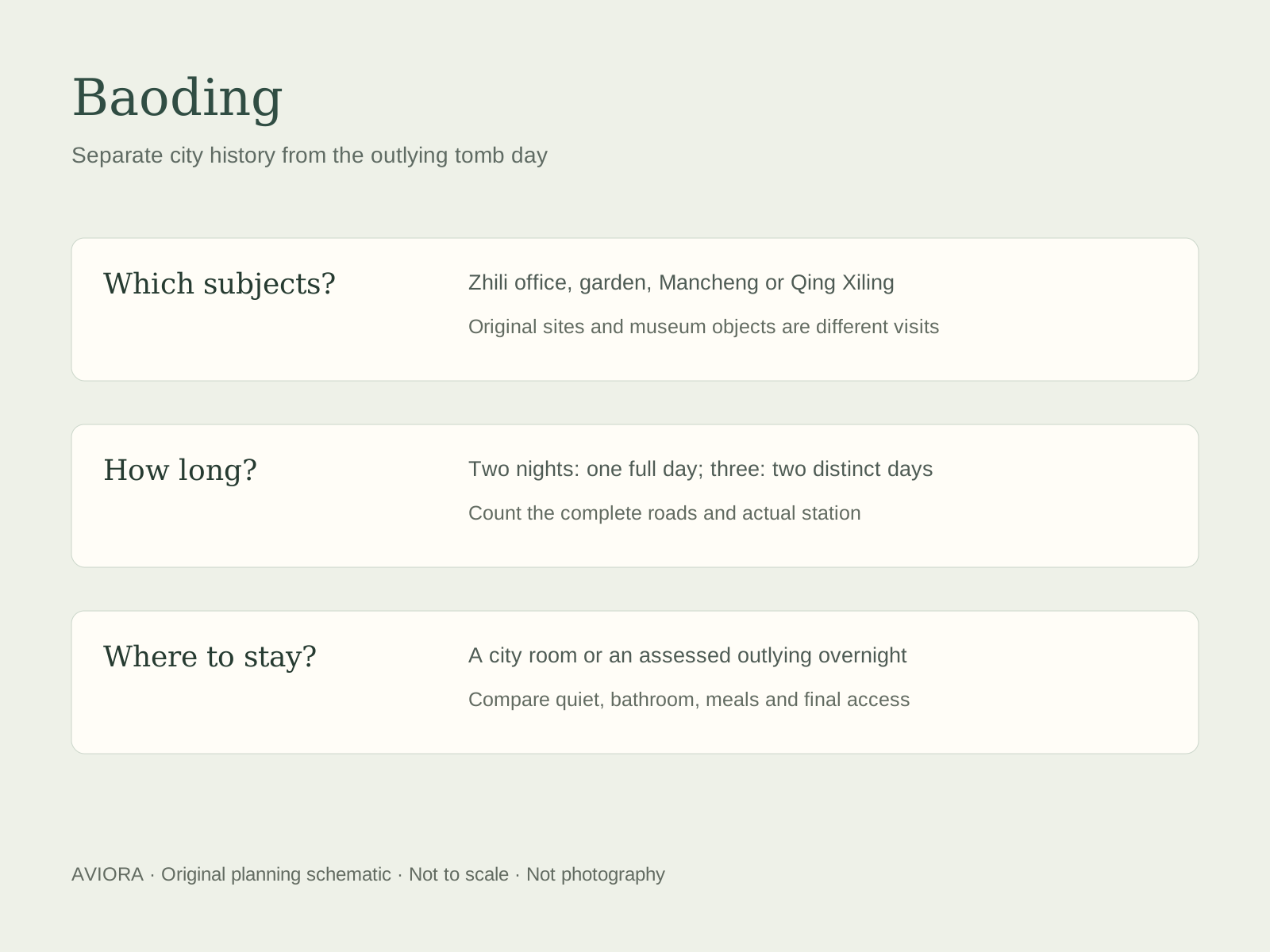
Baoding (保定) is a city in Hebei southwest of Beijing, with a useful combination of urban history and separately planned outlying heritage sites. In the city, the former Zhili governor-general's office introduces provincial administration under the Qing, while the Ancient Lotus Pond offers a different garden and cultural-history subject. Mancheng's Han tombs and the Western Qing Tombs in Yi County are separate excursions from that city chapter, not neighboring parts of one park. Choose two nights for one focused full day or three for a city day plus a substantial outlying subject when connections fit. A Baoding stay does not automatically cover Baiyangdian, Xiong'an or every county in the wider area.
How many days do you need in Baoding?
Two nights can provide a considered city-history day or one main outlying excursion, with any arrival or departure interest fitted to the actual hours. Three nights give two full days: for example, the historic government complex and garden, then Mancheng or a selected Western Qing Tombs route. Adding both tomb subjects generally needs more useful time, particularly when you want detailed interpretation. One night is selective. Count the real station transfers and driving days instead of treating each hotel night as another complete day at the sites.
Compare stays by number of nights
1 night / a selective cultural or transport stop
Choose one realistic subject when entry and actual connections leave useful hours. A late arrival and early train do not provide a complete city-and-tomb stay. Avoid putting the main reason for travel into a closing-time window after an uncertain arrival.
2 nights / one focused full day
Give a city-history pairing or a chosen outlying site real interpretation time, a proper meal and a comfortable return. Arrival or departure time may add a smaller interest, but should not silently become another substantial road excursion.
3 nights / city context and one outlying subject
Use two full days for different interests, such as city administration and garden history followed by Mancheng archaeology or Qing funerary planning. Both major tomb subjects may justify more time rather than a rushed double excursion. Extra nights should earn their place through depth or a better route.
Plan a tailored Baoding visit
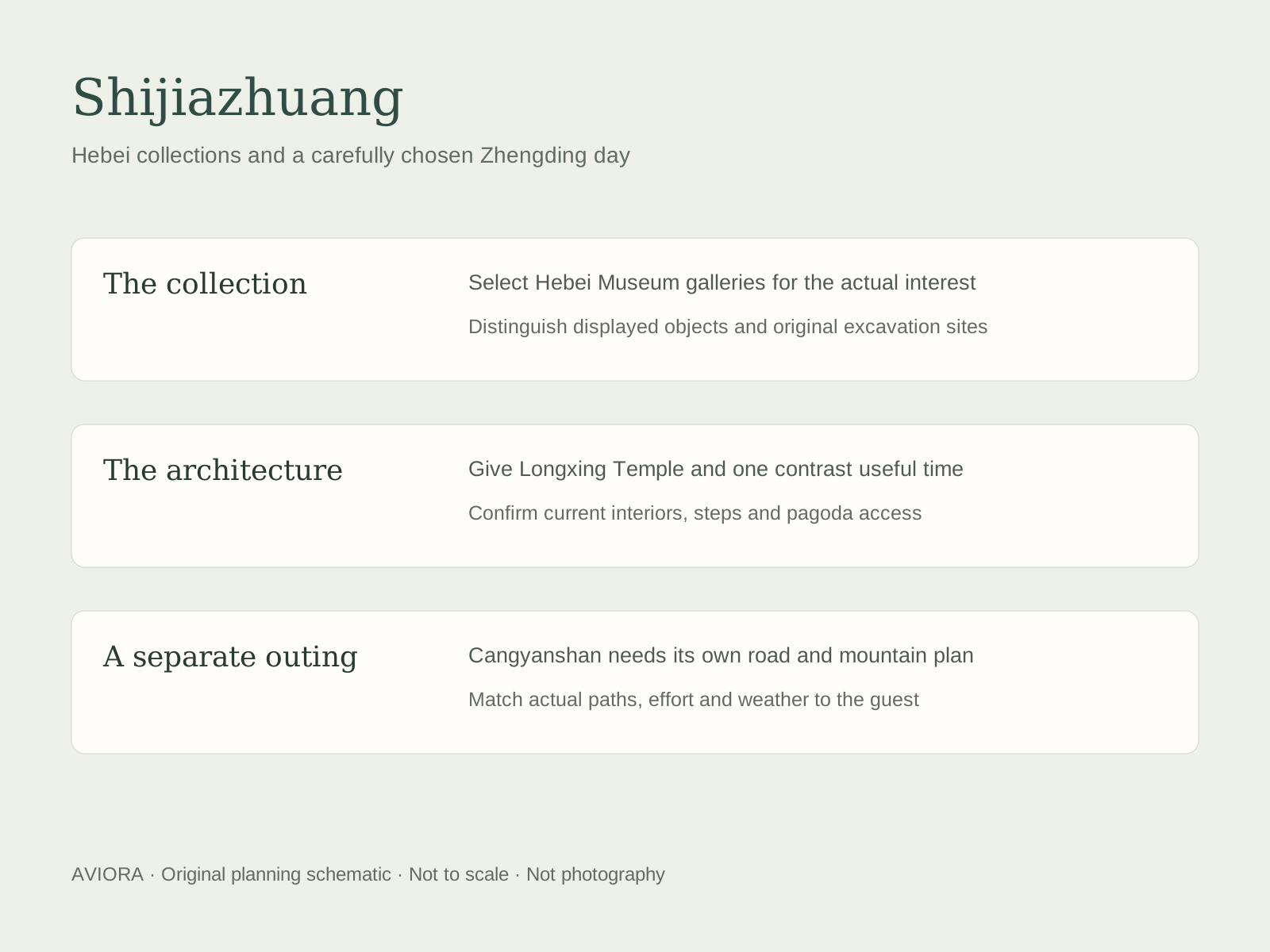
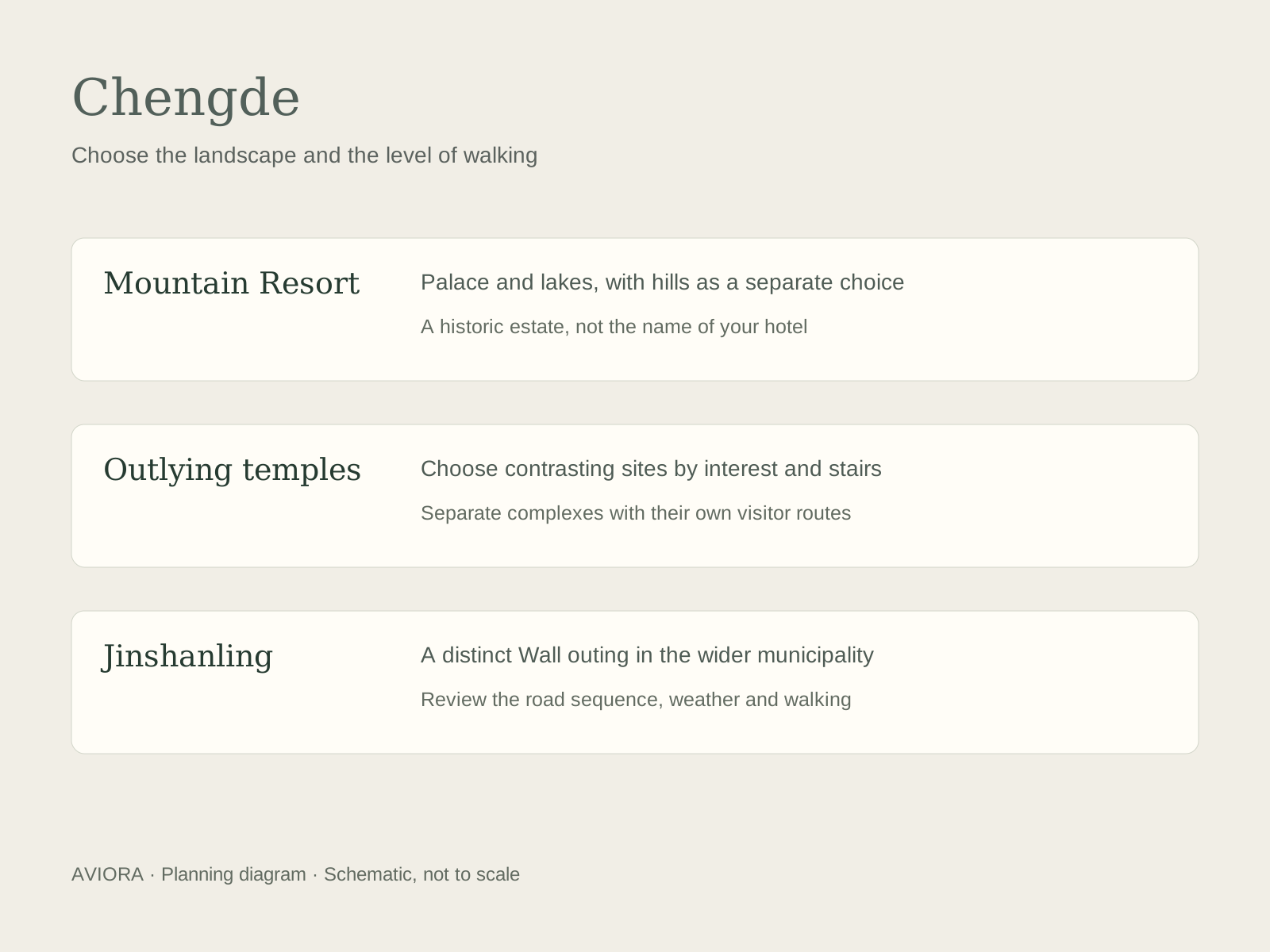
Baoding can add a focused chapter south of Beijing before a separately chosen Shijiazhuang–Zhengding or Handan stay. Chengde offers a different Qing court, garden and temple setting northeast of Beijing and needs its own connection; it is not a local Baoding excursion. Choose by historical interest and the full route, not a province-wide attraction checklist. No matching published Baoding tour is recommended here. Share dates, actual stations, main historical interests, walking needs and room priorities for a tailored plan with explicit inclusions.
A proposal should name the room and hotel address, exact gateway, complete road days, guide language, selected city buildings, tomb route, admissions and meals. Establish which interiors or underground spaces are actually available and which views are exterior-only. Specialist history or archaeology interpretation needs an available provider and agreed content. Research access, stored objects, private halls, conservation areas, boat trips and personal hosts are separately confirmed services where available, not rights conveyed by private guiding. Specify a useful alternative if a core display or route cannot be visited.
This is a destination planning guide, not a fixed departure or a confirmed package. We check the route, accommodation, transport and guide availability for your dates before setting out the services and price in writing.
Build the city day around actual entry and open buildings, leaving time to understand the government complex rather than hurry through courtyards. Give an outlying tomb visit its full road, selected route, lunch and return. Seasonal flowers at the Lotus Pond are an optional enhancement, not a guarantee attached to the garden's name. Keep essential galleries or interiors off an uncertain arrival window, and protect the real departure-station margin. A closed chamber should not turn the whole day into an unexplained drive.
01
Understand provincial Qing administration through the actual Zhili government complex
02
Give the Ancient Lotus Pond garden a cultural subject beyond seasonal flowers
03
Choose Mancheng archaeology or a specific Western Qing Tombs route as a separate full excursion
Suggested Baoding itinerary
What can you fit into your Baoding itinerary?
Arrival / the actual ticketed station and room
Keep the first window realistic
Transfer to the booked hotel, allow a proper meal and settle in. A short city interest can fit when actual entry and arrival hours allow it. Do not make the principal heritage subject depend on a tight closing-time visit after uncertain transport.
Full day 1 / a coherent city-history pairing
Connect government and garden culture
Use the currently open Zhili government route and a considered Ancient Lotus Pond visit, with interpretation, lunch and rest. Explain the actual historical layers and let flowers be a seasonal addition. A selected collection can fit only when it adds a distinct available subject.
Full day 2 / for a three-night stay
Choose one substantial outlying subject
Select Mancheng for a site-based Han archaeology day or a named Western Qing Tombs route for Qing funerary planning. Allow the full roads, current open areas, walking and meals. These are alternatives in this outline, not a promise to complete both and return for another city visit.
Departure / the whole onward sequence
Continue to a separately planned cultural chapter
Allow the actual station transfer or next road journey to Beijing, Shijiazhuang or another confirmed base. A lake or additional tomb day may require more time. This outline is illustrative, not a published package or a guarantee of objects, chambers, flowers, rooms or current visitor operation.
Spring and autumn are useful starting points for combining city courtyards, a garden and a selected tomb landscape, with actual weather and opening arrangements still important. Summer can bring heat and rain; a lotus-flower interest needs current seasonal reports rather than a guarantee based on the site's name. Winter requires a separate review of cold, ice and outlying paths. Collections, conservation and building access may change independently of the season. Select a primary subject and a worthwhile alternative before fixing dates around one photograph.
What affects the cost of a Baoding trip?
Compare room category and breakfast, complete transfers and vehicle days, guide language and historical content, named admissions and any actual internal transport. One selected mausoleum route and a broader multi-stop day have different scope. A city-history visit, a tomb excursion and a lake outing should not be sold as the same service day. A premium should buy accurate explanation, useful timing and reliable comfort rather than private chambers, guaranteed original objects or exclusive access without evidence.
Getting there and getting around
How to get to Baoding and plan your stay
Arriving and connecting
Use a dated service to Baoding / 保定 or Baoding East / 保定东 and the actual hotel address. The stations serve different final transfers and should not be treated as interchangeable pickup points. An arrival through Beijing or a wider regional airport needs the full onward sequence, not just the first ticket. Keep essential interiors or collections off uncertain arrival hours, and allow the real return journey before an onward train. A convenient rail connection supports a focused visit without making every outlying cultural day short.
Getting around
Plan city visits and outlying excursions as different service days, with actual entrances, open areas, internal transport where operating, walking and lunch allowed. A private car does not remove stairs, long monument approaches or final walks into heritage compounds. Choose the guide's historical subject and current visitor route before departure. Photography, conservation and religious instructions apply independently of private guiding. A changed chamber opening should lead to a clear alternative, not an unexplained substitution that loses the reason for travel.
Walking and access
City heritage routes can include thresholds, steps, courtyard paving and prolonged standing. Mancheng's hillside approach and the actual open tomb interiors need a separate assessment of stairs, surfaces, lighting and confined spaces. A Western Qing Tombs route may involve long distances between selected monuments as well as final walking. Confirm current internal transport and the remaining effort; a private car does not make every hall or chamber step-free. Agree seating, toilets, pickup and a worthwhile shorter option suited to the guest.
What first-time visitors often underestimate
Ask whether the Baoding chapter is about provincial government, Han archaeology, a Qing funerary landscape or another clearly defined interest. Then check the actual open route and complete road time. That makes it easier to choose a rewarding stay than a generic list of gardens, tombs and lake names. You do not need every regional highlight for a meaningful visit, but the principal subject deserves proper time and explanation.
Where to stay in Baoding
Compare a specific central hotel for meals and selected city sites with a modern property chosen for room comfort and practical pickup. A Baoding East station hotel can help an actual connection but is not automatically the best base for the historic center or an outlying tomb day. An Yi County or other countryside stay needs a clear route or setting advantage, plus the actual room, bathroom, temperature control, dinner and road access checked. An imperial-sounding name does not make a property historic accommodation, and a boutique label does not establish quiet or service quality.
Compare hotel areas
A central city address / meals and selected urban heritage
Compare the actual room's quiet, bed, bathroom, lift, heating or cooling, breakfast and pickup. Historic-site proximity can be useful, but verify the actual walk and street conditions. An old-city label does not mean a preserved historic room or an absence of traffic noise.
A modern city property / comfort with realistic transfers
Choose it for demonstrable room or service benefits, then count the complete urban and outlying drives. Review dinner and the early departure arrangement. A better night's sleep can be more valuable than themed decoration without dependable facilities.
Baoding East station area / a specific rail-logistics choice
Assess the exact dated train, room and final pickup alongside the cultural route. Short station access does not shorten every tomb excursion or city visit. Make the transport purpose explicit rather than present it as the universal best sightseeing base.
Yi County or another outlying property / a separate overnight decision
Choose an actual property when it improves useful time near a selected subject or a worthwhile setting. Confirm the room, quiet, bathroom, temperature control, meals and onward road. A countryside image alone does not establish a premium retreat or convenient access to every imperial tomb.
Should I choose Baoding's city sites, Mancheng or the Western Qing Tombs?
Choose the Zhili government complex and Ancient Lotus Pond for a coherent city day about administration, urban history and garden culture. Choose Mancheng for a site-based Han archaeology interest, distinguishing the original tomb setting from major excavated objects displayed elsewhere. Choose the Western Qing Tombs for a separate imperial funerary landscape, with the actual open mausoleum route and full road day specified. These are different historical questions. One well-explained outlying subject is more useful than rushing both tomb areas and the city merely to complete a list.
The Western Qing Tombs are not the Eastern Qing Tombs or Beijing's Ming Tombs
Qing Xiling in Yi County is a different complex from Qing Dongling near Zunhua and from the Ming tombs in Beijing's Changping area. A shared imperial-tombs label or UNESCO serial listing does not make the sites interchangeable or nearby. Use the full Chinese name, actual route and selected mausoleums when comparing a proposal.
Mancheng's original setting and excavated treasures are different visits
The Han tombs associated with Liu Sheng and Dou Wan offer a site-based archaeological subject. Important excavated objects are associated with museum collections, including Hebei Museum in Shijiazhuang, rather than a promise that every famous original remains in the tomb. Confirm the actual current display. Distinguish original context, replica, interpretation and the object itself.
Historic government and imperial court are related but different subjects
The Zhili governor-general's office introduces provincial administration and its institutional setting. It is not an emperor's palace or a substitute version of Beijing's Forbidden City. Explain the actual buildings, historical layers and modern presentation rather than infer that every furnished room preserves an unchanged Qing interior.
The garden's name does not guarantee lotus flowers
Ancient Lotus Pond has an architectural and cultural-history interest beyond a seasonal photograph. Flowering and water or maintenance conditions vary. Choose the actual visitor route and guide's subject so the garden remains worthwhile without a particular bloom. Do not confuse a historic site's institutional age with the age of every surviving building or planting.
Baiyangdian and Xiong'an need their own purpose and logistics
A lake visitor route, a wetland interest and a contemporary planning or architecture subject are different experiences. Name the actual place, operating service and full transfer. A Baoding city stay does not automatically provide a boat excursion, open water access or entry to institutional projects in the wider Xiong'an area. Check the current responsible operators and local arrangements separately.
Imperial significance does not establish current chamber access
A mausoleum landscape can be rewarding through its layout, approach, sculpture and buildings even when a particular interior is unavailable. Identify what is actually open, any stairs and the interpretive alternative. Do not use a historic designation or old travel account to promise underground chambers, photography or private access on the proposed date.
Culture and historical context
Use different historical settings to ask different questions
Baoding's city sites help explain an institutional world rather than a single picturesque ancient scene. The Zhili government complex offers a way to discuss provincial administration, authority and the relationship with the imperial capital. The garden opens a different conversation about cultural use, design and successive changes. Good interpretation identifies what survives and what belongs to later repair or presentation, without assigning one simple date to every courtyard or pavilion.
Mancheng and the Western Qing Tombs add distinct archaeological and funerary questions from different periods. The tomb setting, an excavated object, a museum display and a present visitor route are different forms of evidence. Be precise about which one you are seeing. Respect conservation limits and photography instructions; private guiding does not grant research access or entry to closed chambers. Thoughtful comparison can add depth without overstating continuity or inventing privileged access.
Food and social life
Understand a familiar local specialty before ordering it
Donkey-meat huoshao is a well-known Baoding food subject for guests who want to try it. Explain the meat and bread clearly before ordering; it is not an anonymous beef sandwich or a compulsory cultural test. Preparation and accompaniments vary by shop. Other suitable noodles, vegetables and shared dishes can provide a satisfying meal without requiring every guest to eat the signature specialty. Choose a seated meal that fits the road day rather than another distant food stop after a long tomb visit.
Clarify wheat, meat stocks, fat, dairy, nuts, sauces and shared preparation where relevant. The bread and fillings can matter for both allergies and religious diets, and a vegetable dish may contain animal ingredients. Halal, vegetarian or serious allergy requirements need a specific confirmed kitchen and workable alternatives. A culinary lesson or hosted meal is a separate service with a real provider, not an assumed benefit of staying in a city known for food.
Baoding travel FAQ
Questions about visiting Baoding
Is Baoding worth visiting from Beijing?+
It can be for a clear interest in the Zhili government complex, garden history, Mancheng archaeology or a selected Western Qing Tombs route. Choose the actual subject, full transfers and useful hours. A convenient train does not make the city center and every outlying site one compact excursion.
How many nights should I spend in Baoding?+
Two nights give one focused full day; three allow a city-history day and one substantial outlying subject. Adding both major tomb interests may need more time. One night is selective. Base the choice on actual entry and rail hours rather than assume every overnight adds a complete sightseeing day.
Are the Western Qing Tombs the same as the Ming Tombs near Beijing?+
No. Qing Xiling in Yi County, Qing Dongling near Zunhua and Beijing's Ming tombs are different places. A serial heritage designation does not create one visitor park or ticket. Confirm the full site name and selected open mausoleum route before comparing trips.
Can I see Mancheng's famous jade burial suits at the tombs?+
Do not assume the famous originals remain in their excavation setting. Important Mancheng finds are associated with museum collections, including Hebei Museum in Shijiazhuang. Confirm the actual current gallery and object display. An original tomb visit and viewing excavated treasures are different experiences.
Is the Zhili governor's office an imperial palace?+
No. It introduces provincial administration through a historic government complex and its present visitor presentation. It is a different institutional subject from an emperor's palace. Ask the guide to distinguish actual fabric, later changes and interpretation rather than assume every furnished room survives unchanged.
When can I see lotus flowers at Ancient Lotus Pond?+
Research current local flowering conditions in the warmer season rather than rely on a fixed date or the garden's name. Planting, weather and maintenance affect the view. A visit should also have a worthwhile architectural or cultural subject if the desired flowers are absent.
Should I stay near Baoding East station or in the city?+
Compare the exact train, hotel room and cultural route. A station property can serve a particular connection; a central address may help meals and selected city visits. Neither eliminates outlying road journeys. Choose by quiet, comfort and complete daily transfers rather than one short station ride.
Does a Baoding stay include Baiyangdian or Xiong'an?+
Not automatically. A lake or wetland outing and a contemporary architecture or planning interest need specific locations, current operating services and their own transfers. A city hotel booking does not provide boat access or admission to institutional projects elsewhere in the wider region.
Share your dates, interests, arrival and departure cities, and any plans already booked. We’ll recommend an itinerary at a pace that suits you, with the arrangements and price explained before you book.