A gentle lake stop, a literary interest and the right base beyond the city · East China
Chizhou Travel Guide: City Stays, Jiuhua Mountain & Countryside
Plan a useful Chizhou stay around Pingtian Lake and literary culture, then choose a separate Jiuhua Mountain or Shitai countryside chapter with realistic bases and transfers.
1 useful city night or 2 for a full day; regional stays need separate basesSouthern Anhui route planning, literary interests and a gentle city-and-lake pause
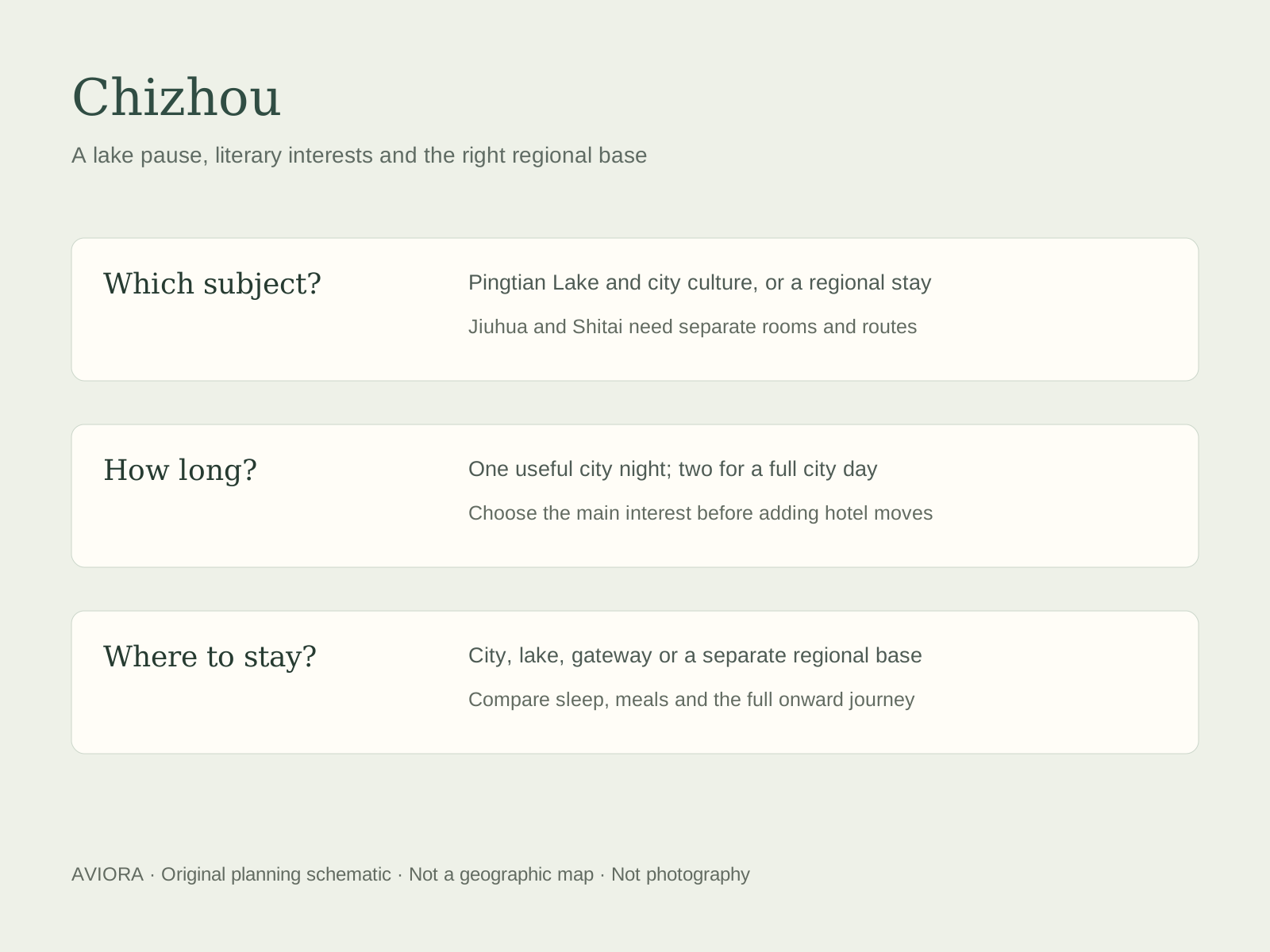
Chizhou (池州) is a city and wider prefectural area in southern Anhui, on the south side of the Yangtze. The city can provide a gentle introduction through Pingtian Lake (平天湖), a regional meal and selected literary interests. It is also a gateway for Jiuhua Mountain (九华山), but a city hotel is a different base from Jiuhua Street or the mountain’s lower gateway. Shitai (石台) offers another, separately planned countryside chapter. Choose a useful city night when the arrival, lakeside time or cultural interest justifies it; otherwise compare going directly to the mountain or rural property that serves the main purpose of the trip.
How many days do you need in Chizhou?
One city night can provide a relaxed arrival, dinner and a selected lake or cultural walk when transport leaves useful time. Two nights give one full day for a slower city introduction. For Jiuhua Mountain, choose the appropriate mountain or lower-gateway stay and allow its own useful nights, rather than drive back to the city after every temple visit. Shitai countryside also needs a specific property and realistic road plan. Three or more regional nights can combine different chapters, but hotel moves, usable days and the guest’s interests should determine the sequence.
Compare stays by number of nights
Day stop / a city interest that fits the connection
Choose a selected lake or cultural visit and meal only when the real arrival and onward transfer leave time. A station change alone is not a Chizhou introduction. Keep luggage and the next gateway journey settled.
1–2 city nights / rest, lake and culture
One night can provide a useful evening and gentle arrival. Two give a full day when city interests and the property justify it. Choose the room for meals, sleep and the actual walking route rather than a regional scenic label.
A longer regional route / separate bases for distinct subjects
Build the useful nights around Jiuhua, a Shitai countryside interest or another southern Anhui chapter. A city night can help when it improves the journey, but need not be compulsory. Compare transfers and walking before combining multiple landscapes.
Plan a tailored Chizhou visit
Tell us your dates, arrival and onward points, available nights and main interest: a restful city stop, Jiuhua’s Buddhist culture, a lake stay or rural scenery. We can compare a useful Chizhou night with going directly to the more appropriate mountain or countryside base. Add Huangshan, Hongcun or Xuancheng when they contribute a different subject and the full connections fit. Request a tailored route with the selected rooms, walks and included services specified. No matching published Chizhou itinerary is currently listed here.
A tailored Chizhou visit should identify the city walking route, guide language, pickup and return, meal arrangements and any separately ticketed cultural visit. A Jiuhua extension needs its own named temples, walking, visitor transport, admissions and room. Shitai requires a distinct property and landscape-route plan. Agree the final luggage approach, weather alternative and what the quoted services cover. A lake, tea-country or literary theme does not establish a boat service, workshop, private household visit or specialist meeting without a willing provider and clear arrangements.
This is a destination planning guide, not a fixed departure or a confirmed package. We check the route, accommodation, transport and guide availability for your dates before setting out the services and price in writing.
Use a city night for a realistic walk and meal, keeping the first evening flexible after a long journey. A Pingtian Lake visit should specify a public section and a suitable daylight window; the whole lake is not one short promenade. Confirm the calendar of any cultural interior before building the day around it. For Jiuhua or Shitai, count the complete onward journey and room arrival, leaving enough time to settle and eat. A departure-day outing must still preserve luggage collection and the full gateway buffer.
01
Take an unhurried Pingtian Lake walk on a selected public route
02
Use poetry and a local meal to give the city stop a clear cultural purpose
03
Choose the right city, Jiuhua or countryside base for the day that follows
Suggested Chizhou itinerary
What can you fit into your Chizhou itinerary?
Arrival
Make the city night useful
Complete the gateway transfer and settle the room. If time and conditions suit, take a short public Pingtian Lake or city walk before a regional dinner. Keep the main cultural visit for a window when it can be explained without rushing.
Optional full city day / morning
Choose the lake or a literary interest
Follow the selected public route, keeping walking, seats and interpretation matched to the group. If Xinghuacun or another cultural interior is included, use its current opening and describe the setting accurately. A poem can support the discussion without becoming proof of a building’s age.
Lunch and afternoon
Slow down or add a different subject
Take a proper meal and choose a shorter contrasting city visit or time at the property. Day visitors preserve the complete return journey. An overnight should not be filled with distant excursions simply to justify a second city day.
Regional continuation / departure
Move to the base that serves the next interest
Continue to the chosen Jiuhua, Shitai or other southern Anhui property, allowing the full road journey and arrival needs. Alternatively depart from the appropriate gateway with luggage and buffer settled. The tailored proposal should specify rooms, visits, admissions and included transfers.
Spring and autumn can suit selected city and countryside walks, though rain and holiday demand remain possible. Summer calls for shade, cooling and shorter exposed sections; heavy weather can affect mountain paths and regional transport. Winter can be cold and damp, making effective room heating important. Birding, tea visits and seasonal landscape photography need a separately defined place, access and timing rather than an assumption based on the broader region. Choose the main purpose first, then match the route to the forecast and current conditions.
What affects the cost of a Chizhou trip?
Compare the same room, meal basis, guide time, transfers and cultural admissions. Mountain access, visitor transport and rural driving belong to the appropriate regional chapter, not an undefined city excursion. A lakeside room should be compared by its booked outlook, comfort and useful time on site. Premium value comes from good sleep, well-explained places and a sensible sequence, rather than unnecessary hotel moves or an unverified private-access claim.
Getting there and getting around
How to get to Chizhou and plan your stay
Arriving and connecting
Compare dated services and the full road connection to the chosen city, Jiuhua or rural property. Chizhou station can serve a city stay, while other named gateways may suit a different route; choose from the itinerary and current services. Include boarding, luggage and the final approach at both ends. A late arrival should have a confirmed meal and comfortable room before another outing. A same-day flight connection needs its own airport, terminal and realistic buffer.
Getting around
Plan a vehicle or suitable local connection between the chosen city visits, then walk a manageable public route. Agree the pickup point, toilets and seated break. Jiuhua visitor transport and Shitai road journeys belong to their own detailed plans. A lake-side hotel, public path and private grounds may have different access, so establish the route rather than assume a continuous promenade. Leave flexibility to shorten outdoor time without substituting an unconfirmed indoor venue.
Walking and access
A selected city-and-lake introduction can be gentler than a mountain day, but ask about distance, steps, seating, toilets and the final vehicle point. Lake roads, landscaped paths and hotel grounds have different access. Jiuhua temple steps and a Shitai mountain route require separate assessments; a private car does not remove terrain once the walk begins. In hot or wet weather, shorten the route and plan a seated break. Do not assume a shoreline photograph establishes a continuous accessible path.
What first-time visitors often underestimate
Chizhou can be a useful, quieter chapter in a southern Anhui journey without needing a long checklist. Decide whether you want a city-and-lake pause, Buddhist culture at Jiuhua or a rural landscape stay. Choose the room and useful nights for that purpose. A well-paced route may include a city night or skip it; both can be sensible when the complete journey is considered.
Where to stay in Chizhou
Compare a central Chizhou room for meals and a city introduction, a Pingtian Lake-area property for its specific room and lakeside setting, or a station-area room for a deliberate transit need. For a pilgrimage or temple-led journey, assess Jiuhua Street and the lower gateway separately using the Jiuhua guide. A Shitai rural property serves a different itinerary again. Ask about the booked outlook, nearby public walking, dinner, noise, dampness, climate control, bathroom and the luggage approach. A lake-view label does not guarantee direct shoreline access or a useful path from the hotel.
Compare hotel areas
Central Chizhou / city meals and a practical introduction
Choose the address for the intended walk, meal and gateway. Check room position, sound, bathroom, climate control and vehicle access. A practical urban room can be useful even without a scenic outlook, particularly for a short arrival or departure stay.
Pingtian Lake area / a particular room and lakeside purpose
Ask what the booked room overlooks, where a public walk begins and how meals work. A distant view is different from direct lake access. Compare road noise, privacy, dampness and the full drives to the chosen city or regional visits.
Station area / a deliberate transit night
Choose this for the actual arrival or departure need and verify the final road or walking approach. Compare dinner, sleep and the next pickup. Describe the stay as a gateway choice rather than a substitute for a lake, mountain or countryside experience.
Jiuhua or Shitai / a separately planned regional base
A temple-led stay and a rural landscape stay need different room and transfer decisions. Use the Jiuhua guide for mountain-village versus lower-gateway choices. For Shitai, start with the property, named outing, dinner and complete road connection; shared municipal context is not proximity.
Should I stay in Chizhou city, at Jiuhua Mountain or in Shitai?
Choose Chizhou city for a useful gateway night, Pingtian Lake and selected city-cultural interests. Choose a Jiuhua base when Buddhist culture and temple routes are the main reason to travel; compare Jiuhua Street with the lower gateway according to walking and room needs. Choose Shitai for a specific countryside property and named landscape outing, with its road journey assessed separately. The best base is the one that serves the intended day, not the place with the broadest regional name.
A gateway can earn a night without becoming the main destination
Chizhou is useful when a gentle lake walk, regional meal or better arrival sequence improves the holiday. It need not be inserted into every Jiuhua journey. Compare what the city night adds with going directly to the base that serves the main interest.
Chizhou city and Jiuhua’s temple settlement are different bases
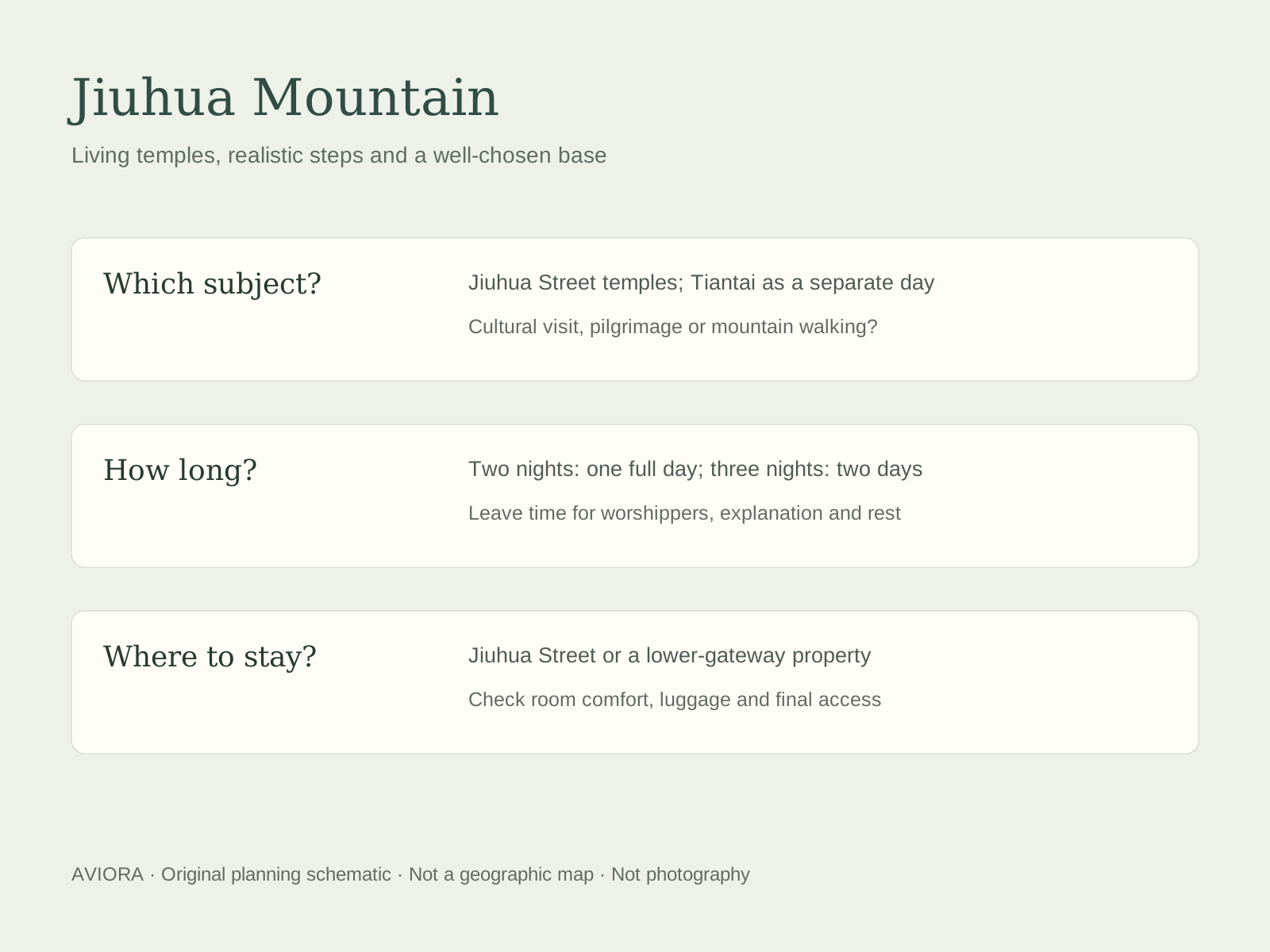
A city room may suit transport or room preferences, while a mountain-area stay can support earlier or slower temple visits. Compare the complete repeated journey, visitor transport and final steps. A station or hotel carrying a regional mountain name is not necessarily beside the selected temples.
A literary association is not a surviving scene from a poem
Xinghuacun and Qiupu can give a visit a literary purpose when the interpretation connects a text to a specific place. Present poetic imagery, local attribution and verifiable historical fabric separately. A modern heritage-visitor landscape should be described openly, not sold as an unchanged ancient village or a proven scene behind every line.
Lake time is different from a boat or water-sport purchase
A Pingtian Lake outlook and a selected public walk can make a complete quiet chapter. Boat trips, swimming and other water activities need their own responsible operator, current permission and suitability checks. Do not imply them in a lakeside hotel description.
Shitai and Guniujiang need their own route assessment
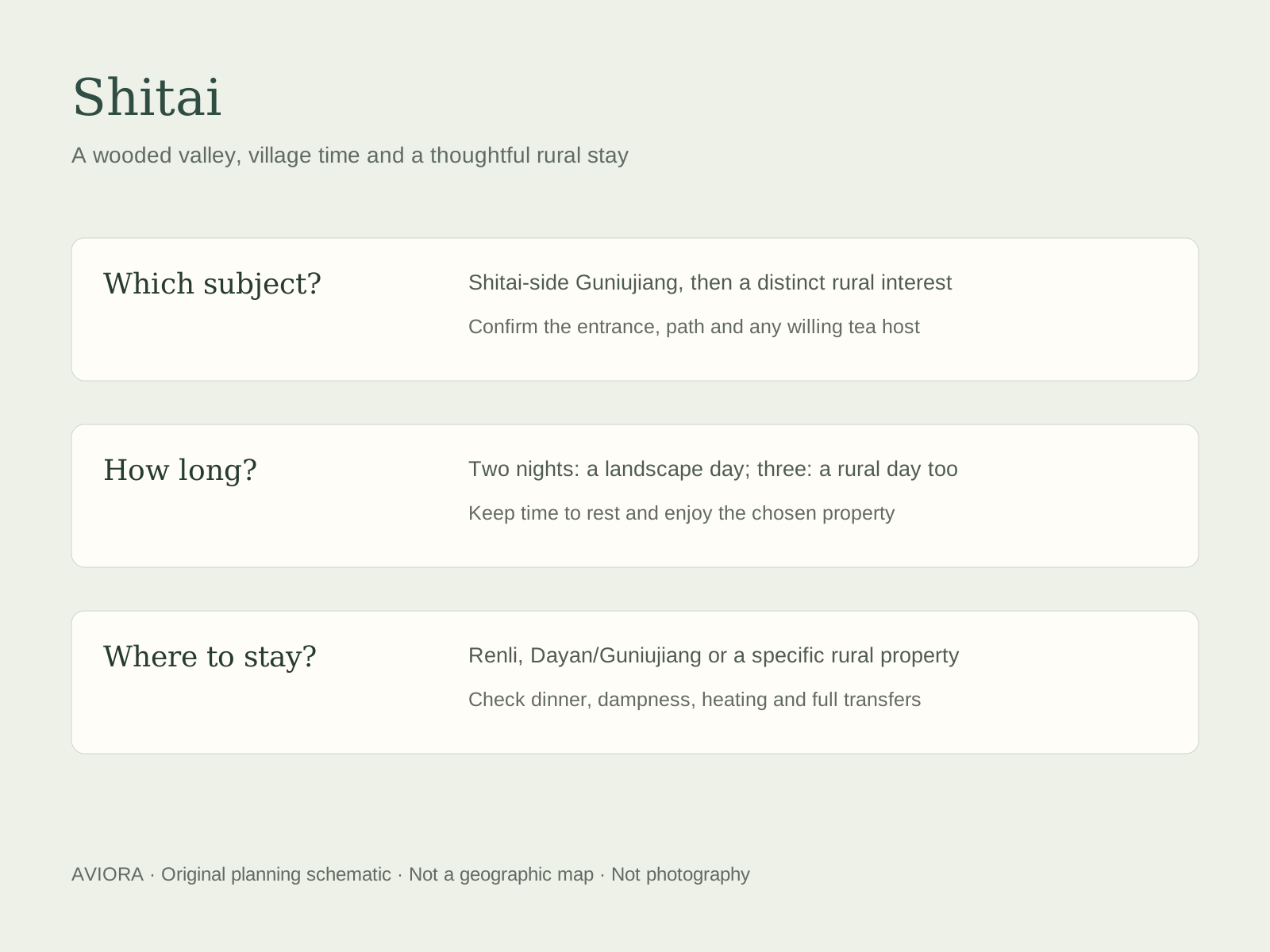
A Shitai countryside stay can add a different landscape, but it needs usable nights and named walking. Guniujiang is a wider mountain-area name associated with different approaches, including the Shitai side and the Qimen side. Confirm the exact Chinese entrance, path and property before choosing transport; do not treat every use of the name as the same trailhead.
Culture and historical context
Let a poem start the conversation, then look carefully at the place
Chizhou’s literary associations can give a quiet city visit a thoughtful purpose. Xinghuacun evokes Du Mu’s Qingming poem in local cultural interpretation, while Qiupu connects the wider region with Li Bai’s poetry. Use a translation and the visible setting to help guests understand an image or mood, distinguishing the literary association from a claim that a particular modern viewpoint is the proven scene of a poem. Local attribution, historical evidence and surviving buildings answer different questions.
A lake walk or a literary visitor site becomes more useful when the guide makes those distinctions understandable. Identify what is older, repaired or newly created, and explain why a place continues to matter. Jiuhua adds another kind of meaning through living Buddhist practice, with its own respectful conduct and interpretation. These subjects can complement each other without turning every modern pavilion into an ancient relic or every cultural visit into a promised private encounter.
Food and social life
A regional meal can be the most useful part of a gateway evening
After a train or road arrival, a comfortable seated dinner can do more for the next day than another rushed attraction. Ask the kitchen what it prepares well, then balance vegetables, tofu or another suitable protein with a staple. A local fish dish may interest the group, but discuss bones, portion and preparation, and do not infer wild Yangtze catch from the city’s location. A simple alternative should be a planned choice, not a reluctant substitute.
Tea can offer another regional interest, including products sold under the Jiuhua Buddhist-tea name, but a label does not prove a particular estate, harvest or producer relationship. A tasting or countryside visit needs a clear host and purpose. For dietary needs, confirm stocks, sauces, pork, fish, soy, wheat and shared equipment with the actual kitchen. A temple-region meal is not automatically vegetarian, and a rural room does not include a household dinner without an agreed arrangement.
Chizhou travel FAQ
Questions about visiting Chizhou
Is Chizhou worth visiting?+
Choose Chizhou city for a gentle Pingtian Lake and cultural stop when it fits your southern Anhui route, or as a useful gateway night. Jiuhua Mountain and Shitai countryside are different reasons to visit the wider area. Decide which experience you want before choosing where to stay.
How many nights should I spend in Chizhou?+
One city night can give a useful arrival, meal and short walk; two provide one full city day. Jiuhua and Shitai need their own useful nights and room choices. A longer regional itinerary should be built around distinct interests and full transfers, not a fixed number of nights under one city name.
Should I stay in Chizhou city or at Jiuhua Mountain?+
Choose the city for its own interests or a useful transport sequence. Choose a Jiuhua-area base for a temple-led visit, comparing Jiuhua Street with the lower gateway according to walking and comfort. Count the complete repeated city-to-mountain journey before deciding that a city hotel is more convenient.
Can I visit Jiuhua Mountain as a day trip from Chizhou?+
A selective visit may work when the full return journey, current visitor transport and chosen temple route fit. It is different from a slower mountain stay or a separate Tiantai walking day. Set the named visits and final steps before accepting a promise to cover the whole mountain in one day.
What can I do around Pingtian Lake?+
A selected public lakeside walk, a restful room and time for a meal can form a worthwhile city chapter. Specify the exact section, access, distance and seating. Do not assume a continuous path from every hotel or include boats, swimming and water sports by implication.
Is Xinghuacun an unchanged ancient village?+
Do not choose it on that assumption. Approach a proposed Xinghuacun visit through its literary association and the actual heritage-visitor setting, distinguishing older material, restoration and newer features. A poem or a familiar place name does not prove every building’s age or an exact historical scene.
Is Chizhou suitable for travelers who prefer gentle walking?+
A selected city-and-lake plan can suit a gentler pace when the route, seats, toilets and last vehicle point are clear. Mountain temples and countryside paths need separate assessments. A private car helps between places but does not remove steps or uneven ground within a visit.
Can I combine Chizhou with Shitai and Guniujiang?+
Yes, when a specific countryside property, usable nights and named landscape route justify the journey. Confirm the Guniujiang entrance and side of the mountain area before choosing transport. A rural stay is a separate chapter, not a quick add-on implied by the wider Chizhou label.
Which station should I use for Chizhou or Jiuhua Mountain?+
Choose dated services together with the final property and first visit. Chizhou and gateways carrying the Jiuhua name have different final approaches. Include road transfers, boarding, luggage and any mountain visitor transport rather than use the station name as proof of arrival beside a temple.
Can I combine Chizhou with Huangshan and Hongcun?+
Yes, if useful nights, complete transfers and the combined walking load support distinct city, mountain or village chapters. Huangshan needs its own stair and accommodation plan; Hongcun has a different village focus. A shorter journey may be stronger with fewer bases explored well.
Share your dates, interests, arrival and departure cities, and any plans already booked. We’ll recommend an itinerary at a pace that suits you, with the arrangements and price explained before you book.