Explore Shitai through a selected Guniujiang route, village or tea interests and a comfortable countryside stay, with exact entrance, walking and gateway choices.
2 nights for one landscape day; 3 for a distinct countryside daySouthern Anhui rural stays, stream landscapes and thoughtful village or tea interests
Shitai (石台) is a county and countryside destination within Chizhou, southern Anhui. Choose it for a comfortable rural stay, a selected Guniujiang (牯牛降) landscape route and time in a named village or tea-growing area. The visitor experience is spread across different valleys and settlements, not one compact resort. Two nights give one full landscape day; three allow a second, distinct rural interest and more time at the property. This guide focuses on the Shitai side of Guniujiang. The Qimen (祁门) side has a different approach, so confirm the Chinese entrance and final hotel address before choosing transport.
How many days do you need in Shitai?
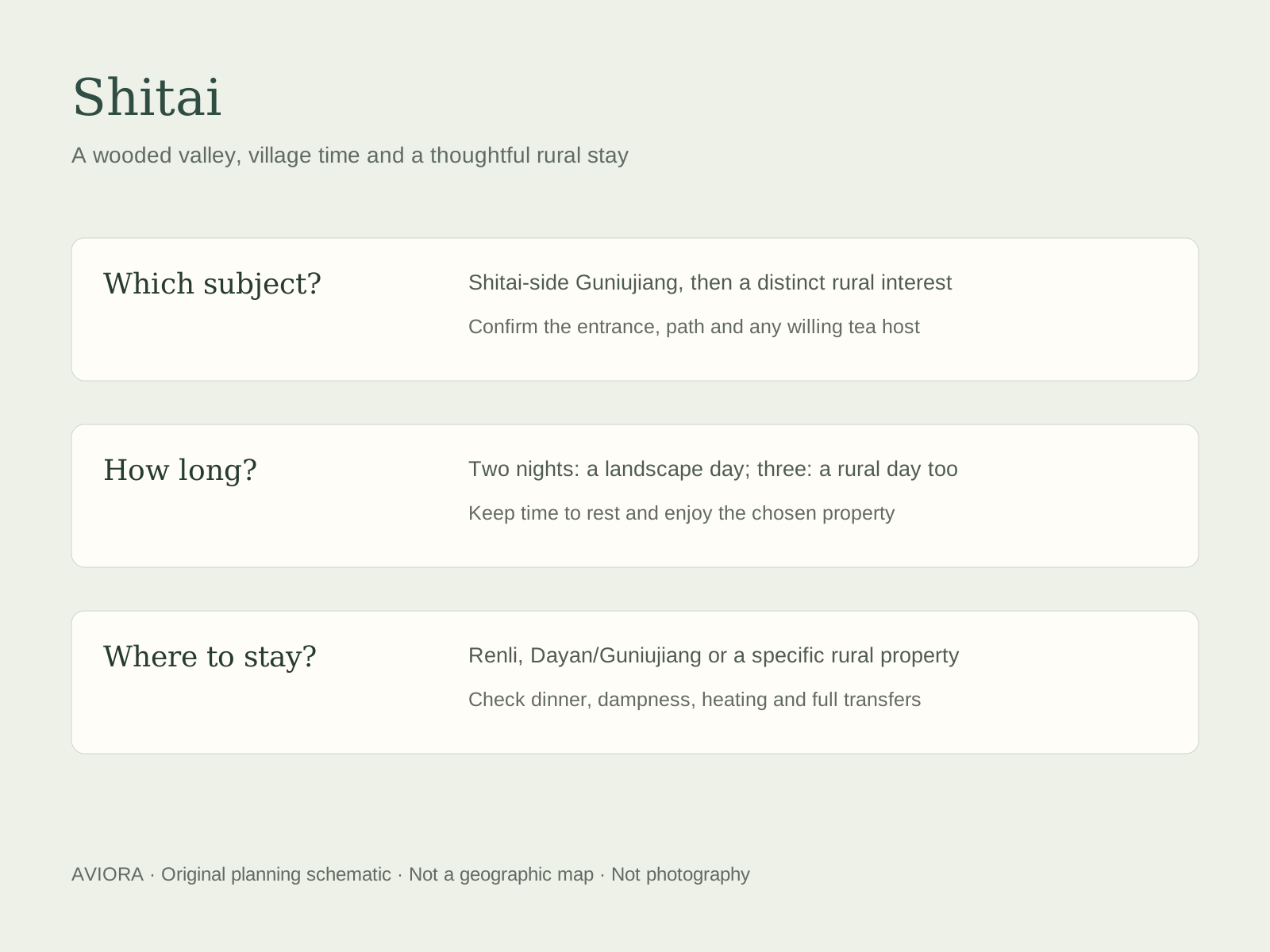
Two nights provide one full day for the chosen Guniujiang visitor route, lunch and time at the rural base. Three nights provide two full days for a landscape outing and a separate village, tea or countryside interest. An extra day is useful when the accommodation and slower pace are part of the reason to travel. A day excursion can work from a suitable starting point, but compare the complete road journey with the time you would actually spend walking. More nights should be supported by named routes or a property worth lingering at, rather than a broad rural label.
Compare stays by number of nights
Day excursion / one landscape with a realistic return
Choose the Shitai-side entrance and a selective route from a suitable starting point. Include lunch, walking and the full road return. A broad Chizhou label does not establish that every hotel makes an easy day excursion.
2 nights / one full landscape day
Arrive at the rural base and use the full day for the main Guniujiang interest and a proper meal. Add a shorter village visit only when it improves the route. Arrival and departure hours depend on the actual gateway and final property.
3 nights / a distinct second countryside day
Give a village, tea or another named outing its own purpose, leaving room for rest and weather flexibility. Choose a stay comfortable enough to enjoy a slower afternoon. A second cave, valley or village should add a different question rather than repeat the first day.
Plan a tailored Shitai visit
Tell us your dates, starting point, available nights and priorities: a comfortable rural break, a stream-and-valley walk, village culture or tea. We can compare two nights around the main Guniujiang outing with three nights and a genuinely different countryside day. Choose the exact property and entrance before the gateway, then assess connections with Chizhou, Jiuhua Mountain, Huangshan or Hongcun. No matching published Shitai package is currently listed here; request a tailored route with named rooms, walks, hosts where relevant and included services.
A tailored Shitai stay should name the property and room, Guniujiang entrance and path, guide language, admissions, required visitor transport, meals and complete road transfers. Specify steps, descent, seated breaks and a shorter alternative. A tea visit, tasting, craft activity or household meal needs a willing host and clear arrangements; none comes automatically with a rural room. A cave visit is a separate suitability decision. Agree how heavy weather affects the outings and quote, and keep protected or closed areas outside the plan.
This is a destination planning guide, not a fixed departure or a confirmed package. We check the route, accommodation, transport and guide availability for your dates before setting out the services and price in writing.
Give the principal landscape a comfortable daylight window, with lunch and time to sit rather than an automatic second scenic area. Check the last useful entry and the route’s return point for your date. After a long arrival, settle the room and dinner first. Heavy rain can change stream conditions, footing and road access; the property should still be comfortable when outdoor time is shortened. Keep departure-day visits modest enough to preserve the full countryside-to-gateway journey and boarding buffer.
01
Explore a chosen Shitai-side Guniujiang route at a pace that allows observation and rest
02
Add a village or tea interest with a clear public route or willing host
03
Enjoy a rural evening in a comfortable room with a reliable dinner
Suggested Shitai itinerary
What can you fit into your Shitai itinerary?
Arrival
Reach the rural base and settle dinner
Complete the chosen gateway-to-property journey and final luggage approach. Enjoy a short nearby public walk only when daylight and energy allow. Confirm the principal entrance, walking plan and next day’s lunch before turning in.
Full day / principal landscape
Give the selected Guniujiang route enough time
Follow the agreed Shitai-side visitor path with interpretation, rest and a realistic turnaround. Keep a shorter route distinct from a longer option. Stay on permitted open paths and allow the return from the actual end point rather than measure the day from the entrance alone.
Lunch and afternoon
Change pace with a village or time at the stay
Take a seated meal, then add a public village visit when it fits the route and offers a different perspective. Otherwise return to enjoy the property. A second scenic entrance is optional; the main landscape and a slower afternoon can make a complete day.
Optional second full day / departure
Add a new subject or continue comfortably
With three nights, choose a separately arranged tea interest, another named countryside route or a suitable cave visit. Otherwise preserve the full road connection to the next base or railway gateway. Confirm the final rooms, walks, hosts where relevant and included services in the tailored proposal.
Spring and autumn can suit selected valley and village walks, while rain, fog and busy holidays remain possible. Tea work depends on the tea and production calendar, so a spring date alone does not guarantee picking or processing. Summer needs cooling, shorter exposed sections and a plan for heavy rain. Winter can be cold and damp, making heating and meal reliability important. Choose the landscape and rural-stay purpose first, then check the particular route and forecast; do not rely on a clear-pool photograph to predict water or access.
What affects the cost of a Shitai trip?
Compare the same room and meal basis, named entrances and paths, guide hours, visitor transport where needed and complete driving. A remote property can add costs for meals and each outing, while a cheaper county-town room may mean more repeated travel. Any tea or household visit should have its inclusion and host arrangement clear. Premium value comes from sleep, thoughtful landscape and cultural interpretation, a suitable pace and an honest weather alternative, rather than an unverified private trail or wellness claim.
Getting there and getting around
How to get to Shitai and plan your stay
Arriving and connecting
Compare dated rail services and complete road approaches from the actual starting point to the chosen room. Chizhou and Huangshan-area gateways serve different sequences; the best choice depends on the final address and the rest of the trip. Include boarding, luggage, mountain-road comfort and the last vehicle point. Send the Chinese property and entrance names to avoid confusing Guniujiang approaches. For a late arrival, arrange dinner before committing to a secluded address.
Getting around
Plan road transport between the property, named entrance and selected village or tea interest. Confirm the pickup and turnaround for each walk, including a shorter alternative. Visitor transport may apply within a managed area and should be specified separately. Public lanes, scenic paths, private homes and working tea spaces have different access. Keep a seated lunch and toilets in the day; an attractive rural road is not a reason to add unplanned stops on private land or at unsafe roadside locations.
Walking and access
A visitor valley route, a longer mountain path, a village lane and a cave have different demands. Ask for the start, finish, steps, slippery surfaces, bridges, exposed sections, toilets, seats and descent. A pool-view photograph does not describe the walking needed to reach it. Penglai Cave needs its own assessment of stairs, lighting and confined spaces. A private vehicle helps between places but cannot remove terrain within a visit. Choose permitted open paths and agree a turnaround before the walk begins.
What first-time visitors often underestimate
Shitai works best when the countryside stay itself has value. Choose a suitable Guniujiang route, enjoy a proper meal and leave time to look or rest. Add tea, a village or a cave only when it brings a new subject and suits the group. You can understand the landscape without a summit, entering a restricted area or taking part in an unconfirmed farm activity.
Where to stay in Shitai
Compare the county-town area around Renli (仁里) for practical meals and services, a Dayan (大演) or Shitai-side Guniujiang property for the principal scenic outing, and a specific Xianyu (仙寓) or other rural property for its own setting. These are different bases. Pin the exact room and entrance before comparing prices. Ask about heating or cooling, dampness, bathroom, mattress, sound, breakfast, reliable dinner and the last vehicle point. A valley outlook or an attractive courtyard does not prove a quiet room, an accessible walk or a meal available after a late return.
Compare hotel areas
Renli and the county-town area / practical meals and services
Compare the exact property, dinner options, noise and full driving to the chosen outings. This can serve a practical stay, but a county address does not place the room beside Guniujiang. Check the booked room and gateway sequence rather than equate urban convenience with scenic proximity.
Dayan or the Shitai-side Guniujiang area / a principal landscape outing
Choose the property against the named entrance and route, checking dinner, stairs, luggage, dampness and climate control. Confirm whether a view is from the booked room or a shared space. A short approach to one scenic visit may still mean a longer journey for another countryside interest.
Xianyu or another specific rural property / time on site
Choose it for a real room and setting, with meals and the complete daily drives settled. A secluded address earns its place when you will enjoy the stay itself. Check sleep, temperature control, bathroom and road access, especially for a late arrival or wet-weather day.
Should I choose Guniujiang, village time or another Shitai outing?
Choose the Shitai-side Guniujiang visitor area for a rock, stream and wooded-valley landscape, with the actual path matched to your walking. Add a named village or tea interest when it offers a different subject and a real host or public route. Consider Penglai Cave (蓬莱仙洞) as a separate cave visit only when its steps, lighting and enclosed setting suit the group. Xianyu-area countryside needs its own property and route assessment. For one full day, one principal landscape and an unhurried meal are usually stronger than collecting distant scenic entrances.
The Guniujiang name does not identify one universal entrance
The mountain landscape is associated with different approaches, including the Shitai and Qimen sides. Use the full Chinese entrance name, property and path before comparing transfers or tickets. A photo or an English map label is insufficient to establish which side a quoted visit serves.
A visitor landscape is not a promise of summit trekking
An open scenic route can offer streams, rock and woodland without a summit objective. Protected areas and closed paths are not made accessible by a private guide. Decide the permitted route and walking demands first, then choose the day for what guests can actually see and enjoy.
Tea interest needs a season and a willing host
A countryside stay does not automatically include picking, production or a private tasting. Ask which tea, what work or preparation can be observed on the date, who explains it and whether the visit is educational or mainly retail. Outside a production period, a thoughtful explanation or tasting can be more honest than a staged processing promise.
Rural health marketing is not a travel benefit you can guarantee
Shitai-area products and properties may use selenium-related language. That is not evidence that a stay, tea or meal will improve a guest’s health. Choose food for quality and suitability, and a room for sleep, comfort and setting; avoid turning a landscape visit into an unsupported therapeutic claim.
A cave is a different experience from a shaded valley
Penglai Cave can change the subject, but lighting, stairs, enclosed spaces and damp surfaces need separate consideration. It is not a universal rain-day replacement, particularly when access or the group’s comfort is uncertain. A shorter outdoor route or time at a good property may be more suitable.
Culture and historical context
The village and the tea leaf need a human explanation
A Shitai village visit is most useful when a guide helps guests read the public lanes, buildings and countryside around them. Near the selected Guniujiang route, a Yanjia visit can add a human scale to the landscape when its public access fits. Explain what is visible, distinguish older fabric from repair and visitor facilities, and ask before photographing residents. A village is not an open invitation to enter a courtyard, arrange a meal or turn daily work into a performance.
Tea provides another way to understand the countryside when a willing host can explain the leaf, processing and preparation. Be clear about what happens in the season: observing production, tasting finished tea and picking are different experiences. Outside a working period, a good conversation can be more useful than a staged activity. Present local stories and product claims as such, without inventing a producer relationship or turning selenium-related marketing into medical advice.
Food and social life
A rural dinner should be part of the plan before the day begins
Agree dinner and timing with the property or chosen kitchen, especially after a longer landscape outing. Ask what can be prepared well and balance vegetables, tofu or another suitable protein with a staple. Rural or mountain-themed descriptions do not prove that ingredients are wild, locally gathered or suitable for every guest. A simple, well-prepared meal and a comfortable seat can be more satisfying than a required tasting of every unfamiliar dish.
Discuss fish bones, shellfish, pork, soy, wheat, alcohol, stocks and shared equipment as relevant to dietary needs. Explain those needs to the actual cook, not only through a booking label. Tea can accompany the stay without a compulsory purchase, and selenium-related product language should not be treated as a health promise. A household meal or cooking session needs a willing host and clear terms; neither is included simply because the accommodation is in a village.
Shitai travel FAQ
Questions about visiting Shitai
Is Shitai worth visiting on an Anhui trip?+
Choose Shitai for a rural stay, a selected stream-and-valley landscape and a slower pace. It is strongest when the property and walking genuinely fit your interests. On a short trip focused on Huangshan or Hongcun, compare the extra road journey and nights with spending more time at those destinations.
How many nights should I spend in Shitai?+
Two nights give one full day for the principal Guniujiang outing and time at the stay. Three allow a second village, tea or countryside interest and a slower pace. Arrival and departure hours depend on the full gateway journey; they do not automatically create additional sightseeing days.
Which Guniujiang entrance should I use?+
Choose the entrance that serves the actual Shitai or Qimen-side route and property. This guide focuses on the Shitai side. Confirm the full Chinese entrance name and path before choosing transport or tickets; the wider mountain name does not identify one interchangeable trailhead.
Is Guniujiang the same as Huangshan?+
No. They are different mountain landscapes with different visitor routes, gateways and accommodation decisions. A Shitai-side valley visit is not a shortened version of Huangshan’s granite peaks and substantial stair routes. Choose by the experience and walking you want, then compare the complete journey.
Can I visit Guniujiang without a demanding mountain hike?+
A selected permitted visitor route may suit a more moderate landscape day, but assess the exact steps, surfaces, descent, seats and return. Do not assume a pool or valley photograph describes an accessible walk. A shorter plan should be named and agreed before arrival.
Where should I stay in Shitai?+
Compare the Renli county-town area for practical services, a Dayan or Shitai-side Guniujiang property for the main landscape outing, and a specific Xianyu or rural property for its own setting. Check dinner, sleep, dampness, heating or cooling, bathroom, luggage and the full drives to both days’ visits.
Can I visit a tea farm or watch tea being made in Shitai?+
Only through a suitable, willing host and an arrangement matched to the production calendar. Ask which tea, what can genuinely be seen on the date, who explains it and what is included. A rural hotel or a tea label does not establish a working-farm visit or hands-on picking.
Is Penglai Cave a good rainy-day alternative?+
Consider it separately according to current access, steps, lighting and comfort in enclosed spaces. It is not a universal substitute for a valley route, and heavier weather can affect the wider journey too. A comfortable property or a shorter suitable outing may be a better choice for some guests.
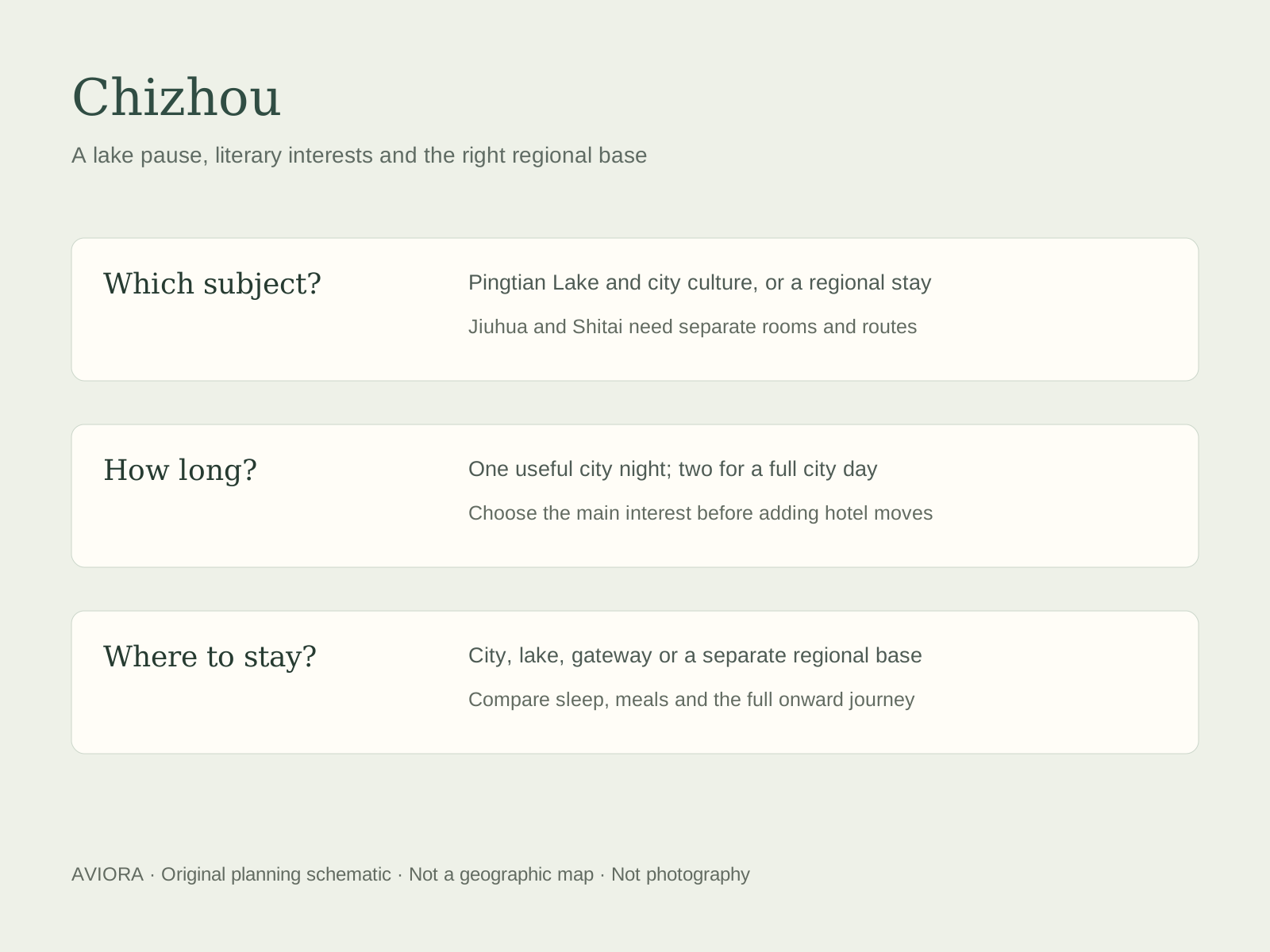
Can I visit Shitai as a day trip from Chizhou?+
A selective day may work from a suitable address when the complete road journey and chosen route fit. Compare that excursion with two nights nearer the main interest, especially if you want a slower walk or another countryside day. Shared municipal context does not establish a short transfer.
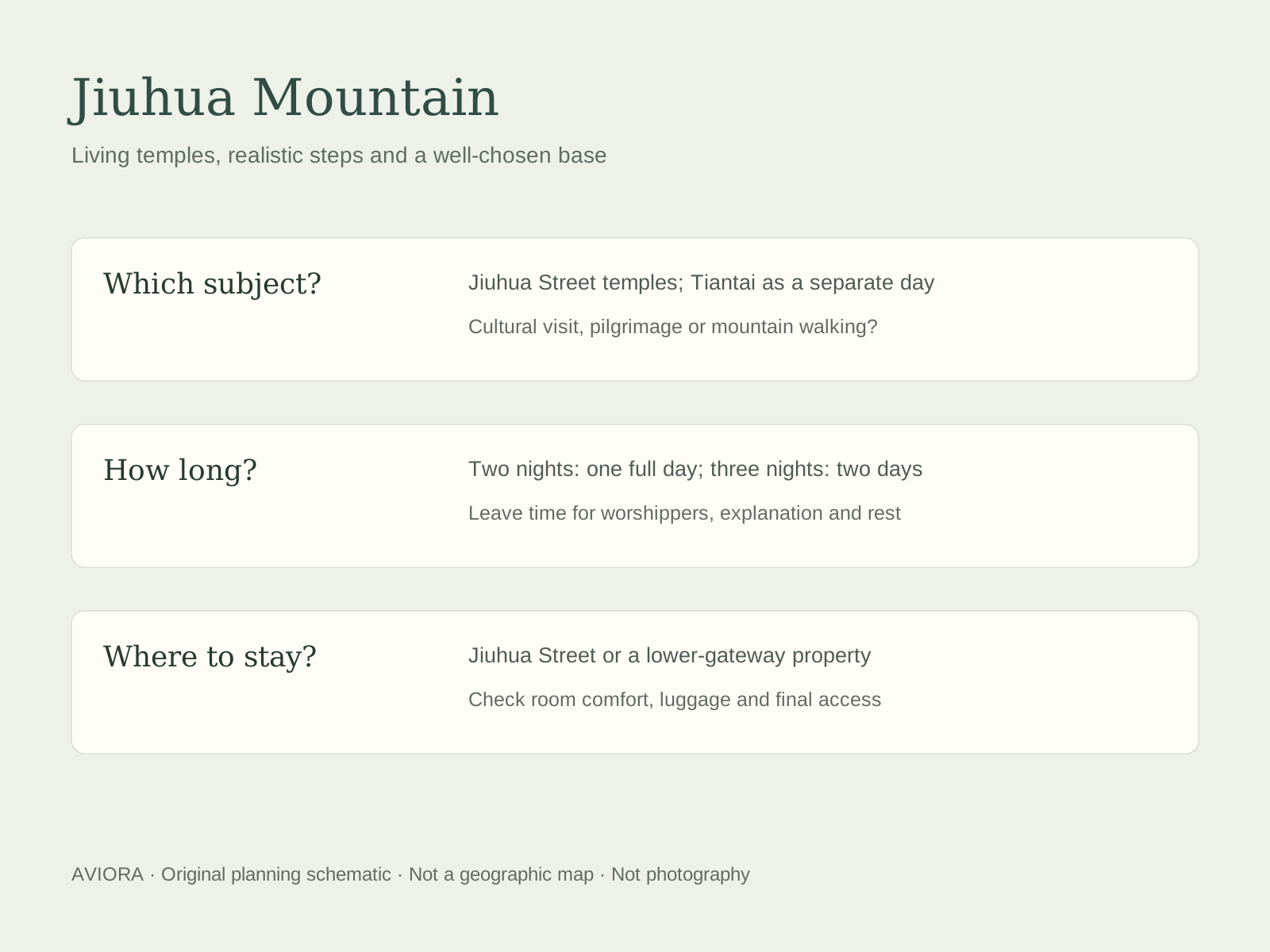
Can I combine Shitai with Jiuhua Mountain and Hongcun?+
Yes, with useful nights and a sequence based on the actual rooms and routes. Jiuhua adds Buddhist culture, while Hongcun adds a distinct village-architecture subject. Count the complete transfers and combined walking, and avoid trying to fit all three into a series of rushed arrival-day visits.
Share your dates, interests, arrival and departure cities, and any plans already booked. We’ll recommend an itinerary at a pace that suits you, with the arrangements and price explained before you book.