Answer Brief
The Answer, Briefly
Foreign visitors can buy real-name China Railway tickets with a valid passport through official channels, including the 12306 English website or app. The passport used for purchase is also the journey credential: carry the original to enter the station, pass identity checks and board. Allow time for security, large-station navigation and any manual passport verification.
High-speed rail can work well between Beijing and Xi’an or between Shanghai and nearby Yangtze River Delta cities. Stations may be some distance from the historic center, so include the hotel transfers in your comparison. It is not automatically better than flying on every sector. Compare total door-to-door time, departure station, seat availability, luggage and the day’s wider itinerary.
Book Through A Traceable Channel
Start with China Railway’s official 12306 English website for its passenger guidance. If you book through an intermediary, confirm which company will handle changes, refunds and support. A travel company or booking platform can still be useful, but the traveler should understand who issued the ticket, how changes are handled and where the confirmed train number appears.
For every passenger, enter the name, passport type and passport number exactly. A mismatch can create verification problems at the station. If a passport is renewed after booking, do not assume the old ticket will work with the new document; resolve the credential change before travel.
E-Tickets And The Passport Journey
On an e-ticket route, the booking is electronic. China Railway says passengers should retain the e-ticket information and present the valid ID document used for purchase to check in, exit and board. An itinerary sheet or reimbursement receipt is not itself a ticket.
Keep the booking confirmation offline with:
- train number and travel date;
- departure and arrival station names;
- scheduled departure time;
- carriage and seat number;
- passenger passport details; and
- booking-channel support contact.
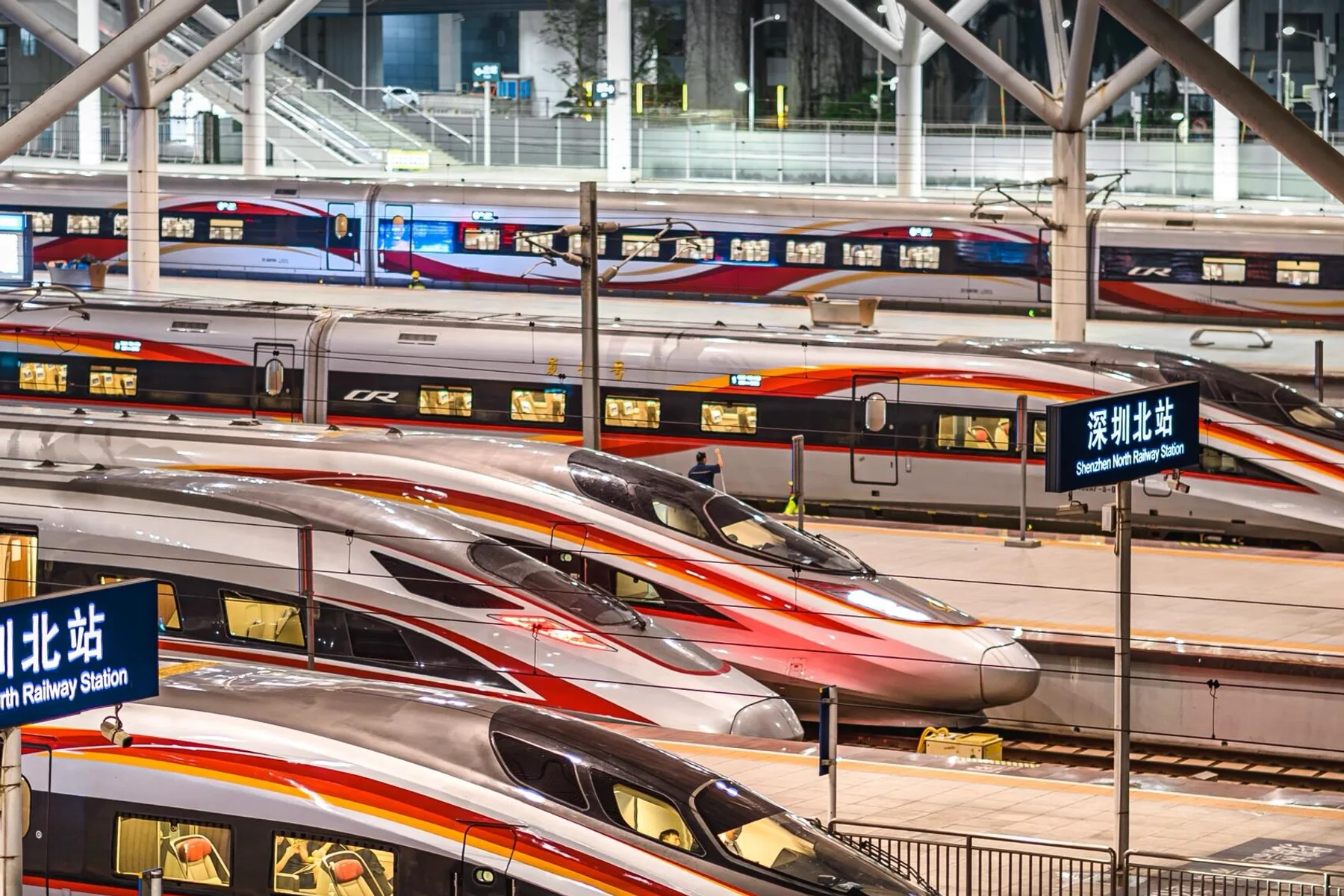
Chinese cities often have several stations with similar names. “Beijing,” “Beijing South” and “Beijing West” are not interchangeable; neither are Shanghai’s principal stations. Put the exact station in the day plan and calculate the transfer from the hotel to that entrance.
How Early To Reach The Station
There is no responsible universal promise such as “20 minutes is always enough.” China Railway notes that ticketing, security, ID verification, gates and platforms are separated by walking time, that queues may form, and that ticket sales and checks stop before departure according to station announcements.
For a first journey, AVIORA plans a conservative station arrival based on the city, station, party size, mobility, holiday pressure and whether a guide or assistant is accompanying the transfer. Summer holidays and major public-holiday periods deserve additional margin.
What Happens Inside
- Enter the correct station access point.
- Present the passport if directed for identity verification.
- Put all baggage through mandatory security screening.
- Find the waiting area and exact ticket gate on the displays.
- Watch the gate opening time and platform assignment.
- Board the carriage shown on the ticket and use the assigned seat.
Some gates read foreign passports directly; another journey may require staff assistance. Treat a manual lane as normal operational variation, not a ticket failure.
Choosing A Seat Class
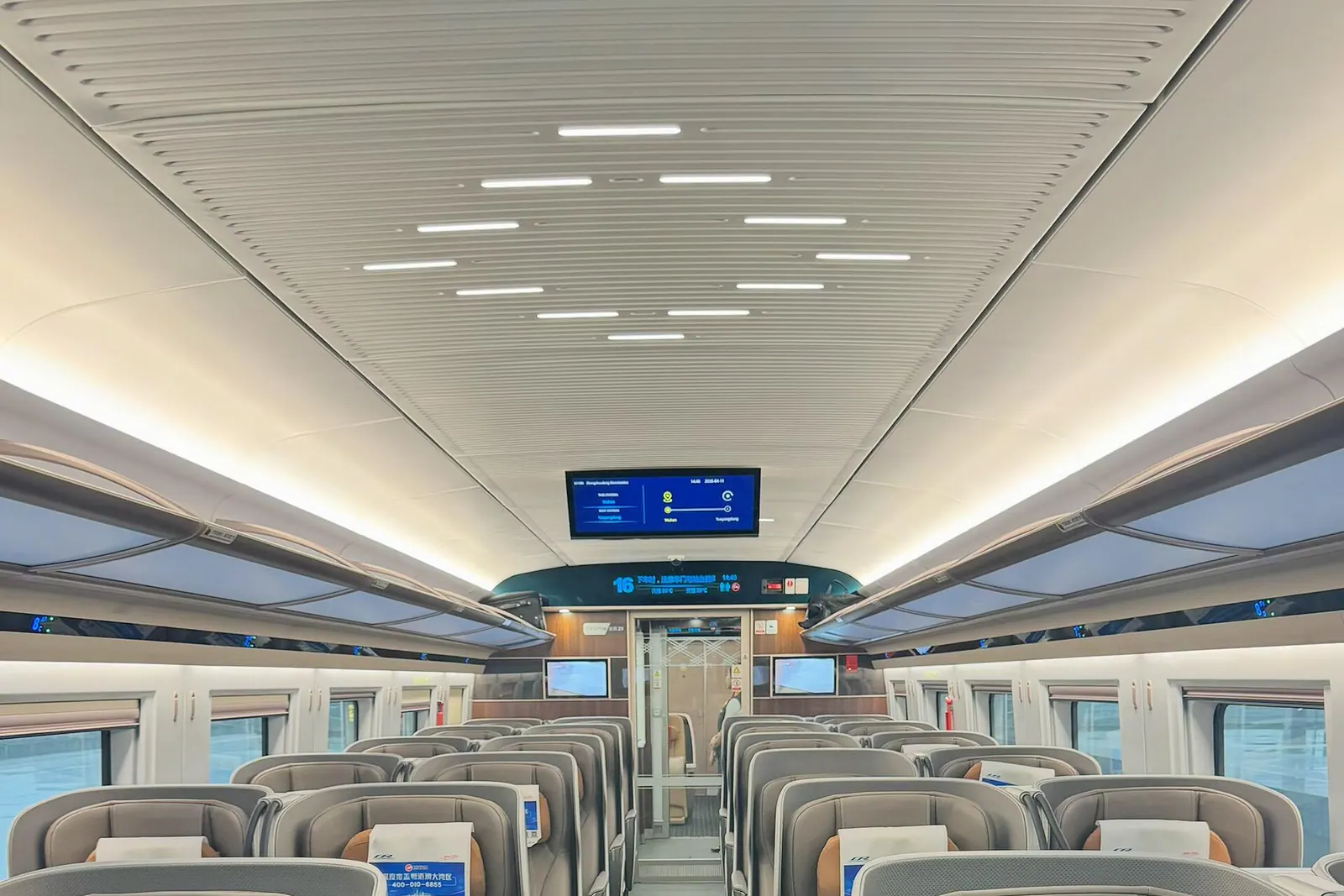
Train type determines the available seating. On many high-speed services, second class provides a practical, comfortable base; first class usually offers wider seats and fewer passengers per row; business class is the most spacious and carries a significant price premium. Exact layouts and services vary by train set, so confirm the specific service rather than promise a universal configuration.
Choose around the traveler:
- Second class: good value for most independent adults and families comfortable with a busier cabin.
- First class: useful when more personal space and an easier working or resting environment justify the difference.
- Business class: worth considering for long sectors, privacy priorities or travelers for whom space materially changes comfort.
Book the party in one order where practical, but never guarantee adjacent seats until the ticket assignment is confirmed.
Baggage And Accessibility
Our August 6, 2026 review of China Railway’s English FAQ recorded a 20 kg free carry-on allowance for most passengers, a 20 kg limit per item and a 130 cm combined-dimension limit for EMU trains, with an exception for eligible folding wheelchairs. Treat these as the details in that dated source record; confirm the current rules for your passenger category, train and equipment before travel.
This rule is not an invitation to bring the maximum. Large suitcases must still be moved through security, station concourses and carriage storage. Travel is easier with manageable luggage, a vehicle with enough luggage space and any porter assistance arranged in advance.
Some large stations provide priority and wheelchair services, but the FAQ advises consulting the station for details. Request mobility support before the journey and design transfers around walking distance, not only train duration. AVIORA’s easy-paced private China journey explains why these loads must be designed.
Changes, Missed Trains And Operational Risk
China Railway has rules for ticket changes, refunds and changes of destination, all dependent on timing, ticket availability and ticket status. Do not publish a blanket claim that every ticket is freely changeable. If plans move, contact the issuing channel immediately.
A missed train can consume the day’s availability during busy periods. Protect the sector by avoiding a tight same-day connection from an international flight and by keeping the guide, driver and hotel informed through one contact path.
What Your Rail Arrangements Should Include
Official railway rules and your private-tour services are different things. Check both before booking:
| Detail | Where to check | Question to ask |
|---|---|---|
| Passenger identification | 12306 guidance and the booking record | Does the ticket use the valid document I will carry? |
| Exact train and stations | Issued ticket or confirmed booking | Which departure and arrival stations, date, carriage and seats are booked? |
| Luggage and restricted items | Current 12306 guidance | Which rules apply to my bags, equipment and passenger category? |
| Hotel-to-station transfers | The private-tour proposal | Are transfers included at both ends, and where does each local team meet me? |
| Luggage assistance | Confirmed service arrangements | Who helps at the station, and which parts must I manage myself? |
| Changes and missed connections | Railway fare terms and the issuing channel | Who handles a change, what are the charges and what happens if no seats remain? |
On our ten-day Beijing, Xi’an and Shanghai tour, the planned rail journey is Beijing to Xi’an; Xi’an to Shanghai is by air. A local transfer does not automatically include a guide accompanying you on the train or a porter carrying bags through the station. The multi-city luggage guide explains what to request if you need additional assistance.
Where Rail Fits AVIORA Routes
The ten-day Beijing, Xi’an and Shanghai journey uses rail to turn a transfer into part of the route rather than an airport repeat. For Chengdu, the panda and Sichuan itinerary can connect by rail to a wider China plan. The decision is made sector by sector: hotel location, station, train timing, party needs and destination sequence all matter.