Explore Zoige, also called Ruoergai, through a selected wetland visit, the Yellow River landscape and a thoughtful highland stay, with realistic roads and room standards.
2–3 nights for a focused grassland chapter, subject to a suitable ascent planOpen plateau landscapes, wetland interpretation and a slower Sichuan–Gansu journey
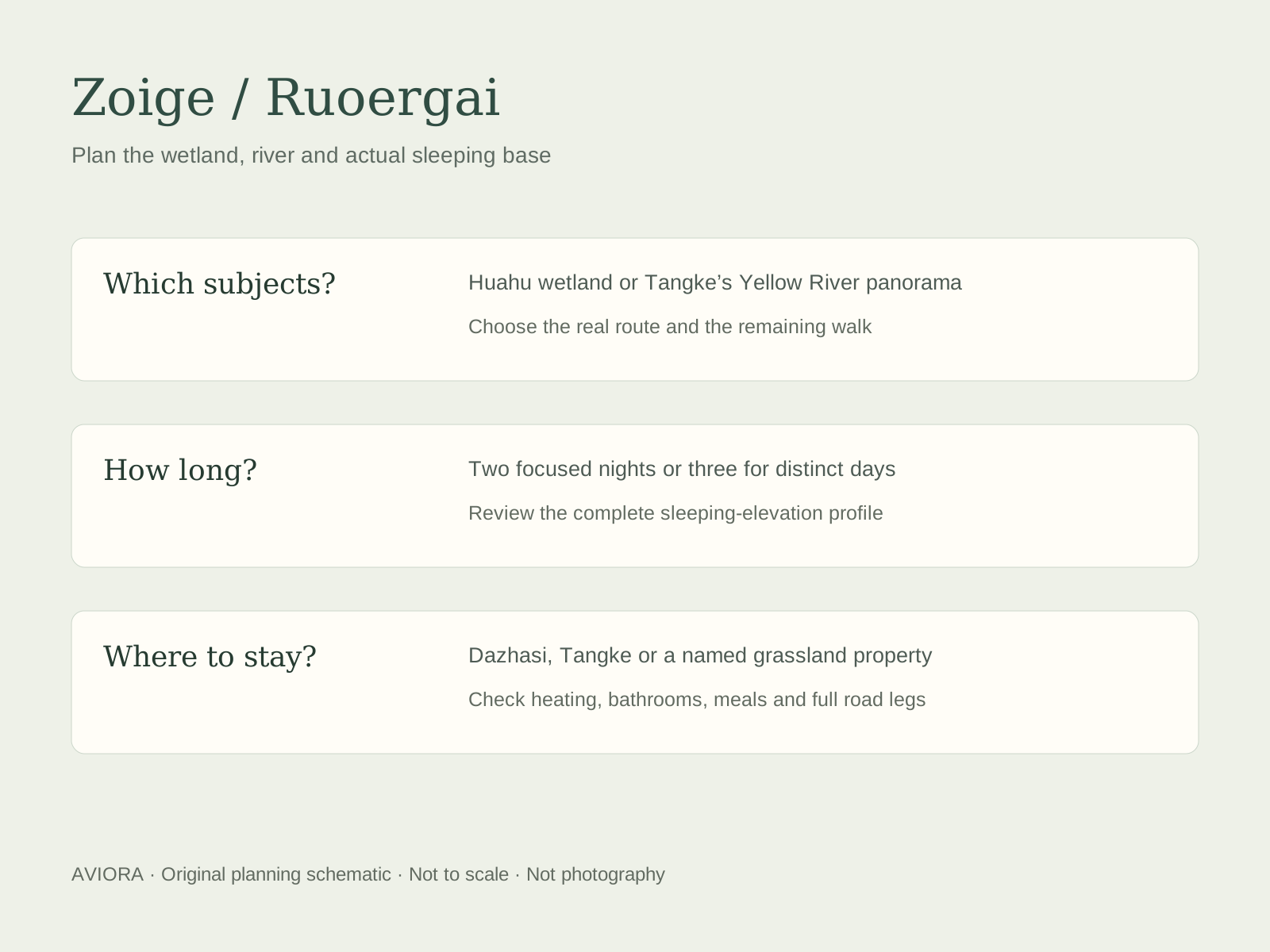
Zoige, also written Ruoergai, offers a highland landscape chapter in northern Sichuan. Choose Huahu for a wetland visit and Tangke for the Yellow River's First Bend; they are separate outings, with Dazhasi serving as the county-town base. Two or three nights can work within a suitable ascent and sleeping plan. Much of the journey is around 3,400–3,500 meters or higher. Pick the locations and room first, then assess the roads and physical demands.
How many days do you need in Zoige?
Two nights give one full day for a clear priority, with the arrival and departure routes chosen to support it. Three nights allow two distinct landscape days, weather flexibility or a slower pace without putting Huahu and a late Tangke visit into one rushed circuit. One night is best understood as a selective stop within a suitable longer route, not a comprehensive Zoige stay. More nights should serve a real interest or useful rest; they are not a guarantee of acclimatization. Count a Langmusi or Hongyuan chapter separately if the wider route needs another base and meaningful visiting time.
Compare stays by number of nights
2 nights / one clear landscape priority
Choose the main interest and a base that supports the actual arrival and departure. Give Huahu or the Tangke river landscape a useful full-day window with rest and meals. A second site can be considered only when the complete road and walking plan fits; it should not be the condition for a worthwhile visit.
3 nights / two distinct days or a slower pace
Separate the wetland and river viewpoints when appropriate, or keep a day flexible for weather and a gentler local interest. Compare one town base with a justified move toward Tangke through the whole route. An extra night should improve useful time rather than create a costly transfer for one photograph.
A wider Sichuan–Gansu journey / allocate each town its own time
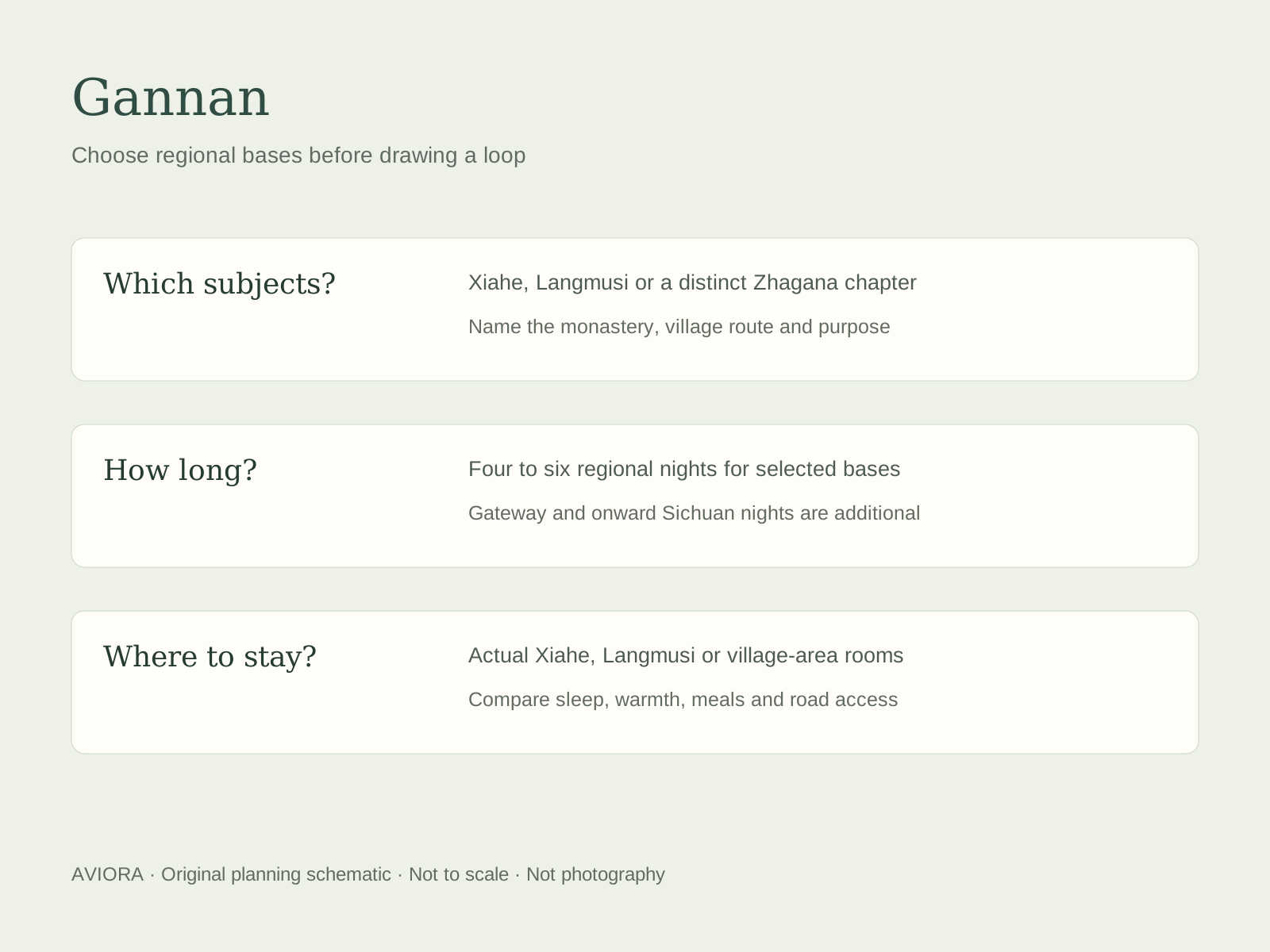
Allow Langmusi, Xiahe or Hongyuan a defined role, actual road journey and suitable room. Do not assume a sequence of highland towns provides a safe ascent just because it looks gradual on a map. Review the actual sleeping elevations, daytime high points and guest suitability before agreeing the order.
Plan a tailored Zoige visit
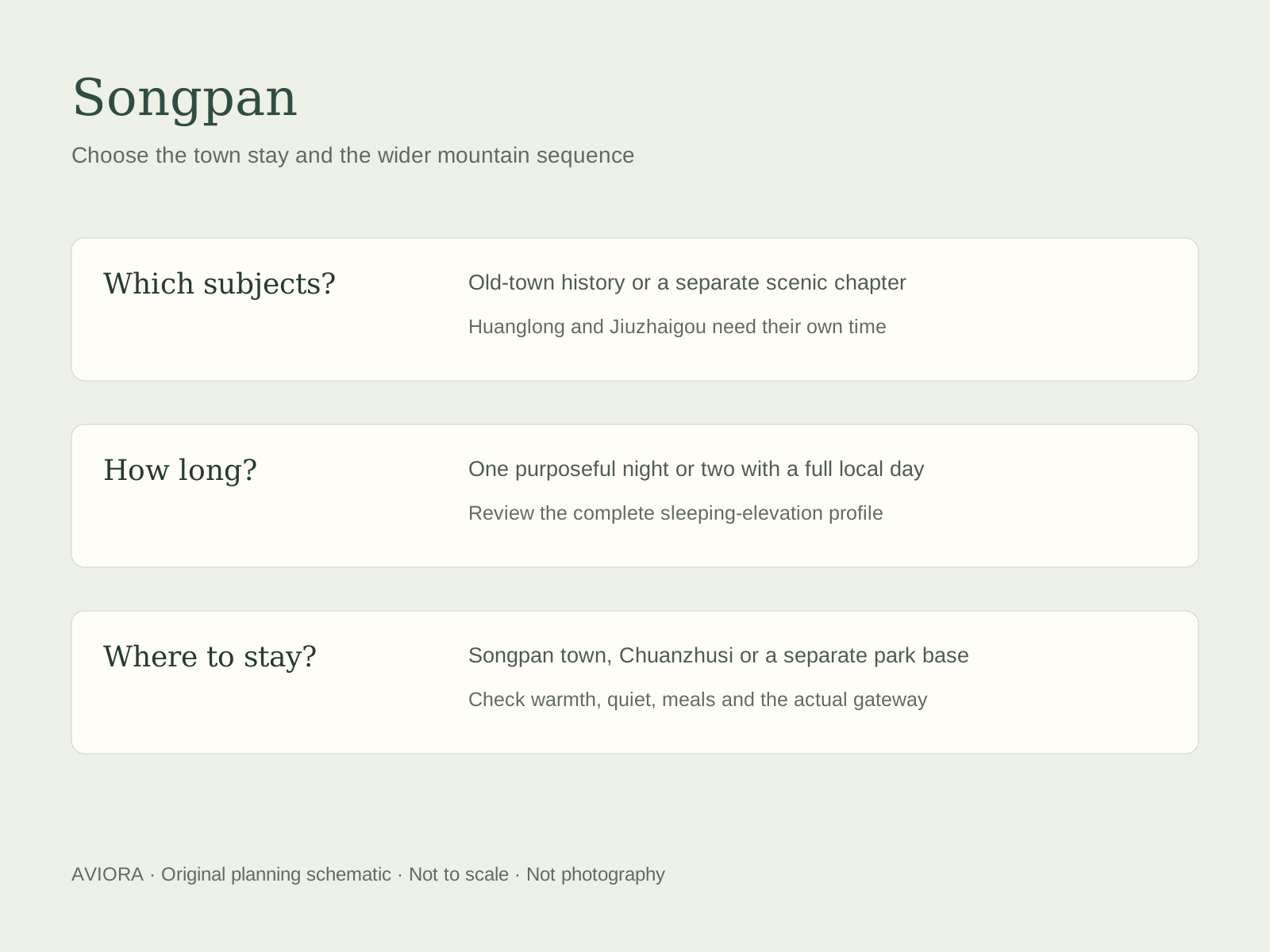
Choose the grassland and wetland visits first, then assess a northern Sichuan or Sichuan–Gansu sequence. Songpan adds town history, Xiahe adds Labrang Monastery, and Jiuzhaigou needs its own full park day and substantial connecting travel. Share dates, gateways, previous sleeping elevations, walking needs and room expectations for a tailored proposal. The existing Chengdu–Jiuzhaigou tour excludes Zoige; any grassland extension would have its own nights, transport and confirmed inclusions.
A proposal should name the actual overnight bases, room and facilities, sleeping elevations, complete road route, guiding language and selected Huahu or Tangke visitor services. Identify current entry, internal transport and viewpoint access separately. State meal arrangements, toilets, weather alternatives and the real final walk. Birding, specialist photography, a horse ride, drone use, religious interiors and family hospitality each need their own appropriate permission and confirmed arrangements. A private car does not authorize driving across pasture or entering closed wetlands. This guide promises no wildlife sighting, private grassland, exclusive community access or medical support beyond specifically contracted services.
This is a destination planning guide, not a fixed departure or a confirmed package. We check the route, accommodation, transport and guide availability for your dates before setting out the services and price in writing.
Plan each day from the actual hotel and road route, including meals, toilets, scenic transport and the return before fatigue or darkness becomes the plan. Summer days can bring rain and thunderstorms as well as open views; changing light does not justify remaining exposed in unsuitable weather. A Tangke sunset brief needs the real viewpoint closing time, descent and onward drive considered together. Keep an alternative if cloud hides the panorama. Peak summer and holidays can also change room availability and the feel of popular visitor areas; remote geography does not guarantee solitude.
01
Read Huahu's water, reeds and bird habitat from a permitted wetland route
02
Choose a Tangke river viewpoint with the real climb, light and return planned
03
Let a suitable room, a warm meal and a considered pace make the plateau stay rewarding
Suggested Zoige itinerary
What can you fit into your Zoige itinerary?
Day 1 / regional arrival
Reach the chosen base with time to settle
Follow the assessed road and sleeping-elevation sequence from the actual gateway. Check the room, have an appropriate meal and keep any short walk modest. Do not make a distant sunset viewpoint the condition for a successful arrival day.
Day 2 / wetland priority
Give Huahu a considered visitor window
Use the confirmed entrance, internal transport and selected permitted path. Take time to understand water, reeds and habitat rather than pursue every bird. Include rest and a practical lunch, adjusting for weather, guest condition and current operation. A river-led short stay can choose Tangke instead of this day.
Day 3 / a separate landscape day when staying three nights
Choose Tangke's actual viewpoint and a sensible return
Plan the complete river outing from the booked base, reviewing ascent, remaining steps, descent and meals. Choose the time for conditions and guest needs rather than insist on sunset. If the panorama is obscured, use a worthwhile shorter alternative rather than extend exposure simply to match a promotional photograph.
Departure / the next chapter
Continue through a deliberate route
Allow the actual road leg to Songpan, a separately planned Gansu chapter or the confirmed Jiuzhaigou base and gateway. A two-night version has one focused full day; the third night supports the second. This outline is illustrative, not a published package, medical ascent recommendation or guarantee of wildlife, hotel facilities, hosts or scenic operation.
Summer commonly suits travelers seeking green grassland and a wetland landscape, with rain, storms and variable visibility still possible. Late spring and autumn offer different colors and conditions; confirm the particular habitat or photographic subject rather than promise a fixed flowering or bird calendar. Winter is a distinct cold-weather proposition with potentially reduced services, not the same tour with greener photographs removed. At any season, compare the actual room heating, road plan and current visitor operation. High demand in popular summer periods can coexist with remote surroundings.
What affects the cost of a Zoige trip?
Compare the exact room, facilities, meals, guide time, full vehicle itinerary, entry and internal transport. A scenic camp may charge for setting while offering fewer comforts than a town hotel; decide whether that trade-off suits the guest. A river-view stay can reduce one evening's driving but add another day's road time. Specialist birding or photography needs a named service rather than an automatic premium. Agree what changes if weather, road conditions or operation alter the outing, and spend first on sleep, a thoughtful route and dependable support.
Getting there and getting around
How to get to Zoige and plan your stay
Arriving and connecting
Plan from the booked gateway, not a generic claim that Zoige is close to Chengdu or a regional airport. A rail arrival in the Songpan region still leaves a substantial road leg; an airport proposal needs an actual operating flight and exact terminal. Review the entire ascent, meal and toilet stops, weather and arrival time. A direct flight onto the plateau is not automatically a gentler option than a road sequence. Keep the first evening modest and arrange dependable dinner and room access rather than add a distant sunset stop to an uncertain arrival.
Getting around
Use a coherent road itinerary for the actual overnight bases and selected sights, then separate public scenic transport and walking from the private vehicle service. Confirm pickup locations, toilets, meal windows and a shorter option. Stop only where lawful and safe, respecting fences, wet ground and livestock. Strong landscape interest does not justify a distracted roadside stop or a drive across pasture. Specialist walks, riding, birding and drone photography need their own current assessment and permissions; they are not automatically included in a private transfer.
Walking and access
Review the actual Huahu visitor transport and boardwalk, or Tangke's climb, steps and descent. A boardwalk is not automatically short, sheltered or suitable for every wheelchair, and a viewing platform may require sustained effort. Confirm gradients, seats, toilets and where a shorter route remains worthwhile. Strong sun, wind and cold can affect an open plateau walk. Stay on permitted surfaces, avoid wetland edges and keep clear of livestock. For altitude symptoms, obtain appropriate assessment rather than continue higher to complete the circuit; low exertion does not establish a suitable ascent.
What first-time visitors often underestimate
Decide which image you want to understand: a wetland at walking pace, the river bends from a suitable viewpoint or a slower pastoral landscape journey. Then ask where you sleep, what the room actually provides and how much driving sits between those interests. A focused two-night stay can be better than a three-night circuit full of hotel changes. The route should also work when a sunset is clouded out or a target bird is not seen.
Where to stay in Zoige
Compare a county-town room in Dazhasi, a Tangke-area property and a named grassland lodge or tented stay by their actual locations and facilities. The town may offer more practical meal and room choices, while Tangke can suit a river-led brief and a particular lodge can provide the landscape setting guests want. None of those labels guarantees heating, dependable hot water, a private bathroom or quiet sleep. Ask for current room details, sleeping elevation, bed, bathroom, power, road approach, meals and luggage handling. A high rate or atmospheric tent photograph does not prove the service level expected from an international luxury resort.
Compare hotel areas
Dazhasi / the Zoige county-town base
Compare practical room comfort, meal choice, heating, bathroom and access to the planned roads. A town address is not a panoramic grassland stay, but a dependable room and a good dinner can be the better short-visit choice. Confirm quiet, lifts where needed and the full journeys to Huahu and Tangke.
Tangke / a river-landscape brief
Choose when the actual property and Yellow River visit justify the location. Verify the view from the booked room, facilities, meal timing and distance to the specific visitor entrance. A Tangke address does not establish an effortless sunset panorama from bed. Include the following day's road journey before moving hotels.
A named grassland lodge or tented property / setting with explicit trade-offs
Obtain current evidence of the exact sleeping space, bathroom, heating, hot water, power, meals and wet-weather access. Check staff availability and communications as well as styling. A tented room should be chosen because its real conditions suit the guest, not sold as equivalent to a fully serviced international resort without evidence.
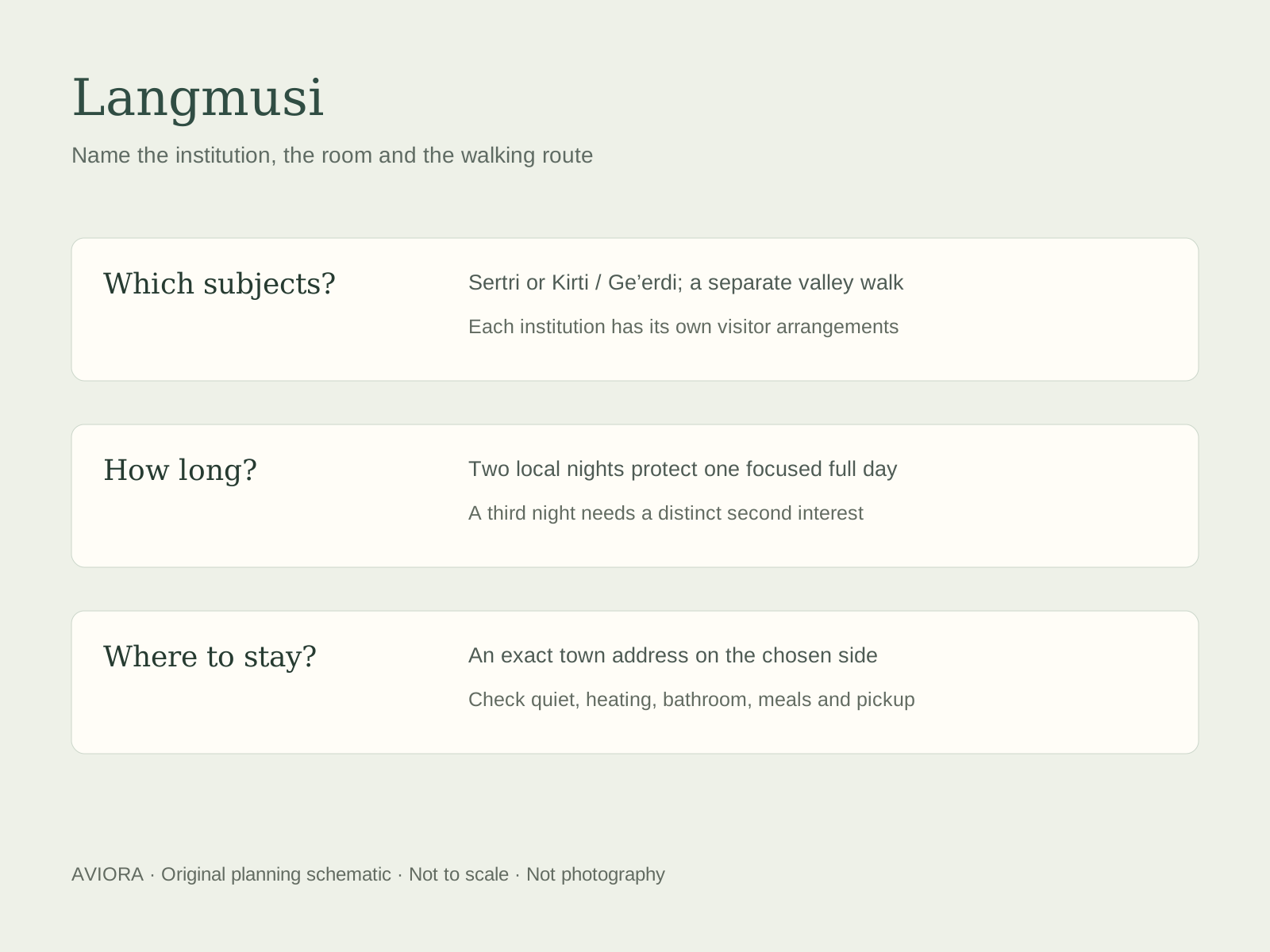
Langmusi or Hongyuan / a separate chapter rather than a county-wide hotel category
Locate the exact property and its purpose in the onward journey. These choices change roads, sleeping location and visitor time; they are not substitutes merely because all are associated with highland scenery. For Langmusi, identify which side of the provincial boundary and which religious site the plan concerns.
Should I prioritize Huahu wetland or Tangke's First Bend of the Yellow River?
Choose Huahu for a managed wetland visit, open water, reeds and the changing detail of a living plateau ecosystem along the permitted visitor route. Choose Tangke for the broad river-bend landscape and a specifically assessed viewpoint. Huahu is not a boating lake by default, and Tangke's elevated panorama can involve more ascent and steps than the roadside image suggests. With two full days, each can have its own unhurried window when roads, access and suitability allow. With one day, choose the main interest and compare the complete drive rather than assume both belong to one compact scenic park.
Zoige, Ruoergai and the wider wetland are overlapping names, not identical boundaries
Zoige and Ruoergai are common English renderings associated with 若尔盖. The wider plateau wetland extends beyond a single county, while a Huahu ticket serves a specific visitor area. Explain the actual location behind each booking. A Hongyuan extension needs its own roads and nights; use designated visitor routes rather than enter fields simply because they look open.
Choose a wetland season rather than one permanent postcard
Late spring, summer, autumn and winter reveal different vegetation, water, bird activity and working conditions. Green summer pasture is not a year-round promise, and a flower-themed English name does not guarantee blooming meadows on the chosen date. Summer warmth also does not remove rain or cold evenings. Match the date to the actual interest and keep room and road expectations realistic.
A Tangke panorama needs the climb and descent behind it
The elevated view that reveals broad river bends is different from a lower-level stop. Establish the currently available visitor route, any mechanical assistance, remaining steps and return. A sunset visit still needs a practical descent, warm clothing, dinner and a safe transfer sequence. Cloud and changing weather may make a different time the more rewarding choice.
A wetland walk is not permission to roam across peatland
Wet ground, channels and apparently firm vegetation can be fragile or unsafe. Use designated routes and lawful stopping places; do not drive onto grassland, approach nests or cross fences for a clearer photograph. The reward is understanding water, habitat and pastoral use at the right scale, rather than getting as close as possible to every bird or herd.
Birdwatching requires time, distance and realistic expectations
Black-necked cranes and other wetland birds are a reason to research the region, not a guaranteed encounter on a standard sightseeing day. Season, habitat, conditions and a suitably qualified guide shape what can be observed. Use binoculars and appropriate distance, avoid playback or disturbance, and agree a rewarding landscape alternative if target species are not seen.
Langmusi is a border-town decision with different religious sites
The Langmusi area spans Sichuan and Gansu, with distinct monastic institutions rather than one universally accessible temple complex. Identify the actual place, visitor route and current rules. A Zoige road journey does not include every hall, ceremony or trail, and sacred or private practices are not attractions available on demand.
Culture and historical context
A broad horizon is also a working and protected landscape
Zoige's open appearance can hide its complexity. Water, wet soils, vegetation and grazing create different habitats and uses across a plateau that extends beyond one scenic entrance. A meaningful visit helps guests notice those differences: where water collects, how reeds change the view and why the permitted path matters. Peatlands hold ecological value that is not captured by describing the place as an empty meadow. Interpretation should connect what visitors can observe with conservation, while avoiding unsupported claims about a particular animal or restoration project.
Pastoral communities and Tibetan Buddhist traditions belong to contemporary lives, not a timeless backdrop for a photograph. Livestock, homes, religious spaces and pasture access have owners and rules. Ask before portraits, keep a respectful distance from work and worship, and arrange any hosted meeting through actual consent. A named monastery visit can add understanding when its history and current visitor arrangements are explained; it should not turn ceremonies or private practices into a promised performance. Quiet observation can be a valuable experience in its own right.
Food and social life
Build the day around real meals, not only the next viewpoint
At this scale, a sensible meal plan improves the journey. Agree breakfast timing, a real lunch opportunity or an appropriate packed option, and dinner at the actual overnight base. Depending on the kitchen, noodles, a vegetable dish and a meat preparation can provide a balanced, comfortable meal; ask about portions, bones and spice. Yak meat or dairy products can be interesting when genuinely available, but guests should choose them for their tastes. A warm meal at the right time is often more valuable than a long detour for an undefined regional banquet.
Clarify dairy, wheat, meat stock, soy, chili and shared preparation where dietary needs matter. Vegetarian-looking food is not proof of a vegan kitchen, and remote properties may have limited alternatives. Serious allergies and religious requirements need confirmed capacity before booking the room or excursion. Butter tea, a particular meal or supplemental oxygen should not be advertised as preventing altitude illness. Food planning supports comfort and enjoyment; individual health concerns require appropriate professional assessment rather than a menu promise.
Zoige travel FAQ
Questions about visiting Zoige
Are Zoige and Ruoergai the same place?+
They are common English renderings associated with 若尔盖 in northern Sichuan. Distinguish the county from the wider Zoige wetland landscape and from a specific Huahu visitor booking. Use the exact Chinese hotel and entrance names so an English regional label does not obscure the real location.
How many nights do I need in Zoige?+
Two nights give one focused full day; three allow two distinct landscape days or useful flexibility when the altitude profile suits the guests. Huahu and Tangke need their actual road and visiting time. Additional Langmusi, Hongyuan or Xiahe chapters should have a clear purpose rather than be squeezed into the same short stay.
What is Zoige's altitude, and is it easy because the grassland is flat?+
Much of the visitor journey is around 3,400–3,500 meters or higher, with variation by road, viewpoint and hotel. Gentle-looking terrain does not remove altitude exposure. Review exact sleeping elevations and the complete ascent; a private car, extra night or oxygen-equipped room does not guarantee suitability.
When is the best time to visit Zoige grassland?+
Summer commonly suits green-pasture and wetland interests, with rain and storms still possible. Spring, autumn and winter provide different conditions and services. Choose for the actual vegetation, birding or landscape brief, then confirm roads, room facilities and current access rather than expect one photograph all year.
Can I see Huahu and the First Bend of the Yellow River in one day?+
Assess the complete route from the actual hotel, both visitor arrangements, walking and return before deciding. They are separate places. With limited time, one well-chosen visit may be better; two full days allow a less pressured division. A late sunset stop still needs descent, dinner and the real onward drive.
Are there luxury hotels or comfortable glamping stays in Zoige?+
Judge a named property and room through current evidence of heating, private bathroom, hot water, bed, power, meals, staff and road access. A high price or tented photograph does not prove international resort standards. A dependable town room may suit the journey better than a scenic stay with facilities the guest does not want to compromise.
Can I visit Zoige on a day trip from Chengdu or Jiuzhaigou?+
Plan it as a distinct highland chapter with actual road travel and suitable nights, rather than a casual day-trip addition. Chengdu and Jiuzhaigou have their own travel and visiting requirements. The right shorter itinerary may choose one landscape region instead of forcing a long return drive and another substantial ascent.
Does a Zoige visit include birdwatching or a Tibetan family visit?+
Not automatically. Specialist birding requires a defined service with seasonal expectations and appropriate distance; wildlife sightings are not guaranteed. Family hospitality needs a willing host and a separately confirmed arrangement. Ordinary scenic admission and a private vehicle do not purchase access to private life or protected habitat.
Share your dates, interests, arrival and departure cities, and any plans already booked. We’ll recommend an itinerary at a pace that suits you, with the arrangements and price explained before you book.