Understand Langmusi across its Gansu–Sichuan boundary, with clear Sertri and Kirti monastery choices, valley-walking decisions and realistic hotel expectations.
2 local nights for a focused full day; 3 for a distinct second interestSpecific monastery interpretation, town-and-valley walks and selective Gansu–Sichuan routes
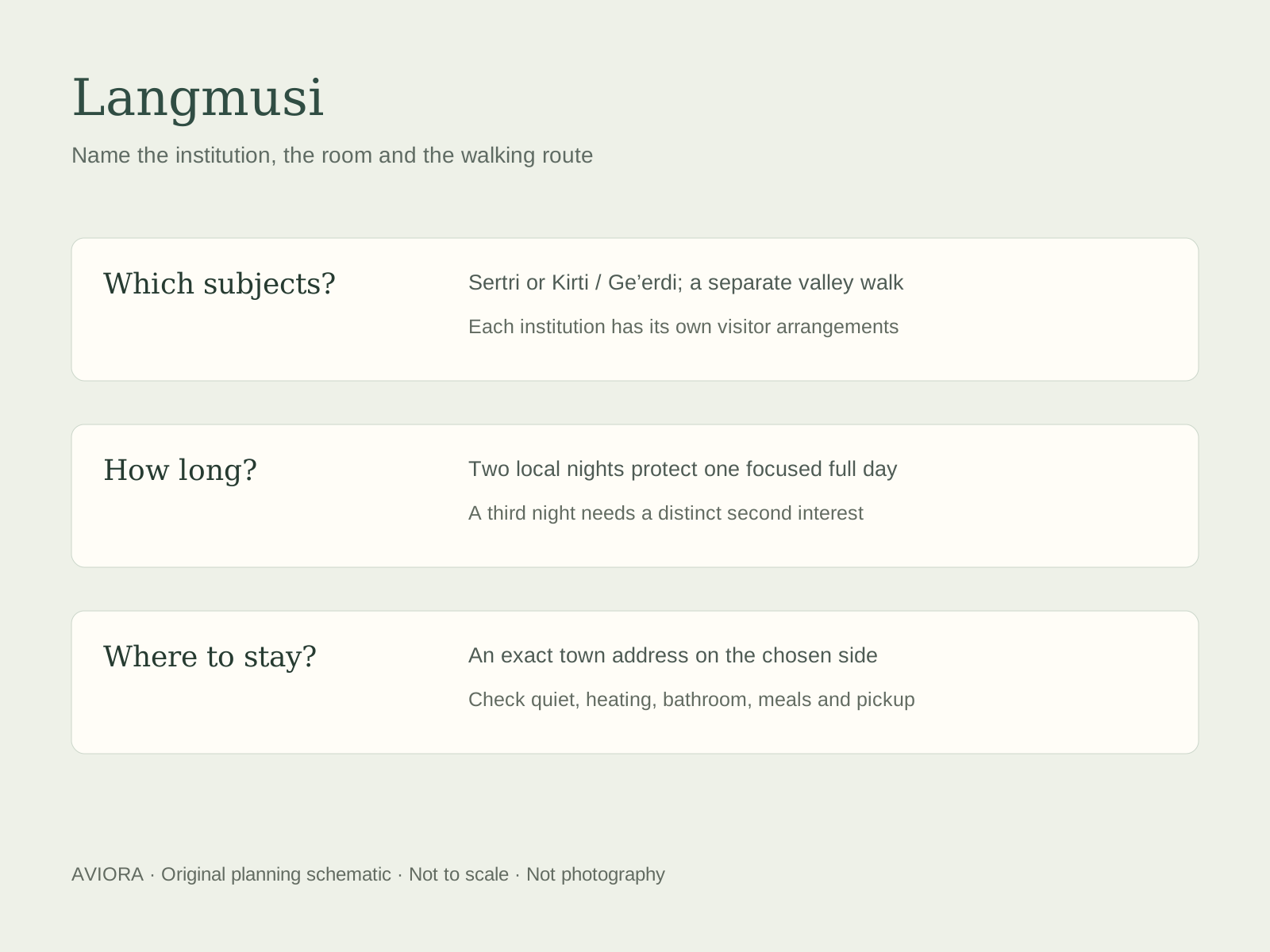
Langmusi offers a town-and-monastery stay on the Gansu–Sichuan boundary, around 3,300 meters high. Choose between Sertri Monastery on the Gansu side and Kirti, also called Ge'erdi, on the Sichuan side, or allow time for both. Two local nights give one focused day without crowding a long arrival drive. Match the room and any valley walk to the wider ascent plan. The provincial boundary here is distinct from entry into the Tibet Autonomous Region.
How many days do you need in Langmusi?
Two nights give one full day for a considered monastery-led visit and an appropriate contrasting interest. Three nights can support a separately assessed valley walk or another distinct subject, with more flexibility for weather and rest. One night is a selective road stop: useful time depends on the real arrival and departure, not the number of names printed in the itinerary. Count Xiahe, Zoige and gateway nights separately. Additional nights create time but do not guarantee acclimatization, site access or private cultural encounters.
Compare stays by number of nights
1 night / a selective road stop
Choose a focused visit when the actual arrival and onward journey leave useful hours. A late room arrival and early departure do not supply an in-depth two-monastery day. Keep meals and rest reliable and do not make an essential interior visit depend on an optimistic drive.
2 nights / one complete local day
Give the selected institution real interpretation time, a proper meal and a complementary town or landscape interest. Visiting both monasteries can be researched when current access and effort fit, but should not become a compulsory race. Keep the next road stage separate.
3 nights / a distinct second interest
Add an assessed valley walk, photography interest or available cultural subject with a clear purpose. Use the extra flexibility for conditions and guest needs rather than fill time with unconfirmed riding or private-host promises. More nights do not guarantee acclimatization or access.
Plan a tailored Langmusi visit
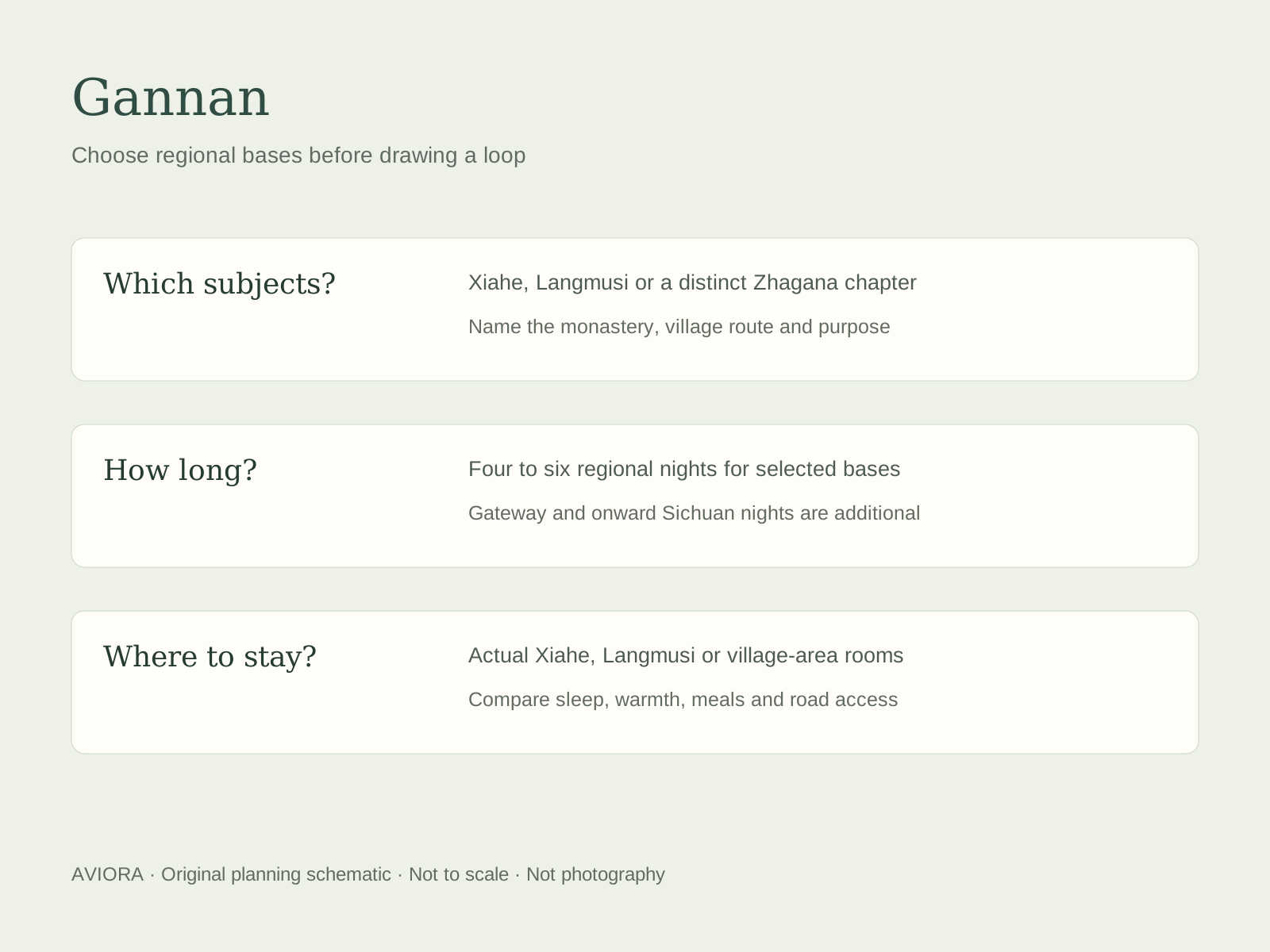
Langmusi can connect a focused Xiahe monastery stay with a separate Zoige landscape chapter, while Songpan offers another town and gateway option. Share your dates, actual gateways, available nights, cultural interests, walking needs and room expectations for a tailored route. We can assess whether both monasteries and a valley walk add value, then allow time for the roads and the complete sleeping-elevation profile. The illustrative local outline helps frame that discussion; final services require a specific proposal.
A useful proposal identifies the exact monastery or monasteries, permitted visitor routes, private guide and any institution-arranged interpretation, room category, complete road days, meals and actual walking plan. Establish current local access and check-in arrangements for the actual travelers and dates. Private teaching, ceremonies, family hospitality, riding, longer hiking and drone use require their own appropriate confirmation where available. Paying for a guide does not open restricted halls or private life. Funerary activity is not offered as visitor entertainment, and no specific ritual or religious encounter is promised.
This is a destination planning guide, not a fixed departure or a confirmed package. We check the route, accommodation, transport and guide availability for your dates before setting out the services and price in writing.
Keep a substantial road arrival modest, then plan the full local day around current religious visitor arrangements, meals and guest energy. A festival or religious calendar can change demand and access without supplying a guaranteed performance. Leave the order flexible if weather or an interior visit changes. A valley outing needs its actual turnaround and return time; do not attach it casually before a long onward drive. Use the whole departure journey when judging a flight or train connection.
01
Understand one named monastery through the actual public and interior routes available
02
Compare the other institution only when it adds a distinct subject and useful time
03
Choose a suitable town or valley walk with its real route and effort assessed
Suggested Langmusi itinerary
What can you fit into your Langmusi itinerary?
Arrival / after the separately planned road journey
Settle into the actual town room
Allow the full drive, meals, current conditions and final approach. Keep the evening modest, check the next day's arrangements and take a short local orientation only when the actual time and guest needs support it. Xiahe or other gateway nights are separate from this outline.
Full day 1 / a considered monastery-led visit
Choose clear interpretation and useful time
Visit the named institution through its permitted route, with a proper meal and rest. A second institution or modest town interest can complement the day when access and effort fit. Do not require both interiors and a long valley walk simply to complete a list.
Full day 2 / for a three-night stay
Add a distinct and assessed local subject
Use a suitable valley route or another genuinely available interest with the exact start, finish, weather and support checked. A shorter alternative should remain worthwhile. No private host, horse ride, religious encounter or clear mountain view is guaranteed by the additional night.
Departure / the real next road stage
Continue with the whole route accounted for
Allow the complete transfer to Xiahe, Zoige or another separately confirmed base, reviewing sleeping elevations and actual connections. This outline is illustrative, not a published package, medical plan or guarantee of hotels, access, rituals or present trail conditions.
The warmer part of the year is a useful starting point for combining religious history with a selected valley walk, while rain and variable visibility still affect paths. Spring and autumn bring different temperatures and conditions; winter needs a distinct road, heating and service assessment. Festival periods can change room demand and visitor access, but religious activity is not a guaranteed show. Choose the specific institutions and walking route, then assess the actual dates. No season guarantees clear peaks, empty streets or access to all interiors.
What affects the cost of a Langmusi trip?
Compare the precise room, heating and meals; complete vehicle days; guide language and hours; each named admission; and any institution-led interpretation. A second monastery visit should add understanding rather than duplicate a generic commentary. Longer walking, riding or a named host requires its own confirmed service basis. Clarify changes if a site or route is unavailable. Premium value should appear in comfort, explanation and useful time, not an unsubstantiated exclusive-access or luxury-lodge claim.
Getting there and getting around
How to get to Langmusi and plan your stay
Arriving and connecting
Start with the previous hotel or actual operating gateway service, then plan the whole road to the booked property. Lanzhou, a dated Gannan Xiahe flight or a Songpan-region rail service creates different journeys and should not be treated as arrival in Langmusi itself. Include meals, current conditions, driver arrangements and the complete ascent. Keep the first evening modest and leave essential site visits for a useful local window. Do not connect a long mountain-road return tightly to a flight using an ideal driving estimate.
Getting around
Confirm the actual vehicle approach, walking to the intended entrance and the route between selected interests. Being in a small town does not make every monastery path level or every valley route short. Follow institution-specific access and photography rules, respect worship and avoid private land. Agree meals, toilets, seating, footwear, pickup and a shorter option. A guide adds value through interpretation and practical judgment, not the ability to override closures or grant private access.
Walking and access
Monastery routes can involve slopes, thresholds, steps and standing at roughly 3,300 meters. Check each actual visitor route and the final walk from the vehicle. A valley path can add uneven ground, stones, mud, stream-related obstacles or exposed sections, depending on the chosen route and current conditions. Establish length, climbing, footwear, guide support, toilets and a shorter option after assessment. An easy-looking photograph does not establish the whole path, and less walking does not remove the altitude exposure.
What first-time visitors often underestimate
Ask which monastery the itinerary means, what the guide will explain and exactly where the proposed walk begins and ends. Then compare the booked room and the complete roads before and after the stay. These details make Langmusi a meaningful chapter, rather than a vague temple label placed between long driving days or a promise of cultural access that has not been arranged.
Where to stay in Langmusi
Choose the exact town property and full Chinese address, including which side of the provincial boundary it occupies. Compare the booked room's quiet, heating, hot water, bathroom, stairs, breakfast and vehicle access before monastery proximity or decorative style. Nearby restaurants and a practical pickup can matter after a long road day. A monastery-view photograph does not prove the view from your category, and a high price does not establish international resort service. For an outlying lodge or camp, assess actual facilities, dinner, road access and sleeping elevation as a separate decision.
Compare hotel areas
Gansu-side town property / a named practical address
Compare the actual walk or transfer to Sertri, dinner, pickup, quiet and room warmth. Specify the complete Chinese address and booked category. Being on the Gansu side does not establish entry arrangements at the monastery or prove that the room overlooks it.
Sichuan-side town property / a separate location choice
Assess the actual access to Kirti / Ge'erdi and any selected walking start, alongside bathroom, hot water, temperature control, noise and meals. Proximity is useful only when it supports the real itinerary. A provincial-side label alone says little about comfort or the visitor experience.
Town-edge lodge or camp / assessed individually
Establish the room or sleeping space, heating, bathroom, power, food, staffing, traveler registration and final road. A remote-looking image is not proof of privacy, reliable services or a suitable hiking base. Choose it for a real benefit that remains worthwhile in poor visibility.
Xiahe or Zoige county town / different overnight chapters
They may support a coherent wider route, but are not interchangeable with a Langmusi night. Count the entire transfer and actual local hours. A broad Gannan or grassland hotel label should not conceal a substantial drive to the institution or valley you want to visit.
Should I visit Sertri, Kirti / Ge'erdi or a nearby valley?
Choose by the subject and actual visitor arrangement, rather than treating the two monastery names as interchangeable. Sertri offers the Gansu-side institutional setting; Kirti / Ge'erdi is a distinct Sichuan-side institution with its own surroundings and rules. A permitted valley walk, sometimes described in travel material as Namo Gorge, is another route and effort decision. If visiting both institutions, ask what different history and visible features the guide will explain. One well-interpreted visit with time to observe can be more rewarding than rushing two interiors and an unassessed walk.
Langmusi is not the name of just one monastery
Sertri and Kirti / Ge'erdi refer to different institutions on opposite provincial sides. Use the full site name when comparing admissions, guiding and photographs. A general promise to visit Langmusi does not tell you which public areas or interiors are included, and one site's rules should not be assumed to apply to the other.
Two monasteries need two clear reasons
Ask what distinct history, architecture, institutional life or visitor route each contributes. If time or energy is limited, one thoughtful visit and a contrasting local walk can provide more understanding than repeating similar stops. Neither institution owes visitors a ceremony, personal conversation or unrestricted photography.
A valley walk is a separate route decision
Descriptions such as Namo Gorge can cover different lengths and stopping points in travel accounts. Identify the actual start, finish, current access, elevation and effort. A short approach does not establish the suitability of a longer hike, stream crossing or horse activity. Agree a turnaround and a worthwhile alternative before setting out.
Provincial geography is not a permit guarantee
This is a Gansu–Sichuan setting outside Tibet Autonomous Region, not an international border crossing. Do not apply TAR arrangements indiscriminately, or infer that every local road and institution is open to every traveler. Check the actual documents, dates, sites and hotel with the responsible parties, including any farther continuation.
The sleeping altitude applies even on a modest cultural day
The town setting is around 3,300 meters, with variation by property and higher road or walking stages possible. Review previous nights and the whole onward route. A private vehicle or oxygen provision does not establish protection from altitude illness. Seek appropriate individual advice and respond to concerning symptoms instead of pushing higher to complete the checklist.
Religious and funerary practices are not entertainment
Respect worship, privacy and instructions about photography. Do not enter or approach sensitive activities to obtain a dramatic image, even if an online account presents them as a highlight. Cultural explanation can be valuable without observation of a private rite. A responsible proposal should never depend on a promised funeral or invitation that participants have not given.
Culture and historical context
Let each institution keep its own identity
The first useful distinction in Langmusi is that one destination name does not describe one monastery. Sertri and Kirti / Ge'erdi deserve their own names, histories and explanations of what is visible to visitors. A good guide separates an institutional setting from the broader religious tradition and from stories repeated in travel accounts. The town and valley can also be understood through their present use, not just their appeal as a mountain backdrop.
Religious places are lived institutions with boundaries. Observe quietly, ask before portraits and follow the rules of the actual hall or public space. Private instruction, a household invitation and a sensitive rite are not benefits that come automatically with a paid guide. Avoid treating people as photographic subjects without consent or funerary activity as an attraction. Respectful distance and precise explanation can create a richer understanding without privileged access.
Food and social life
Make town meals support the cultural and walking day
Choose a proper breakfast before walking, a realistic lunch window and a warm dinner after the road journey. Noodles, rice, vegetables and a suitable meat or tofu dish can provide practical shared choices where available. Ask the actual kitchen about its specialties, ingredients and portions rather than assume every restaurant serves one standard regional menu. An unhurried meal can also provide a useful break between two institutions with substantial standing and walking.
Clarify wheat, dairy, meat stock, nuts, sauces and shared preparation where dietary needs matter. Tea and yogurt vary by preparation; a vegetable dish may contain animal ingredients. Serious allergies, halal requirements or strict diets need a confirmed venue and workable alternative, especially at an outlying property. Arrange late food and early breakfast in advance. A family-hosted meal requires a willing host and separate service agreement, not an assumption based on the town's cultural identity.
Langmusi travel FAQ
Questions about visiting Langmusi
Is Langmusi in Gansu or Sichuan?+
The commonly used travel name spans both. Sertri is on the Gansu side in Luqu County, while Kirti / Ge'erdi is on the Sichuan side in Zoige / Ruoergai County. Use the exact monastery and hotel address. This provincial boundary is not an international border or a crossing into Tibet Autonomous Region.
Are Sertri and Kirti / Ge'erdi the same monastery?+
No. They are distinct institutions with different settings and visitor arrangements. A general Langmusi label does not identify which one is included. If visiting both, ask what distinct subject each contributes and confirm current public and interior access separately.
How many nights should I stay in Langmusi?+
Two local nights provide one focused full day between road journeys. Three can add a separately assessed valley walk or another distinct interest. One night is a selective stop whose value depends on actual arrival and departure. Count Xiahe, Zoige and gateway nights separately.
Which side of Langmusi is best for accommodation?+
Choose the actual property and room rather than a side in the abstract. Compare the intended monastery or walking start, quiet, heating, bathroom, meals and pickup. The full Chinese address and booked category are more informative than a general monastery-view or boutique label.
Is the Namo Gorge walk easy?+
That depends on the exact route and present conditions. Confirm the start, finish, terrain, climbing and turnaround, with appropriate footwear, support and a shorter alternative. A short approach or a flat photograph does not establish the difficulty of a longer valley outing or any stream-related obstacle.
What is Langmusi's altitude?+
The town setting is around 3,300 meters above sea level, with variation by property. Selected roads and walks may go higher. Review all sleeping nights and daytime high points with suitable individual health advice. Fitness, a car and hotel oxygen do not guarantee protection from altitude illness.
Can I combine Langmusi with Xiahe and Zoige?+
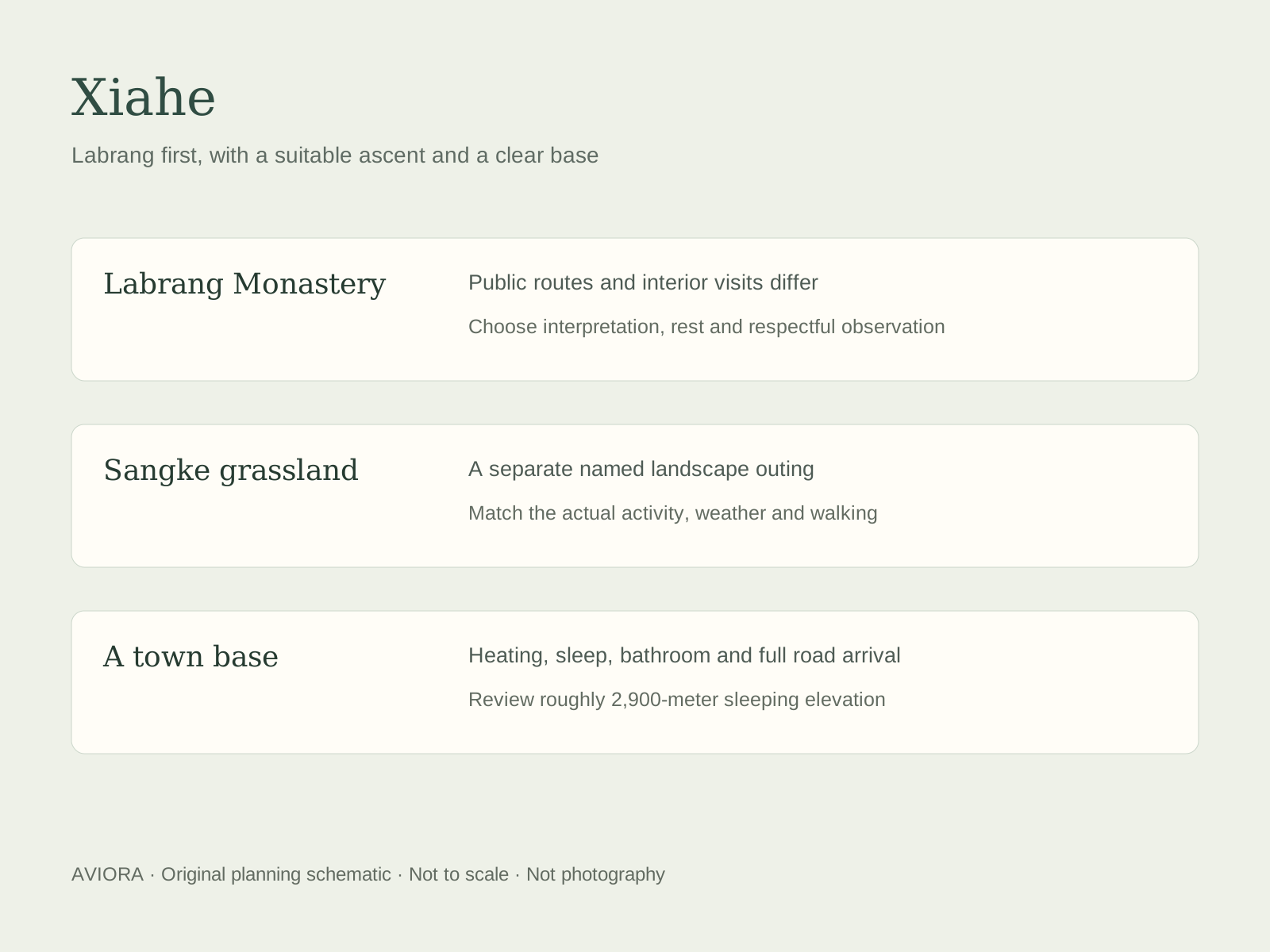
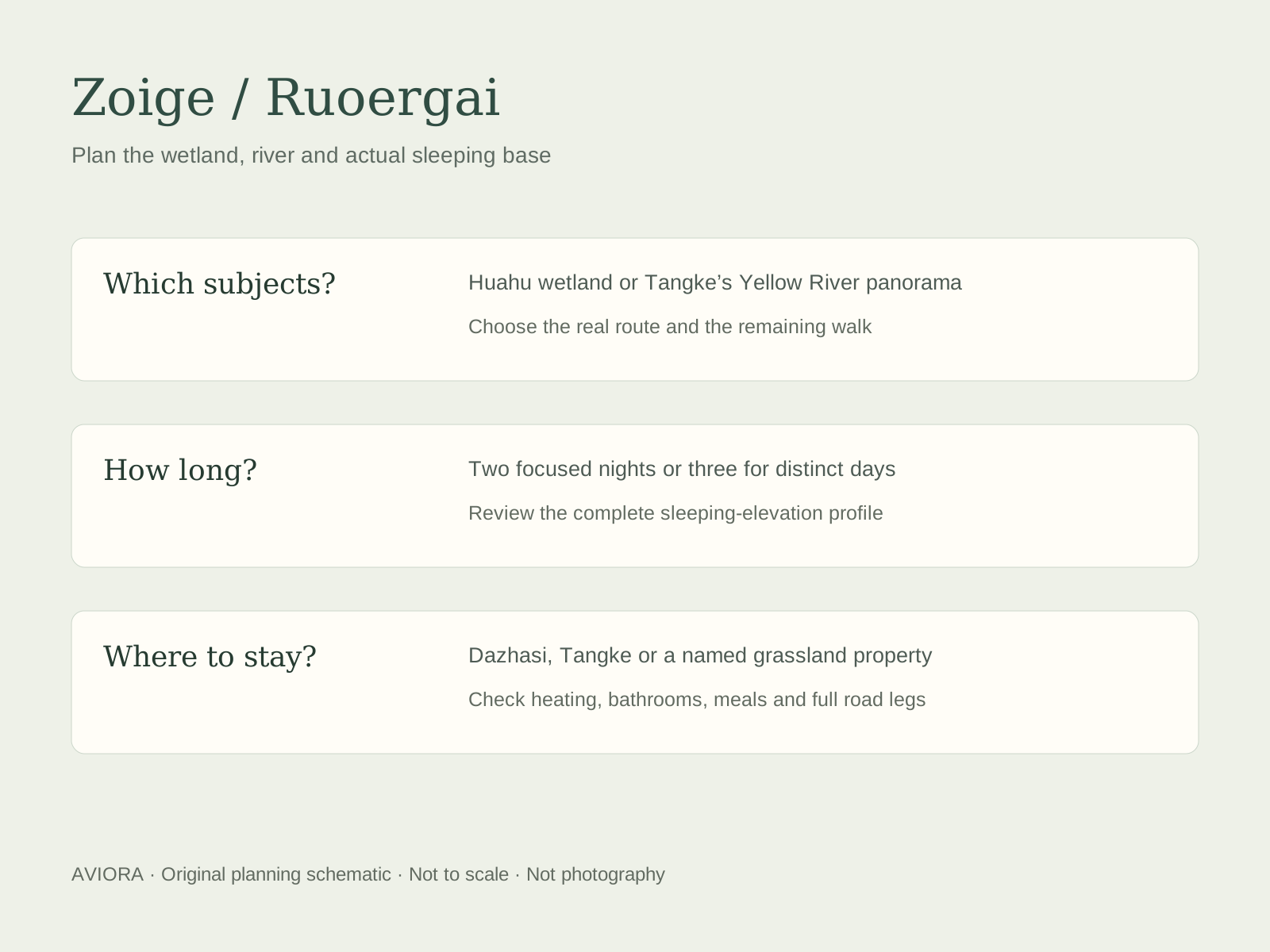
It can be researched as a selective Gansu–Sichuan journey with full road stages and useful nights at each base. Labrang, Langmusi's institutions and the Zoige wetland or river landscape are different subjects. Do not count the same travel day as a full sightseeing day in every place.
Can foreign travelers visit Langmusi?+
Confirm current eligibility, actual routes, site access and hotel check-in arrangements for the travelers and dates. Do not automatically apply Tibet Autonomous Region procedures to this Gansu–Sichuan setting, or infer universal permission from that geographical distinction. Additional or changed routes need their own review.
Does a private tour include ceremonies or funerary practices?+
No such inclusion should be assumed. Worship, private teaching and personal rites are different from public sightseeing and require appropriate boundaries and consent. Funerary activity is not sold as visitor entertainment. A private guide does not guarantee a ritual, private invitation or unrestricted photography.
Share your dates, interests, arrival and departure cities, and any plans already booked. We’ll recommend an itinerary at a pace that suits you, with the arrangements and price explained before you book.