1 night / a selective city stop
Useful only when the complete arrival and departure leave time for one main subject and a meal. Do not promise the old city, Gulongzhong, a museum and a long entertainment evening around a short overnight.
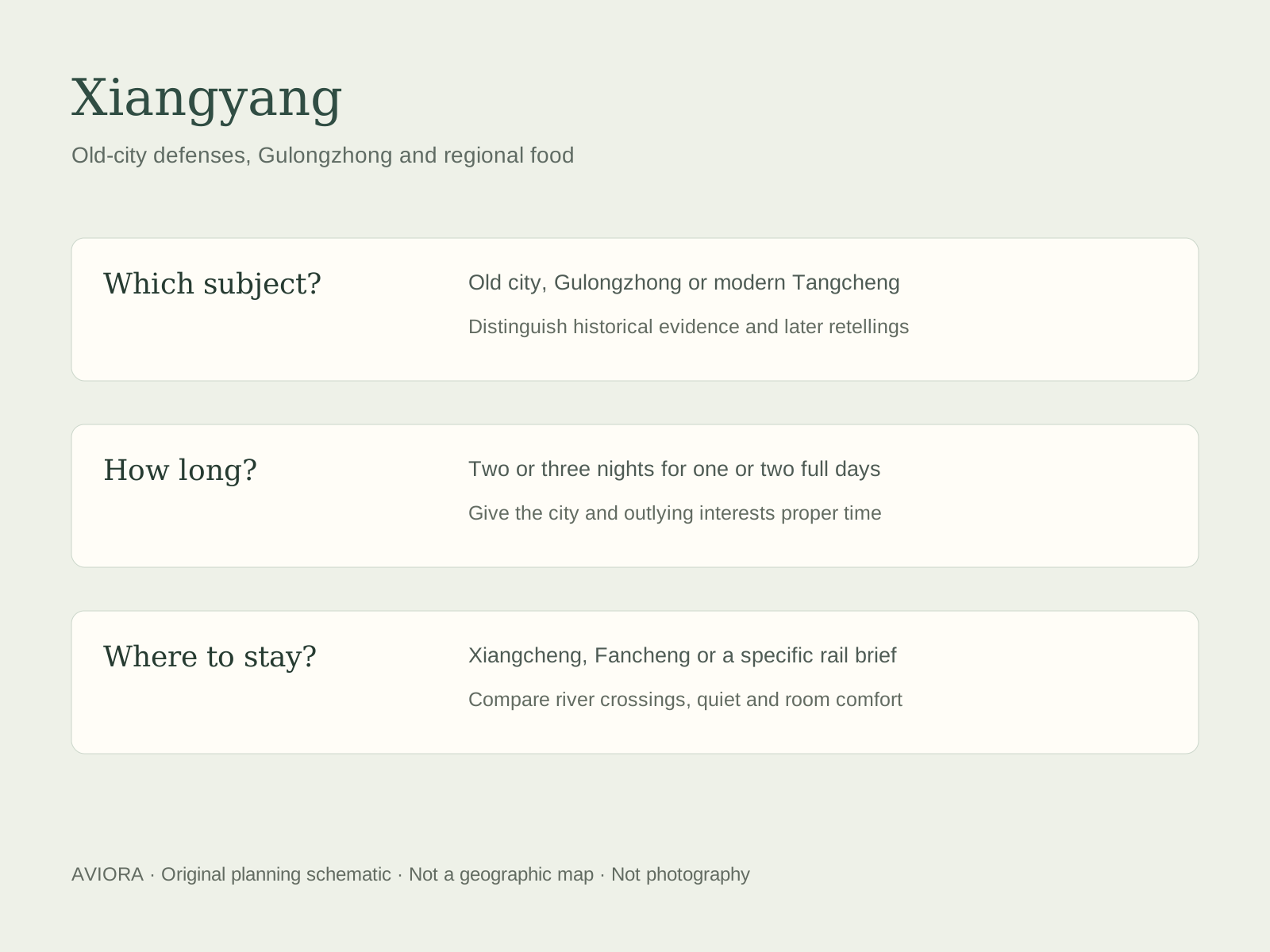
A Han River city where history and its retellings meet · Central China
Explore Xiangyang's walled-city setting, Gulongzhong's Three Kingdoms associations and distinctive beef-noodle breakfasts, with Tangcheng and hotel areas clearly distinguished.
Xiangyang (襄阳), in northwestern Hubei, offers a rewarding city stay for travelers interested in defensive landscapes, Three Kingdoms stories and everyday food. The Han River separates Xiangcheng (襄城), with the main walled old-city setting, from Fancheng (樊城), a different urban and hotel area. Gulongzhong (古隆中), also written Ancient Longzhong, is a separate cultural-landscape visit associated with Zhuge Liang. Tangcheng (唐城) is a modern film and visitor complex, not a surviving Tang-dynasty city. Two nights give one full day; three allow the old city and a distinct outlying subject to receive proper attention.
Choose two nights for a selected old-city route, regional food and one carefully fitted additional subject. Three nights give two full days: a city-history day and a separate Gulongzhong or other clearly chosen interest. A Tangcheng evening can replace another activity rather than extend an already full day into exhaustion. One night is a selective stop with favorable transport, not a complete visit. Longer stays should have a specific purpose, such as deeper historical interests or time at a worthwhile hotel, rather than repeat similar street and wall walks.
Useful only when the complete arrival and departure leave time for one main subject and a meal. Do not promise the old city, Gulongzhong, a museum and a long entertainment evening around a short overnight.
Give the city a coherent historical introduction and a regional breakfast. Add an outlying subject only if actual visiting time, roads and energy allow; two nights are not two full days.
Separate old-city history from Gulongzhong or another chosen subject. A modern Tangcheng evening can fit when wanted, with enough rest and current program confirmation. Leave space for the room and a proper meal rather than add another attraction automatically.
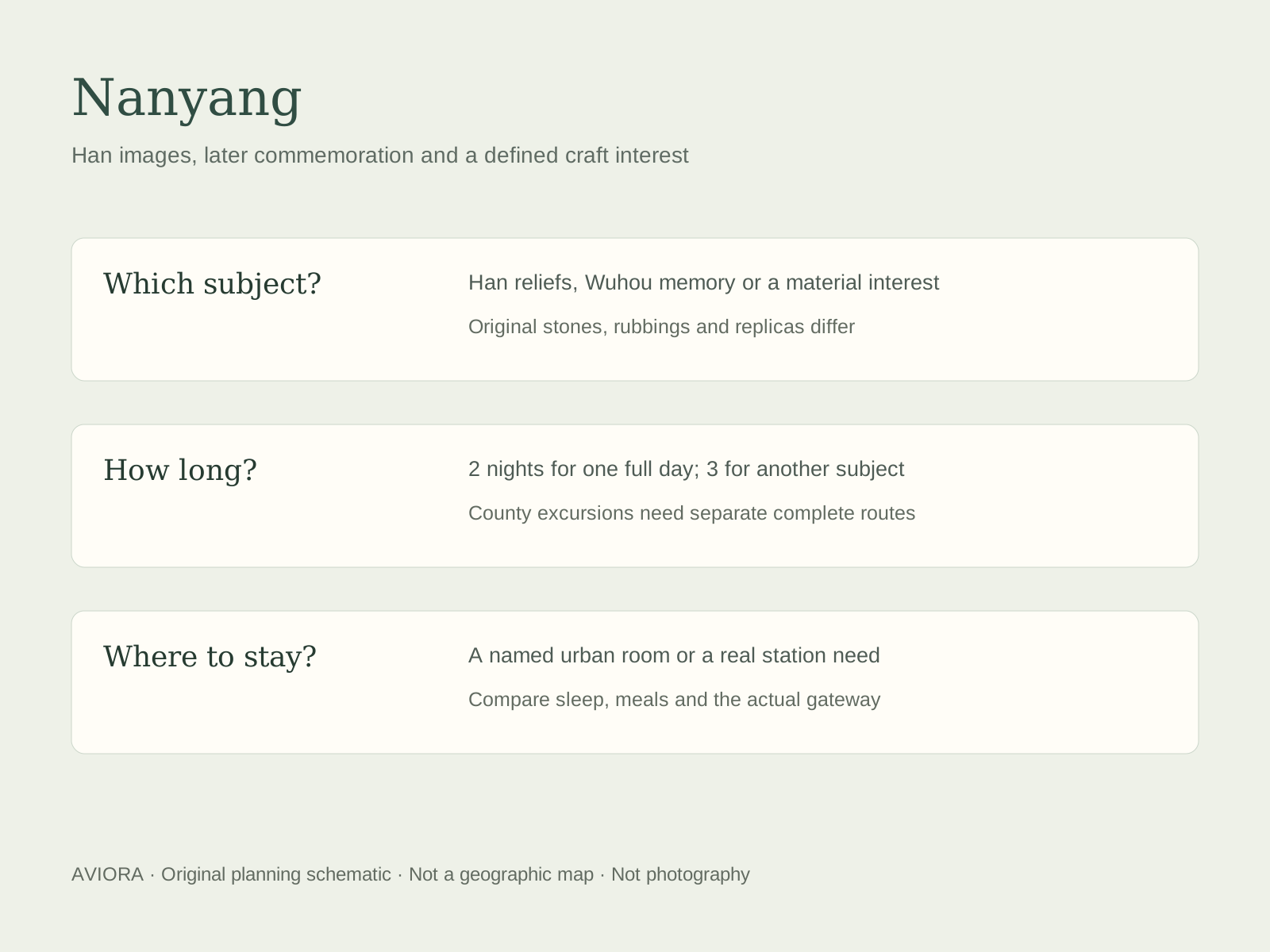
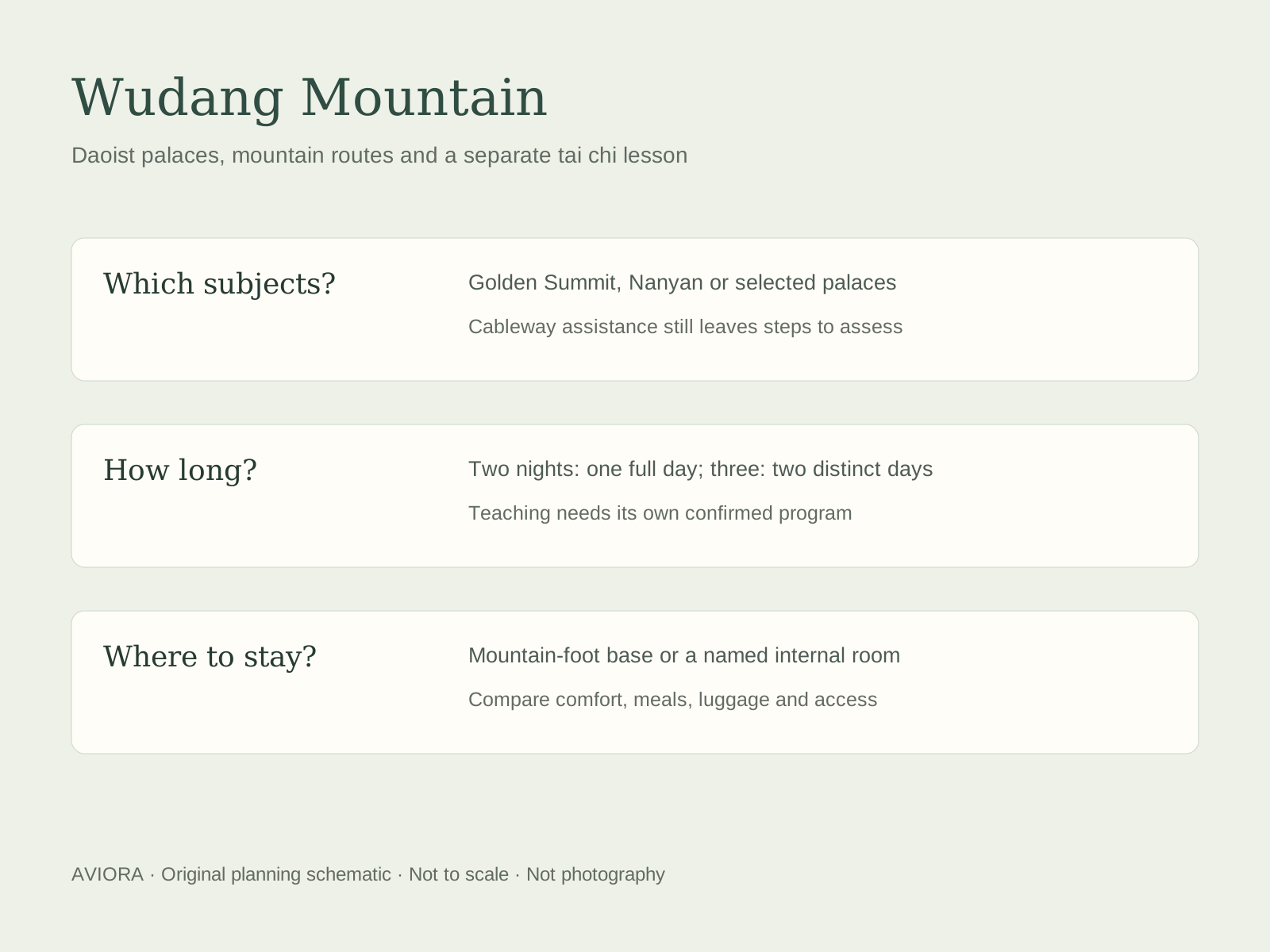
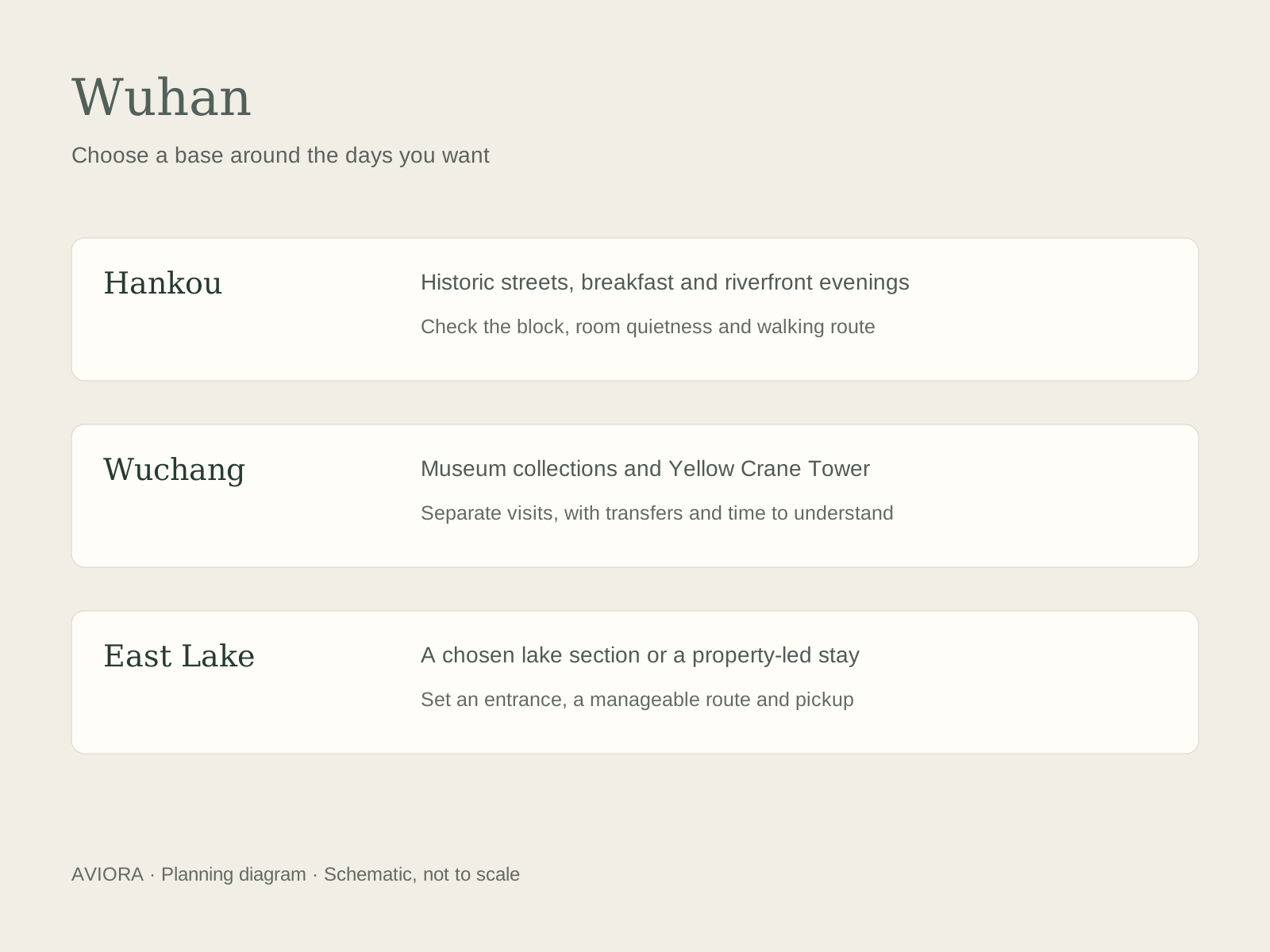
Wudang Mountain adds a different Daoist architectural landscape with its own full days, accommodation and remaining mountain steps. Wuhan adds major archaeological collections, Hankou neighborhoods and another distinctive breakfast culture. Shiyan city deserves time only for a named museum, industrial-history subject or useful arrival sequence. There is no matching published Xiangyang product recommended here. Share dates, gateways, room expectations and the historical subjects that interest you for a tailored itinerary showing the complete journeys and what each local day adds.
A useful Xiangyang proposal should identify the actual city route, wall or museum access, outlying visit, room and guide language. Tell us whether military history, Three Kingdoms literature, breakfast culture or a modern entertainment evening matters most. Agree the walking and standing, meal timing and full vehicle hours. A performance, hosted meal or specialist historian requires a separate named arrangement. Private guiding can make the places and their evidence understandable; it does not make public paths exclusive or turn a commemorative building into an original ancient residence.
This is a destination planning guide, not a fixed departure or a confirmed package. We check the route, accommodation, transport and guide availability for your dates before setting out the services and price in writing.
How our tailor-made China service works · Explore routes in Central China
Start planningSignature experiences
Group the selected Xiangcheng old-city interests into one coherent route, with a meal and seated break. Give Gulongzhong its own substantial visiting window and the complete road transfer. If choosing Tangcheng, obtain the actual dated opening and program before scheduling an evening, then protect time for dinner and the return. A museum or wall access window should be confirmed before it becomes the reason for an overnight.
Suggested Xiangyang itinerary
Arrival / night 1
Complete the actual station or airport transfer and enjoy dinner near the selected base. Add a manageable old-city or river walk only when arrival hours allow. Confirm the next day's wall or museum route and breakfast plan.
Full day 1 / night 2
Begin with a suitable beef-noodle breakfast or an agreed alternative. Follow the selected old-city and open wall route, with interpretation, seated breaks and a proper meal. Add a named museum only when its current venue and opening fit; do not assume every collection is in the same walking circuit.
Optional full day 2 / night 3
Give Gulongzhong a thoughtful visiting window when Zhuge Liang and Three Kingdoms traditions appeal. A Tangcheng program is a separate optional interest with its own dated arrangements, dinner and return. It can replace other activity rather than make a supposedly relaxed day longer.
Departure
Use the correct station and full onward transfer. Wudang's mountain itinerary and Wuhan's city stay each need their own useful days. This illustrative two- or three-night outline is not a published package and does not guarantee wall sections, exhibitions, performances, private access or hotel rooms.
When to go
Spring and autumn are useful starting points for city walking and an outdoor Gulongzhong visit. Summer can be hot and humid, so combine early walks, shade, seated meals and indoor time. Winter needs warm clothing for exposed wall and river sections. Current venue openings and Chinese public holidays matter as much as the season. A peony display, performance or other dated event should be included only after checking the actual program, not assumed from an attractive seasonal image.
Compare actual rooms and river-view categories, full road and guide hours, named admissions, meals and any separately ticketed entertainment. A Tangcheng entrance, a particular performance, transport and photography service are different items. For a premium stay, establish what improves the trip: a quiet room, good interpretation, comfortable transfers and enough time. A higher rate does not secure an empty old city, unrestricted wall access or entry to closed heritage buildings.
Getting there and getting around
Use the ticketed station or airport to calculate the full transfer to the selected hotel. Xiangyang East and Xiangyang station serve different arrival locations; neither name identifies the final old-city pickup. A Wudang extension needs the dated onward service and both road legs. Keep an uncertain arrival away from the essential museum window or an inflexible performance time, and protect a proper local day if the city is an important interest.
A thoughtful route groups old-city subjects, then uses a separate transfer for Gulongzhong or another outlying visit. River crossings and hotel location can change the order. A vehicle helps between areas but cannot follow every pedestrian lane or remove wall steps and venue standing. Identify actual pickup points and a manageable end to the walk. For an evening program, agree dinner, exit and the return journey rather than assume a daytime vehicle booking covers a late finish.
Distinguish a level neighborhood walk from wall stairs, uneven paving, museum standing and a longer landscaped Gulongzhong route. Ask which wall section is open and where you ascend and descend; an impressive perimeter on a map is not a continuous accessible visitor path. Tangcheng can also involve substantial walking and standing. Agree a shorter worthwhile route, seating and pickup points rather than infer ease from a flat-looking city photograph.
Decide which story interests you: the strategic river city, Zhuge Liang and Three Kingdoms traditions, everyday food or designed film scenery. Then choose the actual places that support it. Xiangyang is easier to understand when these experiences are connected thoughtfully rather than all described as an ancient town tour.
Begin with an actual Xiangcheng hotel when old-city walks and evenings near the historical area are central. Compare Fancheng for a particular room, restaurant choice or an itinerary that genuinely benefits from that side of the Han River. A Xiangyang East station-area stay serves a different arrival or departure brief. Check the full road to your chosen sights, river crossings, room quietness, bathroom, breakfast and pickup access. An old-town label does not guarantee a historic building, and a river-view room does not establish an easy walk to the old-city entrance.
A starting point for guests who want historical walks and nearby evenings. Check the actual block, traffic noise, vehicle pickup and distance to the chosen route. A hotel described as old-town style may be a modern building and may have very different access from a room inside a pedestrian lane.
Can work for a chosen property, dining or plans on that side of the Han River. Compare the actual crossings and return after dinner before choosing it for a Xiangcheng-led visit. Being beside the same river does not make two hotels equally convenient for the old city.
Consider only when the correct train and an early or late travel sequence justify it. Check the real station-to-room luggage route, meals and onward transfer. Near Xiangyang East is not the same as near Xiangyang station or near the walled old city.
Choose the old city for the relationship between defenses, river and urban life, using the sections actually open to visitors. Choose Gulongzhong for Zhuge Liang and Three Kingdoms interpretation, with historical association, commemorative buildings and later storytelling distinguished. Choose Tangcheng for designed film scenery, photography or a specifically confirmed entertainment program. They answer different interests. Tangcheng is not an original Tang capital, and a Gulongzhong visit should not describe every structure as a surviving residence from Zhuge Liang's lifetime. With limited time, select the subject that interests you most rather than collect all three names.
Use the river, gates, street pattern and visible masonry to explain the city's strategic setting. Distinguish surviving fabric, restoration and later commemoration through the evidence available at the actual site. A historical siege story does not make every section of wall the same age or every gate open to visitors.
Gulongzhong provides a way into Zhuge Liang's associations with the region. Explain the difference between historical accounts, later literature and the present commemorative landscape. Historical associations are richer when clearly explained; there is no need to claim a reconstructed interior is an untouched room from the third century.
Choose its designed settings and confirmed visitor program for photography or entertainment. It is not a substitute for the historical old city. Ask about the dated program, walk, seating and return; costumes, a photographer and a particular performance are included only when expressly agreed.
Choose an actual noodle shop with suitable seating and kitchen capability instead of inserting a rushed tasting after a full hotel breakfast. Clarify broth, chili, wheat and portions. Guests who prefer a milder meal or do not eat beef should have a worthwhile alternative.
Culture and historical context
The Han River helps explain Xiangyang's strategic role. Read the relationship between the city, defenses and river before treating a gate as an isolated photo stop. The visible landscape includes layers of survival, repair and later change. A good explanation identifies the evidence available at the particular place rather than assigning every brick to a famous siege or describing the whole urban area as unchanged since antiquity.
Gulongzhong introduces Zhuge Liang through historical association and later cultural memory, including the influence of Three Kingdoms literature. These layers deserve clear labels. Tangcheng offers another kind of retelling through modern film scenery and visitor entertainment. Distinguishing them does not diminish the experience: it lets guests choose whether they want historical inquiry, commemorative landscape or a designed evening setting, and understand what they are seeing.
Food and social life
A Xiangyang beef-noodle breakfast works best as a proper meal rather than a hurried bowl added after the hotel buffet. Choose an actual shop for seating, preparation and the group's preferred spice level. Discuss the broth, beef, noodle type and bowl size, and order a manageable amount before adding other dishes. Local breakfast habits may include huangjiu; explain that it contains alcohol rather than present it as a compulsory soft drink or a required part of the tasting.
Wheat, soy, beef, meat stock and chili are relevant ingredients to discuss, and a meat-free topping does not establish vegetarian broth. Serious allergies need an actual kitchen assessment and a useful alternative. For lunch or dinner, balance regional preparations with vegetables and suitable staples, using the kitchen's strengths. A hosted tasting or cooking session requires a separate arrangement; ordinary restaurant assistance should not be described as a private culinary encounter.
Xiangyang travel FAQ
It can be rewarding for travelers interested in historical defenses, Three Kingdoms interpretation and a regional city beyond China's classic first-trip circuit. Allow useful local time and a guide who makes the context clear. On a short trip without those interests, compare it with the extra transport and the destination time you would remove.
Two nights give one full day for a selective introduction. Three give two days to separate old-city history from Gulongzhong or another chosen subject. One night needs favorable transport and a narrow focus. Arrival and departure hours determine the useful time, not the night count alone.
Start with Xiangcheng for a visit centered on the main walled old-city setting. Compare Fancheng for a specific hotel, dining or interests on that side of the Han River. Check actual river crossings, room comfort and pickup. A shared river-view label does not make the locations equivalent.
No. Tangcheng is a modern film and visitor complex with designed historical settings. It can suit photography or an actual entertainment program, but should be distinguished from Xiangyang's historical old-city fabric. Confirm any performance, costumes or photography service separately.
Gulongzhong, or Ancient Longzhong, is a cultural landscape associated with Zhuge Liang and Three Kingdoms traditions. Visit for interpretation of those associations and later commemoration. Do not expect every present building to be an original structure from Zhuge Liang's lifetime; choose the visit when the subject interests you.
No. Xiangyang East / 襄阳东 and Xiangyang / 襄阳 are different stations. Use the ticketed service and the whole road to the actual hotel to compare options. An old-city visit during a connection needs sufficient time for both transfers, luggage and the return, not just a gap between trains.
Yes when dated transport and useful days support both. Xiangyang adds city defenses, Three Kingdoms interpretation and food; Wudang adds Daoist architecture and a separate mountain route. Give the mountain its own accommodation and assess scenic transport, remaining stairs and walking rather than use a city hotel for every day.
Xiangyang beef noodles are a useful local introduction, with broth, beef and chili preparations varying by shop. Ask about wheat, soy, stock, spice and portions. Huangjiu may accompany local breakfasts, but it is alcoholic and optional; tea or water and a suitable alternative meal should be available for guests who prefer them.
Route combinations
Plan your journey
Share your dates, interests, arrival and departure cities, and any plans already booked. We’ll recommend an itinerary at a pace that suits you, with the arrangements and price explained before you book.
You are asking about Xiangyang.
The enquiry form will load here.
Prefer a direct reply? Message us on WhatsApp or email our China team.