2 nights: one focused city day
Choose a coherent old-city route and selected interiors or a museum. Leave out distant components when they would reduce every stop to a brief photograph.
Maritime history, living temples & southern Fujian food · South China
Explore Quanzhou through its port history and living religious landscape, with an old-city route, well-placed hotel and a separate choice of outlying heritage sites.
Quanzhou in Fujian is worth visiting for the relationship between maritime trade, different religious traditions and the everyday life of a southern Chinese city. Its UNESCO-listed heritage is a distributed set of sites, not one enclosed old-town attraction. Start with a coherent city walk and selected religious or museum visits, then choose an outlying heritage chapter if it deepens your interest. The value is understanding how the places connect, rather than trying to tick off the entire listing.
Three nights give two full days: one for the old city and selected religious heritage, another for a museum and an outlying interest or more neighborhood time. Four nights allow a slower stay or a separate cultural encounter. Two nights can suit one focused city day, but should not promise every heritage component, a coastal excursion and specialist visits. A day trip from another Fujian city is a selective introduction, with station transfers counted in the available time.
Choose a coherent old-city route and selected interiors or a museum. Leave out distant components when they would reduce every stop to a brief photograph.
Separate the old-city introduction from a museum and a selected outlying heritage interest. Keep time for meals and an evening near the chosen hotel.
Add time for a confirmed specialist encounter, a different heritage theme or a slower city stay. More nights should deepen understanding rather than turn the full UNESCO list into an obligatory circuit.
Plan Quanzhou as a tailored cultural chapter within Fujian or a wider China journey. Begin with the nights available and your interest in maritime history, religion, architecture or food, then select a limited set of visits. We do not currently recommend a published Quanzhou package on this page. The final proposal should identify the city base, outlying sites, admissions and hosts rather than treating every example in this guide as included.
We can discuss a tailored Quanzhou plan with the selected sites, hotel, guide, transfers and any cultural host specified in the proposal. Good interpretation connects port history and living places without treating religious communities as performances. Normal public access and worship rules apply. Private hosts, Nanyin music sessions, craft encounters and entry to particular interiors require their own consent and confirmation.
This is a destination planning guide, not a fixed departure or a confirmed package. We check the route, accommodation, transport and guide availability for your dates before setting out the services and price in writing.
How our tailor-made China service works · Explore routes in South China
Start planningSignature experiences
Build a walk around a manageable old-city area, then give a museum or outlying site its own window. Kaiyuan Temple, Qingjing Mosque, transport heritage and other components tell different stories and need different arrangements. Check opening and worship considerations before choosing the sequence. A specialist music or craft appointment should not sit immediately after an uncertain train arrival.
Suggested Quanzhou itinerary
Arrival
Transfer from the exact airport or station and keep the first meal and neighborhood walk manageable. Do not attach a fixed cultural appointment to an uncertain arrival.
Full day 1
Choose selected sites with interpretation, breaks and respect for current access. The point is understanding their connections, not entering every religious building.
Full day 2
Select a museum and an outlying heritage interest, or give an agreed cultural encounter its own time. Include the full road journey and a proper meal.
Departure
Work backward from the booked transport, station and luggage needs. This outline is a tailored planning example, not a published package with every option included.
When to go
Spring and autumn can suit city walks, with rain and variable temperatures still possible. Summer can be hot and humid and needs attention to coastal storms and current notices. Winter may offer more comfortable walking for some travelers but is not a guarantee of warmth. Religious dates, holidays and individual opening arrangements can affect the plan as much as a seasonal label.
Compare the actual hotel and room, guiding expertise, outlying vehicle mileage, admissions and any hosted session. A neighborhood food walk, a sit-down meal and a privately arranged cultural visit are different services. Confirm meals, interpretation, performance or workshop fees and purchase expectations. Premium service should be described through the agreed arrangements rather than promises of exclusive access to public heritage.
Getting there and getting around
Quanzhou Jinjiang International Airport and the city's railway stations are different gateways. Quanzhou, Quanzhou South and other station names should not be treated as interchangeable pickups. Confirm the ticket and final hotel address, then calculate the complete transfer. If coming from Xiamen, include the journey from your actual hotel to the departure station rather than counting only time on the train.
Combine manageable walking with road transfers to separate sites and museums. Narrow streets and busy areas can affect pickup and drop-off, so confirm the meeting point rather than assuming the vehicle reaches every entrance. Outlying heritage needs a real road plan. A boat or other visitor activity, if discussed, is not a substitute for the agreed city transport arrangements.
City lanes and religious sites can involve thresholds, stone paving, steps, standing and crowded sections. Larger temple grounds or outlying sites add their own distances and shade conditions. Review the actual route, seats and remaining barriers before booking. A private vehicle reduces travel between visits but does not remove walking within them or guarantee doorstep access on narrow streets.
Quanzhou is most rewarding when its different sites explain each other. A temple, mosque, bridge and collection are not simply interchangeable monuments. Give the guide time to connect them, while respecting that several places remain part of contemporary religious or neighborhood life.
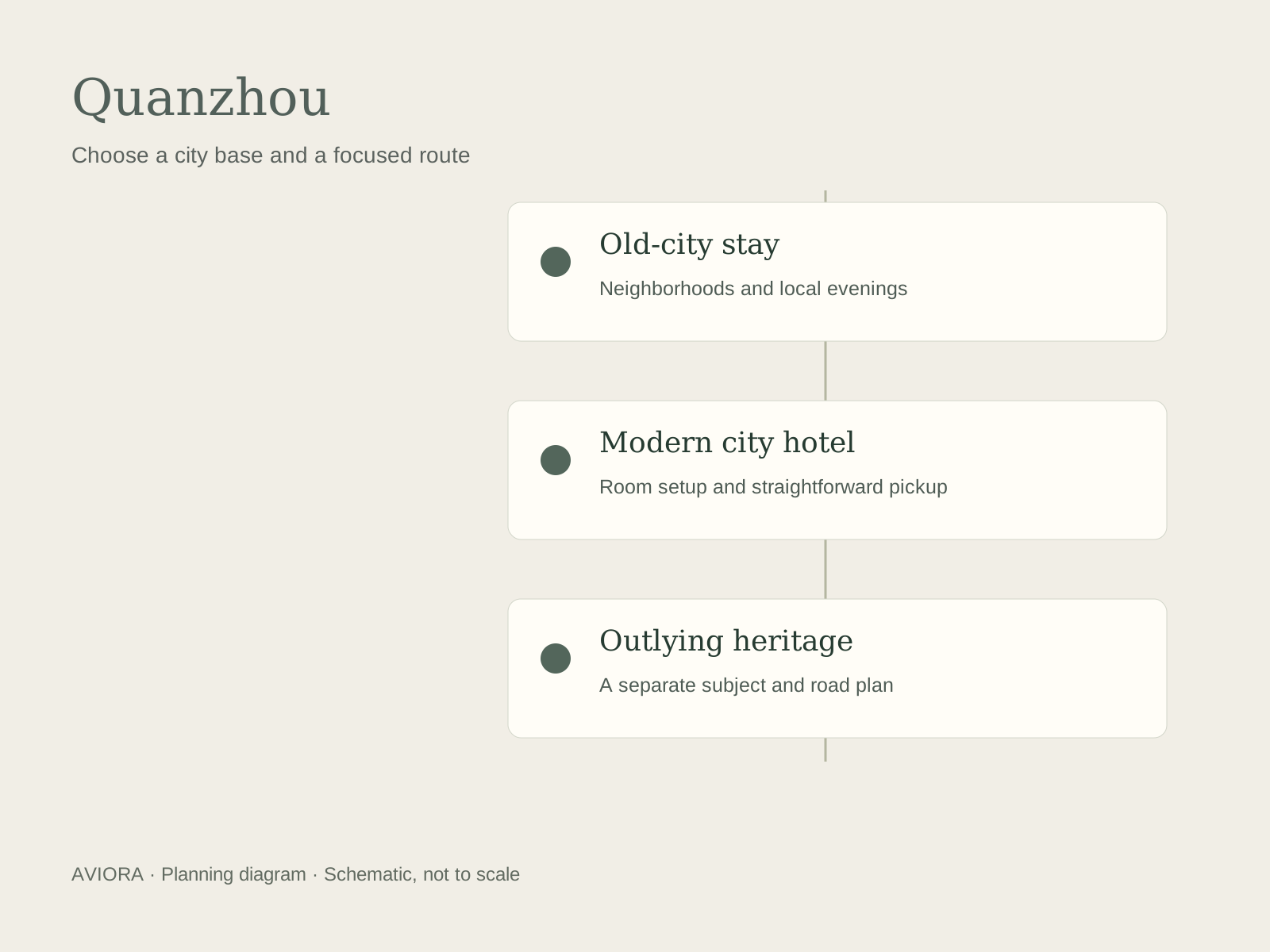
Choose an old-city or nearby base when neighborhood walks and evening food are central to the visit. Check the specific street, noise, stairs and vehicle approach at small historic properties. Compare a modern city hotel when room setup, facilities and straightforward pickup matter more. A coastal property offers a different holiday and requires its own heritage-day transfers; a Quanzhou address does not establish easy access to the old city.
Consider for walking and evening food. Check the actual lane, room sound, stairs, bathroom and where luggage leaves the vehicle. Historic atmosphere does not automatically mean quiet rooms, heritage interiors or an accessible stay.
Compare when room configuration, facilities and pickup matter. Check journeys to your actual visits and evening dining. A newer hotel can improve practical comfort while offering a different atmosphere from sleeping near historic lanes.
Choose for the property and setting, with a separate plan for city heritage. Verify the real address and road connections before calling it a convenient old-city base. A landscape or resort stay should not silently replace a cultural-city hotel.
A day visit can work for a limited old-city introduction if the full rail and road plan leaves worthwhile time. Stay two or three nights when maritime history, temples and local evenings are real interests. A short train ride is not the complete journey from your Xiamen hotel to the first visit. Choose the overnight for time in Quanzhou, rather than assuming every nearby city belongs in one day.
The UNESCO property connects religious, transport, production and administrative evidence across different places. You need not visit every component to understand the story. Choose examples with a guide who explains their relationships and distinguishes documented history from interpretation.
Kaiyuan Temple and Qingjing Mosque provide different perspectives within the city's history and present life. Check what is open to visitors and follow dress and photography instructions. Sightseeing access does not imply access to worship areas or permission to interrupt religious activity.
Luoyang Bridge offers a transport-related chapter away from the central walk. Other sites may serve different production, religious or landscape interests. Confirm the actual destination and road journey instead of adding a distant stop only because it appears on a heritage list. Quanzhou's Luoyang Bridge is not the city of Luoyang in Henan.
Nanyin music can be a rewarding subject when a suitable session is available. A public performance, privately hosted explanation and informal rehearsal are different arrangements. Agree the host, language, duration, consent and fee before advertising the experience. No named performer or backstage access is automatic.
Culture and historical context
Quanzhou's maritime history is visible through several kinds of evidence rather than one waterfront monument. Religious sites, transport structures and museum collections can illuminate different aspects of trade and community. A selective itinerary works when the guide connects those examples and explains why a particular site belongs in the story, instead of presenting a string of unrelated superlatives.
Those places also have contemporary meanings. Follow worship instructions, respect private spaces and ask before photographing people. A Nanyin session or cultural conversation can add depth when the participants welcome it and the language support is right. It should be described as the arrangement actually confirmed, without promising a private ceremony or exclusive cultural authority.
Food and social life
Quanzhou's food offers a different southern perspective from Cantonese dining. Local snacks, soups and seafood can introduce the range, but the group should choose according to appetite and preference rather than a compulsory tasting list. A seated meal can be a welcome change after temple grounds and neighborhood walking. Plan it near the day's route and leave time to eat without rushing to another entrance.
Explain allergies and dietary needs before reservations. Seafood, stocks, sauces and shared preparation can matter even when a dish's name does not make them obvious. A mosque-area restaurant is not automatically suitable for every Muslim traveler, and a vegetable dish is not automatically vegetarian. Clarify the actual ingredients and preparation rather than relying on the neighborhood or cuisine label.
Quanzhou travel FAQ
It can be when maritime history, religious heritage and southern Fujian food interest you. Give it its own useful time rather than adding a rushed stop solely for UNESCO status. With limited nights, compare it with your other cultural priorities.
Two full days, commonly with three nights, allow a city introduction and a museum or selected outlying heritage chapter. Two nights suit one focused day. Add more for a confirmed specialist interest or a slower stay, not to visit every component automatically.
A selective visit can work if the actual transport leaves worthwhile time. Calculate hotel-to-station journeys, the booked train and the Quanzhou transfer. Stay overnight when local evenings and more than one cultural chapter matter.
Compare an old-city base for neighborhood atmosphere with a modern hotel for its particular room and access. Check exact addresses, noise, stairs and dining. A coastal property is a different stay and is not automatically convenient for the historic city.
Access depends on the specific site, date and area. Confirm current visitor rules and follow dress, photography and worship instructions. A sightseeing plan does not grant entry to every religious interior or guarantee a prayer arrangement.
No. Choose a coherent selection that explains the port's history and fits your interests and walking. The serial listing covers different locations; trying to complete it can replace understanding with road travel.
No location-based guarantee is appropriate. Agree the evidence needed for certification, ownership, ingredients and preparation, then check the actual restaurant or hotel meal. Religious heritage does not establish every nearby kitchen's suitability.
Route combinations
Plan your journey
Share your dates, interests, arrival and departure cities, and any plans already booked. We’ll recommend an itinerary at a pace that suits you, with the arrangements and price explained before you book.
You are asking about Quanzhou.
The enquiry form will load here.
Prefer a direct reply? Message us on WhatsApp or email our China team.