Celadon, steel and the skill behind the finished object · East China
Longquan Travel Guide: Celadon, Sword Crafts & Where to Stay
Plan Longquan in Zhejiang for celadon and sword-making traditions, with collections, confirmed workshops, kiln villages and the right city or countryside base clearly distinguished.
2–3 nights for a focused craft visitCeramics, making traditions and southern Zhejiang routes
Longquan (龙泉) is a county-level city within Lishui in southwestern Zhejiang, known for celadon ceramics and a separate sword-making tradition. It is not Chengdu's Longquanyi district. Come to understand materials, processes and the choices behind an object, using a collection and a properly arranged workshop rather than treating the city as one large craft market. Historic kiln locations and countryside villages form different routes. Select the main craft interest and host before deciding whether the stay needs a second full day.
How many days do you need in Longquan?
Two nights give one full day for an explained collection and a confirmed celadon or sword-making visit. Three nights allow a second craft subject or a separately planned kiln-history or countryside day. A day excursion from another southern Zhejiang base needs careful assessment of the full return journey and the appointment; it is not automatically an easy addition to a Lishui city day. Arrival and departure timing should leave the essential host visit a reliable window.
Compare stays by number of nights
Day excursion: one craft subject only
Assess the complete return journey from your actual base, then choose a collection or confirmed appointment with useful time. A rushed excursion should not promise both craft traditions, kiln villages and countryside walking. If the appointment is the reason to travel, ensure it is confirmed and remains worthwhile after the transport is included.
2 nights: a collection and a real making interest
Use the full day for context, a process-focused visit and time to talk. Keep the essential appointment off a fragile arrival connection. This format can suit a curious non-collector as well as a specialist, provided interpretation and participation match the guest's level.
3 nights: a second craft or countryside chapter
Choose a genuinely different subject: sword-making after celadon, a kiln-history route or a selected village-and-architecture interest. Compare the actual road day and available accommodation before moving bases. A second full day should deepen understanding, not repeat similar showrooms.
Plan a tailored Longquan visit
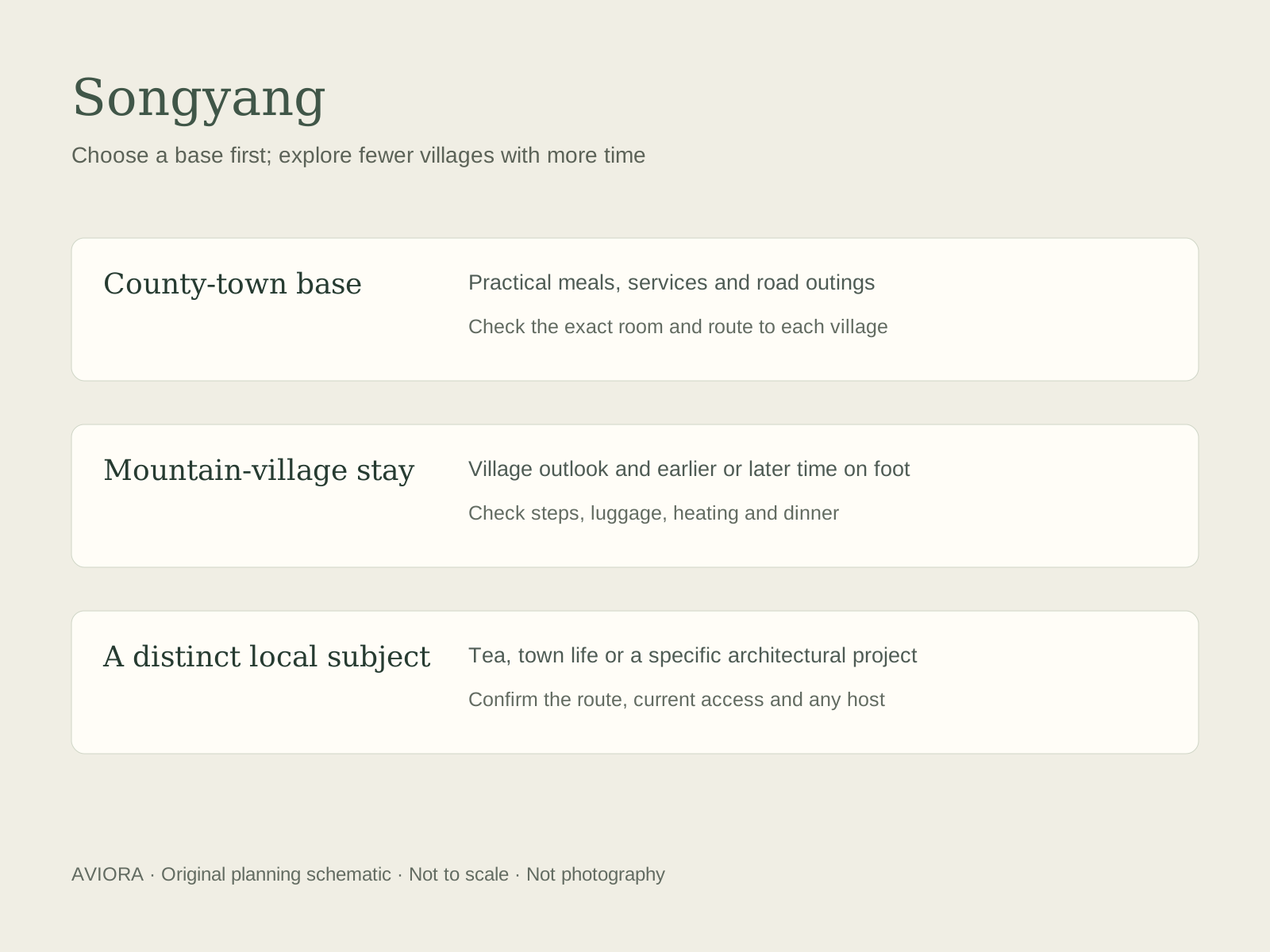
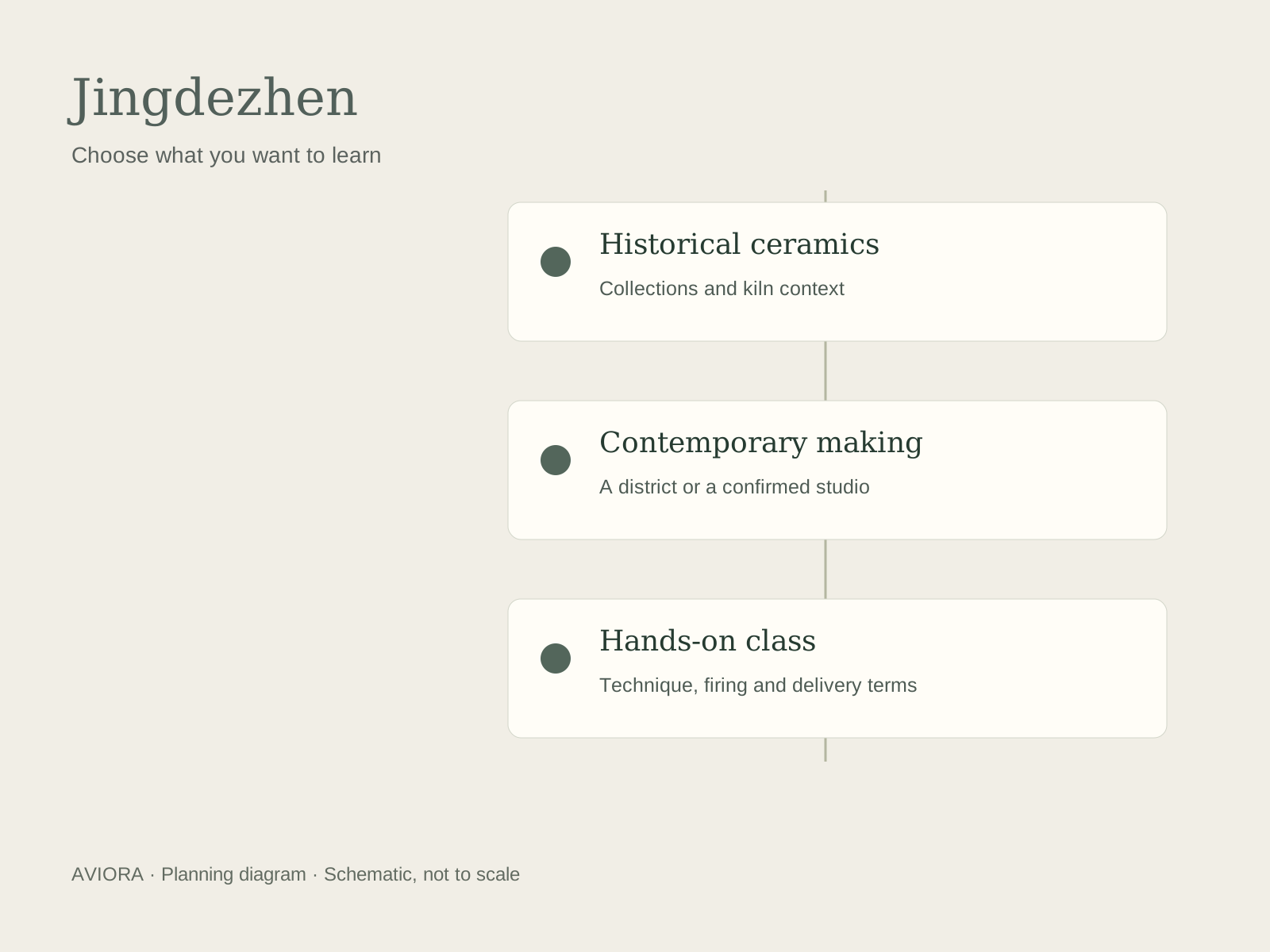
Longquan can form a focused chapter in a southern Zhejiang itinerary planned through Lishui, with Songyang offering a different village-and-architecture interest. Jingdezhen and Yixing provide separate porcelain and zisha comparisons for a more substantial ceramics journey, each requiring its own travel and nights. No matching published Longquan product is recommended here. Request a tailored visit around a collection and real host, using the illustrative two-night framework rather than assuming a city famous for craft supplies guaranteed master access.
A tailored proposal can specify the room, exact gateway, collection, guiding, admissions and confirmed craft topic. Name the actual provider, language, duration, safe viewing arrangements and level of participation. Observation, a demonstration, an introductory class and production access are different services. For ceramics, establish materials, glazing, firing, collection and shipping. For swords, a cultural explanation need not include purchase or hands-on forging. Buying, carrying and shipping a blade require separate checks with the relevant transport provider, carrier and destination authorities; a workshop visit is not permission to travel with one.
This is a destination planning guide, not a fixed departure or a confirmed package. We check the route, accommodation, transport and guide availability for your dates before setting out the services and price in writing.
Confirm the host and topic before fixing the surrounding route. A working kiln or forge follows production and safety needs, not a visitor timetable, and every stage may not be visible in one appointment. Leave time for questions, a meal and a collection that supplies context. Place a more distant kiln-history or village route in its own usable window. Keep a worthwhile fallback that does not depend on a firing, forging sequence or individual maker being present.
01
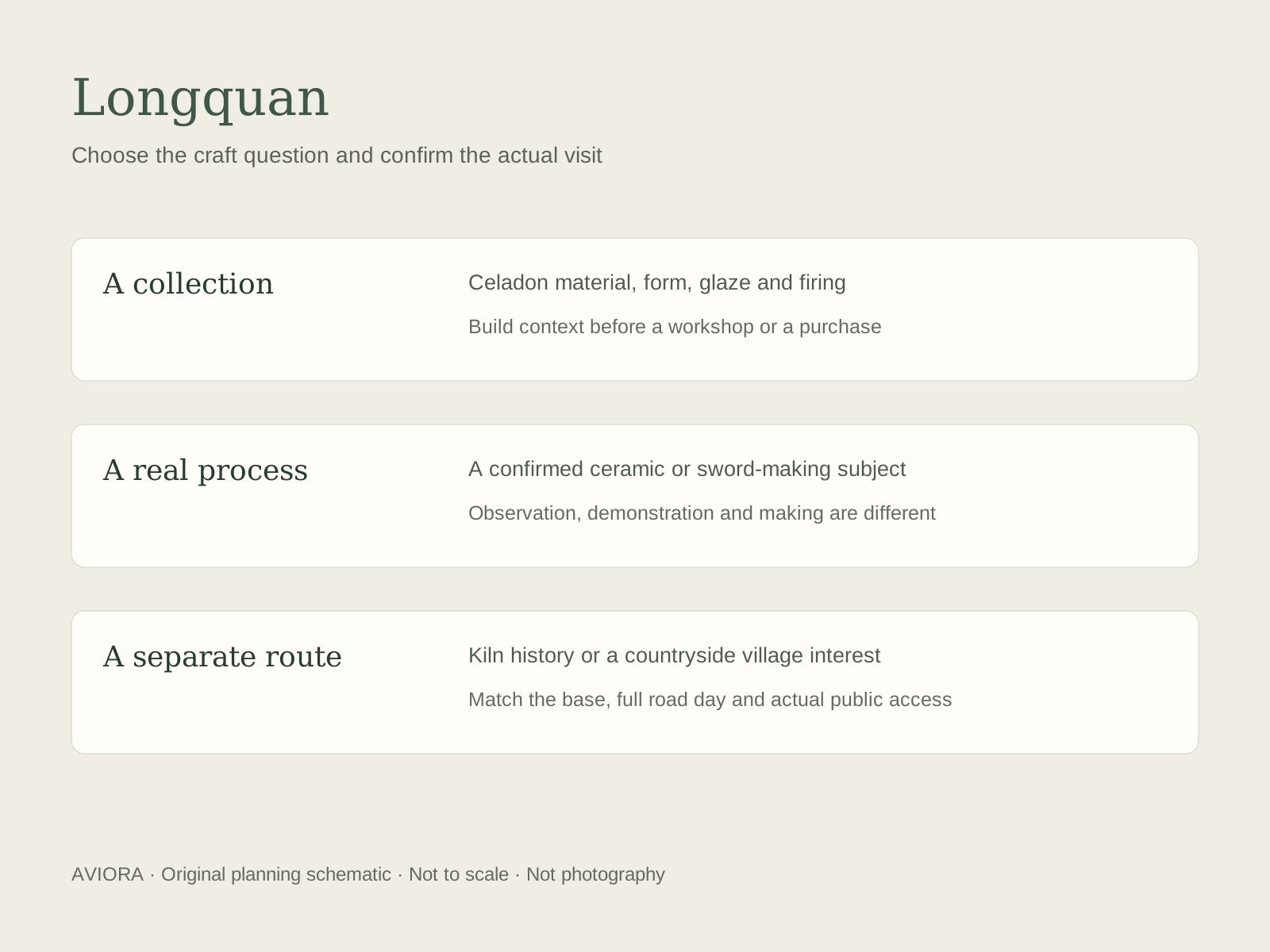
Understand celadon through a collection and the relationship between body, glaze and firing
02
Choose a confirmed ceramic or sword-making visit for a defined process, with safe observation and realistic participation
03
Add a separate kiln-history or village route when its context and full journey justify another day
Suggested Longquan itinerary
What can you fit into your Longquan itinerary?
Arrival
Reach the right Longquan base
Transfer from the full ticketed station to the booked room and keep dinner straightforward. Add a short introduction only when timing allows. Protect the essential host visit from an uncertain arrival and check the next day's meeting point and actual subject.
Full day
A collection and a defined making interest
Use an explained collection and a confirmed celadon or sword-making visit, allowing questions, safe observation and a seated meal. A beginner ceramic class is an alternative with realistic firing and shipping terms. Keep buying optional and do not promise every production stage on demand.
Optional second full day
Choose a genuinely different chapter
With a third night, consider the other craft, a defined kiln-history route or a separate Baoxi-area village interest. Confirm access, walking and the complete road day. A deeper conversation at one suitable venue can be better than a sequence of repeated showrooms.
Departure
Continue through southern Zhejiang with usable time
Allow the full local transfer or continue to a separately planned Songyang or Lishui-region chapter. Jingdezhen and Yixing need their own wider-route arrangements. This two-night framework with an optional third night is illustrative, not a published product or guarantee of master access, live firing or blade transport permission.
Spring and autumn can suit workshops with selected village or countryside walks, with rain and busy dates still possible. Summer calls for heat-aware timing, especially around active production spaces; a museum or seated explanation can provide a useful alternative. Winter makes hotel heating and indoor comfort important. Kiln activity, forge work and maker availability follow production needs, not a guaranteed visitor season. A quiet travel date does not establish access to a working process.
What affects the cost of a Longquan trip?
Compare room category, full transfers, guide language, admissions and actual host time. A retail introduction is different from paid specialist instruction. Ceramic materials, firing, packing and overseas delivery may be separate, with breakage terms agreed. For any blade purchase, establish legality and carriage feasibility before payment rather than assuming a souvenir is exempt. Price, seals, certificates and a guide's introduction do not independently prove authorship, age, metallurgy or investment value.
Getting there and getting around
How to get to Longquan and plan your stay
Arriving and connecting
Use the full Chinese railway station on the dated ticket and the exact hotel or host address. A Lishui city arrival creates a different onward connection from a Longquan-area arrival. Include luggage, pickup, final road approach and dinner when comparing services. Send the confirmed ticket rather than only a city name, and protect the essential workshop appointment from an uncertain arrival. A longer road transfer should be visible in the proposal, not hidden behind a regional label.
Getting around
Plan transfers around the actual collection and appointment addresses. A car can link places but cannot enter every workshop, kiln path or village lane. Agree safe visitor areas, where the guide interprets and where the driver meets you afterward. Keep a seated break and appropriate toilets in the route. A countryside day may need a separate meal arrangement, while evening independent dining is a different question at a remote property.
Walking and access
A museum, active workshop, kiln site and village lane have different physical demands. Ask about standing, seating, thresholds, uneven ground, heat and safe distance from equipment. A short class needs a suitable table and activity rather than simply permission to enter. Historic kiln routes may involve slopes or steps; assess the actual public path instead of assuming an archaeological label provides accessible terrain. Check room-to-breakfast access and the vehicle approach as well as the craft visit.
What first-time visitors often underestimate
You do not need specialist vocabulary to enjoy Longquan. Begin with a small number of questions: how is the object formed, which stages are visible and what choices change the finished result? A well-explained collection and an appropriate host can make those answers tangible. Decide whether you prefer ceramics, steel or landscape; a focused visit is more rewarding than requiring both traditions to fit into a rushed shopping circuit.
Where to stay in Longquan
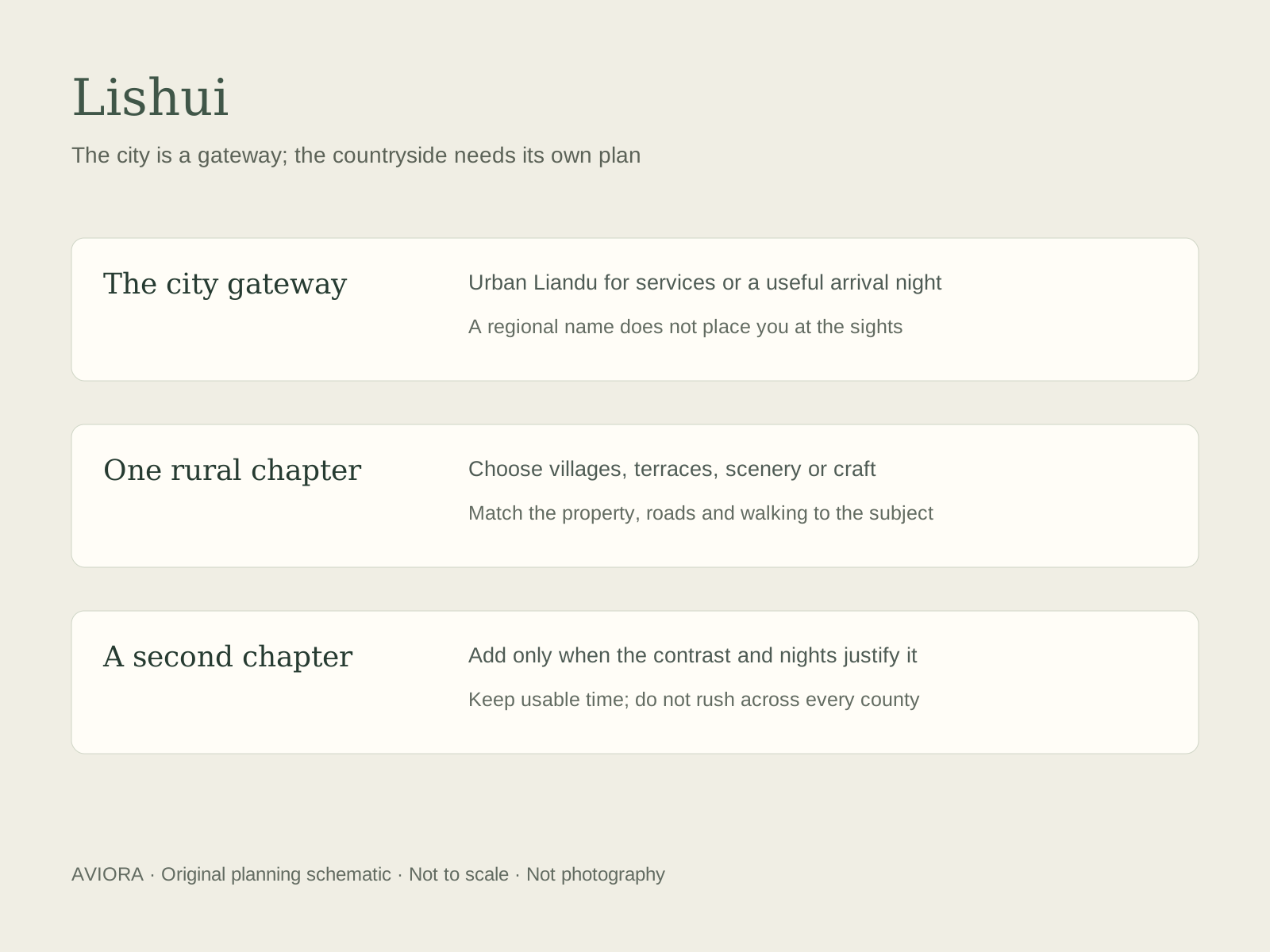
Choose a named Longquan city hotel for a collection-and-workshop visit when room comfort, meals and vehicle pickup matter most. A kiln-area or village property can serve a different immersive stay, but must be reviewed for room facilities, heating or cooling, dinner and the final approach. A countryside address does not establish access to a kiln or maker. Lishui city is a separate base, not another Longquan hotel neighborhood. Compare the full road pattern before trading convenient sleep and dining for a more atmospheric setting.
Compare hotel areas
Longquan city / collection-and-workshop base
Compare named hotels for the exact room, quiet, bathroom, climate control, breakfast and pickup. Map the selected collection and host rather than assuming all craft visits are in the center. A comfortable urban base can support serious craft travel without a theatrical heritage setting.
A kiln-area or village property / subject-led stay
Consider only when the location materially improves the route or an evening in the setting. Confirm dinner, heating, bathroom, stairs and luggage access. A nearby kiln site may have limited public access, and a guesthouse's craft theme does not establish a working kiln or a personal host appointment.
Baoxi or another countryside setting / a separate purpose
A specific rural property can serve a village, landscape or contemporary architecture interest. Check the whole journey to celadon and sword venues, as well as meals and wet-weather options. Do not describe a distant countryside hotel as if it were beside every Longquan craft collection.
Should you choose Longquan celadon, sword-making or a kiln-village route?
Choose celadon for a discussion of clay body, glaze, firing and the relationship between historic and contemporary making. Choose a sword-making subject when a confirmed provider can safely explain stages such as forming, heat treatment, grinding or fitting, without promising to perform every stage during your appointment. Choose kiln-history or village locations for their own landscape and archaeological context. A collection, active workshop and historic kiln site provide different evidence. Start with one strong theme and add another only when the venue, interpretation and route justify it.
Celadon names a ceramic tradition, not one uniform green object
Longquan celadon rewards looking at glaze, body, form and firing rather than judging by color alone. Thickness, lighting and production choices affect appearance, and contemporary work need not copy a historic shape. An explained comparison can be more useful than being told one shade is the only authentic one. A museum object, modern functional bowl and decorative work require different questions; none can be reliably valued from a brief travel encounter.
UNESCO recognition is not a workshop booking or product certificate
The intangible heritage inscription for Longquan celadon concerns traditional firing technology. It does not establish that every workshop uses the same process, that an object is antique or that a specific person will receive visitors. Confirm the actual visit and claims separately. Celadon recognition also should not be transferred to swords simply because the two traditions share a city name.
A historic kiln site and a live firing offer different knowledge
Dayao and other kiln locations can explain production history and landscape through a defined public route. An archaeological site is not a promise of access to excavation or permission to collect fragments. A working studio can show current making, but a complete firing may not fit the visit. Select the question first and confirm what is actually available rather than asking one venue to deliver archaeology, making and a live firing together.
A sword visit can be substantial without forging or buying
A good explanation can distinguish a blade's construction and heat treatment from grinding, fittings and finished presentation. A demonstration only reveals the stages that the host can safely show. Do not promise visitors will forge a complete sword or infer technical quality from a dramatic performance. Safe observation, thoughtful interpretation and handling only with explicit permission can be enough; shopping is optional and transport permissions remain a separate matter.
A beginner ceramic class needs a realistic outcome
Choose whether you want to observe shaping, try a simple form or discuss glaze and firing. A short session may not include every stage or a finished usable object. Ask who completes the later work, which item is yours, when it may be ready and what happens if it cracks or cannot be shipped. A photograph of a professional's finished vessel is not the promised result of a beginner workshop.
Village architecture is not an extra stop at the edge of every workshop
Baoxi's contemporary bamboo-architecture interest and other countryside locations have their own geography and present-day use. Building access, hosting and walking routes need confirmation; contemporary projects should not be described as unchanged ancient structures. A separate day can be worthwhile for the right interest, but a distant photo stop is not automatically a better use of time than a deeper craft conversation.
Culture and historical context
A shared city does not make celadon and swords one craft
Celadon and sword-making both invite close attention to materials and skilled decisions, but they require different explanations. A ceramic body and glaze respond to forming and firing; a blade and its fittings involve another set of processes and judgments. A useful visit makes those differences visible through an object, a collection or the stages a host can actually show. It avoids assuming that a dramatic workshop scene explains everything about the finished work.
Longquan's traditions also continue in contemporary production and commerce. Historic kiln evidence, an established workshop, a new designer and a retail showroom are not interchangeable forms of authority. Ask what a provider knows and can demonstrate, respect working boundaries and leave room for questions. Cultural depth comes from understanding a real process in context, not from a promise that a famous name, a heritage label or an expensive object guarantees access or authenticity.
Food and social life
Let the meal make the craft day comfortable
A Longquan meal can introduce suitable cooked mushrooms, bamboo shoots and other vegetables alongside tofu, fish or meat dishes chosen for the group's appetite. Season and the kitchen's actual supply matter more than a fixed list of rural specialties. Ask how ingredients are sourced and prepared rather than treating a wild-food description as proof of quality or safety. A seated lunch near the day's route can add more value than another distant stop described as compulsory local dining.
Clarify meat stocks, sauces, allergies, bones and shared preparation. A mushroom or vegetable dish is not automatically vegetarian. At a remote property, arrange dinner and a late-arrival alternative before leaving the city. A tea conversation or studio welcome drink is not a meal, and purchase discussions should not consume the only comfortable lunch window in a full making-focused day.
Longquan travel FAQ
Questions about visiting Longquan
Where is Longquan, and is it the same as Longquanyi?+
This guide concerns the county-level city of Longquan within Lishui, Zhejiang. It is a different place from Longquanyi in Chengdu, Sichuan. Use the full Chinese destination, station and property address to avoid a mistaken booking based on a shared Longquan name.
How many nights should I spend in Longquan?+
Two nights give one full craft-focused day. Three nights allow another craft or a separate kiln-history or countryside subject. A day excursion depends on the complete return journey and confirmed appointment. Do not count arrival and departure as full days without checking their usable hours.
Can I visit a Longquan celadon workshop?+
A visit needs a confirmed provider, subject, language and format. A showroom, observation visit, demonstration and hands-on class are different arrangements. Production and firing may not be visible on demand. Ask what is actually included and keep a worthwhile alternative if the working process changes.
Does UNESCO recognition certify every Longquan celadon pot?+
No. The inscription concerns traditional firing technology, not every object, workshop or travel service. It does not establish an item's age, author or value, and does not guarantee private access or a maker appointment. Product claims and visit arrangements require their own evidence.
Can I make celadon and take it home the same day?+
Do not assume so. A beginner session may cover only part of the process, with drying, glazing and firing handled later. Confirm what you make, who finishes it, the expected collection or delivery arrangement and responsibility for breakage before booking the class.
Can I watch sword-making without buying a sword?+
Yes, if a suitable provider confirms a process-focused visit with buying optional. Specify the stages that can safely be shown and whether any handling is permitted. A demonstration need not cover every production stage, and a cultural visit does not require a purchase.
Can I take a Longquan sword on a train or international flight?+
Do not assume a blade can travel with you or be mailed as an ordinary souvenir. Check the exact item, carrier rules and destination import requirements with the responsible parties before buying. A vendor's reassurance or a workshop visit is not travel or customs permission.
Should I stay in Longquan city or a kiln village?+
A city hotel can support collections, appointments and dining. A village stay makes sense when its location adds real value and room, dinner, heating and access suit you. A craft-themed guesthouse does not automatically provide kiln access. Compare actual visits and the complete road day.
Is Longquan a simple day trip from Lishui city?+
Assess the complete return transfer, meal and host appointment rather than the shared regional name. A narrow excursion can work only when useful time remains. A separate stay can be better for a substantive craft day or a second countryside subject.
Share your dates, interests, arrival and departure cities, and any plans already booked. We’ll recommend an itinerary at a pace that suits you, with the arrangements and price explained before you book.