2 nights: one focused full day
Choose historical context and one complementary interest. A short day should not be sold as an introduction to every process plus a finished piece ready for departure.
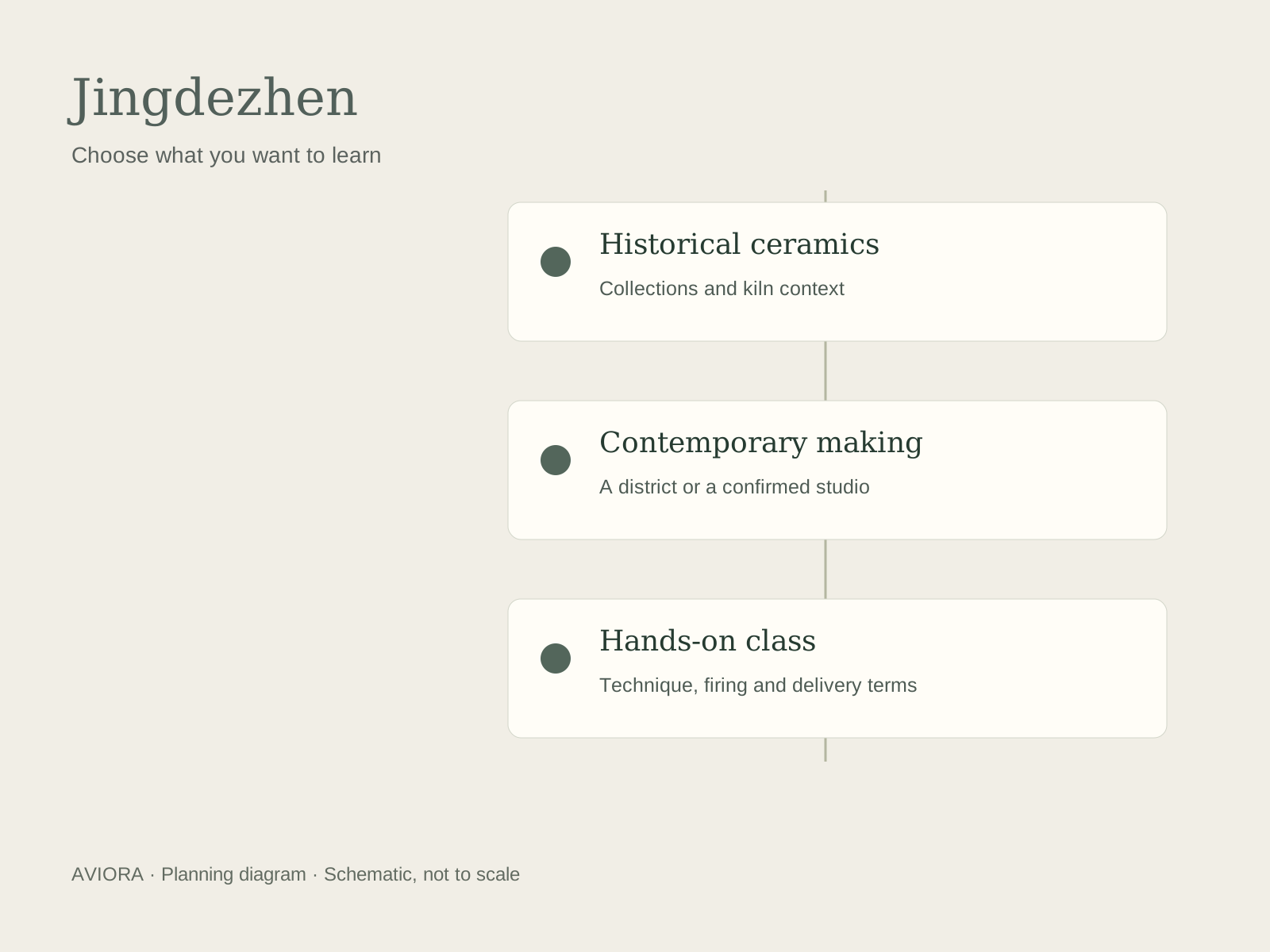
Porcelain history, working studios & a class with purpose · East China
Explore Jingdezhen through historical ceramics and contemporary makers, with a studio session chosen for what you want to learn and honest arrangements for firing and shipping.
Jingdezhen in Jiangxi is worth visiting when ceramics are an interest you want to understand rather than simply buy. Its historical production, museums and contemporary studios offer different perspectives on porcelain. Begin with context, then choose a maker encounter or class that matches your curiosity and ability. A short pottery session is an introduction to one technique, not a complete porcelain-making process, and a studio visit is not automatically private access to a working artist.
Three nights give two full days: one for historical context and selected collections, another for a confirmed studio session and contemporary creative areas. Four nights allow more time for making, a separate craft neighborhood or a slower hotel stay. Two nights can work for one focused day, but should not promise a museum survey, several studios and a finished fired piece to carry away. Longer learning programs need a teacher and schedule designed for that purpose.
Choose historical context and one complementary interest. A short day should not be sold as an introduction to every process plus a finished piece ready for departure.
Separate collections and kiln history from a confirmed class or host encounter. Leave some flexibility around individual opening arrangements and the time the group wants to spend looking.
Add nights for a specific learning plan or a different craft interest. Check whether extra sessions genuinely progress the technique; more nights alone do not guarantee that a piece will be fired before you leave.
Plan Jingdezhen as a tailored ceramics chapter rather than an unplanned shopping stop on a wider itinerary. It can be considered alongside Huizhou villages or another East China destination when the actual transport and interests justify the connection. This page does not currently recommend a published Jingdezhen package. Your proposal should specify the museums, host or class, hotel base and any post-visit handling of work rather than treating every option in this guide as included.
We can discuss a private Jingdezhen plan with guiding, transfers, hotels and any agreed ceramic session specified in the proposal. A worthwhile host explains the process and welcomes the visit on clear terms. Private artists, workshops and production areas are not automatically open. Name the learning goal, interpretation needs, purchase expectations and any firing or delivery arrangements before confirming; a cultural visit is not an authenticity appraisal or investment service.
This is a destination planning guide, not a fixed departure or a confirmed package. We check the route, accommodation, transport and guide availability for your dates before setting out the services and price in writing.
How our tailor-made China service works · Explore routes in East China
Start planningSignature experiences
Give historical context and hands-on learning separate useful windows. Leave time to reach the studio, meet the teacher, understand the materials and clean up; an uncertain train arrival is a poor basis for a fixed class. Contemporary markets, demonstrations and individual spaces have their own schedules. Confirm those for the travel date rather than assuming a creative district operates as one attraction with uniform opening hours.
Suggested Jingdezhen itinerary
Arrival
Transfer to the selected hotel, confirm the following day's bookings and keep the first evening local. Avoid tying a private class to an uncertain arrival.
Full day 1
Choose a museum and kiln-history chapter with time for interpretation and a meal. Add another collection only when it serves a different question rather than repeating the same overview.
Full day 2
Use the confirmed studio or teaching session, then explore a contemporary creative area if time and openings suit. Confirm what happens to any work after departure.
Departure
Check purchase receipts, packing and any agreed forwarding details before the station or airport transfer. This is an illustrative plan, not an automatically included published package.
When to go
Spring and autumn can suit city walks and time between creative spaces, with rain and busy periods still possible. Summer can be hot and humid; winter makes room heating and studio comfort important. Host availability, exhibitions and markets depend on the actual date. A useful museum-and-studio plan should not rely entirely on an outdoor event or a promise of live production at every stop.
Compare teaching time, host expertise, materials, interpreter support, class size, private vehicle hours and admission. Establish whether glazing, firing, packing, domestic forwarding and international shipping are included or separate. Kiln results and transport risk need clear terms. A costly piece, a private appointment and a premium hotel do not automatically make a visit educational or suitable for your group.
Getting there and getting around
Jingdezhen North railway station and Jingdezhen Luojia Airport are separate gateways, with onward journeys to the actual hotel or studio. Confirm the precise ticket and pickup point before arranging the first appointment. Leave room for check-in and a meal after travel. If connecting from another regional stop, calculate both road legs and the available transport rather than assuming a short map distance means an easy morning class.
Use road transfers between selected museum and studio addresses, with manageable walking inside each area. Some workshops have limited vehicle approach, stairs or shared working spaces. Agree where the guide and driver wait during a class and what service continues afterward. Independent evening exploring works best when the hotel actually serves the area you want to use.
Museums can involve substantial standing and movement between galleries. Creative districts and workshop areas may add uneven paving, thresholds, stairs and limited seating. For a class, ask about chair height, wheel or table setup, hand strength and whether a seated alternative is possible. A private session can adapt only within the teacher's facilities and the selected technique.
Porcelain making involves multiple stages and different skills. Seeing a demonstration, trying a wheel and acquiring a finished object are separate experiences. Be clear about what you want to learn and what you expect to take home, then choose a session that can honestly deliver that outcome.
Choose near Taoxichuan when its contemporary creative setting, nearby dining and time around the area are part of the stay. Compare central-city properties for a history-focused route and the actual addresses of your selected museums. A quieter property farther out can suit hotel time or a particular studio, but adds transfers and may limit independent meals. Check the precise room and pickup point; a ceramic-themed hotel is not proof of a working studio or included class.
Consider for a stay centered on contemporary ceramics, design and nearby evening time. Check the particular hotel's street, sound, room quality and actual walking route. Markets and events are date-specific, so choose a property you would enjoy without one.
Compare addresses against the actual museums, kiln-history visits and meals you want. A central label does not establish easy walking between all sites. Confirm pickup, luggage access and room comfort rather than relying on a short map radius.
Choose deliberately for the property or a particular confirmed host. Verify road transfers, meals and what you will do between appointments. A ceramic theme or rural setting does not establish workshop access, private teaching or resort-level service.
A studio visit focuses on looking, discussion or a demonstration with a host who agrees to receive you. A class gives you time to try a specific technique with teaching and suitable materials. Neither automatically includes glazing, firing or international delivery. Agree the teacher, activity, language support, duration, group size and outcome before booking. If you want to meet a particular artist or learn an advanced process, that needs a separate confirmed arrangement.
An imperial-kiln visit, a broad ceramics collection and a contemporary creative district answer different questions. Select the sequence that interests you instead of treating them as interchangeable shopping stops. Museum buildings, archaeological areas and exhibitions may have separate entry arrangements.
Wheel throwing, hand-building and surface decoration involve different skills and outcomes. Ask what a beginner can realistically attempt and what the teacher does afterward. A brief session should not promise mastery, a complete production process or a museum-quality result.
Clay work may need drying, glazing and firing after you leave. Confirm who finishes it, what changes are expected, whether breakage or firing failure can occur and how packing and shipping are charged. Delivery dates, customs and damage claims require clear terms; a same-day class does not imply a finished item in your suitcase.
If buying matters, discuss budget and whether you want contemporary work, everyday objects or a specialist collecting interest. Ask for provenance, maker details and a receipt appropriate to the purchase. A guide's introduction is not an independent appraisal, authenticity guarantee or promise of investment value. Antiquities and culturally regulated objects need separate lawful export advice.
Culture and historical context
Jingdezhen's value is easier to understand when finished ceramics are connected with the skills and stages behind them. Historical collections can introduce form, decoration and production context; a confirmed contemporary studio visit shows how an individual maker approaches materials and design today. Those are complementary perspectives rather than evidence that every workshop repeats one uninterrupted historical practice.
A good encounter leaves the maker room to work and the visitor time to ask useful questions. Establish interpretation, photography and any demonstration before arriving. Named artists and private studios should not be advertised without their agreement. The experience can be memorable because the explanation is precise, without claims of exclusive access or celebrity introductions.
Food and social life
Looking closely in museums and concentrating in a class can be tiring in different ways. Keep a proper meal break and choose food near the day's route rather than adding another cross-city journey. Jiangxi cooking can be assertive in flavor and spice, so describe preferences before a menu is chosen instead of assuming every regional specialty will suit the group.
Discuss allergies, vegetarian requirements and ingredients in stocks, sauces and shared preparation. A tea break in a studio is not necessarily lunch, and a creative-district visit does not automatically include a hosted meal. For a quieter hotel outside the central areas, confirm dinner and breakfast before relying on spontaneous alternatives after an evening appointment.
Jingdezhen travel FAQ
Yes, if the history, design and processes interest you. Collections, kiln history and a thoughtfully hosted studio encounter can make a substantive cultural visit without a purchase. Confirm that shopping is optional and choose a program focused on learning.
Two full days, commonly with three nights, allow historical context and a separate studio or class day. Two nights can suit one focused day. Add time for a specific learning plan rather than assuming a longer stay guarantees a finished fired piece.
A suitable session can be discussed with a confirmed teacher. Choose a specific technique and agree duration, materials, language support and the realistic beginner outcome. Accessibility and the table or wheel setup also need checking.
Do not assume so. A clay piece may need drying, glazing and firing after the class. Agree whether the session produces an immediately portable object or requires later handling, with packing, delivery, risks and charges clearly stated.
No. Taoxichuan is a contemporary creative district, while the imperial-kiln area provides a different historical and museum perspective. They are separate visits with their own addresses and opening arrangements.
Only a host, date and terms actually confirmed in your proposal can be promised. Artists and production spaces are not automatically open to visitors. Public markets, retail shops, demonstrations and private appointments are different experiences.
Discuss the seller's or studio's actual service before buying. Packing, insurance, costs, customs responsibilities and damage or firing-failure terms need agreement. Travel planning alone does not establish a guaranteed delivery date or independent authenticity assessment.
Route combinations
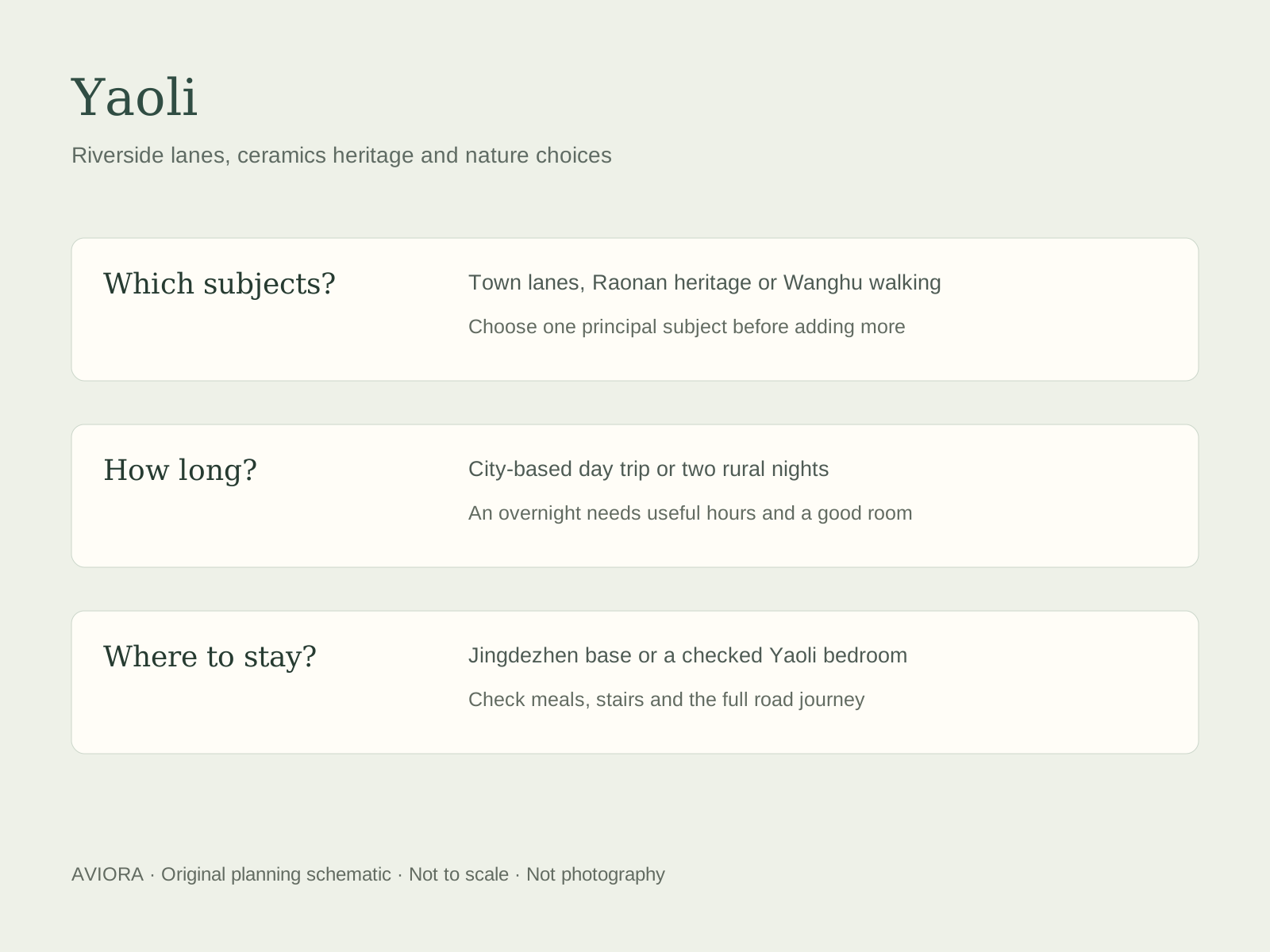
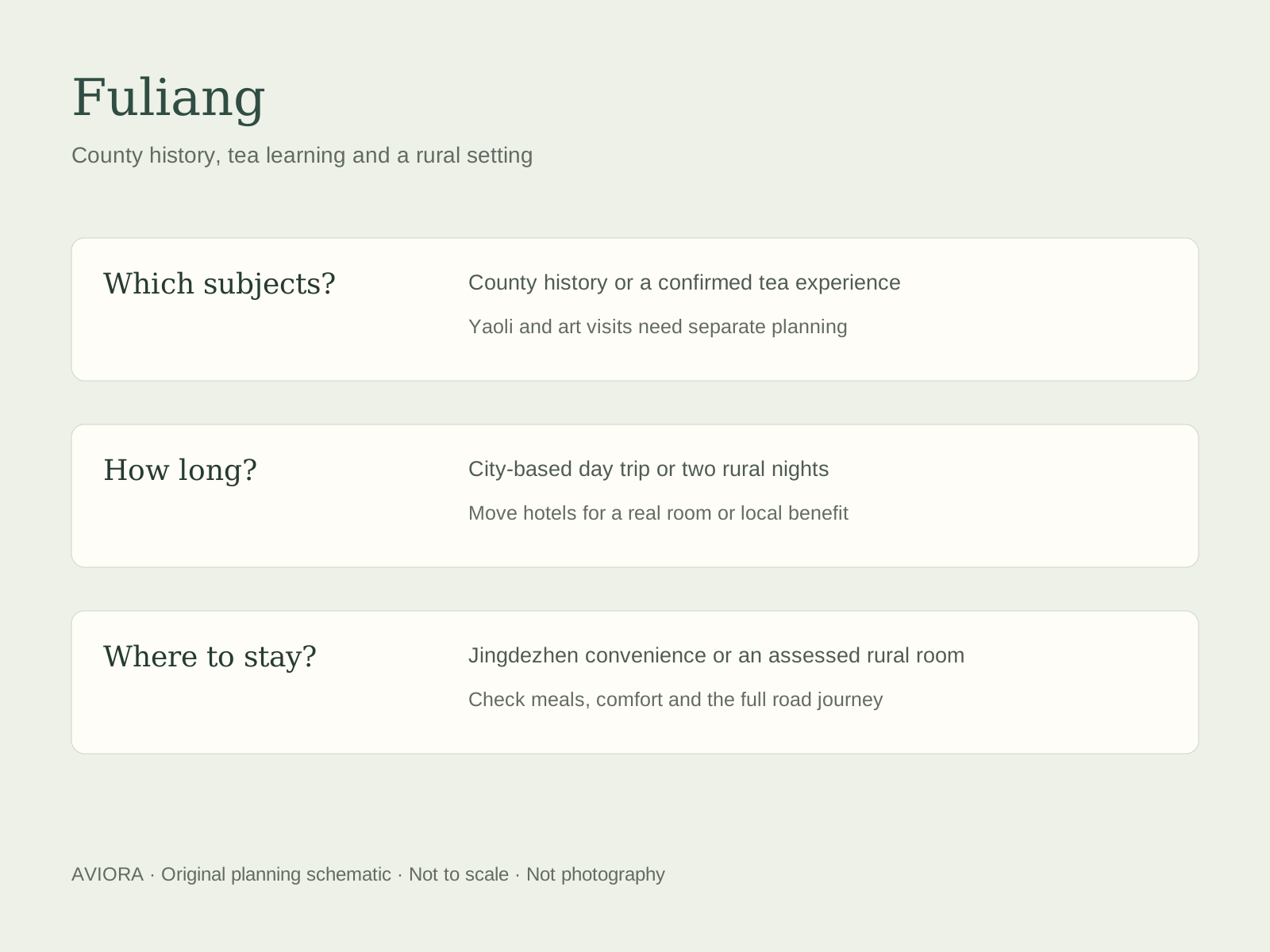
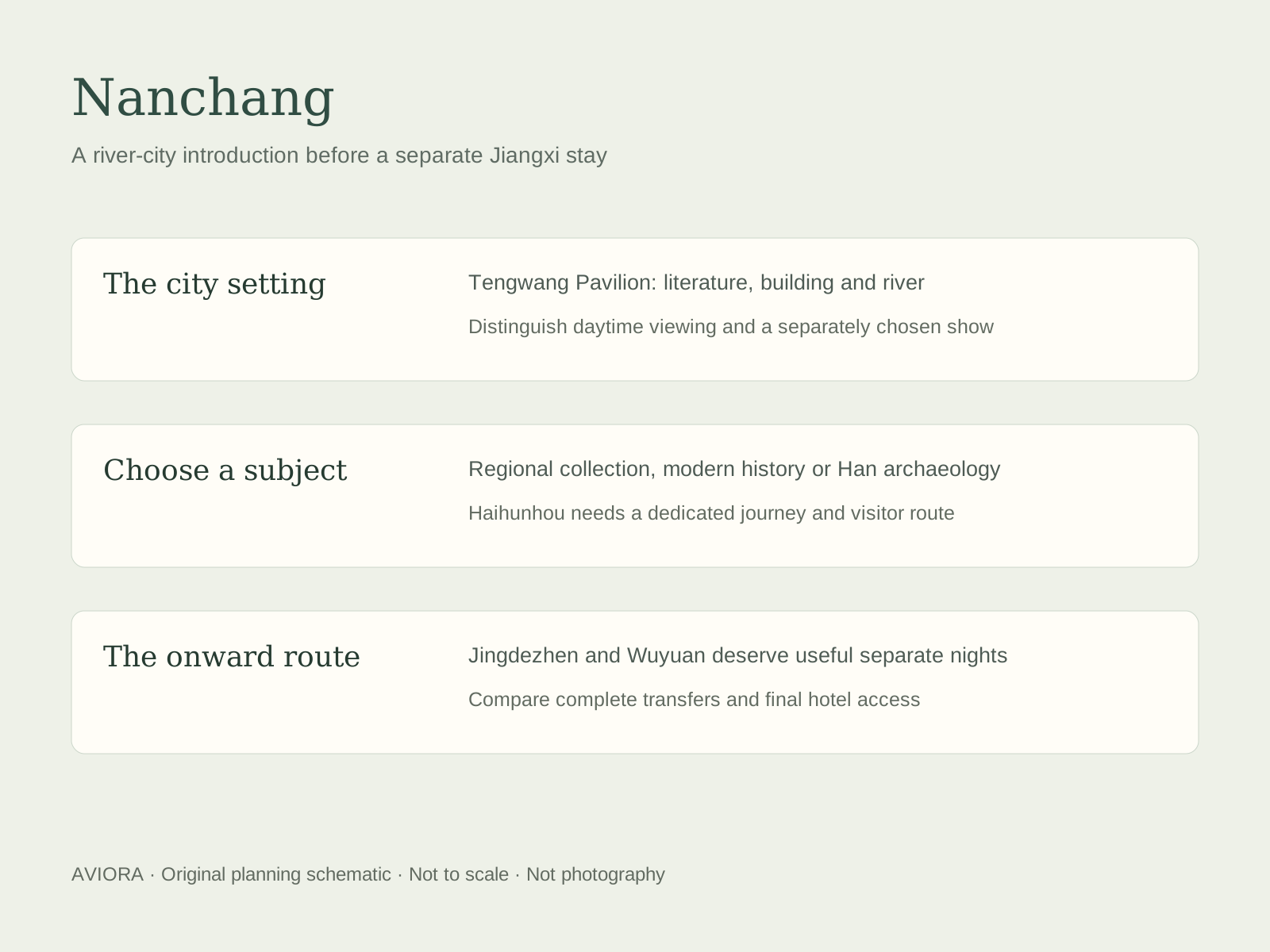
Plan your journey
Share your dates, interests, arrival and departure cities, and any plans already booked. We’ll recommend an itinerary at a pace that suits you, with the arrangements and price explained before you book.
You are asking about Jingdezhen.
The enquiry form will load here.
Prefer a direct reply? Message us on WhatsApp or email our China team.