A highland town worth understanding before adding it to the route · Southwest China
Litang Travel Guide: Monastery, Altitude & Where to Stay
Explore Litang through its monastery, Renkang's cultural setting and selected Maoya grassland scenery, with candid advice on altitude, rooms and western Sichuan roads.
2 nights for a focused visit; 3 for a distinct second interest, when suitableKham Tibetan history, monastery interpretation and a deliberate highland journey
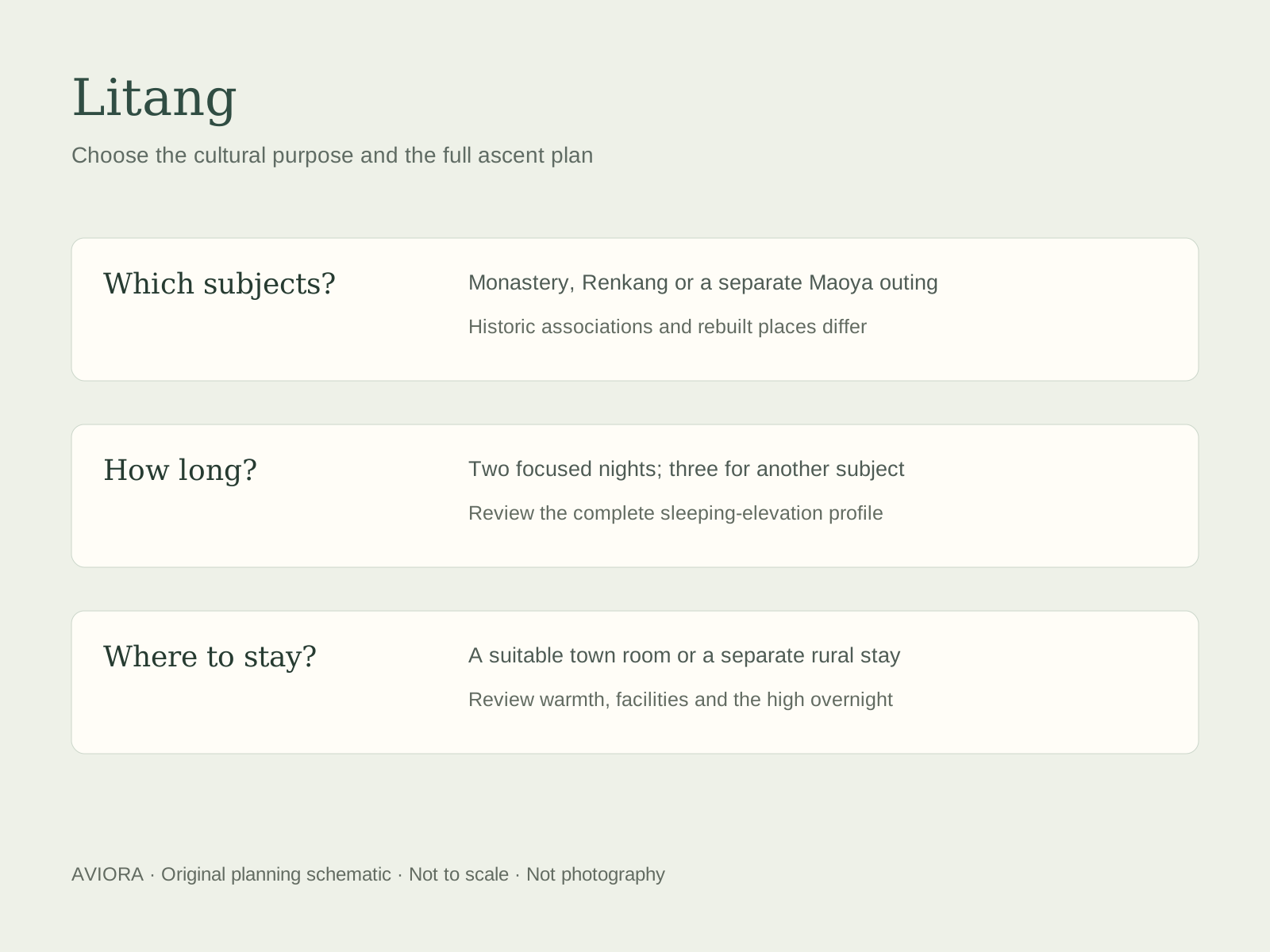
Litang in western Sichuan offers Kham Tibetan cultural history through its monastery and Renkang neighborhood, with Maoya grassland as a separate landscape outing. The town sits at roughly 4,000 meters, so choose it for a genuine interest within a suitable ascent and sleeping plan. Two nights can give one focused day; three allow a slower pace or another subject. Review the complete road profile and room comfort before deciding whether an overnight suits your journey.
How many days do you need in Litang?
Two nights can support one full day for a considered monastery and town visit without attaching both to a long arrival. Three nights make sense for a separately planned Maoya grassland outing, deeper cultural interpretation or a gentler rhythm. One night within a longer road journey may leave only a selective visitor window and still means sleeping at high elevation. More nights do not guarantee acclimatization. If the guest or the ascent plan does not suit Litang, a different route is a valid choice; a famous town name should not make the overnight compulsory.
Compare stays by number of nights
2 nights / a focused cultural visit
Use one full day for a selected monastery route and a manageable town introduction, with meals and rest. Choose a suitable room and protect arrival and departure margins. This duration describes useful visitor time, not a prescribed acclimatization schedule or a guarantee that sleeping in Litang is appropriate.
3 nights / a distinct second interest
Add a properly planned grassland subject, more detailed cultural interpretation or a slower pace when suitable. Review whether the extra day adds value rather than repeat similar viewpoints. A flexible plan should be able to change if weather or guest condition makes an outing inappropriate.
A road-route overnight / be clear about the real visitor window
A one-night stop can fit a suitable wider route, but late arrival and early departure do not deliver an in-depth Litang visit. It still creates a high sleeping night. Do not choose it solely because a road itinerary needs an overnight between distant destinations; compare the whole sequence and alternatives.
Plan a tailored Litang visit
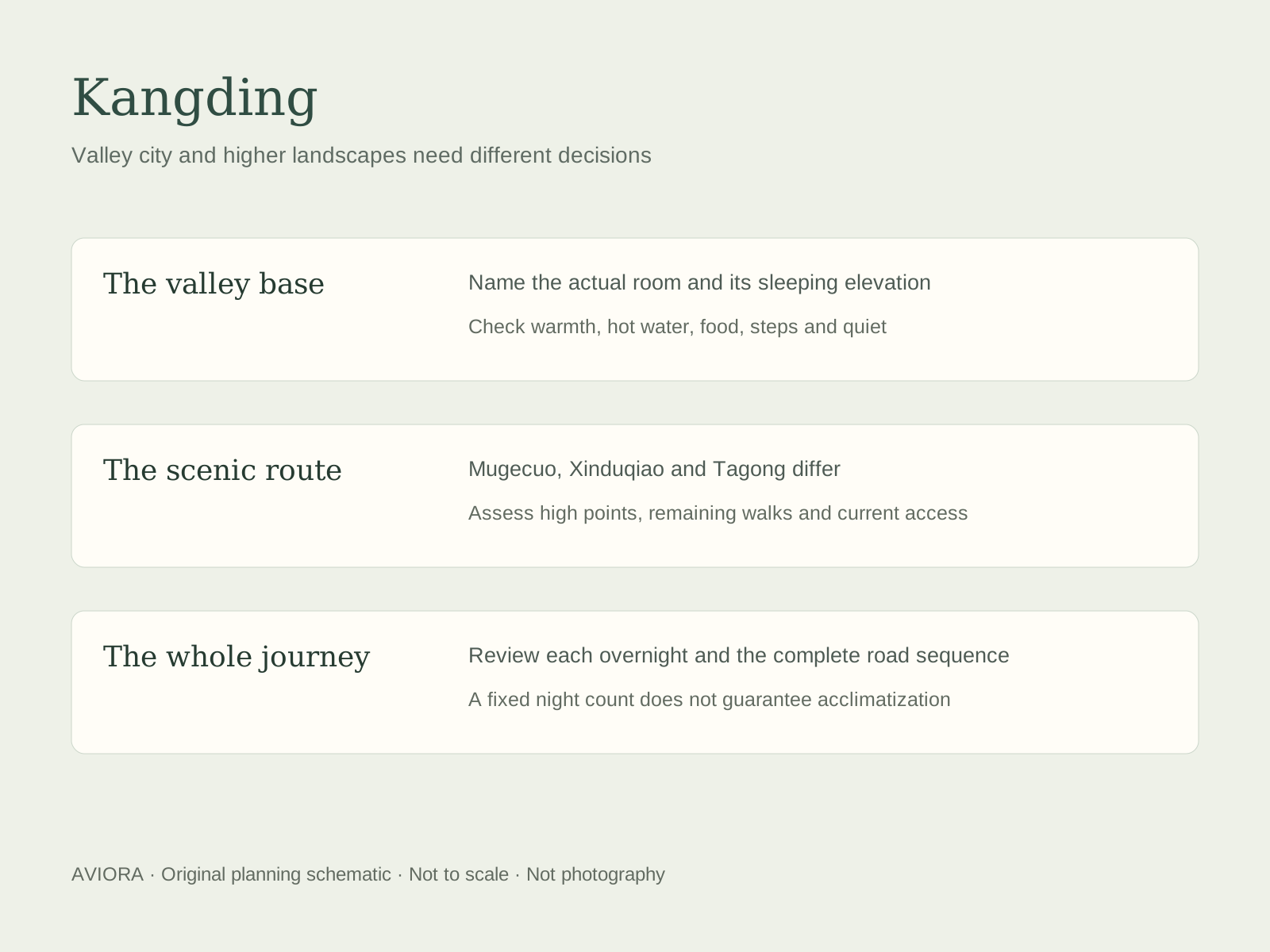
Choose Litang for a specific cultural or landscape interest, then assess it within the full Kangding, Daocheng or wider Sichuan sequence. Send dates, previous sleeping elevations, walking needs, room expectations and your maximum comfortable driving time for a tailored proposal. Yading and Shangri-La in Yunnan require substantial separate travel and visiting time. The plan should explain why each overnight suits the journey, with the ascent profile and a sensible alternative reviewed before booking.
A tailored proposal should name each overnight room and sleeping elevation, full road route, high points, guiding language, meals, selected monastery and town visits, and admissions. Identify the remaining walk, current interior visitor arrangements and any local guide's role. A monastery visit does not include private teaching, ceremonies or access to closed halls. Hosted encounters, riding, specialist photography, trekking and drone use need their own consent, permission and confirmed providers. Establish communication and the practical response if conditions or guest needs require a route change. This destination guide provides no medical clearance, guaranteed acclimatization, celebrity meeting or special access to private community life.
This is a destination planning guide, not a fixed departure or a confirmed package. We check the route, accommodation, transport and guide availability for your dates before setting out the services and price in writing.
Protect useful town time instead of putting every stop into a long transfer day. Review current roads, weather, driver hours, meals and the highest daytime points, then keep arrival modest. Monastery access follows the actual visitor and religious schedule, while open grassland is exposed to changing wind and weather. Do not make a sunset or a pass photograph essential after a tiring road journey. A festival requires verified dates and actual visitor arrangements; ordinary admission does not secure a ceremony or a scheduled performance.
01
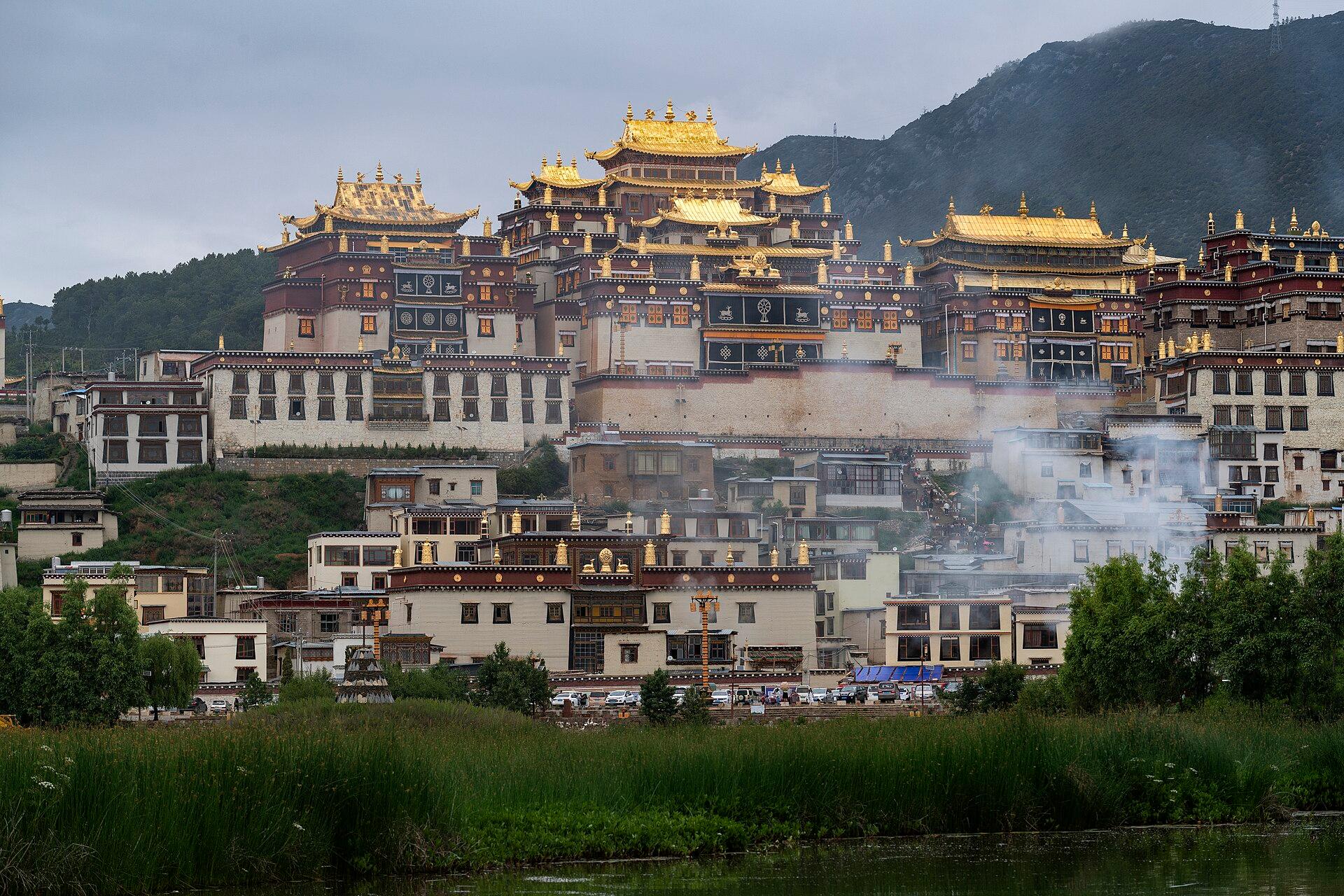
Understand Litang Monastery through a permitted visit that respects its living religious role
02
Connect Renkang's historical associations with the actual houses, exhibitions and streets visible today
03
Choose a Maoya landscape route with a clear purpose, lawful access and comfortable return
Suggested Litang itinerary
What can you fit into your Litang itinerary?
Arrival day
Reach the actual base without a compulsory scenic detour
Follow the assessed road and sleeping-elevation sequence. Check the room, settle in and take a suitable meal. Keep any local introduction short and optional rather than attaching a full monastery visit or distant sunset to uncertain transport.
Full cultural day
Give the monastery and selected town subjects useful time
Follow the confirmed visitor arrangement at Litang Monastery, with the remaining approach and steps reviewed. Take a proper meal, then choose a manageable Renkang walk or named exhibition when conditions and guest needs support it. Distinguish historical associations from restored presentation and respect active worship.
Optional second full day / three-night stay
Add one defined landscape or cultural interest
Choose a Maoya grassland route with lawful stopping places and a clear purpose, or deepen a separately arranged cultural subject. Include meals, toilets and a comfortable return. A longer stay should add understanding or useful rest, not simply require more high-altitude viewpoints.
Onward chapter
Continue only through a separately planned sequence
Allow the actual roads, high points and next sleeping base for Kangding, Daocheng–Yading, Yunnan or another agreed destination. A two-night version has one full day; the third supports the second. This outline is illustrative, not a published package, medical ascent recommendation or guarantee of access, hosts, room equipment or weather.
Choose dates for the actual cultural and landscape interests. Warmer months can support town visits and grassland scenery, with rain, cold nights and variable mountain conditions still possible. Green summer pasture is not a year-round promise, while autumn and winter create different colors, temperatures and service constraints. Confirm room heating and current roads at any season. A festival or horse-racing event requires verified dates and visitor arrangements rather than an assumed annual performance attached to every itinerary. Clear mountain views and quiet streets are not guaranteed by the calendar.
What affects the cost of a Litang trip?
Compare exact room comfort, heating, sleeping elevation, meals, full vehicle service, guide language, admissions and any specialist interpretation. A transfer across western Sichuan and a focused town day are different services. State the approach to weather, road and health-related route changes before booking. Premium value should be visible in a suitable room, a thoughtful cultural explanation and a workable pace, not an undefined VIP label, oxygen-based safety promise or access that a guide cannot authorize. A lower-cost room can prove poor value if it compromises sleep and warmth.
Getting there and getting around
How to get to Litang and plan your stay
Arriving and connecting
Start with the actual preceding overnight and dated transport. A road journey from the Kangding region can involve different passes and sleeping choices; name the route rather than give one timeless journey estimate. A proposed flight through Daocheng Yading or another regional airport needs an actual operating service, complete road transfer and altitude assessment. An airport bearing a familiar destination name is not arrival in Litang. Protect meals, rest and a realistic check-in, and avoid making a monastery or grassland detour compulsory after uncertain travel.
Getting around
Use a manageable town route with the actual monastery approach and pickup identified. Road service can connect separate interests, but remaining steps, walking and visitor rules still matter. For Maoya, select lawful stopping places and agreed paths, with seating, toilets and weather alternatives considered. Private guiding does not open restricted religious spaces or private homes. Riding, trekking and remote photography require distinct providers, permissions and support; a horse is not a substitute for assessing mobility or altitude suitability.
Walking and access
Assess the monastery approach, stairs, thresholds and time standing as well as the selected town walk. At roughly 4,000 meters, a modest route can feel different from the same distance at sea level. A vehicle can reduce a road or approach leg without removing altitude exposure. Grassland paths, wet ground and roadside viewpoints need separate assessment, with toilets, seating and a genuinely shorter option. Stay on permitted routes and respect worship. For concerning symptoms, obtain appropriate help rather than continue higher or rely on a room's equipment to complete the itinerary.
What first-time visitors often underestimate
Ask why Litang belongs in your particular journey. If the answer is a monastery interest, a clearly interpreted town visit or a specific landscape, give it real time and a suitable room. If the answer is only online fame or a place to break a long drive, compare alternatives before accepting the high overnight. A strong proposal explains what you will understand, how the days work and what changes if conditions or guest needs make the original route unsuitable.
Where to stay in Litang
Compare an exact town-center or Renkang-area property with a vehicle-accessible hotel elsewhere in town, then assess any outlying grassland stay as a different accommodation decision. Prioritize effective heating, hot water, bathroom, bedding, quiet, stairs or lift, meals and the final luggage approach. A Tibetan-style facade does not establish room comfort, and a high rate does not prove international resort service. Confirm each hotel's sleeping elevation rather than apply the town's approximate figure to every address. If oxygen equipment is advertised, obtain its actual specification and service arrangements; it is not medical supervision or a reason to accept an unsuitable ascent.
Compare hotel areas
Town center or Renkang area / cultural time and meals
Compare the actual room, road approach and walk to dinner. Character and location can help a short visit, but check street noise, heating, bathroom, stairs and luggage handling. The name of a cultural neighborhood does not prove a historic room, quiet night or access to a particular household.
A vehicle-accessible town property / practical comfort
Useful when the real room, lift, pickup and departure make the journey easier. Confirm meal options and the short transfer or walk to planned visits. A newer building does not automatically establish effective heating, international service or a better night's sleep; assess the specific property and room category.
A named Maoya or other outlying property / a separate landscape stay
Choose only with current evidence of the actual room, bathroom, heating, meals, power, staff and road approach. Check its precise sleeping elevation and what can be enjoyed on site. A scenic camp is not interchangeable with a town hotel or a lower-altitude alternative simply because the horizon looks open.
Should I prioritize Litang Monastery, Renkang or Maoya grassland?
Give the monastery a useful window when religious history is the main interest, then use a selected Renkang walk to connect people, place and present-day interpretation. Litang Monastery is a living religious institution, so public areas, interior access and worship have different rules. Maoya adds a separate open-landscape day with its own roads and permitted walking. With one full day, choose a coherent town-and-monastery brief rather than force a distant grassland circuit into the afternoon. The best mix depends on why you came and what effort suits you, not how many names fit on a map.
Litang's elevation matters before its sightseeing list
The town is roughly 4,000 meters high, while some approach roads rise higher. Sleeping and daytime exposure need separate review. A fit traveler can still be affected, and a previous comfortable night elsewhere does not guarantee the next ascent will suit. More hotel nights, supplemental oxygen and a private driver are not substitutes for an appropriate health and route assessment.
Do not confuse the Seventh Dalai Lama's birthplace with the Sixth's literary association
The Seventh Dalai Lama, Kelzang Gyatso, was born in Litang in 1708. The Sixth Dalai Lama, Tsangyang Gyatso, is associated with a widely circulated verse referring to Litang; that is not a claim that he was born here. A Renkang visit should identify the specific person, historical association and what survives or has been reconstructed, rather than merge several lives into one romantic story.
A monastery's history and its visible buildings are different timelines
Litang Monastery has a long institutional history, but later destruction, rebuilding and repair also shape what visitors see. Explain the actual hall and present function rather than date every visible surface to the foundation period. Public visitor routes, active worship and restricted spaces have distinct arrangements. A knowledgeable guide can add context without promising entry everywhere.
Renkang is a living and presented cultural setting
Historic associations, rebuilt houses, exhibitions, businesses and contemporary residents can coexist. Identify the actual venue and interpretation rather than describe the whole neighborhood as untouched ancient life. Ordinary entry or a street walk does not include home access. Local public figures and online personalities are not bookable encounters unless a real agreement specifically establishes one.
Maoya grassland is a landscape, not a single all-inclusive attraction
Choose the actual section, lawful stop and purpose of the outing. A road view, a walk, a private-property stay and a horse ride have different arrangements. Respect fences, grazing and fragile or wet ground. Open space does not authorize off-road driving, wildlife approaches or taking portraits without permission, and weather can change the reward of a long scenic detour.
Daocheng–Yading and Shangri-La need separate route decisions
Daocheng town, Yading's accommodation bases and the scenic visitor routes are distinct places. Shangri-La city in Yunnan is another destination, not a generic label for every Tibetan highland town or every similarly named place on the road. Use Chinese addresses, exact overnight bases and full transport legs to avoid confusing destination branding with actual geography.
Culture and historical context
Keep institutional history, individual lives and visible buildings distinct
Litang's religious and cultural significance becomes clearer when a visit separates different kinds of evidence. A monastery's foundation story is not the construction date of every present hall. A house associated with a historical figure may now include rebuilding and interpretation. The Seventh Dalai Lama's birthplace and the Sixth's literary association are different stories. A good guide identifies the particular person, place and surviving or presented detail, allowing visitors to understand the town without turning several centuries into one romantic legend.
Contemporary Litang is also a place of work, commerce, worship and changing tourism. Kham is a cultural and historical region, not a promise that every community or religious practice is the same. Follow current photography rules, ask before portraits and leave worshippers space. A public street does not make a home public, while a popular online image does not make its subject available to meet. Respectful observation and a clear explanation can provide more value than a staged claim of access to untouched life.
Food and social life
Choose a real meal plan for a highland town day
Plan breakfast, a practical lunch and a warm dinner with the actual hotel or restaurant. Depending on the kitchen, yak-meat dishes, noodles, vegetables, dairy preparations or tsampa can offer different tastes and textures. Explain ingredients and preparation rather than expect one uniform Tibetan menu. Butter tea and roasted-barley foods may be unfamiliar, so let guests try a small amount and choose what they enjoy. A balanced meal and enough time to eat can be more rewarding than a compulsory regional banquet after a long drive.
Clarify dairy, wheat, barley, meat stocks, soy, nuts and shared preparation when dietary requirements matter. Tsampa is commonly barley-based, so a traditional-food label does not establish gluten-free suitability. A vegetable dish may contain animal ingredients. Serious allergies and religious requirements need confirmed kitchen capacity and an alternative before booking. Food, tea and supplemental oxygen are not preventive promises for altitude illness; individual health concerns require appropriate professional guidance.
Litang travel FAQ
Questions about visiting Litang
Is Litang worth visiting on a western Sichuan trip?+
Yes for a considered interest in Kham Tibetan history, its monastery and a selected grassland setting, when the complete ascent and sleeping plan suit the travelers. It is a selective addition rather than a compulsory stop. Online fame alone is a weak reason to accept a roughly 4,000-meter overnight.
What is Litang's altitude, and can I sleep there safely?+
The town is roughly 4,000 meters above sea level, with variation by room and higher points on some approach roads. Individual suitability depends on the full ascent and health circumstances. Obtain appropriate professional advice; fitness, a car, extra nights or room oxygen equipment cannot guarantee safety.
How many nights should I stay in Litang?+
Two nights provide one focused full day; three can add a separately planned landscape subject or slower pace when suitable. A one-night transit stop still means sleeping at high elevation and may offer little visitor time. No fixed number of nights guarantees acclimatization.
What is Litang Monastery called, and can visitors enter?+
It is commonly called Litang Monastery or Changqingchun Ke'er Si in Chinese. Confirm the current public and interior visitor route separately from worship and restricted spaces. A private guide does not establish access to every hall, ceremony or teaching; the actual arrangement belongs in the proposal.
Which Dalai Lama was born in Litang?+
The Seventh Dalai Lama, Kelzang Gyatso, was born in Litang in 1708. The Sixth Dalai Lama, Tsangyang Gyatso, has a different literary association with the town. Keep these figures distinct, and identify the actual house, exhibition or rebuilt presentation when visiting the Renkang area.
Can I visit Yading as a quick excursion from Litang?+
Treat Daocheng–Yading as a separate route chapter with actual roads, accommodation bases, scenic transport and walking. Daocheng town and Yading's visitor areas are not the same place. A short Litang stay should not depend on squeezing that distinct mountain experience into a casual return outing.
Are oxygen-equipped Litang hotels suitable for a luxury trip?+
Assess the actual room, heating, hot water, bathroom, quiet, meals and service. Ask what any oxygen equipment is and how it is operated, but do not treat it as medical supervision or clearance for the ascent. A premium label is useful only when its real comfort and service benefits are specified.
Does Litang need the same permit as the Tibet Autonomous Region?+
Litang is in Sichuan, outside the Tibet Autonomous Region, so do not apply the same geographical label to both. That distinction does not prove unrestricted access throughout a proposed route. Check current local visitor conditions, hotel arrangements and any site-specific rules for the actual passport and travel dates.
Share your dates, interests, arrival and departure cities, and any plans already booked. We’ll recommend an itinerary at a pace that suits you, with the arrangements and price explained before you book.