Answer Brief
The Answer, Briefly
A cable car can reduce the climb at Mutianyu, but it does not establish a continuous step-free route to or along the Great Wall. If you cannot manage any steps, assess the whole journey before booking: vehicle drop-off, shuttle, ticket controls, boarding, the upper station, the viewpoint and the return. A shorter wall visit and an accessible wall visit are different requests.
Key Takeaways
- Describe your walking, standing and transfer ability rather than asking only for a senior-friendly tour.
- Check the exact uphill system and return route; the enclosed cable car and chairlift are different arrangements.
- Keep the Wall as the day's principal outing and protect the following morning from another demanding start.
- Agree a suitable alternative if weather or equipment availability prevents the planned ascent.
For wider route selection, start with the China tours for seniors guide. The decision here is narrower: whether a particular Wall visit matches the person actually traveling.
What A Cable Car Changes, And What Remains
At Mutianyu, mechanical ascent avoids making the mountain climb on foot. After that, the historic structure still has gradients, changes in level and uneven stone. The effort also includes reaching and boarding the system, navigating other visitors and returning to the vehicle.
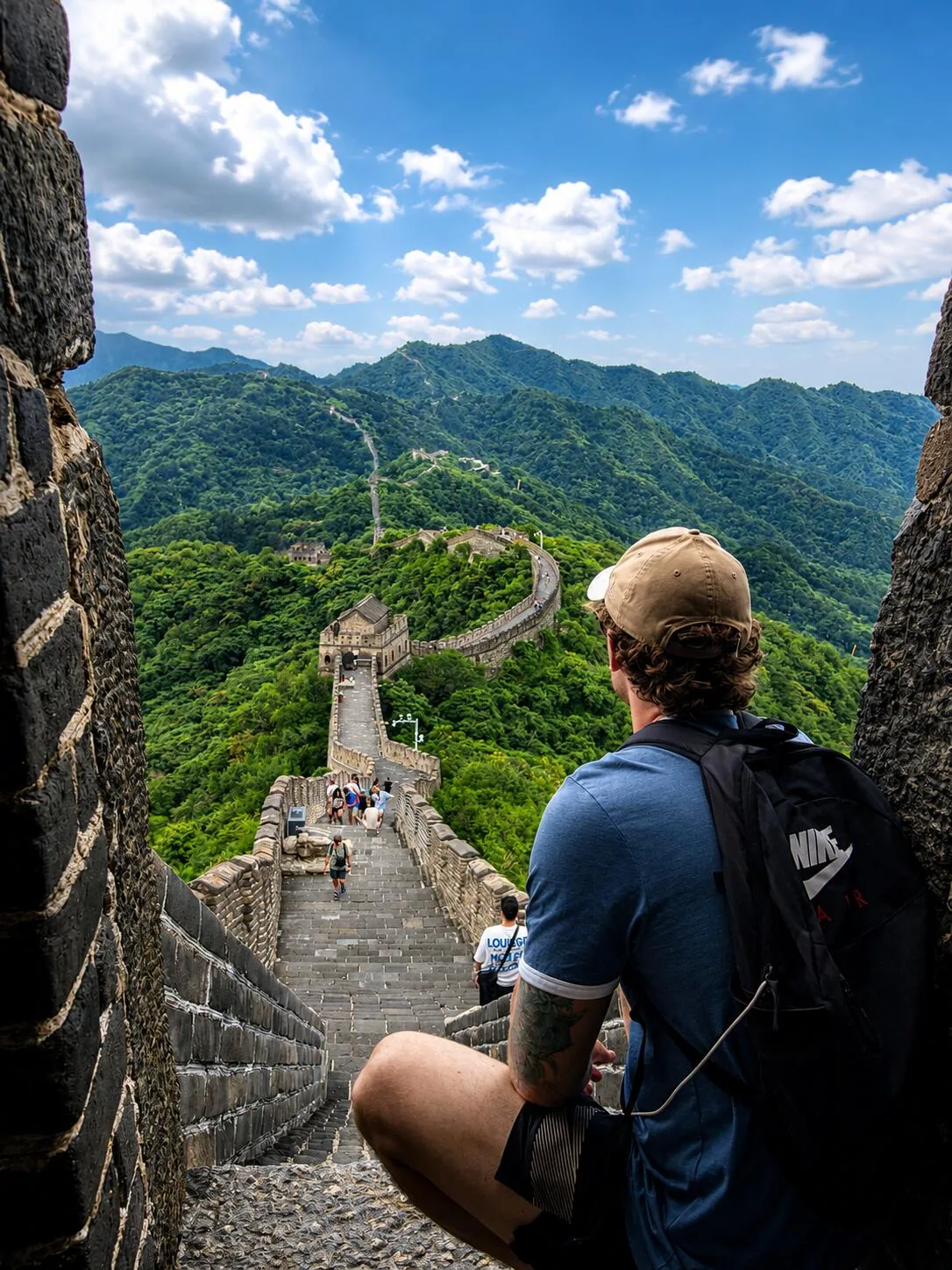
A photograph of a broad, apparently flat wall section cannot establish how someone reaches it. The difficult part may be a threshold, a boarding movement or a crowded approach outside the photograph. Ask for the route to be explained in order, rather than accepting a general assurance that wheelchairs are seen there.
| Requirement | What might help | What still needs checking |
|---|---|---|
| Avoid the long uphill climb | Suitable mechanical ascent | Approach, boarding and remaining steps |
| Walk only a short distance | Limited out-and-back visit | Actual surface and available rest points |
| Avoid prolonged standing | Timing and a shorter visit | Security, queues and boarding waits |
| Remain in a wheelchair | Route-specific access review | Continuous access, dimensions and transfers |
| Keep three generations together | One shared route and a meeting plan | Different speeds, supervision and weather |
Age alone does not choose a row. Someone who walks comfortably on flat ground may struggle with a vehicle step, while another traveler may manage steps but need frequent seated breaks. Give the planner both pieces of information.
Trace The Route From The Hotel Door
Begin with the vehicle. Can you enter an ordinary passenger seat, or must you remain in the wheelchair during travel? A standard private vehicle is not automatically wheelchair accessible. Equipment weight, folded size, seat height and available luggage space all affect what can be arranged.
Next identify the permitted vehicle drop-off and the public access process. Private transport does not confer permission to drive through protected or restricted areas. A plan that says only “door-to-door transfer” leaves the most important walking gap unexplained.
Then review ticket controls, any shuttle movement, the lower station and the upper station. Ask which parts involve a slope, threshold, step or transfer. If one barrier is unacceptable, solving the other five does not make the complete route suitable.
Finally check the return. An ascent plan is incomplete without explaining where the traveler turns around, how the group remains together and what happens if fatigue arrives earlier than expected. Do not assume another descent system can be substituted without changing tickets, access or suitability.
Choose The Equipment Before Choosing A Wall Section
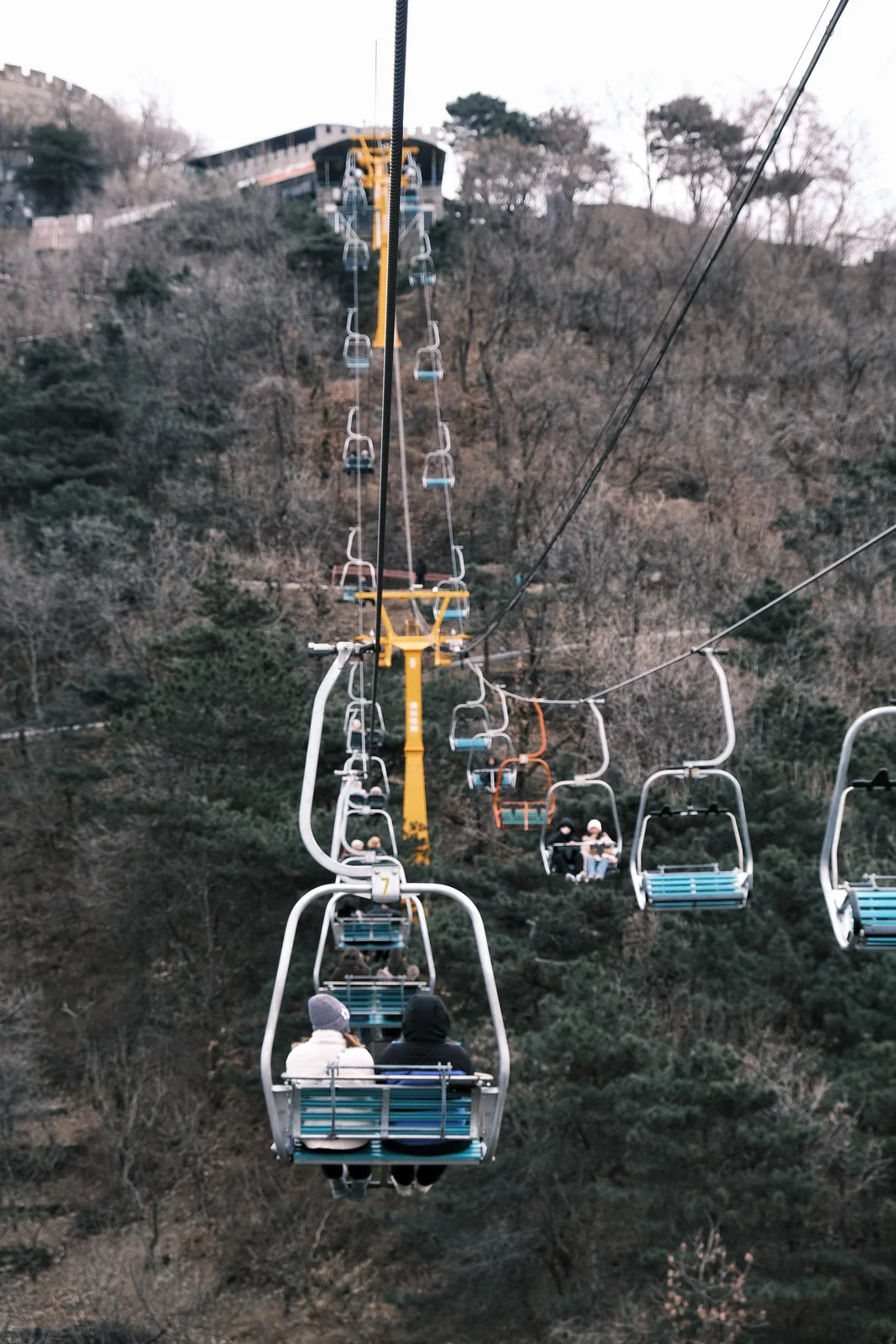
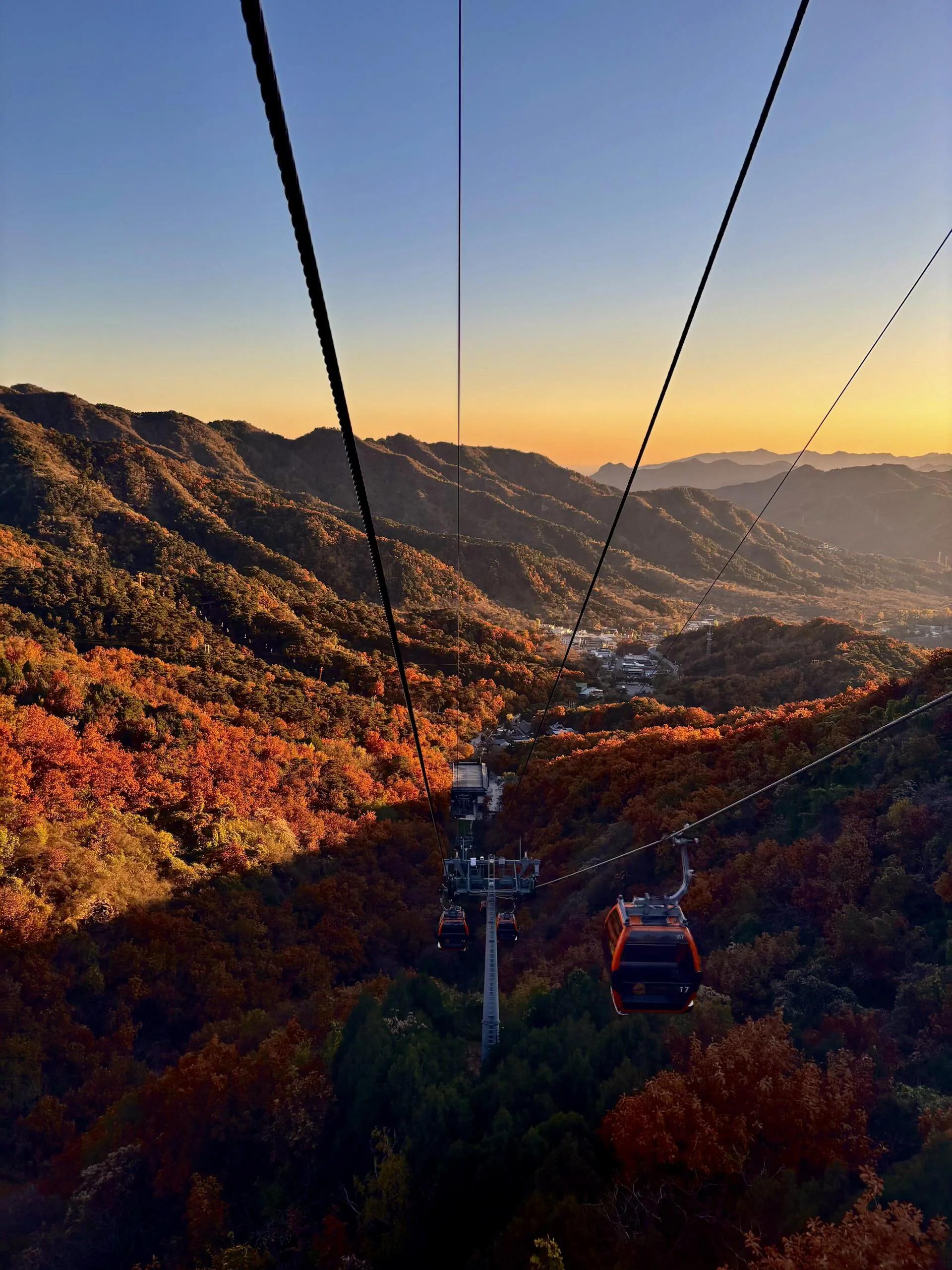
The enclosed cable car and the chairlift/toboggan arrangement should not be treated as interchangeable versions of one ticket. They involve different boarding experiences and different route decisions. Availability and conditions must be checked for the intended date.
A chairlift may be unsuitable for a traveler who needs assistance transferring or does not feel secure with open boarding. A toboggan is not an accessibility substitute for a closed cabin. Its operating restrictions and the traveler's abilities require a separate decision.
The Mutianyu walking and cable-car guide explains why choosing the uphill system and choosing the walk belong in the same conversation. Avoid planning a long traverse merely because two different descent options appear on a map.
Send An Access Brief That Can Be Acted On
Provide practical information without sending unnecessary medical records. The operator needs to understand the barriers and assistance involved; your clinician handles medical suitability.
- State the comfortable distance on level ground and the maximum standing time.
- Explain whether a single step is manageable, and whether a handrail is essential.
- Describe independent vehicle boarding and wheelchair transfer ability.
- Give equipment dimensions, weight and any battery information needed for transport.
- Identify essential toilet features and whether assistance is required.
- Describe the point of the visit: walking the ramparts, seeing the structure or sharing a family viewpoint.
- Identify any person who must remain accompanied at all times.
“Can walk for twenty minutes but cannot climb steps” is more useful than “quite fit for their age.” So is “can transfer with help from a family member but cannot be lifted by staff.” These distinctions change the vehicle and route, not merely the wording of the itinerary.
A Day Framework Without False Timing Promises
Build the day around stages rather than a universal pickup hour. Beijing hotels differ in location, traffic changes and attraction operations may be seasonal. An early departure can help with some pressures while creating others for someone who needs a slow breakfast or medication routine.
Before departure: confirm the day's equipment operation, the intended route, the traveler's condition and what clothing or supplies are needed. Carry essential medication with the traveler rather than leaving it in a luggage compartment.
On arrival: use the agreed public access route, confirm the meeting arrangement and reassess the approach before committing to the ascent. Discovering that boarding is unsuitable is a reason to pause, not a reason to improvise a lift by untrained people.
At the upper area: choose the shortest meaningful experience that fits the verified conditions. Turning back early is a valid completion of the plan. Do not spend all remaining energy reaching a photo point if the same energy is needed to return.
After descent: allow time for the access process in reverse, a suitable meal or rest, and the road journey back. Avoid attaching another major landmark simply because the map makes it look convenient.
Review the private Mutianyu day tour as a service reference, then send the access brief for an individual assessment. A published tour description is not approval of a particular wheelchair route.
How Families Can Share The Visit Safely
Three generations may want different distances. That can work only when the supervision arrangement works too. One guide cannot continuously accompany two parties moving in different directions.
If someone plans to rest, identify the actual place, who remains with them, weather protection and how contact is maintained. Do not build the arrangement around the assumption that a quiet seat will appear whenever it is needed.
An additional guide or assistant may be needed if a traveler cannot remain independently at the meeting point. Ask about that before booking. The multigenerational Mutianyu guide addresses shared visits; this article addresses access barriers.
Agree The Unavailable-Lift Decision In Advance
Weather, maintenance or safety decisions can interrupt mechanical ascent. Walking up is not an equivalent replacement for someone who depends on the lift. Moving the visit to another day also depends on reservations, guides, vehicles and the wider itinerary.
Ask which alternatives would satisfy the purpose of the visit. A different viewpoint, a different day or a different section may be worth considering, but each requires its own feasibility check. Do not describe an unverified alternative as equally accessible.
The written plan should explain who notifies you, who decides, what changes require your approval and which costs follow the supplier's terms. It should distinguish a cancellation from a shortened visit chosen after arrival.
For a longer trip, the 12-day Easier Pace route offers a service reference for adding recovery time. It still requires the same individual access review; additional days do not remove physical barriers.
Expert Insider Tips
Plan Around The Barriers That Matter
Send your date, hotel, equipment details and non-negotiable access requirements when reviewing the Mutianyu private day tour. The useful outcome is a specific route decision, with limitations stated before payment, rather than a reassuring label that leaves the hardest parts unresolved.