1 night: one uncertain landscape window
Possible for a selective stop when the full arrival and departure work, but easily dominated by road travel. Do not base the entire journey on a single dawn or promise a village walk after a late arrival.
A living terrace landscape, village context & time for changing weather · Southwest China
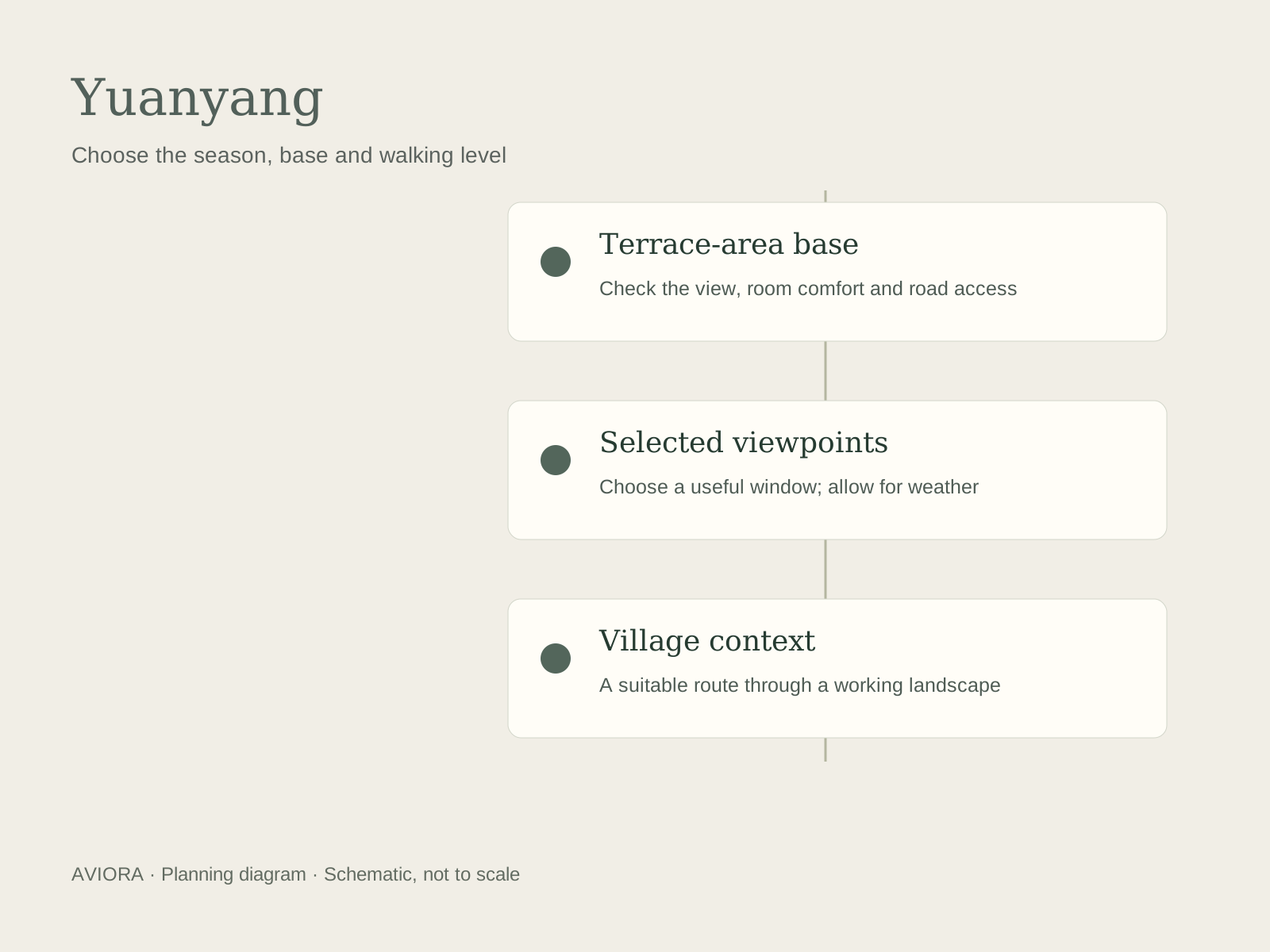
Choose a Yuanyang terrace base for the season and the experience you want, with useful time for viewpoints, village context and rest instead of chasing a guaranteed sunrise.
Yuanyang is a county in southern Yunnan's Honghe prefecture, known for a major part of the Honghe Hani Rice Terraces cultural landscape. Visit for a working agricultural system linking forest, villages, water and terraced fields, not simply a single mountain viewpoint. The best base is usually chosen around the terrace-area visits you want, rather than the county name alone. Reflection photography, green growing fields and harvest scenery are different seasonal subjects; decide which matters before selecting dates and accommodation.
Two nights provide a full day and, if arrivals allow, more than one early or late landscape window. Three nights add a second full day for village context, a suitable walk and some flexibility around fog or rain. Dedicated photographers may want longer, but extra nights cannot guarantee clear views. One night can become a long road journey followed by a single uncertain dawn. Keep the complete Jianshui or Kunming transfer separate from the time you want to spend on the terraces.
Possible for a selective stop when the full arrival and departure work, but easily dominated by road travel. Do not base the entire journey on a single dawn or promise a village walk after a late arrival.
Choose viewpoints and a suitable village or interpretive interest around current conditions. Keep breakfast and rest after an early start, with an evening session only if the group wants it and the weather supports it.
Add a second full day for a different route, a slower walk or focused photography. Avoid repeating every viewpoint simply because more time is available. Additional nights provide opportunities rather than guaranteed clear views.
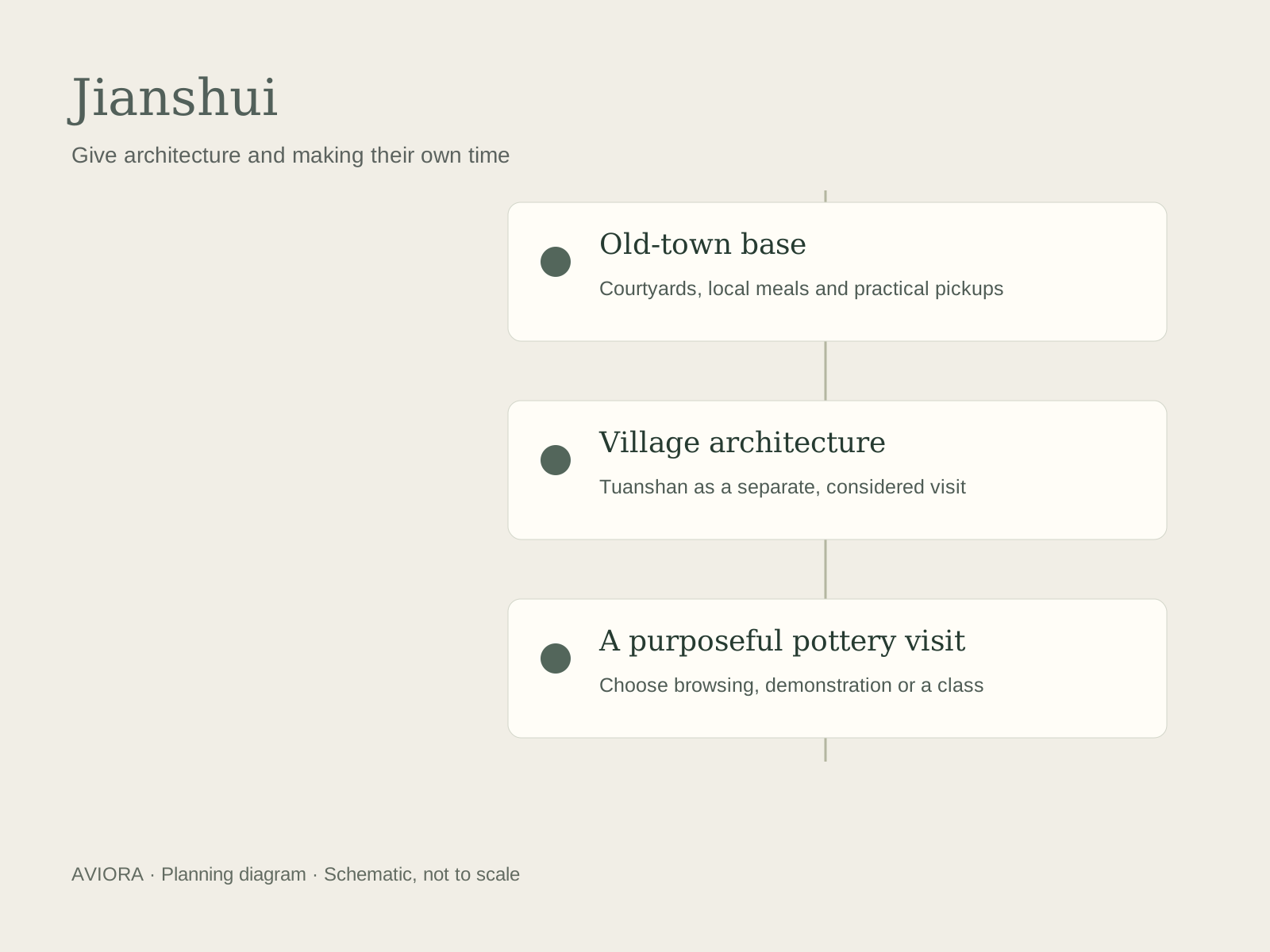
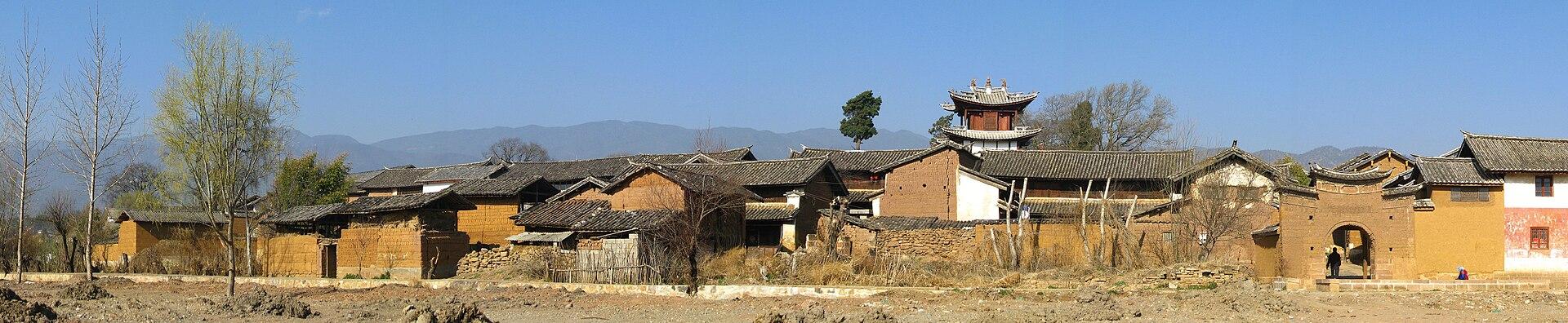
Jianshui and Yuanyang can form a complementary southern Yunnan route: architectural and craft interests followed by an agricultural landscape stay. Give each place its own nights and include the full mountain-road transfer. Kunming is a broader gateway decision, not proof of a short day trip to the terraces. There is no published Yuanyang product recommended on this page; the outline is illustrative and a written proposal should specify hotel position, guide and vehicle hours, site access and onward travel.
We can discuss a tailored Yuanyang stay with the named property, guide, road service, selected viewpoints and any village walk listed in the proposal. A private vehicle does not provide exclusive platforms, unrestricted field access or a guaranteed photograph. Hosted meals or household visits require an actual willing host and agreed arrangements. Describe mobility and photography needs early so the hotel approach, walking surface and dawn transport can be reviewed before booking.
This is a destination planning guide, not a fixed departure or a confirmed package. We check the route, accommodation, transport and guide availability for your dates before setting out the services and price in writing.
How our tailor-made China service works · Explore routes in Southwest China
Start planningSignature experiences
Plan the first useful viewpoint around the actual arrival and hotel access rather than assuming a long transfer will deliver sunset. Keep early photography, breakfast, rest and a possible village walk in separate windows. Mountain visibility can change, so discuss a realistic alternative instead of filling the day with repeated long drives between obscured views. A second full day can add context and flexibility, not a guarantee that the weather will clear.
Suggested Yuanyang itinerary
Arrival
Allow the full road journey and hotel approach. Add a nearby viewpoint only if conditions and daylight genuinely permit; settle in, discuss the landscape and confirm breakfast and the next day's road plan.
Full day 1
Choose the early or later viewpoint that suits the group and conditions. Include rest, a proper meal and a suitable village or interpretive visit, rather than driving continuously between every platform.
Optional extra full day
Use the extra time for another landscape perspective, an appropriate walk or a slower stay. Do not assume a second day guarantees clearing fog, a home visit or an unrestricted field route.
Departure
Allow the full journey to Jianshui, Kunming or another confirmed destination. A dawn session needs to fit breakfast, packing and the real departure. This outline is illustrative, not a published package or a guarantee of particular light.
When to go
The water-filled period broadly from late autumn into early spring is often chosen for reflection photography, subject to actual farming and water conditions. Growing rice and harvest offer other seasonal interests. Fog can be atmospheric or hide the landscape completely; clear sunrise and sunset views remain uncertain. Rain affects path safety and road plans, while rural rooms may feel cold or damp in cooler weather. Choose the actual hotel and a trip whose value includes interpretation, not just one famous image.
Compare the actual property and room, road-transfer hours, dawn or evening vehicle service, guide support, admissions and any separately hosted experience. A terrace-view category needs a room-level description and does not guarantee visibility. Remote meals, luggage assistance or a specialized photography guide should be identified if needed. A premium should correspond to real comfort, time or expertise, not an unsupported claim to private viewpoints, home access or predictable light.
Getting there and getting around
Plan a complete road arrival from the actual gateway or previous hotel. A Kunming airport or railway arrival is not an arrival at the terraces, and a Jianshui train still needs onward road travel. Use the mountain hotel address, not simply Yuanyang county, for the transfer. Allow for winding roads, rest and any final luggage approach; discuss motion sensitivity and avoid making a first-night viewpoint dependent on a tight or uncertain connection.
Road transfers connect selected viewpoints and villages, while the final access can involve platforms, stairs and footpaths. Agree the real pickup points and internal transport arrangements where relevant. Group visits sensibly around the property and changing conditions rather than crossing the area repeatedly to chase every photograph. For a longer walk, establish the actual local route, guide, surface, weather alternative and return vehicle before setting out.
Official viewing areas, village lanes and paths among terraces have different surfaces and access conditions. Steps, wet stone, mud, narrow edges and agricultural water channels can be challenging. A scenic view may be possible without a field walk, but the exact platform and hotel route still need review. Use a suitable local route, stay off planted plots and do not treat irrigation banks as public hiking trails. Rain or fog can justify shortening a walk.
The terraces are a changing place of work and community life. Reflective water, mist and green fields are different expressions of the same landscape, not evidence that a visit outside one photographic season is meaningless. Learn what the land is doing during your stay, choose a manageable route and leave room for the weather. A good guide should make the landscape understandable even when a famous distant ridge disappears into cloud.
Compare a Duoyishu-area stay for the particular terrace setting, a base around Shengcun for a different balance of services and access, or Xinjie when the actual hotel and route suit you. Review the exact address, room view and road approach: not every Yuanyang hotel overlooks terraces. Nansha, the lower county-seat area, is a different base from the mountain terrace villages. For any rural property, confirm heating or cooling, bathroom, meals, stairs, luggage help and early-morning pickup before choosing it for a photograph.
Choose a specific property for its actual view, comfort and relationship to your intended routes. Check whether the vehicle reaches the door, how many steps remain, room temperature, bathroom, meals and dawn pickup. A terrace-facing photograph does not prove the booked room shares that outlook.
Compare for the actual combination of meals, local services and road access to selected viewpoints. Confirm the exact street, noise, facilities and daily drive rather than assuming every address in the area offers a panoramic room or easy walking to platforms.
Consider when a particular hotel and service access fit the trip, accepting the full journeys to the chosen terrace sites. Distinguish Xinjie from Nansha and from rural villages. A county-center label is not enough to establish a practical base for repeated dawn visits.
For water-filled reflection scenes, consider the post-harvest and pre-planting period, broadly late autumn through early spring, while checking the actual agricultural stage and water conditions locally. Growing-season fields provide a different green landscape, and harvest timing varies by elevation and farming practice. Duoyishu is commonly considered for dawn and Bada for later light, but neither guarantees a clear sky, visible sun or empty platforms. Choose a season and stay that remain worthwhile through village and landscape interpretation even when a famous view is obscured.
Water, growing rice and harvest each create different subjects. Timing is influenced by elevation, farming and weather, so a month alone cannot establish the appearance of every field. Ask about the current conditions for the selected area and use reference images as examples, not as guaranteed outcomes. Heavy processing and a different season can make online photographs misleading planning tools.
Duoyishu and Bada are often associated with different light windows, but visibility, road access and personal comfort should shape the day. A traveler who wants a slower morning can still appreciate terrace structure and cultural context. If sunrise is important, agree the actual departure, warm clothing, breakfast and return; do not promise sun through fog or force the whole group into every session.
Fields and water channels support local livelihoods. Follow the agreed visitor route, keep off crops and ask before photographing individuals or entering a house. A village name does not grant access to every courtyard. Payment for a ticket or private guide is not permission to stage farm work, interrupt residents or use a drone wherever you choose.
The cultural landscape's significance includes forest stewardship, water management, settlements and farming, not only the appearance of reflective terraces. Ask for interpretation of those relationships and distinguish listed boundaries from the wider county. A viewpoint ticket should not be described as access to every listed village, home, trail or field.
Culture and historical context
A terrace panorama becomes more meaningful when the explanation follows water downhill: from forested upper slopes through villages and into cultivated steps. The landscape reflects long-term knowledge and cooperation as well as physical labor. Ask how water is shared and how settlement, forest and farming relate, using a local account rather than assuming every village follows an identical routine. This turns a viewpoint into an introduction to a living cultural landscape.
People are not props within the scenery. A farmer may be working, a doorway may be private and a path may exist for cultivation rather than tourists. Ask permission before close portraits and household visits, follow the agreed route and do not stage activities as spontaneous village life. A well-arranged encounter identifies its host and purpose; public heritage status does not create personal access to a resident's home or labor.
Food and social life
After an early viewpoint session, a suitable breakfast and a warm place to sit can improve the whole day. Local meals may feature rice, vegetables and different meat or preserved preparations, but choose by the actual kitchen and season rather than expecting one fixed Hani menu. Ask the guide or host to explain how a selected dish relates to local ingredients. Food can add a human scale to the agricultural story without turning dinner into a staged ceremony.
Rural accommodation may have a smaller menu and need advance notice for meals. Discuss allergies, meat preferences, vegetarian or halal requirements, cooking fats and stock before booking the property. Do not infer vegetarian preparation from visible vegetables or assume a hosted dinner is included with a village visit. Confirm drinking water, breakfast timing and dinner availability, particularly after late photography or before an early road departure.
Yuanyang travel FAQ
Choose by your subject: the post-harvest and pre-planting period, broadly late autumn to early spring, is often considered for water reflections; growing and harvest seasons show different landscapes. Confirm the actual farming stage and conditions locally. No season guarantees clear light, water in every plot or visible sunrise.
Two nights give a full day and more than one possible landscape window when transfers allow. Three nights add context and weather flexibility. A single night can be dominated by travel and one uncertain dawn; dedicated photography may justify longer, with no guarantee of clear views.
Compare the actual property near your intended terrace routes, including Duoyishu, Shengcun or Xinjie-area options. Nansha is a different lower county-seat location. Check road access, room view, stairs, temperature, bathroom and meals rather than booking by the county name alone.
No. They are different terrace-viewing areas with separate road approaches and visitor arrangements. Duoyishu is commonly considered for dawn and Bada for later light, but actual visibility, access and personal pace matter more than a fixed photography rule.
Plan a separate terrace stay instead of assuming a practical short excursion. The complete road journey, mountain approach and uncertain viewing conditions need time. A Kunming arrival still requires a gateway-to-hotel plan and should not be counted as a full terrace day.
Choose an actual permitted local route with suitable guidance and current conditions checked. Wet stone, mud, steps, narrow banks and irrigation channels can be difficult. Fields are working agricultural land, not unrestricted trails; stay off crops, respect residents and arrange the return pickup.
A viewpoint-focused visit may work, but platforms and hotel approaches can still involve walking and stairs. Review the exact site, room and vehicle access for your needs rather than relying on a generic accessible-tour label. A long village or field walk is optional.
Yes, with separate nights and a complete road-transfer plan. Jianshui adds architecture, pottery and food before or after the agricultural landscape. Avoid promising extensive sightseeing at both ends of a transfer day, and choose dates around the real conditions that matter to you.
Route combinations
Plan your journey
Share your dates, interests, arrival and departure cities, and any plans already booked. We’ll recommend an itinerary at a pace that suits you, with the arrangements and price explained before you book.
You are asking about Yuanyang.
The enquiry form will load here.
Prefer a direct reply? Message us on WhatsApp or email our China team.