Tea knowledge, forest landscapes and a southern Yunnan stay with substance · Southwest China
Pu'er Travel Guide: Tea, Jingmai Mountain & Stays
Plan Pu'er around a clear tea or countryside interest, distinguishing the Simao city base from Jingmai Mountain, with advice on hosts, tastings, rooms and the full journey between them.
3–4 nights for one focused chapterTea learning, selected coffee interests and a slower southern Yunnan stay
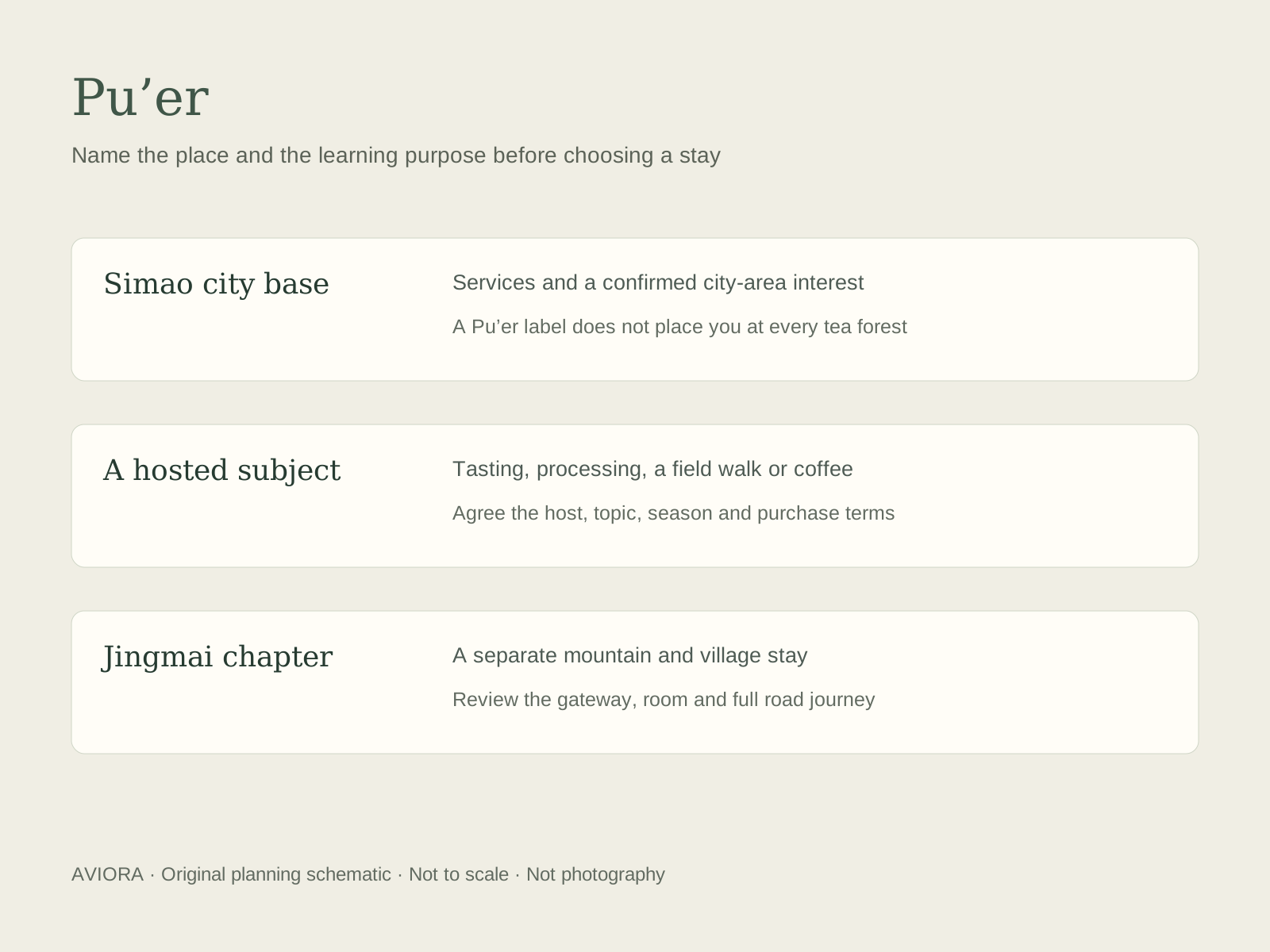
Plan a Pu'er visit around the experience you want: tea processing and tasting, coffee, a countryside property or Jingmai Mountain's tea forests. The name refers both to a large area of southern Yunnan and to tea produced across several parts of the province. Simao is the urban center; Jingmai lies in Lancang County and needs a separate journey. Choose the actual venue and base first, then build the route around useful time there.
How many days do you need in Pu'er?
Three nights give two full days for one coherent base and a selected tea, landscape or coffee interest. Four nights allow a slower rhythm and more flexibility for a host's working schedule. If Jingmai is the main purpose, plan the arrival gateway and nights around the mountain rather than assuming it fits into a short drive from the Simao city hotel. Combining city-area Pu'er and Jingmai needs the full road transfer and usable time in both. One rushed tasting and an early departure are not a deep tea journey.
Compare stays by number of nights
2 nights: one focused full day
Choose a strong priority near a sensible base: a confirmed tea topic, a coffee interest or a countryside stay. Do not promise both city-area Pu'er and a comprehensive Jingmai visit between two transport bookings. A short stay is worthwhile when the gateway and host location fit naturally.
3 nights: a useful first tea-country chapter
Two full days allow one substantial hosted subject and another landscape, village or food interest without repeating tastings. Choose the base around the main experience. If that is Jingmai, the mountain stay and final road approach need to be designed from the start.
4 nights or more: depth and working-time flexibility
Give a second distinct topic proper time, retain a quieter day or allow for a producer's schedule. Combining separate parts of the prefecture can justify another base only when the additional subject earns the transfer. More nights should deepen understanding or improve the stay, not multiply sales stops.
Plan a tailored Pu'er visit
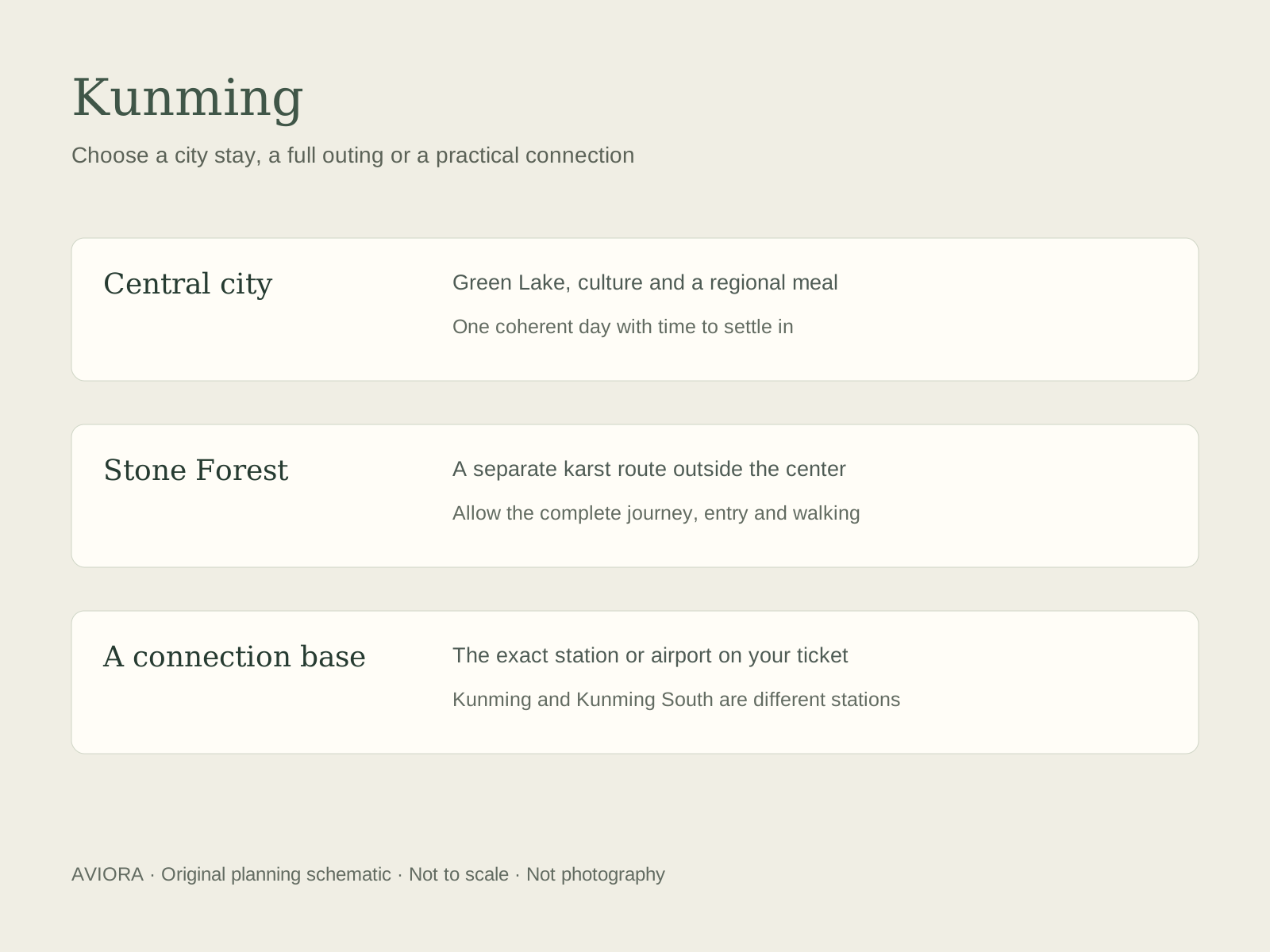
Start with the subject you want to understand: tea processing, tasting, coffee or the Jingmai cultural landscape. Share your dates, gateway, existing tea knowledge, room preferences and walking needs for a tailored Pu'er proposal. We can compare a Simao-area base with a separate Jingmai stay, then assess the wider Kunming connection. Shaxi and Jianshui offer different cultural chapters elsewhere in Yunnan; add them only when the full travel sequence leaves worthwhile time in each place.
A tailored proposal can specify the base and room, exact arrival point, vehicle, guiding, selected tea or coffee host, visit topic and meals. Distinguish a tasting, farm walk, production observation, hands-on session and buying opportunity in writing. Interpreter or specialist expertise, seasonal participation, private hospitality and shipping need their own confirmation. Access depends on the producer's work and consent; private transport does not create unrestricted forest or home entry. Share your knowledge level, preferred depth, caffeine preferences and walking ability before comparing visits.
This is a destination planning guide, not a fixed departure or a confirmed package. We check the route, accommodation, transport and guide availability for your dates before setting out the services and price in writing.
Build the day around the host's real work and the route from your hotel. Allow time for questions, a meal and unhurried travel; an informative tasting need not be followed by several similar shops. Field activity and processing follow the season and the day's production. A fixed harvesting promise can make a poor itinerary when conditions change. Keep the mountain transfer separate from a tightly timed train or flight, and allow a shorter alternative if weather affects rural roads.
01
Learn a clear tea topic through a well-explained tasting or confirmed production encounter
02
Choose a worthwhile countryside stay with an honest account of its room, roads and walking
03
Give Jingmai's village and old tea-forest landscape its own time when it is the real purpose of the journey
Suggested Pu'er itinerary
What can you fit into your Pu'er itinerary?
Arrival
Reach the base chosen for the real subject
Use the exact train or airport and allow the final road journey to the city, countryside property or mountain village. Keep dinner and luggage access clear. A late arrival should not carry a compulsory tasting or be described as a full tea-country day.
Full day 1
One tea encounter with a clear learning purpose
Meet the confirmed host for the agreed tasting, field or processing subject, with season and work determining what can be observed. Leave time for questions and a proper meal. Keep purchases optional and separate from the educational service.
Full day 2
A distinct local interest and time at the property
Choose a public village or landscape route, a different confirmed coffee topic or a slower hotel day according to the base. A Jingmai plan should use its own village geography rather than copy a city-area itinerary. Avoid repeating similar tasting shops simply to fill the day.
Departure
Continue with the full connection accounted for
Allow the road approach, luggage and ticketed departure point. More nights can add depth or a separately designed second base. This three-night framework is illustrative, not a published product or a guarantee of seasonal participation, private hosts or access to every tea forest.
Choose dates around the experience rather than an all-year tea-harvesting promise. Tea field activity and processing follow local conditions and the host's work; coffee has its own agricultural rhythm. Drier periods can be useful for rural roads and village walking, while the wetter season needs flexibility for rain, humidity and slippery paths. City, forest and mountain properties can feel different on the same day. Mist and clear views are weather-dependent, and a spring travel date does not establish access to every working tea plot.
What affects the cost of a Pu'er trip?
Compare the room, meals, complete transfers, guide language and the named host or venue. A commercial tasting, specialist interpretation and a production session have different value and inclusions. Keep tea purchases separate from the service quote, with origin claims, quantity and price explained. A premium should buy better interpretation, comfort and time, not unsupported claims of ancient-tree authenticity, a famous master or exclusive access to a tea forest.
Getting there and getting around
How to get to Pu'er and plan your stay
Arriving and connecting
Pu'er railway station serves the city-area gateway, while Pu'er Simao Airport uses code SYM. Lancang Jingmai Airport, code JMJ, is a different airport and may be relevant to a Jingmai-focused plan when services fit. None of these names removes the final road journey. Check the current flight or train, luggage, Chinese property address and road approach before deciding. Do not buy a city arrival on the assumption that every tea mountain is nearby.
Getting around
Use planned transfers for the selected host and village routes, with a practical meal stop and pickup point. Mountain lanes, tea paths and private working land are not interchangeable public roads. A guide can explain the subject and help communicate, but specialist knowledge and producer access need to be confirmed rather than inferred from a private-tour label. Leave a slower property day unfilled when another long transfer would add little.
Walking and access
A seated tasting, paved village lane and walk through a tea forest have different demands. Ask for the exact surface, gradient, distance and resting options. Roots, uneven steps, mud and humid conditions can affect a rural route, while some hotels have stairs beyond the vehicle stop. Do not assume a forest setting is a gentle maintained garden or that the vehicle can follow the walking route. Review the final room approach as carefully as the visit.
What first-time visitors often underestimate
You do not need to be a tea collector to enjoy Pu'er. A good first visit leaves you understanding what you tasted, how it was made and why the place matters, without pressure to buy. Choose one well-prepared encounter and a stay you will enjoy. For an experienced enthusiast, specify the questions and expertise needed so the visit offers more than the same introductory shop tasting repeated at several addresses.
Where to stay in Pu'er
Choose a Simao city property for services, dining and city-area visits, a named countryside or forest-area property for its own setting, or a specific Jingmai-area stay when the mountain is the main purpose. Check each address against the host and route you will actually use. A tea-themed room does not establish a producer encounter, plantation access or a view of old tea forests. Confirm heating or cooling, bathroom, bedding, humidity control where needed, meals, noise and the final luggage approach before describing a rural stay as high-end.
Compare hotel areas
Simao city / Pu'er urban center
Useful for services, varied meals and visits within a sensible road radius. Confirm the address, room quietness and pickup access. A city property can provide dependable comfort without a tea-forest panorama. Do not assume a booking labeled Pu'er is convenient for Jingmai simply because both sit within the prefecture.
A named countryside or forest-area property near the chosen interest
Choose for the room, grounds, meals and actual surroundings, with the road connection to your host checked. Forest-themed marketing does not establish a maintained walking route, wildlife encounter or private plantation. Ask about humidity, ventilation, room access, dinner and current nearby activity. A remote address can still bring road or group noise.
Jingmai Mountain and its selected village stays
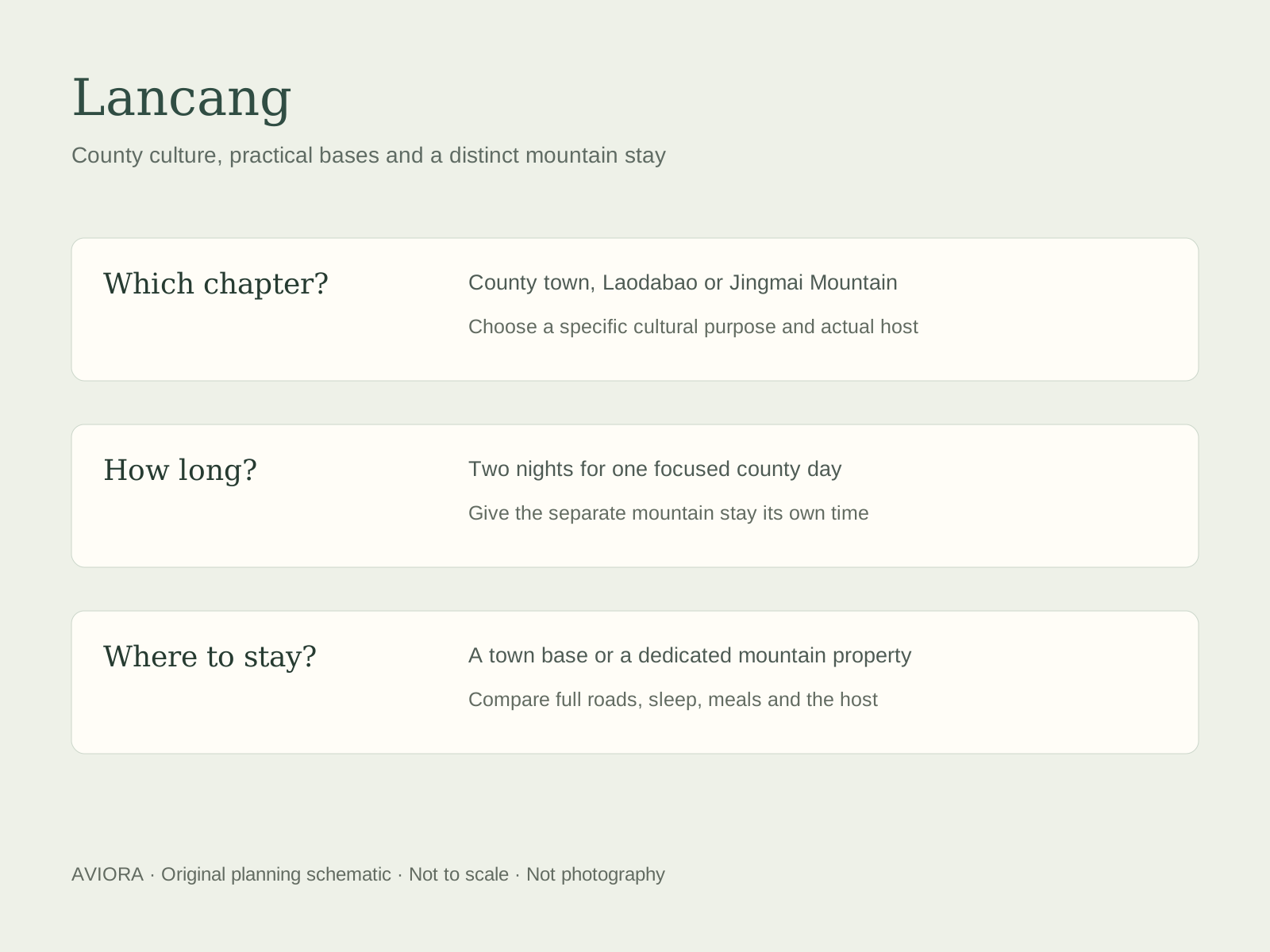
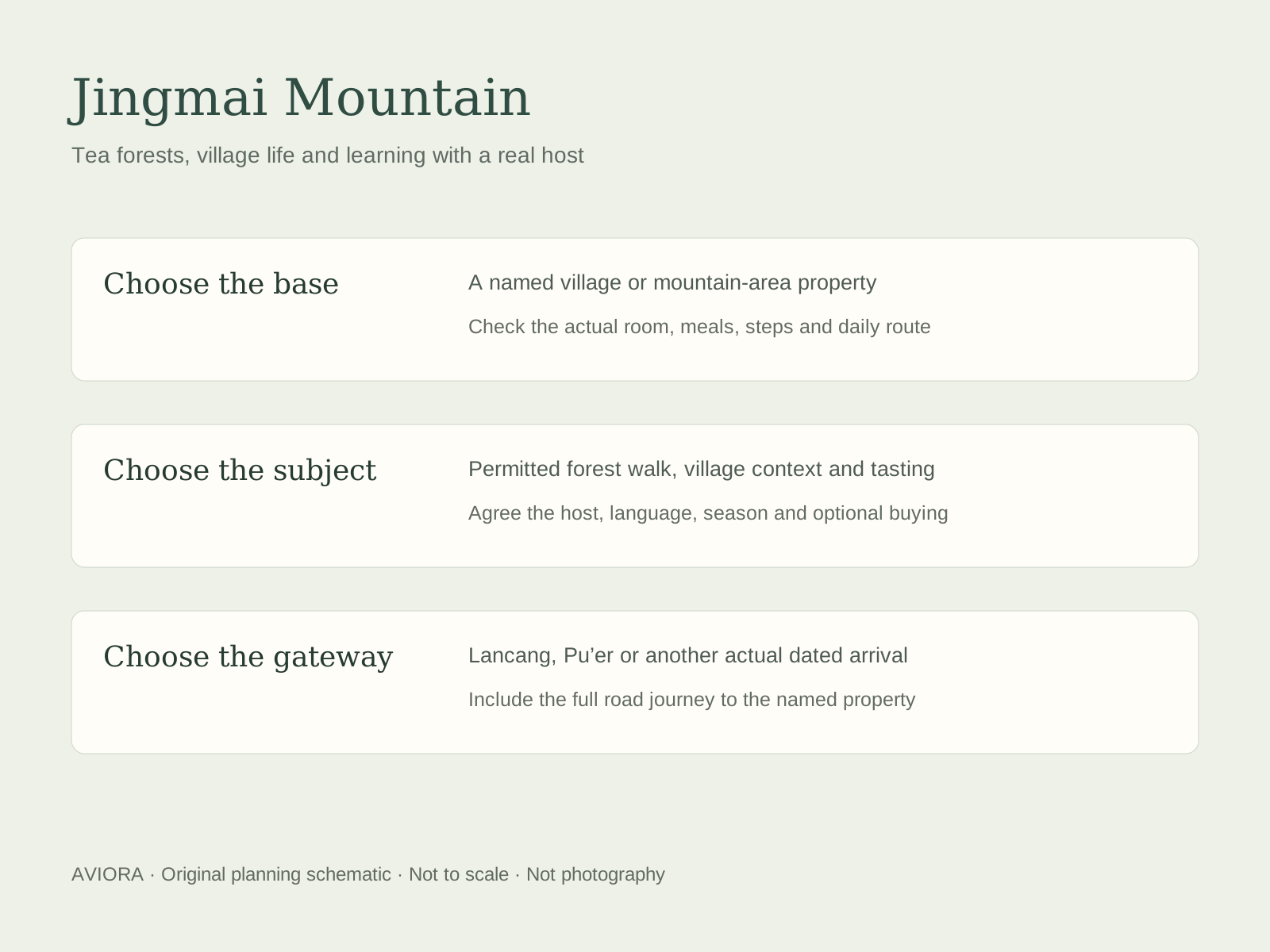
A separate choice for a mountain-and-village chapter in Lancang County. Review the exact village, room, stairs, final road, luggage handling and meal arrangements. A scenic traditional building can differ substantially from a full-service hotel. Wengji and Nuogan are specific village interests, not guarantees that any household or tea forest is open to a private tour.
Should you stay in Pu'er city or on Jingmai Mountain?
Choose the Simao city area for a comfortable services base and a confirmed city-area tea, coffee or landscape interest. Choose Jingmai when the old tea-forest cultural landscape, villages and a well-arranged mountain stay are central to the trip. They are not two nearby hotel neighborhoods. Compare the exact gateway, complete road journey, room comfort and host access. A city tasting can be excellent without a mountain visit, while a meaningful Jingmai stay needs more than a shop stop advertised under the Pu'er name.
The city, the tea category and the heritage landscape are different things
Pu'er city is not the sole origin of every tea sold as pu-erh, and the UNESCO-recognized Jingmai cultural landscape is not the whole prefecture. Ask where the leaves were grown, where processing happened and which place the itinerary actually visits. A tea-town label can conceal a substantial road journey. Clear geography makes the holiday better and helps distinguish useful provenance information from a sales story.
A good tasting teaches a question you can take away
Agree the comparison before the visit: raw sheng and ripe shu styles, processing, storage or a clearly explained difference between particular teas. Ripe pu-erh uses an accelerated pile-fermentation process; raw tea and its later aging follow a different path. Do not reduce the subject to darker means older or more expensive means better. A small, explained tasting can be more valuable than many cups with no time for questions or no clarity about what is being served.
Old-tree and vintage claims need evidence beyond a forest photograph
A walk among tea trees does not authenticate a retail cake's origin, age or storage history. If buying matters, ask for clear product identification, quantity, price basis and any available provenance rather than treating the guide as a certification service. Age, rarity and investment narratives should not be the reason to feel pressured to purchase. The visit fee and any buying commission or expectation should be transparent before the session.
Field work, processing and village life do not follow a visitor timetable
Harvest and production vary with season, weather and the producer's work. Confirm what you can observe and whether participation is genuinely offered, rather than promising leaf picking or tea making throughout the year. A working household, public lane and visitor venue have different boundaries. A meaningful encounter can be a thoughtful conversation or tasting; it need not claim exclusive access or ask residents to perform everyday life for a camera.
Jingmai deserves its own arrival decision
Compare the actual road journey from Simao with another suitable gateway for the mountain. Pu'er Simao Airport and Lancang Jingmai Airport serve different locations, and a train to Pu'er does not end at the Jingmai tea forests. A direct-looking line on a map can involve winding rural roads. Choose the gateway around the selected village and room, not the marketing prominence of the prefecture's name.
Coffee can add contrast without becoming another generic plantation stop
The Pu'er area also offers coffee interests, but a cafe tasting, farm walk, processing explanation and harvest participation are different visits. Choose a confirmed host and a topic that adds something distinct to the tea chapter. A good tasting can be worthwhile without a farm visit, and a farm visit need not include production in every season. Discuss caffeine preferences and avoid presenting either drink as a detox or health treatment.
Culture and historical context
Understand the tea forest as a cultural landscape
Jingmai's importance lies in the relationship between tea, forest, settlements and the communities that maintain the landscape. It is more than a collection of old trees or a backdrop for a tasting. A considered visit explains the selected village and publicly accessible route, with knowledge appropriate to that place. Wengji and Nuogan offer specific village contexts; neither should be reduced to a generic minority-village performance or a guarantee of household access.
Tea landscapes are also working places. The age of a tree, the history of a settlement and the provenance of a retail product are different claims needing different evidence. Respect the grower's work, homes, cultural practices and photography preferences. A thoughtful encounter can be a modest conversation or an explained public walk; depth comes from a clear subject and consent, not a promise that private guiding makes every forest path or kitchen available.
Food and social life
Let tea and the table complement one another
Plan tea sessions with water, a sensible meal and enough time between tastings. Explain what is being served and let guests choose how much to drink; familiarity with tea or coffee does not mean everyone wants a full day of repeated caffeine. A small comparison with clear questions can be more memorable than a long sequence of cups. Neither drink needs to be marketed as a health treatment to make the encounter worthwhile.
Southern Yunnan meals can introduce regional vegetables, herbs, rice and suitable meat or fish preparations, but a prefecture label does not specify every community's cuisine. Choose a venue and explain the dishes rather than presenting all food as one uniform ethnic tradition. Check broths, sauces, spice and shared preparation for dietary needs, and confirm dinner arrangements at a remote hotel. A dependable meal supports the rural stay as much as an impressive tea-room photograph.
Pu'er travel FAQ
Questions about visiting Pu'er
Is Pu'er a city or a type of tea?+
The name is used for a prefecture-level area in Yunnan and is associated with a tea category. The urban center is in Simao. Pu-erh tea is also produced elsewhere in Yunnan, so a tea label does not identify the farm, processing location or travel route by itself.
How many nights should I spend in Pu'er?+
Three nights give two full days for one coherent base and a selected tea, coffee or landscape interest. Four nights allow more depth or schedule flexibility. Combining city-area Pu'er with Jingmai requires the full transfer and usable time in both, rather than assuming the mountain is a nearby city excursion.
Is Jingmai Mountain close to Pu'er city hotels?+
Jingmai is in Lancang County in a different part of the prefecture, not an outer neighborhood of Simao. Compare the complete road journey and the selected village before choosing a city hotel or gateway. A train to Pu'er does not place you beside the old tea forests.
What is the difference between sheng and shu pu-erh?+
They describe raw and ripe styles with different processing and aging paths. Ripe shu uses an accelerated pile-fermentation process. A useful tasting explains the specific teas, processing and storage rather than treating darker color as proof of greater age or higher quality.
Can I pick leaves or make tea during a visit?+
Only when the season, producer's work and a confirmed arrangement support it. Tasting, field observation, production viewing and hands-on participation are different services. Do not assume an all-year tea visit includes harvesting or access to working equipment.
Does a tea tasting require buying tea?+
The visit fee, purchase expectations and any commercial relationship should be clear in advance. A learning session should not depend on pressure to buy. If you choose to purchase, ask about the product, quantity, price and available provenance; a forest visit does not authenticate every retail claim.
Is all of Pu'er a UNESCO World Heritage site?+
No. The recognized Cultural Landscape of Old Tea Forests of the Jingmai Mountain in Pu'er is a specific heritage property. The designation does not cover the entire prefecture, every tea farm or every product sold under the Pu'er name, and it does not guarantee visitor access everywhere.
Which airport is best for Jingmai Mountain?+
Compare current services and the final road journey from each relevant gateway. Pu'er Simao Airport uses SYM; Lancang Jingmai uses JMJ and serves a different location. The best choice depends on the booked village and room, timing and full transport plan rather than the airport name alone.
Can I add coffee to a Pu'er tea trip?+
A confirmed cafe, farm or processing interest can add contrast when the route and season fit. Agree the topic and host so it is not simply another sales stop. Tasting, farm walking and harvest participation are different experiences, with availability and caffeine preferences discussed separately.
Share your dates, interests, arrival and departure cities, and any plans already booked. We’ll recommend an itinerary at a pace that suits you, with the arrangements and price explained before you book.