2 nights: choose one historical focus
Use the full day for selected city history or a Purple Mountain sequence, with an evening meal near the hotel. A short stay cannot comfortably include every major museum, tomb, wall section and memorial.
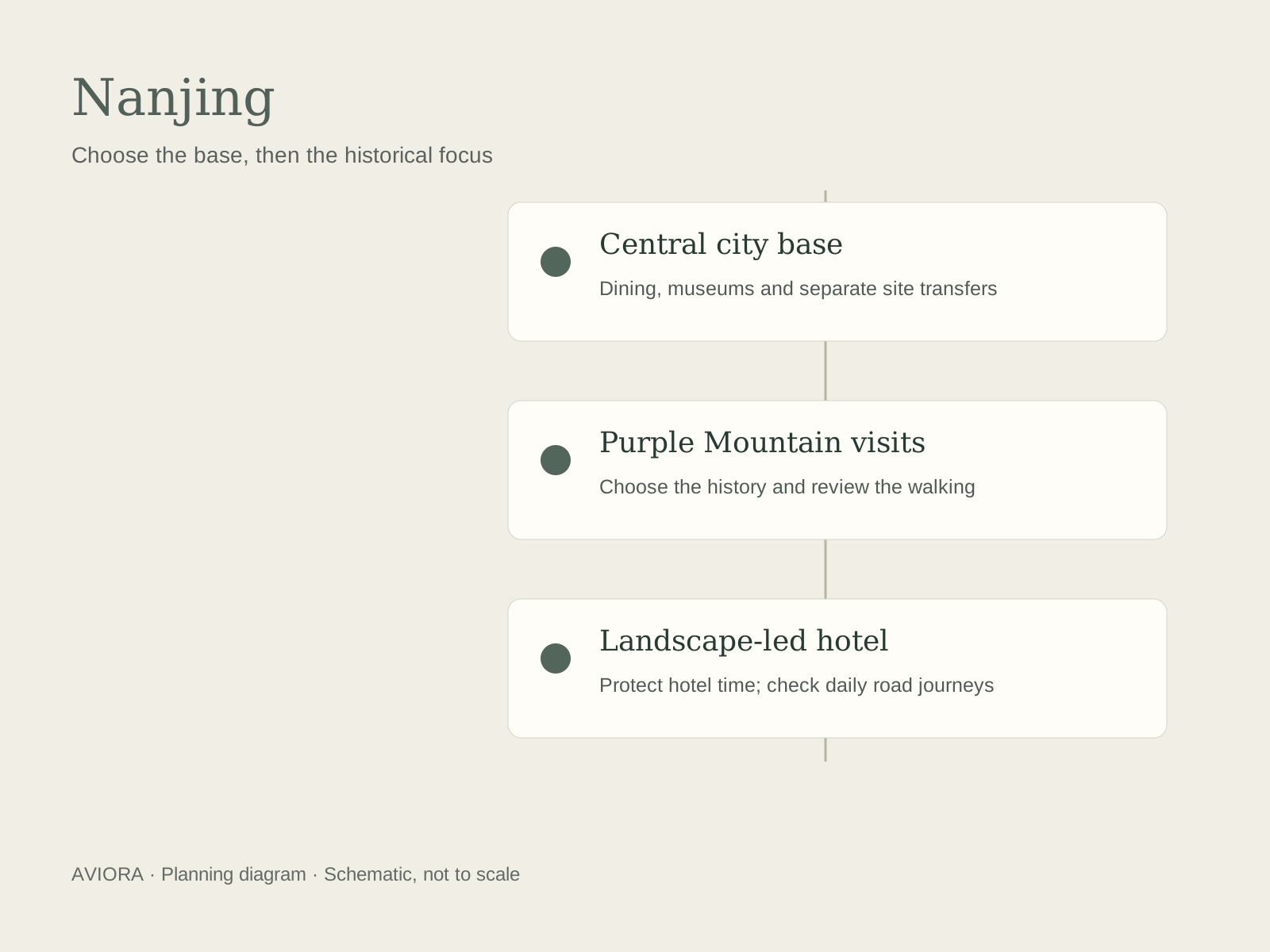
Capital history, wooded tomb approaches & Jiangsu food · East China
Understand Nanjing through a few well-chosen historical layers, compare central and landscape-led hotels, and make room for regional food beyond a hurried Shanghai excursion.
Nanjing is Jiangsu's provincial capital and a former Chinese capital on the Yangtze. It suits travelers who want to connect imperial history, Republican-era history, museums and everyday city life. Start with the Ming city wall and a selected Purple Mountain visit, then choose the museum or historical site that best fits your interests. This is Nanjing city in Jiangsu, not Nanjing County in Fujian, where some Fujian Tulou clusters are located. The older English spelling Nanking refers to the same Jiangsu city.
Three nights give two full days for a selective city introduction and Purple Mountain, with time for meals and a museum. Four nights provide a third day for deeper historical interests, a thoughtful memorial visit or a more relaxed pace. A Shanghai day trip is possible with suitable trains, but station transfers and large sightseeing areas make it a focused excursion rather than a complete Nanjing visit. Add nights when the history matters to you, rather than squeezing every period into one day.
Use the full day for selected city history or a Purple Mountain sequence, with an evening meal near the hotel. A short stay cannot comfortably include every major museum, tomb, wall section and memorial.
Allow one city day and another for selected Purple Mountain visits. Fit a museum according to the reservation and your attention span, keeping an arrival or departure day realistic.
Add a dedicated museum or Republican-history day, a reflective memorial visit if appropriate, or more hotel time. Choose an additional subject you care about instead of repeating similar monuments.
Nanjing can deepen a lower-Yangtze route alongside Shanghai, Suzhou or Hangzhou. Choose it for capital history rather than as another interchangeable water-town stop. Use the actual station pair, hotel transfers and available full days to decide the order. This page does not currently recommend a published Nanjing package; the outline below is a planning example. A tailored proposal should distinguish confirmed services from optional visits and leave room for a proper local meal.
We can discuss a tailored Nanjing stay with the hotel, guide, vehicle hours, admissions and onward rail arrangements itemized in the proposal. Historical interpretation should match your interests and language needs. A private guide does not provide private museum access, remove public reservations or make a stepped monument accessible. Tell us about walking limits and children's ages before the sightseeing sequence is set.
This is a destination planning guide, not a fixed departure or a confirmed package. We check the route, accommodation, transport and guide availability for your dates before setting out the services and price in writing.
How our tailor-made China service works · Explore routes in East China
Start planningSignature experiences
Group sights by actual location and the attention they deserve. Give Purple Mountain a substantial part of a day; a vehicle cannot eliminate internal walking or turn its separate monuments into one short stop. Reserve a museum window around its own admission arrangements. Keep a memorial visit away from a rushed train departure, and do not assume an evening cruise or a temple visit will operate simply because you have spare time.
Suggested Nanjing itinerary
Arrival
Transfer from the named station or airport, then keep the first meal local. Add only a short nearby walk that fits the arrival and weather.
Full day 1
Pair a manageable city-wall section with Nanjing Museum or a selected Republican-history site, according to confirmed access. Leave time for lunch and interpretation rather than adding every institution.
Full day 2
Choose Ming Xiaoling or Sun Yat-sen's Mausoleum as the main visit; combine only when the steps, internal travel and time work. Return for rest and a regional dinner.
Optional extra full day
Add a separate historical subject, a carefully considered memorial visit or hotel time. A memorial is not an automatic family activity. This extra day requires an additional night or a departure that genuinely leaves enough time.
Departure
Allow the complete transfer to the booked train or flight. Suzhou, Shanghai or Hangzhou can follow with their own usable time. This outline is illustrative, not a published package or a promise that every option is included.
When to go
Spring and autumn often suit a balance of city walks and wooded approaches, although rain and temperature changes remain possible. Summer can be very hot and humid; shorten exposed wall sections and build in a midday break. Winter calls for suitable clothing, especially in wind and unheated outdoor areas. Blossom and autumn-color dates vary and can draw crowds: choose the underlying history as the reason to visit, with seasonal color as a possible addition.
Compare hotel location and room category, guiding depth, vehicle hours, rail class, site tickets and any separate local transport. A central hotel can reduce some journeys; a landscape-led property may justify more driving if you will enjoy time there. Museum entry, exhibitions, interpretation equipment, evening activities and meals must be identified separately. Do not infer that a public museum's admission policy includes a private specialist or priority access.
Getting there and getting around
Arrive through the airport or exact railway station shown on the ticket. The name Nanjing South does not mean a central-city hotel pickup, and Nanjing station is a different meeting point. Include luggage, station exits and the final hotel road transfer when assessing a short stay. On a Shanghai excursion, book the return around the complete sightseeing day rather than assuming the rail ride alone determines the time needed.
A combination of planned road transfers and selected walks can keep the day comfortable. The metro is an option for independent city time, but luggage, station depth, walking and weather still matter. For Purple Mountain, establish any internal transport and where the road vehicle can stop. Pedestrian streets and city-wall routes can require a different exit and pickup from the entrance; make that explicit before beginning the walk.
City-wall access can involve steep steps and exposed sections. The mausoleum's ceremonial stairs, the distances within landscaped sites and museum standing time present different challenges. Ask for the exact entrance, pickup point, surface and seated breaks. A drive through Purple Mountain is not equivalent to reaching each monument. In hot or wet weather, shorten outdoor sections and retain an indoor alternative that is actually open.
Nanjing makes most sense when the historical layers are explained in sequence. Start with what interests you and the walking you can comfortably do. A thoughtful tomb approach, a well-interpreted collection and a good meal can create a fuller understanding than a checklist of entrances. This city is distinct from Fujian's Nanjing County, even though their romanized names match.
Compare Xinjiekou for central convenience, the Xuanwu Lake and northern old-city area for a different evening setting, and the Qinhuai/Confucius Temple area for waterside atmosphere with possible evening noise. A Purple Mountain property can suit time in a particular hotel and its surroundings, but needs separate journeys for city meals and museums. Confirm the exact address: a riverside or Nanjing South station hotel serves a different purpose from a central sightseeing base.
A useful starting point for city services, dining and journeys in several directions. Compare the actual street, room quietness, lobby pickup and traffic approach. Being near a metro entrance does not necessarily make a large hotel or station easy with luggage.
Consider for a particular lake-facing property or nearby walks. Check whether the room really has a lake view and how you reach the water. The setting does not put every attraction or Nanjing South railway station within walking distance.
Choose for evening atmosphere and a nearby meal, after checking noise, pedestrian access and the vehicle meeting point. A river-area address is not proof of an undisturbed heritage stay or a room overlooking the water.
Choose the individual property for its room, grounds, dining and the time you will spend there. These are different locations, not one hotel district. Check daily transfers before trading a central base for a particular landscape or design experience.
Ming Xiaoling is the tomb complex of the Hongwu Emperor, founder of the Ming dynasty, with an approach whose stone figures and landscape reward time. Sun Yat-sen's Mausoleum explains a different, modern historical chapter and has a substantial stepped ceremonial approach. Choose by historical interest and walking ability before combining them. They are separate visits within the wider Purple Mountain area, not interchangeable names or an assurance that one ticket covers everything.
Nanjing's surviving wall is not one continuously interchangeable visitor walk. Zhonghua Gate and sections near Xuanwu Lake offer different approaches and contexts. Check the selected entrance, exit, stairs and pickup, then let the guide explain the defenses and city layout. A short meaningful section can be more rewarding than a long exposed walk.
Nanjing Museum offers art and historical collections; the Memorial Hall of the Victims in Nanjing Massacre by Japanese Invaders commemorates mass suffering. They are different institutions and should not be confused in bookings. Discuss the latter's subject matter and suitability for children beforehand, allow quiet time, and follow photography and visitor instructions. It should not be sold as a quick entertainment stop.
Ming imperial history, the city's Republican period and its wartime experience need different context. Choose one or two connected themes and an appropriate guide. The Presidential Palace can serve a Republican-history interest when access fits the date; its courtyards and exhibitions add walking and should not be an automatic extra after an already full mountain day.
Road transfers help connect the city, but monuments may have controlled approaches, internal transport and pedestrian sections. Agree what the quoted vehicle and guide hours cover and where the driver can actually meet you. Plan a good meal and a seated break before adding another distant attraction.
Culture and historical context
The Ming wall and Xiaoling offer a way to understand how a capital was defended, ordered and commemorated. At a selected wall section, ask how gates and the surrounding terrain worked together; along the tomb approach, notice the arrangement of stone figures and the changing relationship between architecture and trees. These details turn a walk into a historical argument rather than a succession of photo stops.
The city's later history needs another frame. Republican-era sites and wartime remembrance should be explained with care, without collapsing them into the Ming story or treating all monuments as similar attractions. Decide which subjects you want to explore and allow time to absorb them. A memorial visit is optional and requires respect for its purpose, particularly when traveling with children or guests who prefer a less emotionally demanding day.
Food and social life
Nanjing's salted duck, yanshui ya, is different from the crisp-skinned roast duck many visitors associate with Beijing. Its restrained seasoning and sliced presentation make it worth discussing as a dish in its own right. Duck-blood vermicelli soup offers another local direction, often with additional duck ingredients; ask what goes into the bowl before ordering. A seated meal with a few selected dishes can explain more than an indiscriminate snack circuit.
Balance a duck dish with vegetables, rice or noodles and food that suits the group. Broths, sauces, organ meats and shared preparation matter for allergies and dietary restrictions, including when a dish sounds simple in translation. A guide can help explain choices, but preferences and strict requirements should be shared before a restaurant is selected. Qinhuai's evening setting can be enjoyable without making the busiest waterfront table the right meal for everyone.
Nanjing travel FAQ
Two full days, often with three nights, suit a selected city introduction and Purple Mountain. Add a third full day for a dedicated museum, Republican-history interest or thoughtful memorial visit. A short stay requires choosing among these rather than promising all of them.
Yes, if capital history, museums or the Ming landscape interest you. It adds a different subject from Shanghai or Suzhou. A focused day trip can work with appropriate rail services and full transfers, while separate nights allow more depth and less clock-watching.
Compare Xinjiekou for central convenience, Xuanwu Lake surroundings for a different setting, and Qinhuai for evening atmosphere with possible noise. Choose a Purple Mountain or riverside hotel for the specific property, accepting its separate daily transfers. Verify the actual address and room.
No. Ming Xiaoling is a Ming imperial tomb complex; Sun Yat-sen's Mausoleum relates to modern Chinese history. Both are in the wider Purple Mountain area, but their historical meaning, walking routes and visitor arrangements differ.
A selective visit may be possible, but the actual route needs review. Mausoleum stairs, wall entrances, landscaped-site distances and museum standing can be demanding. Check step-free access, seating and pickup for each chosen venue; a private car alone does not solve these issues.
Check the individual institution's current process for your date and identity document, including any separate exhibition or site arrangements. Do not assume a guide can bypass a reservation or that one booking covers every Purple Mountain monument. Confirm closures before setting the daily order.
Yes. Nanking is an older English spelling of Nanjing in Jiangsu. Nanjing County in Fujian is a different place associated with some Tulou visits. Use the province and actual station or airport on every booking.
Salted duck, known as yanshui ya, is a useful introduction, usually served as a cool or room-temperature sliced dish rather than Beijing-style roast duck. Duck-blood vermicelli soup is another local specialty with ingredients to discuss first. Choose a meal around your preferences and allergies instead of assuming every signature dish will suit you.
Route combinations
Plan your journey
Share your dates, interests, arrival and departure cities, and any plans already booked. We’ll recommend an itinerary at a pace that suits you, with the arrangements and price explained before you book.
You are asking about Nanjing.
The enquiry form will load here.
Prefer a direct reply? Message us on WhatsApp or email our China team.