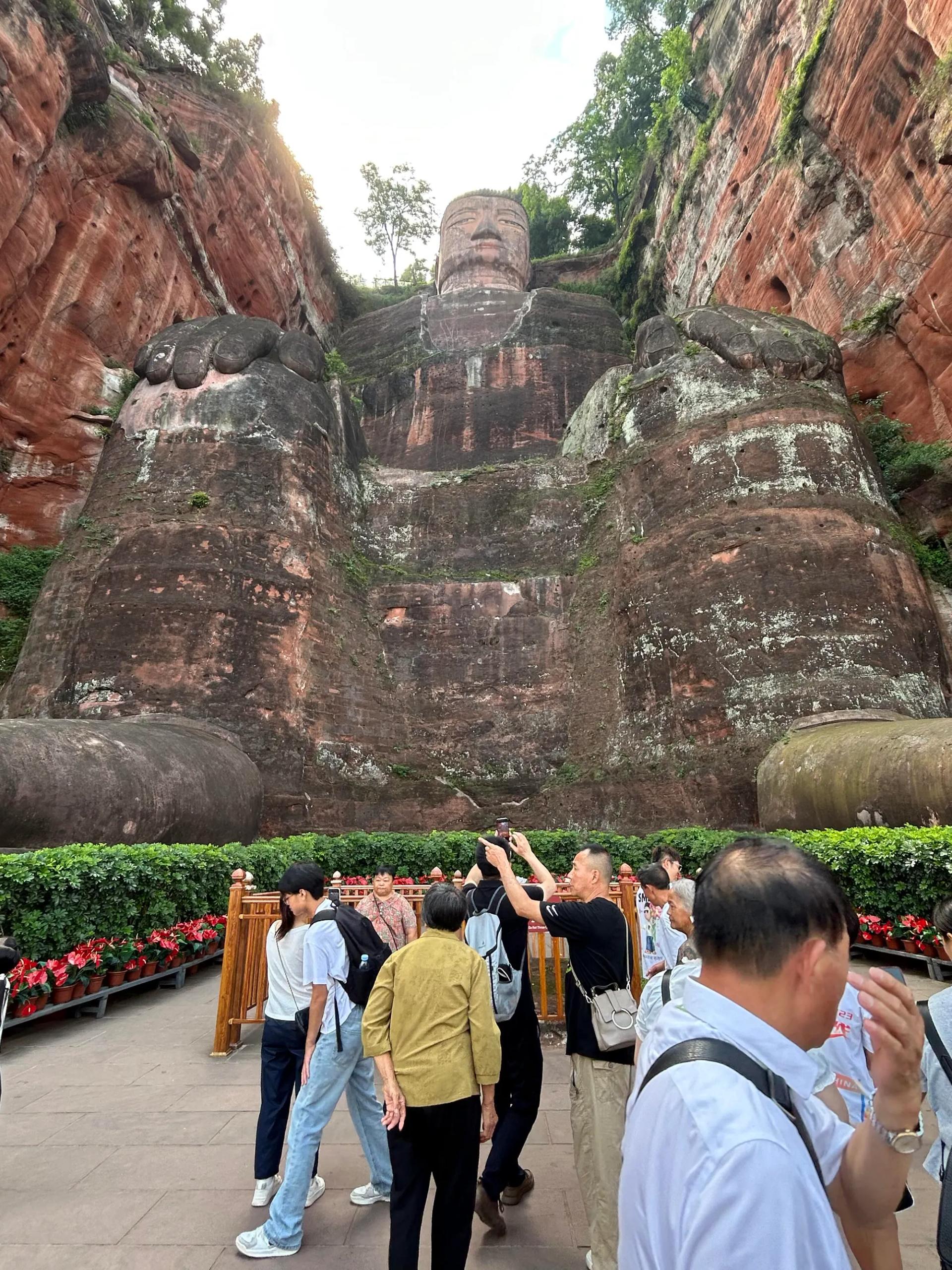
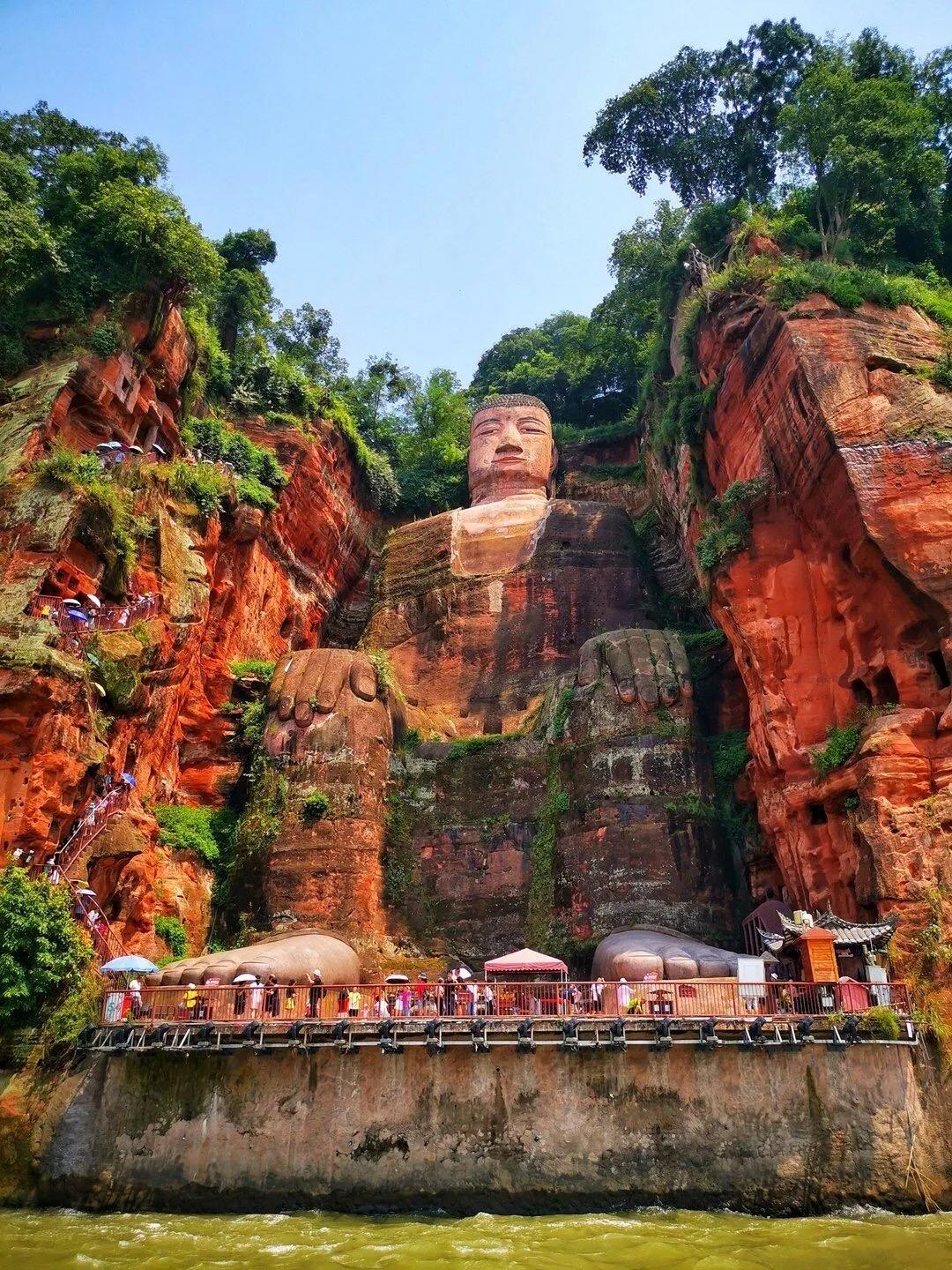
Work on the Leshan Giant Buddha began in the eighth century during the Tang dynasty. The seated figure was carved into the cliff overlooking the meeting of the Min, Dadu and Qingyi rivers. Its religious purpose and the wish to protect river travelers help explain why this location mattered, beyond the sculpture’s size.
The relationship between the figure, cliff and water is central to the visit. From the river you can understand the overall scale; on land, where access permits, the setting and closer details become more apparent. A guide can connect the sculpture’s Buddhist meaning with its construction and drainage, rather than treating it only as a photograph.