Ancient Kucha, Buddhist cave art and a Silk Road stay with depth · Northwest China
Kuqa Travel Guide: Kizil Caves, Kucha & Hotels
Plan Kuqa for Kizil cave art, Subash Buddhist ruins and oasis-city context, with a separate canyon decision, useful hotel advice and realistic Silk Road connections.
3 nights for two distinct full daysBuddhist art, Silk Road archaeology and considered oasis-city travel
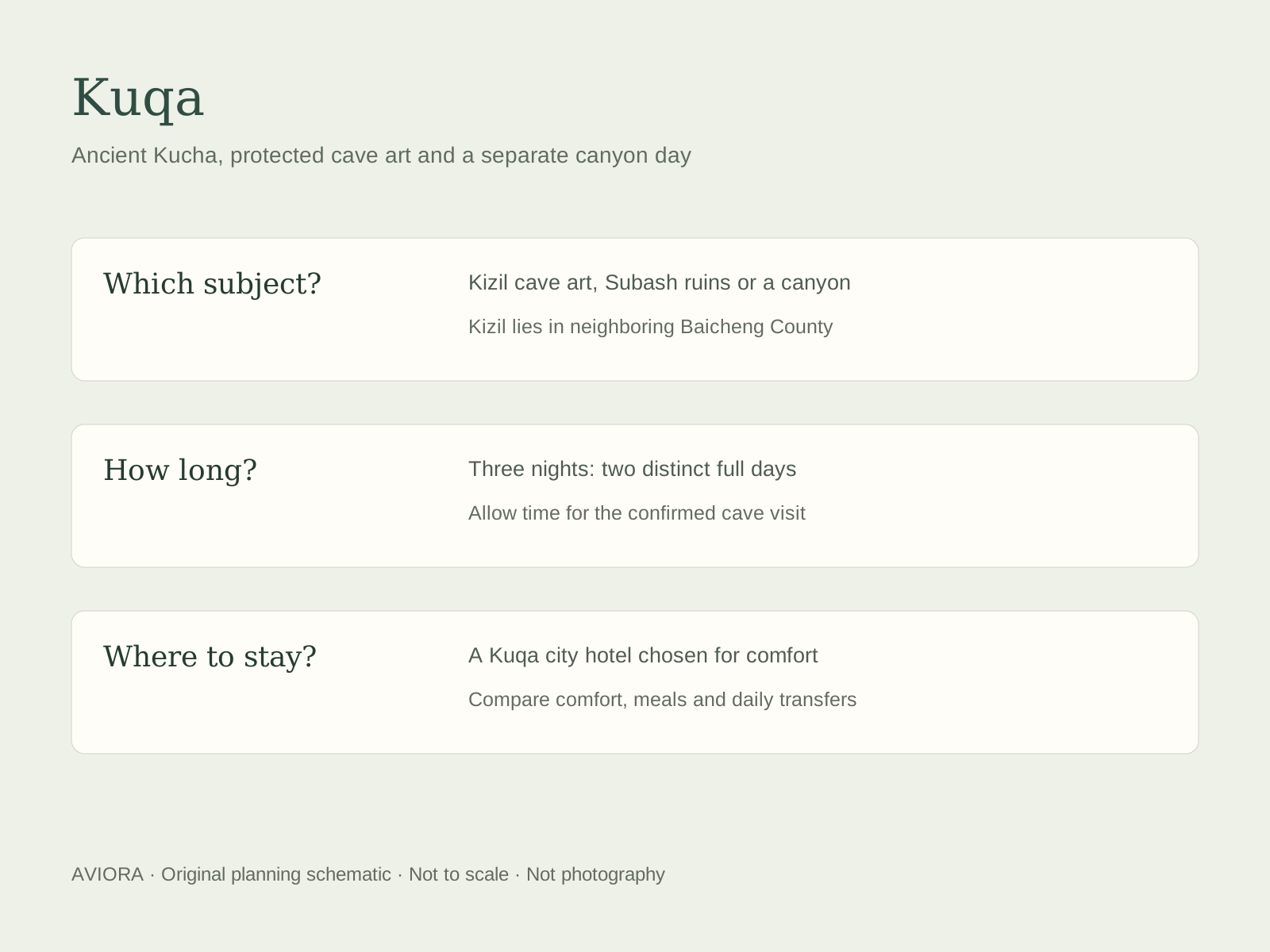
Kuqa (库车), also written Kuche, is an oasis city in Xinjiang's Aksu region and a useful base for understanding the ancient kingdom of Kucha, or Qiuci (龟兹). The modern city and the historical kingdom are related but not identical in extent. The main cultural subjects include Kizil Buddhist cave art, Subash Buddhist ruins and the wider oasis context. Kizil is in neighboring Baicheng County, not within Kuqa city, so it needs a separate road and visitor plan. Three nights give two full days for selected interests; a canyon outing is another choice rather than an automatic addition after every cave visit. Confirm current visitor access and the actual arrangements for each traveler before fixing the route.
How many days do you need in Kuqa?
Three nights give two full days, allowing a substantial Kizil visit and another day for Subash, selected city interests or an assessed canyon route. Two nights leave one full day and require a clearer priority. One night is a selective stop dependent on real arrival and departure. Four nights can support deeper art interests or a slower physical pace when the actual public visits justify it. Extra time does not establish access to more caves, archaeological work areas or special collections; those depend on the responsible institution's current arrangements.
Compare stays by number of nights
1 night / a selective transit stop
Choose one useful subject around real arrival and departure. A late room arrival and early train cannot support a substantive cave excursion. Consider another night rather than describe a photograph of an entrance as a complete art-history visit.
2 nights / one full day
Give the main cave or cultural interest a complete day with roads and meals. Select any partial-day city subject carefully. Do not assume Kizil, Subash and a substantial canyon route fit comfortably merely because the booking includes two hotel nights.
3 nights / two distinct days
Separate a substantive Kizil visit from Subash and selected city context, or choose an assessed canyon day instead of another cultural subject. Let actual opening and guest interests determine the sequence. A four-night stay needs a further purpose, not an unverified promise of additional cave access.
Plan a tailored Kuqa visit
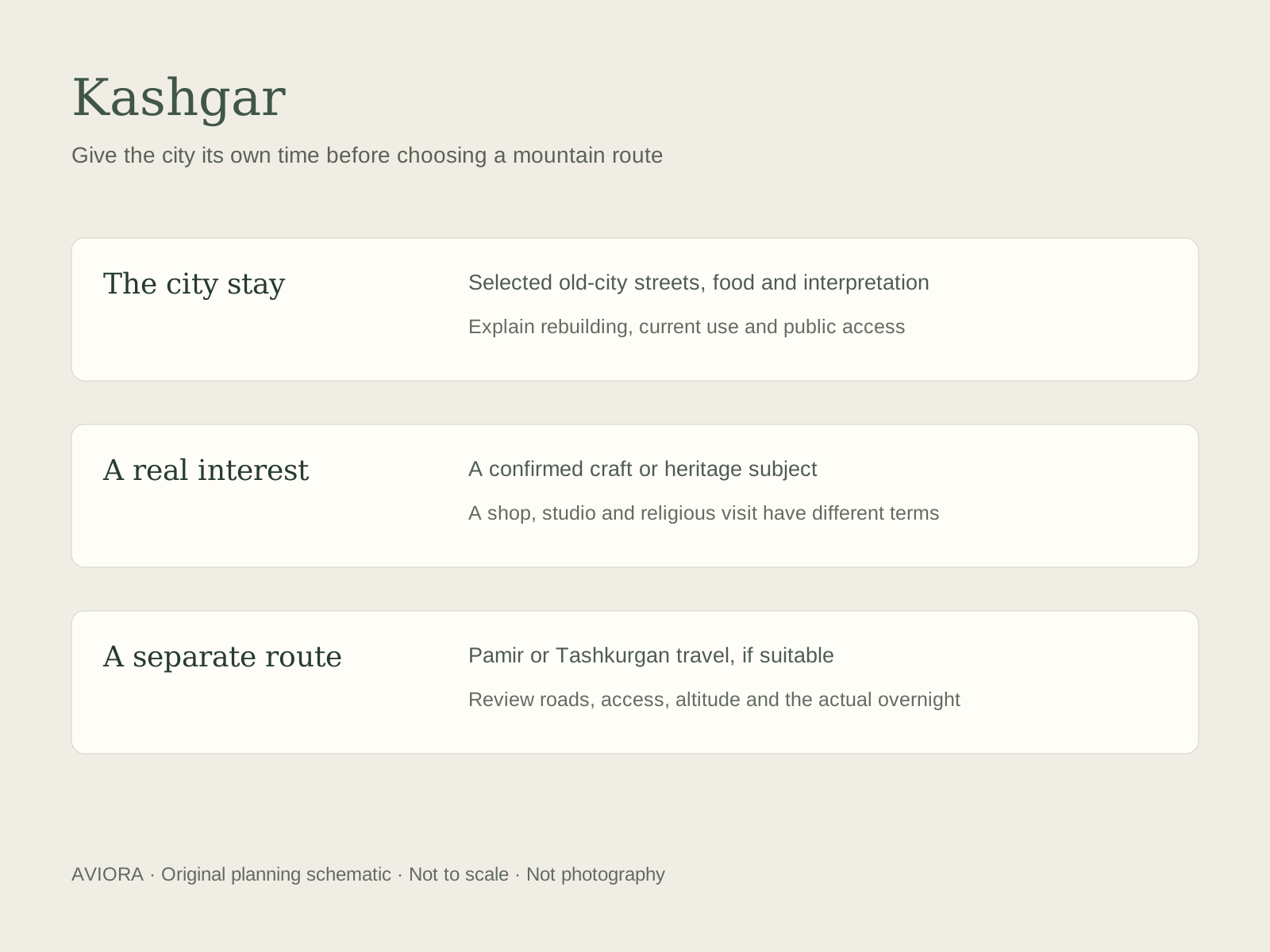
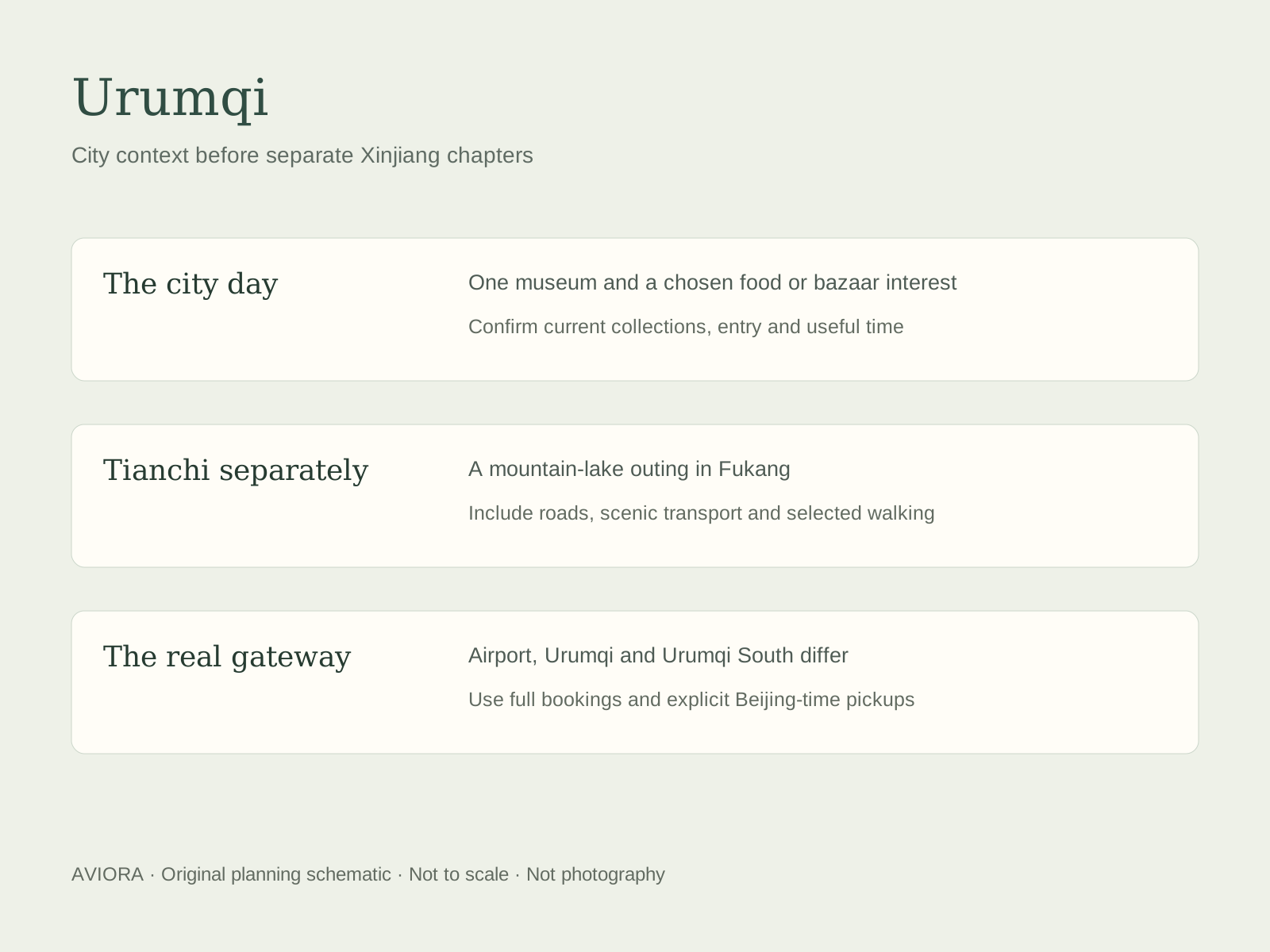
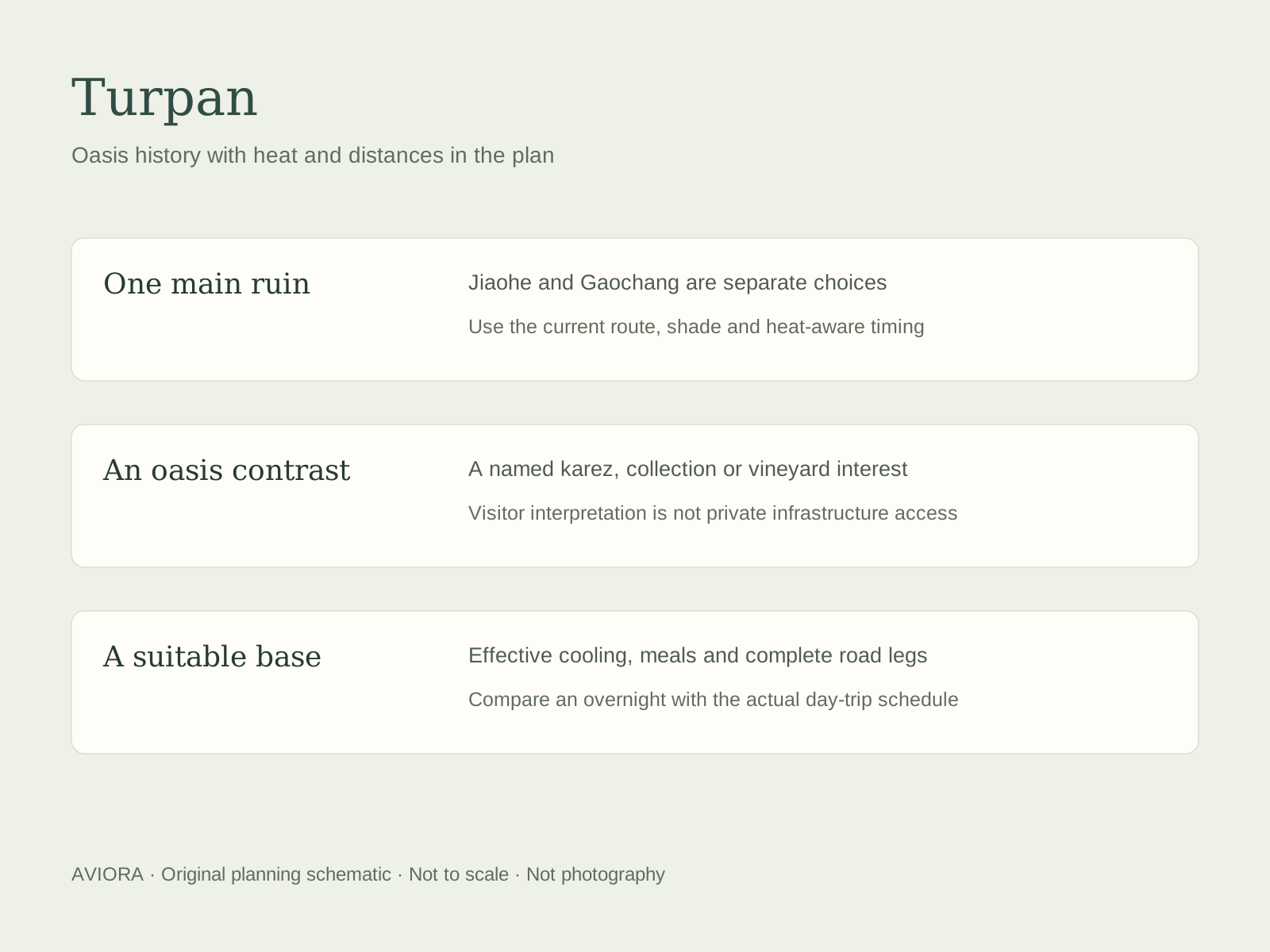
Kuqa can add ancient Kucha and Buddhist art to a longer Xinjiang route through Kashgar, Urumqi or Turpan. Each connection needs dated transport, complete transfers and useful local nights. Dunhuang offers another cave-art comparison farther east, not a neighboring day trip. Treat a Duku Highway or other mountain-road continuation as a separately assessed seasonal route with current access, weather, road and altitude reviewed; a summer photograph does not establish it is open for the actual travelers. No matching published Kuqa tour is recommended here. Share dates, gateways, art interests and walking needs for a tailored route.
A proposal should name the actual traveler arrangements, hotel and room, arrival gateway, public sites, responsible visitor services, full roads, guiding, admissions and meals. Explain which cave visit is offered and the limits of outside guiding or interpretation inside protected spaces. Specialist access, extra caves, research collections and photography require explicit institutional authorization; private guiding does not provide it. A canyon day needs its own path, weather and return assessment. Agree a worthwhile alternative if public operation, traveler requirements or conditions change the principal visit.
This is a destination planning guide, not a fixed departure or a confirmed package. We check the route, accommodation, transport and guide availability for your dates before setting out the services and price in writing.
Anchor the stay around the actual Kizil visitor arrangement and full road to Baicheng County, allowing explanation, the public cave route, meals and return. Subash needs time to understand the ruined site rather than a rapid photograph. Choose a canyon only when the remaining usable day and conditions genuinely fit. Keep substantial excursions away from a tight onward train or flight. Confirm appointment and admission instructions rather than rely on a historical guidebook's cave numbers or hours.
01
Understand ancient Kucha through the cave architecture and art actually available to visitors
02
Read Subash's ruined monastic landscape with preparation and time
03
Choose a separate canyon or city interest that complements the main cultural purpose
Suggested Kuqa itinerary
What can you fit into your Kuqa itinerary?
Arrival / first night
Settle and review the confirmed visitor plan
Complete the actual gateway transfer, eat and rest. A modest city orientation can fit useful hours. Confirm the principal site's instructions and keep essential art viewing away from uncertain arrival or the end of an exhausting travel day.
Full day 1
Give Kizil the attention it deserves
Follow the actual authorized visitor arrangement, with the complete Baicheng County road, cultural explanation, meals and return. Respect the institution's cave selection and photography rules. A famous closed cave is not a reason to enter an unauthorized space or misdescribe the delivered visit.
Full day 2
Choose archaeological context or a distinct landscape day
Use Subash and selected city context for a history-led stay, or choose an assessed Kuqa-area canyon outing instead. Review current paths, weather and physical effort. Do not promise every ruin, museum and canyon in one identical second day.
Departure / wider Silk Road route
Protect the whole connection
Allow breakfast, luggage and the full road to the actual gateway or next room. This outline is illustrative, not a published package or a guarantee of traveler access, caves, roads, rooms, photography, specialist hosts or current activities.
Spring and autumn are useful starting points for mixed city, art and outdoor archaeology, with actual wind, temperature and visibility still important. Summer can be hot and dry around exposed sites, while mountain weather differs from city conditions. Winter needs a serious review of cold, public operation and transport. A seasonal mountain-road opening is a separate question from whether a city museum or cave visit can operate. Choose dates around the actual public sites and traveler arrangements rather than a generic Silk Road season.
What affects the cost of a Kuqa trip?
Compare the exact room, full gateway and excursion roads, admission, official visitor services, cultural preparation, guiding language, meals and any separately confirmed activity. A specialist art interest may require more preparation and a different format from a general sightseeing guide. Clarify what can actually be delivered rather than charge for unnamed exclusive access. An expensive proposal does not guarantee extra caves, empty interiors, private religious spaces or exemption from institutional and traveler requirements.
Getting there and getting around
How to get to Kuqa and plan your stay
Arriving and connecting
Compare the actual dated flight or train with the complete hotel transfer, arrival hour and next day's public visit. An overnight train and a daytime service create different sleep and useful-day decisions. Confirm traveler documents, current accommodation and itinerary arrangements with the responsible providers. Keep the principal cave visit away from uncertain arrival and allow the full return road before a fixed departure. Do not infer a convenient service from a route appearing on a map.
Getting around
Plan a private road sequence only where the actual traveler and route arrangements permit it, distinguishing the driver from cultural guiding and official site services. Kizil, Subash and the canyon need separate roads and visitor routes. Include water, meals, shade or warming breaks, toilets and a realistic return. Current public instructions and closures take precedence over an old itinerary. Do not leave authorized paths or enter fragile ruins to improve a photograph.
Walking and access
Review cave approaches, steps, standing time, interior space and the complete public route. Subash involves an exposed ruined landscape, with ground conditions and shade assessed for the current visitor arrangement. Canyon walking can involve uneven surfaces, narrow sections and weather-related closures; it is a different physical day. Ask about seating, toilets, turn-back options and transport reach. Neither a short distance on a map nor a private car establishes that a visit is step-free or suitable for every guest.
What first-time visitors often underestimate
Decide whether the journey is mainly about Kucha's Buddhist history, a wider oasis route or canyon scenery. Choose the actual public visit first and protect its time. A shorter authorized cave selection can still be substantial with good explanation; it should not be padded with promises of closed rooms or rushed into the end of a long driving day.
Where to stay in Kuqa
Choose a specific Kuqa city hotel for comfortable sleep, meals and the complete excursion roads. Compare a newer service-oriented property with an old-town-area address using actual room quality, noise, temperature control, bathroom, breakfast and pickup. A heritage-style facade does not establish historic accommodation or easy walking to every interest. Neither a city nor airport-side room is at the Kizil cave entrance. Confirm the hotel's current ability to accommodate the actual travelers and their documents rather than infer it from a booking-platform listing alone.
Compare hotel areas
Kuqa city / practical base for separate excursions
Compare a precise property for sleep, dining, temperature control, bathroom and pickup. Ask how its location supports the actual city interests and longer roads. Central services can be useful, but no city hotel removes the separate Kizil or canyon journey.
Old-town-area address / assess the room before the atmosphere
Choose only when the actual building, facilities and walking access suit the guests. Check noise, stairs, bags and after-dark food. An old-town location does not establish an original historic bedroom, quiet streets or permission to enter nearby religious and residential spaces.
Gateway-side property / for a genuine transport advantage
An airport- or station-oriented room can fit a particular arrival but may add roads for cultural visits and meals. Compare the complete two-day plan instead of the shortest first transfer. Current traveler accommodation arrangements must be confirmed for the actual booking.
Should I prioritize Kizil, Subash or the Tianshan Grand Canyon?
Choose Kizil for Buddhist cave architecture and surviving wall paintings through the currently available visitor selection. Choose Subash for the layout and setting of a ruined Buddhist monastic landscape; it is not an intact temple interior. Choose the Kuqa-area Tianshan Grand Canyon for a separate rock-and-walking interest under suitable conditions. Its geography differs from Dushanzi Grand Canyon elsewhere in Xinjiang. A short stay should give the strongest subject real time, not promise every cave group, ruin and canyon in one standard day.
Kuqa, Kucha and Qiuci need a clear relationship
Use Kuqa or Kuche for the modern city and Kucha or Qiuci for the relevant historical context. The ancient kingdom should not be mapped automatically onto the current city boundary. This distinction also explains why a Kuqa-based cultural excursion can reach Kizil in another county without claiming that county is fully covered.
Learn from the cave selection that is actually available
Focus on the plan of a visited cave, how images relate to its surfaces and what survives. Protected wall paintings and limited interiors call for patient looking within the institution's rules. A famous image in a book is not proof that its cave is included, and a larger fee does not authorize entry to conservation or research areas.
Subash is a ruin to interpret, not a restored palace circuit
Look at the relationship between surviving structures, ground plan and the surrounding landscape. Distinguish visible material evidence from reconstruction or an interpretation of earlier use. A prepared explanation can make a ruined site rewarding without promising decorated halls, active worship or entry to fragile remains.
Cave art and canyon scenery deserve different preparation
An art day needs institutional arrangements, explanation and time to look. A canyon day needs suitable walking, current weather and the full return planned. Trying to add both as small stops can weaken each; choose the main purpose and protect its useful hours.
Tianshan canyon names do not identify one attraction
The Kuqa-area canyon and Dushanzi Grand Canyon are different places on a wider Xinjiang itinerary. Confirm the actual Chinese venue name, road and public route. Do not use an image or transfer estimate from one to describe the other.
A Silk Road holiday is not one continuous short drive
Kuqa, Kashgar, Turpan and Urumqi each require real transport choices and useful nights. A mountain-road continuation adds season, current access, weather and altitude questions. Compare the whole journey rather than compress the region into a chain of single-night labels.
Culture and historical context
Give the surviving art and ruins their own voice
Ancient Kucha formed part of a wider network of Buddhist movement, learning and exchange. At a cave visit, begin with the space you can actually enter: how a chamber is arranged, where paintings survive and how images relate to the architecture. A thoughtful introduction makes a selected public visit meaningful without relying on a promise to see every famous image. Distinguish the historical cultural landscape from the boundaries and identity of the modern city.
Subash offers a different kind of evidence through a ruined monastic setting rather than a painted interior. Surviving structures, their relationship to the ground plan and the landscape call for preparation and patient looking. Explain what is visible, what has been repaired and what is an interpretation. Contemporary Kuqa is also a living city; its residents and religious spaces should not be presented as a static backdrop to an ancient Silk Road story.
Food and social life
Make the oasis meal a comfortable part of the route
A local bread, noodle or rice dish can provide a useful introduction to the city when the actual kitchen and preparation are explained. Ask about portion size, meat, spice and how a bread is made rather than assume every familiar regional label is identical across Xinjiang. A proper seated meal and water break matter after an exposed archaeological site or before a long road; food should not be the leftover minutes between attractions.
Check wheat, meat stocks, dairy, sesame, nuts and shared preparation where relevant. A regional or Uyghur restaurant label alone does not establish the precise halal, allergy, coeliac or vegetarian provision a guest needs. Confirm the actual kitchen and an alternative, especially on excursion roads with fewer choices. For the room, review breakfast and usable dinner options as carefully as the distance to the first sightseeing stop.
Kuqa travel FAQ
Questions about visiting Kuqa
Is Kuqa worth visiting on a Xinjiang trip?+
Yes, for a specific interest in ancient Kucha, Buddhist cave art and archaeological landscapes. Give those subjects useful days and actual visitor arrangements. A short transit stop with only an entrance photograph provides a much narrower experience.
Are Kuqa and Kucha the same name?+
Kuqa, also written Kuche, names the modern city. Kucha or Qiuci refers to the relevant historical kingdom and cultural context, whose extent is not identical to the modern boundary. Use the distinction when discussing sites outside the city.
Are the Kizil Caves inside Kuqa city?+
No. Kizil is in neighboring Baicheng County and is commonly planned as a separate road excursion from a Kuqa base. Confirm the current authorized visitor selection and full transfer. Other Baicheng visits need additional time beyond the Kizil excursion.
How many nights should I stay in Kuqa?+
Three nights give two full days for selected cultural and landscape subjects. Two leave one full day and need a clear priority. Extra nights do not establish access to more caves or specialist collections.
Can I choose particular caves or photograph the paintings at Kizil?+
Follow the responsible institution's actual visitor selection and photography rules. Famous images or cave numbers in books do not prove access on your date. Private guiding or a higher fee does not authorize additional interiors, research spaces or photography.
Can I visit Kizil and the canyon in one day?+
Assess the actual cave appointment, roads, meals, canyon walking and complete return before deciding. They are substantial and different subjects. With two full days, separating them can preserve more useful time and reduce pressure.
Is Kuqa's Tianshan Grand Canyon the same as Dushanzi Grand Canyon?+
No. They are different places on a wider Xinjiang route. Confirm the exact Chinese venue name, public path and full road before choosing accommodation or transport. An image of one should not be used to describe the other.
Can foreign travelers visit Kuqa and the surrounding sites?+
Check the actual travel dates, documents, accommodation, public-site access and proposed roads with the responsible providers and authorities before booking. Do not infer every route is available from a general city guide or another traveler's past visit. Confirm any mountain-road continuation separately.
Share your dates, interests, arrival and departure cities, and any plans already booked. We’ll recommend an itinerary at a pace that suits you, with the arrangements and price explained before you book.