Give the lake and river time beyond the arrival transfer · Northwest China
Kanas Travel Guide: Lake, River Bays & Where to Stay
Plan Kanas around the lake, selected river bays and a suitable overnight base, with honest advice on scenic transport, autumn timing, winter conditions and adding Hemu.
2–3 local nights for a focused lake chapter; gateway nights counted separatelyAltai forest and lake scenery, selected walks and an unhurried northern Xinjiang journey
Kanas in northern Xinjiang offers a lake, river and forest stay in the Chinese Altai. Allow two or three local nights when arrival times permit, choosing between Jiadengyu and a specifically located property inside the scenic area. The lakeshore, Three Bays viewpoints and Guanyu Pavilion have different transport and walking demands. Burqin is a separate gateway; Hemu needs its own transfer and time. Plan around a few rewarding visits rather than every viewpoint on arrival day.
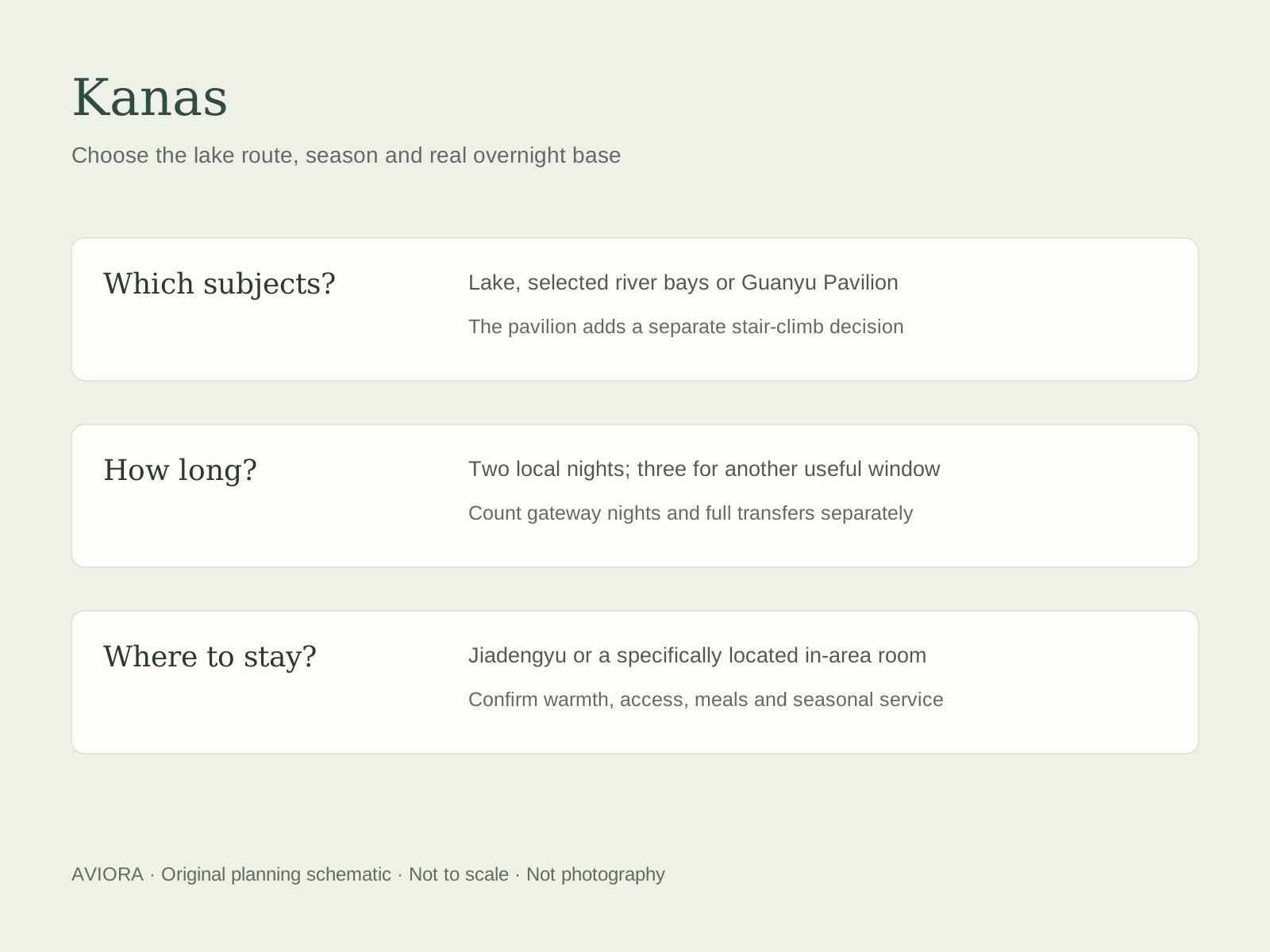
How many days do you need in Kanas?
Two local nights can provide one focused full day between arrival and departure. Three create a second useful window for another route, weather flexibility or a slower stay. Count a Burqin gateway night separately and be precise about whether the room is in Jiadengyu or within the scenic area: access procedures and remaining transfers affect useful time. Adding Hemu usually changes the overnight sequence and should serve a distinct village interest, not merely extend the attraction list. More nights are worthwhile when they improve the experience, rather than repeat long entry journeys or move rooms for similar views.
Compare stays by number of nights
2 local nights / one focused scenic day
Choose a base and arrival that protect a useful full day for the lake and selected river scenery. Compare the entire entry and return sequence, especially from Jiadengyu. Keep the pavilion optional rather than require every attraction for the stay to feel complete.
3 local nights / a second window and less pressure
Add a distinct route, more time beside the lake or flexibility for weather. A second scenic visit needs actual entry and transport terms, even when the room is within the broader destination. Avoid filling the extra day with an unverified border excursion or a rushed Hemu return.
Kanas plus Hemu / give each place a role
Choose Kanas for the lake-and-river landscape and Hemu for a separately planned village and valley setting. Allow the full transfer, luggage, room access and useful hours in each. Adding one name to the itinerary without meaningful time can weaken both visits; a shorter journey can choose one well.
Plan a tailored Kanas visit
Start with the northern Xinjiang days you can protect, then compare Kanas alone with a Kanas-and-Hemu sequence. For a tailored proposal, share dates, gateways, room standards, walking needs and any particular autumn or winter interest. We can assess the actual connections and a hotel location that leaves useful scenic hours. Urumqi, Turpan and Yining are separate regional chapters with substantial travel between them. Current traveler eligibility and access arrangements need confirmation for the chosen route.
A proposal should identify the exact overnight bases and room, dated gateway, complete road transfers, park admission and repeat-entry terms, public scenic transport, guiding language and the remaining paths on foot. State any Guanyu Pavilion transport or optional boat separately, together with meals and luggage arrangements. For winter, describe the actual vehicle, driver, road and scenic operation, property heating and contingency. Hemu, Baihaba, specialist hiking, horse riding, drone use and hosted visits require distinct services and any applicable permission. Private guiding does not authorize off-road driving, closed paths, unrestricted border-area access or entry to homes. No autumn peak, mist, wildlife sighting or private lake experience is promised here.
This is a destination planning guide, not a fixed departure or a confirmed package. We check the route, accommodation, transport and guide availability for your dates before setting out the services and price in writing.
State meetings in Beijing time, UTC+8, and use actual ticketed times, resolving any other locally used convention in writing. Build the day around current entry, transport, visitor stops, walking, meals and last return service. Seasonal daylight does not override opening or vehicle arrangements. Autumn's color window varies with elevation and weather and can be brief; obtain current conditions instead of promising one fixed peak date. Popular periods can bring queues and room pressure despite the remote setting. Leave a usable margin after a long arrival rather than promise an immediate full lake circuit.
01
Notice how lake, river bends and forest create different landscape experiences
02
Walk a selected permitted shore or river section with time to observe rather than rush every bay
03
Choose a real local base that improves sleep and useful visitor hours in the intended season
Suggested Kanas itinerary
What can you fit into your Kanas itinerary?
Day 1 / local arrival
Reach the real base and keep the evening useful
Complete the actual gateway and road sequence, then any scenic entry and final luggage transfer. Settle into the room and enjoy a suitable meal. A short permitted walk can fit when hours allow; a full lake circuit should not depend on uncertain arrival.
Day 2 / lake and selected river scenery
Choose useful visitor windows rather than every stop
Follow the confirmed transport arrangement for a selected lake visit and a manageable river-bay route. Include lunch, rest and a clear return. Choose the paths for current surfaces and guest needs; mist or peak leaf color should be a bonus rather than the sole reason the day works.
Optional second full day / three local nights
Add a distinct route when it improves the stay
Consider Guanyu Pavilion after reviewing current access, stairs and visibility, or choose another suitable shore or cultural subject. Confirm any repeat-entry and transport conditions. A boat or hosted visit is separate, and Hemu should not be squeezed in without its complete transfer and useful time.
Onward chapter
Continue through a confirmed regional sequence
Allow the actual road and luggage plan for Hemu, Burqin or the booked airport or station. A two-night version has one full scenic day; the extra night supports the second. This outline is illustrative, not a published package or a guarantee of autumn color, snow access, permits, hosts, rooms or scenic operation.
Summer commonly suits green forest, lake scenery and selected walks, with variable weather and cold periods still possible. Autumn is sought for changing deciduous color, often researched around September, but the actual window varies and can be brief. Spring transition and winter need their own access and service assessment. Snow travel is a distinct brief, with road operation, heating, daylight and paths checked specifically. Neither peak color, dawn mist nor an empty viewpoint can be guaranteed. Match dates to the actual visitor experience and room availability rather than a single seasonal image.
What affects the cost of a Kanas trip?
Compare exact room, heating and service dates; complete gateway transfers; entry validity and repeat access; public scenic transport; guide hours; meals; and any optional boat or pavilion service. A lower room rate outside the scenic area can add time and transport stages, while an in-area premium may buy location without better facilities. Decide which benefit matters. Winter rates and vehicle needs belong in a specific current proposal, not an assumed summer tariff. A premium should improve sleep, useful hours and interpretation, not promise exclusive scenery or access beyond the public rules.
Getting there and getting around
How to get to Kanas and plan your stay
Arriving and connecting
Start with the booked flight or train and its actual operating gateway. A Kanas Airport proposal requires a verified dated flight; an Altay-area arrival can leave a substantial road sequence before the selected hotel. Include meals, luggage, current roads and the last scenic entry or transfer where relevant. Consider a Burqin gateway night when it improves the real journey, not as an uncounted substitute for a night beside the lake. Keep a full scenic outing separate from uncertain arrival and check the complete return before fixing an onward flight.
Getting around
Use the currently confirmed scenic transport network and permitted paths, with the private regional road service described separately. Identify actual stops, the final room approach and where luggage is handled. Choose a river walk with a clear finish and return instead of assuming every bay forms one short accessible trail. Seasonal operation and weather can change the sequence. Private transport does not authorize off-road access, photography in restricted places or entry to homes; specialist activities and village hosts need distinct arrangements.
Walking and access
Assess lakeshore paths, river walk sections and Guanyu Pavilion separately. Boardwalks can include steps, slippery surfaces and a substantial distance to a pickup. The pavilion's usual approach involves many stairs even when its relevant transport operates; a shuttle is not arrival on the viewing platform. Choose the actual section, rest places, toilets and shorter alternative. Snow and ice create a different route assessment in winter. Remain on permitted paths, keep away from swift water and respect closures rather than approach a bank or viewpoint solely for a photograph.
What first-time visitors often underestimate
Choose the core experience before expanding the route: a lake-and-river stay, an autumn photography brief or a separately planned snow journey. Ask where the room is, how you reach it and how much useful time remains after entry and transport. Then decide whether the pavilion or another village improves the trip. A focused stay that remains rewarding without peak color or mist is more dependable than a circuit built around one perfect photograph.
Where to stay in Kanas
Compare Jiadengyu for access to the scenic approach, an exact Kanas-village or other in-scenic-area room for its setting and current access, and Burqin for a gateway purpose. Verify the actual address, booked room, heating, hot water, bathroom, noise, meals and final luggage transfer. A timber exterior can be attractive without proving insulation or resort service. An in-area room may improve some visitor windows but does not automatically overlook the lake or allow private driving. Confirm the applicable entry, transport and repeat-visit arrangements before deciding whether the location justifies the price.
Compare hotel areas
Jiadengyu / the main scenic-approach base
Useful for a defined gateway brief, with the actual hotel's transfer to entry assessed. Confirm heating, bathroom, meals and departure arrangements. It is not an in-lakefront location, and the remaining scenic transport needs to be counted each day. Near the entrance still requires an exact address.
A specific Kanas-village or in-scenic-area property / location with access conditions
Locate the room relative to the actual stops, paths and dining. Clarify admission, luggage, local transfers and seasonal service rather than assume a private vehicle reaches the door. A traditional-looking cabin is not automatically secluded, insulated or lake-facing. Compare real facilities with the visitor-time benefit.
Burqin town / a separate gateway night
Choose for the actual arrival, road sequence, dinner or departure, not as if it were accommodation beside Kanas Lake. The town can be a purposeful break in the journey, but a late arrival followed by an early scenic transfer is not a full Kanas day. Count the complete onward road and entry stages.
Hemu / another destination rather than a Kanas room category
Select a named village property only when Hemu has a distinct purpose in the trip. It changes roads, final luggage approach, visitor arrangements and overnight location. Check heating, bathroom, noise and meals, especially in winter. A Hemu photograph should not be used to describe the booked Kanas accommodation.
How should I divide time between Kanas Lake, the Three Bays and Guanyu Pavilion?
Give the lake and a selected river route priority for a first scenic day, using the actual bus stops and permitted paths rather than assuming every bay must be walked in one continuous circuit. The Three Bays usually refers to Wolong / Dragon Bay, Moon Bay and Immortal Bay along the river landscape. Guanyu Pavilion adds an elevated panorama with a separate transport stage and a substantial stair climb on the usual visitor approach. Choose it when current operation, visibility and mobility justify the effort. A shorter shore or river experience can be rewarding without the pavilion, and a boat is a separate optional service rather than a necessary way to understand the lake.
A park ticket, a scenic bus and a private transfer are different services
Specify regional road transport separately from entry and the actual internal visitor network. A privately booked driver does not imply private access to scenic roads or the ability to stop anywhere. Confirm the room's final transfer and permitted bus stops, with entry validity and repeat-visit terms checked for the chosen stay.
The famous autumn view has a changing window
Birch and other deciduous trees change at different times across the landscape, with weather affecting color and leaf retention. September is a common starting point for researching an autumn trip, not a guarantee of peak color on every date. Check current conditions and keep the lake, forest structure and river scenery valuable in their own right. Mist at Immortal Bay is also a natural possibility, not an included performance.
Guanyu Pavilion needs an honest mobility choice
The elevated panorama differs from a lake-level visit. The usual visitor approach includes a significant stair climb after the relevant transport stage, so assess knees, balance, weather and the descent. It is not necessary for every guest, and a selective lake or river route can be the stronger experience for someone who prefers less climbing.
Winter is a different operating plan
Snow changes access, road travel, walking, daylight, heating and the range of services. Confirm the exact road and visitor operation for the dates, suitable vehicles and drivers, current room facilities and an alternative if conditions change. Do not assume the summer bus network, boat or viewpoint operates unchanged. A winter photograph of Hemu or a ski area does not establish the same facilities at Kanas Lake.
Hemu and Baihaba are not interchangeable village add-ons
Each has its own location, visitor arrangements, roads and cultural context. A Baihaba proposal particularly needs current traveler-specific border-area eligibility and any required documentation established before confirmation. A Kanas ticket or a guide's general regional experience does not prove access. Give Hemu its actual transfer and time rather than promise every village in a short lake stay.
A Tuva cultural subject needs a specific place and real consent
The region is associated with Tuva communities, but a cabin exterior or a commercial visitor venue does not represent every household's life. Name the actual site and distinguish public interpretation from a separately arranged host. Ask before portraits and keep private homes private. Singing, teaching or family hospitality should not be promised merely because a proposal mentions local culture.
Culture and historical context
Understand a landscape before reducing it to a seasonal image
The lake, its outflowing river and the surrounding forest offer different ways to see Kanas. A broad lake view emphasizes scale, while a selected river section reveals bends, changing water and vegetation at closer range. The value of a walk is not confined to mist or a particular leaf color. Thoughtful interpretation can help guests notice these relationships while staying on permitted paths and avoiding unsupported wildlife stories. Local lake-monster legends can be discussed as folklore, not evidence of a creature or a promised attraction.
Village settings and Tuva cultural associations add another subject, but a scenic visit is not automatically a private cultural encounter. Public exhibitions, commercial visitor spaces and lived-in homes are different places with different rules. Identify the actual venue and the basis of any hosted visit, ask before portraits and respect local work and worship. Timber houses should be described through the specific setting and current use rather than a claim that an entire community exists unchanged outside modern life.
Food and social life
Make the meal plan fit the real lake day
Choose breakfast, lunch and dinner around the actual room, transport and walking rather than assume a suitable restaurant is available beside every stop. A longer scenic day may need a properly arranged packed option. Where genuinely served, compare a noodle or meat dish with vegetables and explain portions, bones and preparation. A Burqin meal can be part of a separate gateway evening, not a restaurant stop magically adjacent to the lake. Expensive fish or a regional banquet is optional, not a necessary proof of a premium Kanas visit.
Clarify wheat, dairy, meat stocks, fish, nuts and shared equipment when dietary needs matter. Restaurant labels and regional cuisine do not establish allergy, vegetarian or religious suitability on their own. Confirm the actual kitchen's capacity, particularly at a small cabin property or in winter, and keep an alternative. For fish, establish species, portion or weight basis and preparation charges where relevant before ordering. A hosted family meal or cooking encounter requires its own willing host and confirmed arrangement.
Kanas travel FAQ
Questions about visiting Kanas
Where is Kanas, and is it the same as Hemu?+
Kanas is a lake, river and forest destination in Burqin County, Altay, northern Xinjiang. Hemu is a separate village destination, with its own transfer, room and visitor arrangements. They can be combined in a suitably paced route, but a Kanas stay does not automatically include or fully cover Hemu.
How many nights should I stay in Kanas?+
Two local nights give one focused full day; three provide another window or a slower pace. Count Burqin gateway nights separately and locate the actual room in Jiadengyu or within the scenic area. Useful time depends on the whole entry and transfer sequence, not just the number of hotel nights.
Should I stay in Jiadengyu or inside the Kanas scenic area?+
Compare actual rooms, comfort and visitor time. Jiadengyu serves the main scenic approach and still requires entry and internal transport. An in-area property may improve some windows but does not automatically face the lake or allow private driving. Confirm admission, luggage, transfers and repeat-entry terms before booking.
When is the best time for Kanas autumn colors?+
September is a common research window, but color varies by elevation and weather and may change quickly. Obtain recent conditions near travel rather than expect one fixed annual peak. Popular dates also affect rooms and visitor flow. Plan a rewarding lake-and-forest stay even if the color is earlier or later than expected.
What are the Three Bays in Kanas?+
The phrase usually refers to Wolong / Dragon Bay, Moon Bay and Immortal Bay along the river landscape. They are distinct stops and viewpoints, not one guaranteed short walk. Select actual bus stops and permitted path sections, checking surfaces, distance, toilets and return arrangements.
Is Guanyu Pavilion suitable for limited mobility?+
Assess the actual route individually. The usual approach includes a significant stair climb after its relevant transport stage, so a shuttle does not provide step-free arrival at the panorama. Review knees, balance, weather and descent. A selected lakeshore or river experience can be a worthwhile alternative.
Can I visit Kanas in winter?+
Consider a separately confirmed winter route with current road and scenic operation, suitable vehicle and driver, dependable room heating and clear contingencies. Do not assume summer buses, boats or viewpoints operate unchanged. Hemu snow imagery and nearby skiing do not establish the same experience at Kanas Lake.
Can foreign travelers add Baihaba to a Kanas trip?+
Only after current eligibility and any required border-area documentation have been checked for the actual traveler and dates. A Kanas booking or regional tourism description does not prove access. Keep the proposal conditional until the responsible arrangements are established, and retain a worthwhile alternative.
Share your dates, interests, arrival and departure cities, and any plans already booked. We’ll recommend an itinerary at a pace that suits you, with the arrangements and price explained before you book.