Teochew food, gongfu tea and an old city worth staying in · South China
Chaozhou Travel Guide: Teochew Food, Tea & Stays
Give Chaozhou time for its old-city streets, Guangji Bridge, religious heritage and a considered introduction to Teochew food, with practical hotel, walking and onward-route choices.
2–3 nightsTeochew food, tea culture and slower old-city exploration
Chaozhou (潮州), also encountered as Teochew or Chiuchow in cultural and food contexts, is a city in eastern Guangdong with a distinctive regional identity. Visit for the relationship between old-city streets, Guangji Bridge, living temples, gongfu tea and Teochew cooking, rather than treating it as another generic Cantonese food stop. The city is part of the wider Chaoshan region alongside places such as Shantou and Jieyang; those names are related but not interchangeable. Two or three nights let a first visit unfold through a coherent walk, a proper meal and time to sit over tea.
How many days do you need in Chaozhou?
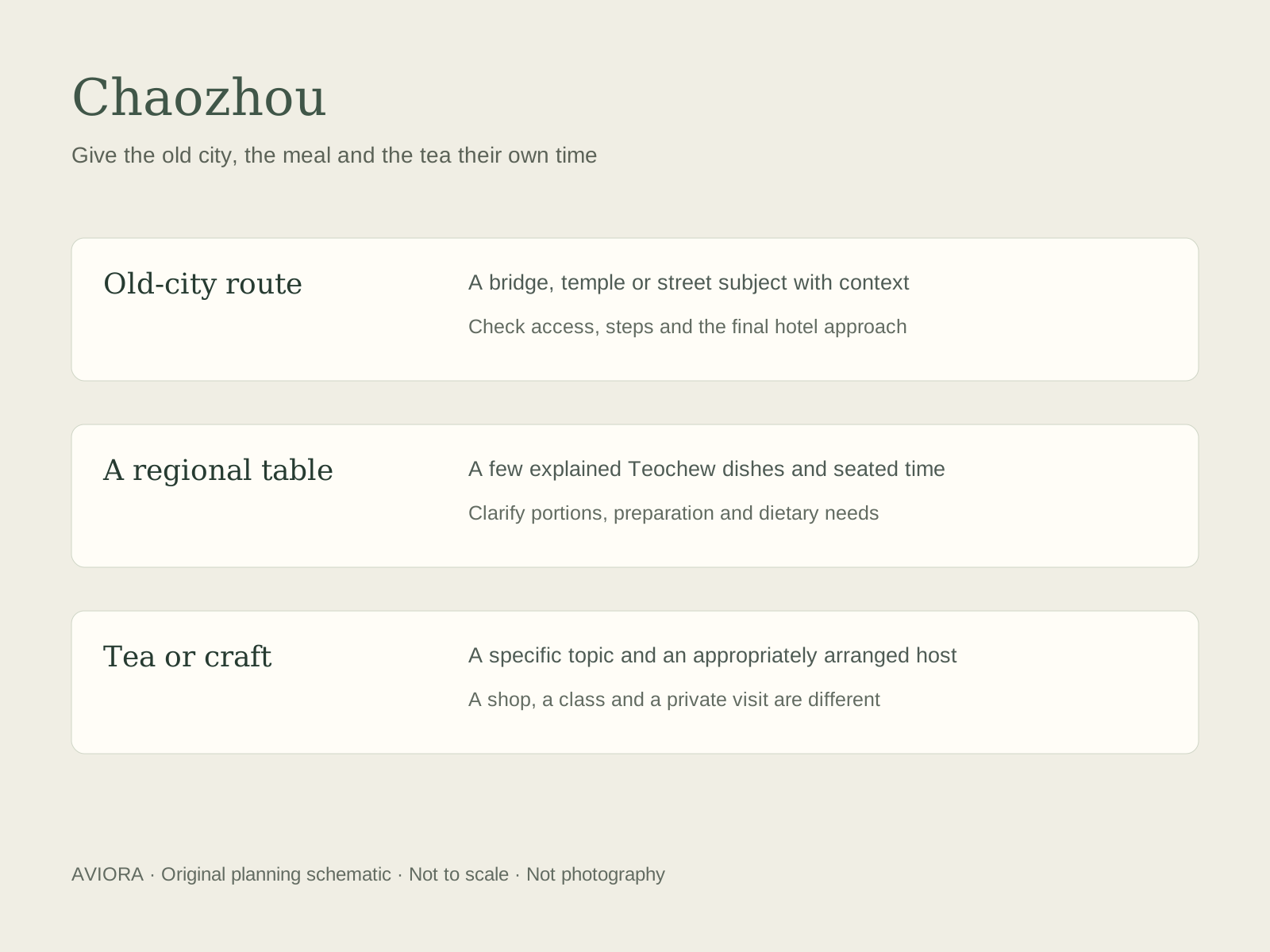
Two nights usually provide one full day for the old city, a bridge or temple interest and a regional meal. Three nights give a second full day for a separately arranged craft or tea subject, a different neighborhood or an easier pace. One night can work as a selective stop when connections leave useful time, but it should not promise every landmark and a comprehensive food tour. Keep Shantou, Jieyang and more distant outings separate unless the added subject genuinely justifies their road journey.
Compare stays by number of nights
1 night: a selective stop
Choose one strong route and one meal when arrival and departure leave enough time. A late check-in followed by an early train is not an old-city immersion. Avoid promising several temples, crafts, bridge time and extensive food touring within the same narrow window.
2 nights: one useful full day
Explore a selected old-city sequence and leave time for dinner or a tea interest. This can work well when the city itself is the priority and additional hosts are optional. Count station transfers separately so the one full day is not quietly consumed by transport.
3 nights: depth and a slower table
Use the second full day for a confirmed tea or craft subject, another distinct city interest or a gentler rhythm. Leave enough appetite and time for meals. An extra night does not require a distant excursion or another round of similar shops.
Plan a tailored Chaozhou visit
Chaozhou can form an eastern Guangdong chapter or connect with Xiamen and Quanzhou when the actual rail services and useful nights make sense. Guangzhou and Shunde offer different culinary and cultural subjects farther west, not local add-ons. No matching published Chaozhou product is recommended here. Use the illustrative three-night outline to request a tailored visit, keeping the city stay, any wider Chaoshan travel and optional hosts clearly defined rather than borrowing a Guangdong product that does not include Chaozhou.
A tailored Chaozhou proposal can identify the hotel and room, exact airport or station pickup, selected old-city route, guiding and meals. Name any admissions and distinguish a snack walk from a fully included seated meal. A tea host, craft demonstration, cooking session, performance or specialist interpreter requires separate confirmation. Private guiding does not open homes, workshops or religious areas beyond normal access. Share dietary needs, interest in tea, preferred walking length and whether you want a cultural or food-led stay before comparing proposals.
This is a destination planning guide, not a fixed departure or a confirmed package. We check the route, accommodation, transport and guide availability for your dates before setting out the services and price in writing.
Keep the first old-city walk coherent, with a shaded pause and a proper meal instead of continuous snacking. Review the bridge's current visiting arrangements before fixing the sequence. A temple, museum or host appointment can have a different schedule from the public lanes. Leave an evening food or tea interest unhurried, and avoid relying on a late activity before an early station transfer.
01
Explore a selected old-city route with the bridge, temple or shrine given clear context
02
Understand a Teochew meal and a thoughtful gongfu tea subject without a compulsory shopping itinerary
03
Enjoy a well-placed room and unhurried evenings instead of a rushed wider-Chaoshan checklist
Suggested Chaozhou itinerary
What can you fit into your Chaozhou itinerary?
Arrival
Reach the base and enjoy an easy first meal
Allow the complete station or airport transfer and the final luggage approach. Settle in, then take a short local walk or dinner if timing allows. Keep a bridge scene or special host out of a tightly timed arrival evening.
Full day 1
An old-city route with a proper table
Choose a coherent walk with a temple, bridge or other heritage subject matched to current access. Include shade, seated pauses and a regional meal. Avoid turning every lane into another tasting stop or trying to cover the entire wider Chaoshan region.
Full day 2
Tea, craft or a different city perspective
Use a confirmed host or collection for a clear subject, or choose another public cultural interest when that is stronger. Leave time for the room and a slower meal. A private visit or hands-on session belongs in the plan only when the arrangement is actually available and agreed.
Departure
Continue from the precise gateway
Allow the hotel departure, luggage and full transfer to the ticketed service. Xiamen, Quanzhou or another Guangdong city needs its own useful stay. This three-night outline is illustrative, not a published product or a promise of optional hosts, performances and private interiors.
The cooler parts of the year are useful starting points for old-city walks and time at the table. Summer heat, humidity and rain call for shade, breaks and flexible outdoor timing; storm-related conditions can affect transport and river-side plans. Festivals, performances and any bridge-related public event need date-specific confirmation. A quieter weekday can be worth comparing, but neither an old-city postcode nor a particular season guarantees empty lanes or a silent room.
What affects the cost of a Chaozhou trip?
Compare room category, breakfast, complete transfers, guide language and named admissions. A food walk may include small shared purchases while a restaurant meal has its own menu and portion basis. Tea sessions, craft hosts and performances should have clear fees and purchase expectations. Paying a premium should improve room comfort, interpretation and meal quality, not simply add several similar shops or an unsupported promise of private cultural access.
Getting there and getting around
How to get to Chaozhou and plan your stay
Arriving and connecting
Jieyang Chaoshan International Airport uses code SWA. The airport, Chaoshan railway station and other ticketed arrivals require different road journeys to the hotel. Send the full station or terminal, luggage and Chinese address before arranging pickup. A regionally named gateway is not a guarantee of a short final transfer, and any child seat or mobility support needs separate agreement. Keep a long arrival day clear of fixed bridge or host appointments.
Getting around
Use walking for a coherent old-city route and planned transfers where the site or gateway lies farther away. Agree the vehicle meeting point because narrow lanes and pedestrian areas may prevent door-to-door access. A food-led day should allow seating and an easy return rather than continuous walking between snacks. River-side conditions, religious access and public visitor arrangements can change the sequence; keep a shorter alternative instead of forcing every planned stop.
Walking and access
Old-city paving, thresholds, crowded lanes and bridge approaches create different demands. Agree a route with seating, toilets and a practical pickup point. Small historic properties may have stairs and a last stretch where a vehicle cannot reach the door. A private car helps between districts but does not make every lane or heritage building step-free. In heat or rain, a shorter walk with better explanation can be the stronger plan.
What first-time visitors often underestimate
Chaozhou rewards a slower introduction. Give the old city one clear route, choose a few dishes with explanation and leave time to sit over tea. The strongest proposal is not necessarily the one listing the most snacks, bridge photographs and workshops. It is the one that makes the region's distinct identity understandable while keeping the room, meals and daily pace comfortable.
Where to stay in Chaozhou
Choose a property in or near the old city for evening food and lanes, a hotel at its edge for a balance of access and pickup, or a modern city base when room comfort and straightforward road arrival matter more. Check the quoted room, stairs, soundproofing, bathroom and the final luggage approach. A courtyard photograph does not tell you whether the room faces a busy lane or a shared dining area. For a short visit, a quieter room in a useful location can be worth more than moving hotels for another decorative setting.
Compare hotel areas
Inside or immediately beside the old city
Choose for evening food and time on foot. Check the street, quoted room, stairs, sound transmission and the last luggage approach. A characterful property can be a good stay without matching a full-service hotel's facilities. Clarify breakfast and dinner options rather than assuming every courtyard has a quiet restaurant.
An old-city-edge property with practical pickup
Consider when easier road access and a manageable walk to selected interests are the right balance. Review the actual crossing, pavement and hotel entrance. Edge of old town is not a precise distance or a guarantee of quietness. A suitable room and a reliable meeting point can improve the whole day.
A modern city hotel
Useful for room layout, facilities and straightforward vehicle access. Compare the real transfer to old-city interests and evening meals. A view over the river or city is separate from convenient pedestrian access. Choose a modern base knowingly rather than expecting every Chaozhou address to place you among historic lanes.
Should you stay in Chaozhou Old Town or visit from another Chaoshan city?
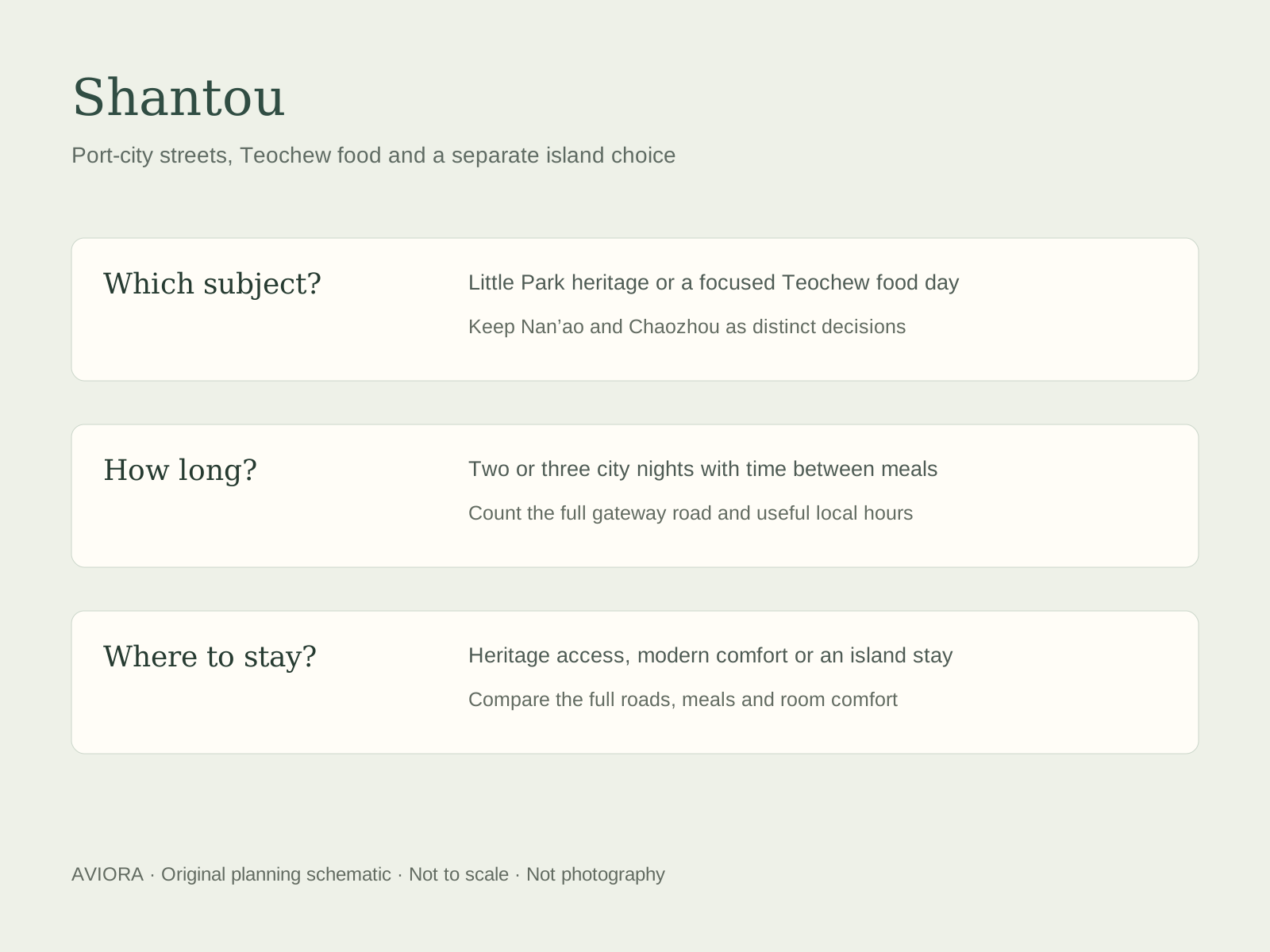
Stay in Chaozhou when unhurried old-city time, dinner and tea are part of the reason to come. A visit from Shantou or another base can provide a focused introduction, but the complete return drive and available hours determine what fits. Paifang Street, Kaiyuan Temple and Guangji Bridge are not just entrances to collect; each adds a different subject. A night here can protect evening time, but does not guarantee a particular light display, quiet street or late-running activity. Choose the base around the experience rather than the broad Chaoshan label.
Teochew is a useful identity, not another name for all Cantonese culture
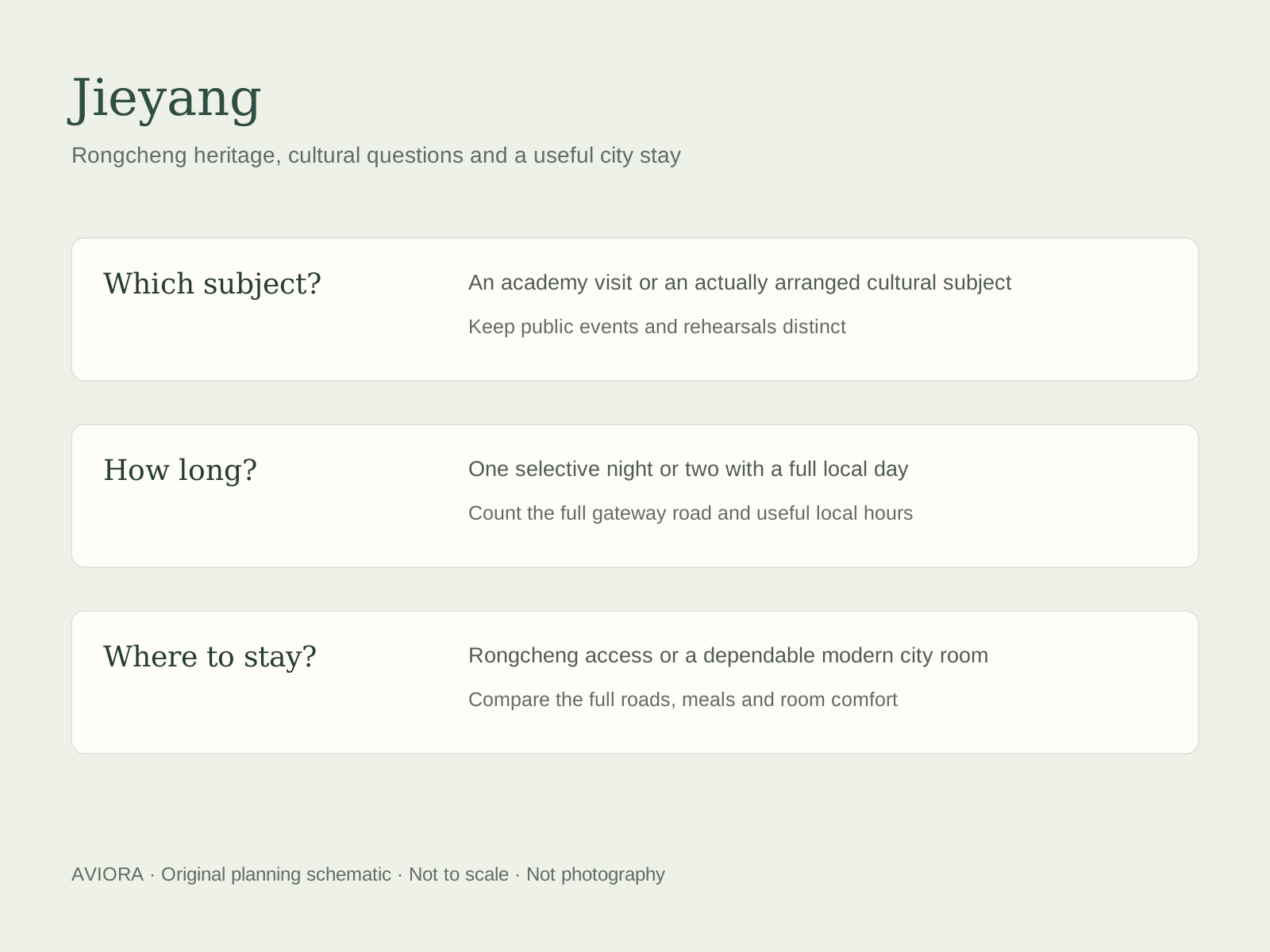
Chaozhou's language, tea practices, crafts and cooking have their own context within eastern Guangdong. A guide should explain the subject at the chosen place rather than repeat the same account used for Guangzhou. The wider Chaoshan region includes other cities, and Chaozhou city does not automatically cover them. Keep names precise when choosing restaurants, family-history interests or a multi-city route.
Guangji Bridge deserves a current visit plan, not a fixed spectacle promise
Its distinctive bridge structure and river setting can be worth understanding in daylight. Current pontoon, opening and visitor arrangements determine what can be crossed or observed. A night view or public light event, if operating, is a different experience. Do not guarantee a particular opening scene, display or unrestricted crossing from an old photograph, and keep an alternative if conditions change.
Gongfu tea is an attentive practice, not a martial-arts show
The term describes skill and care in preparation rather than kung fu entertainment. A useful session can explain the tea, small brewing vessel, sequence and changes between infusions. Agree the host, language, duration and whether the setting is a shop, cultural venue or private invitation. Tasting should not depend on pressure to buy, and a retail tea stop is not automatically a hosted cultural encounter.
Choose a craft subject before promising a workshop
Woodcarving, embroidery and other local crafts can provide depth through a suitable collection, demonstration or willing practitioner. Those are different visits. Identify the venue, process, interpretation and opportunity to observe before calling it hands-on or master-led. A shop window can show interesting work without providing production access, a private studio appointment or evidence for every provenance claim.
A good food day balances dishes rather than maximizing stops
Beef hotpot, braised dishes, rice-based snacks and tea offer different ways to understand a meal. Choose what the group actually enjoys, clarify portions and let a few stops do real work. Fully cooked alternatives can be selected where raw or lightly prepared seafood does not suit the traveler. Dietary needs, stocks, sauces and shared equipment matter more than claiming every visitor must eat every signature dish.
Use the correct Chaoshan gateway
Jieyang Chaoshan Airport serves a region, not just one old-city hotel. A railway service using Chaoshan or another regional station can require a separate drive in a different direction. Choose by the full ticket, hotel address and onward route. A short rail time from Xiamen or Guangzhou does not include both terminal transfers, luggage and the time needed to enjoy Chaozhou.
Culture and historical context
Let the old city reveal a distinct regional identity
Chaozhou's value comes from the relationship between built heritage, trade, religion, tea and everyday city life. A walk through Paifang Street can discuss the meaning of its ceremonial forms while distinguishing present-day commerce and restoration from older fabric. Guangji Bridge adds a river and engineering subject; a temple or shrine adds another kind of context. The places become more interesting when their differences are explained rather than all described as timeless ancient China.
Tea and crafts offer another way to understand the region when a suitable host or collection is available. Choose a specific process or question, and respect the boundary between a public visitor space, a shop, a working studio and a home. A demonstration, lesson and master appointment require different arrangements. Cultural depth can come from an informed public visit and a thoughtful conversation without promising exclusive access or asking residents to perform a generic tradition.
Food and social life
Build a Teochew meal with contrast and room to enjoy it
A meal might introduce beef hotpot with cuts and cooking explained, a braised preparation, vegetables and a rice-based snack rather than an indiscriminate tour of famous dishes. Different restaurants and households prepare these foods differently. Let the guide clarify portions, sauce ingredients and whether the meal suits the group's appetite. The point is to understand the table, not to prove how many bowls and plates can be finished before the next stop.
Tea can provide a quieter pause between food interests, with caffeine preferences and buying expectations discussed. Seafood, meat broths, peanuts, fish sauces and shared equipment can matter for dietary needs even when a dish name sounds simple. Choose fully cooked options where appropriate and clarify any raw or lightly prepared item before ordering. A seated lunch, clean facilities and enough time to eat make the food experience more convincing than a long list of compulsory tastes.
Chaozhou travel FAQ
Questions about visiting Chaozhou
Are Chaozhou, Teochew and Chaoshan the same thing?+
Chaozhou is a city; Teochew is a name encountered in language, cultural and food contexts associated with the region. Chaoshan is a wider regional term that also includes places such as Shantou and Jieyang. Use the precise city and address when planning transport, hotels or a family-history interest.
How many nights should I stay in Chaozhou?+
Two nights give one full day for selected old-city interests and regional food. Three nights allow a separate tea or craft subject, another city interest or a slower pace. One night works only as a focused stop when the complete connections leave useful time.
Should I stay in Chaozhou Old Town?+
Choose an old-city or edge base for evening food and lanes, checking noise, stairs and the final luggage route. A modern city hotel can suit room comfort and pickup better, with a separate transfer to the old city. The best choice depends on the exact room and the stay you want.
Can I cross Guangji Bridge and see the pontoons open?+
Check current visitor and operating arrangements for the date before planning a particular crossing or scene. Daytime heritage viewing and any night event are different experiences. An old timetable or photograph does not guarantee the same access, pontoon arrangement or display during your visit.
Is Chaozhou's Kaiyuan Temple the one in Quanzhou?+
No. They are different temples in different cities and provinces. Chaozhou is in Guangdong and Quanzhou in Fujian. Confirm the city, Chinese name and address when comparing photographs or booking a route.
What is a Chaozhou gongfu tea experience?+
It can be an attentive introduction to tea preparation, vessels and successive infusions. Agree the tea, host, language, setting and purchase expectations. Gongfu refers to skill and care here, not a martial-arts performance, and a shop stop is not automatically a private cultural session.
Is a Chaozhou food tour suitable for dietary restrictions?+
It needs a venue-and-preparation review. Discuss meat stocks, seafood, sauces, spice, shared cooking and allergies before choosing the stops. A snack walk and a seated meal have different inclusions. Fully cooked alternatives and fewer well-explained dishes can make a better visit than a fixed must-eat list.
Can I combine Chaozhou with Xiamen or Quanzhou?+
Yes, when the actual rail service, both hotel transfers and available nights support each city. The cultural and food subjects differ, so preserve useful time rather than reducing either place to a brief station-to-photo circuit. Xiamen's ferry arrangements are another separate planning task if Gulangyu is included.
Share your dates, interests, arrival and departure cities, and any plans already booked. We’ll recommend an itinerary at a pace that suits you, with the arrangements and price explained before you book.